Contents
What it is
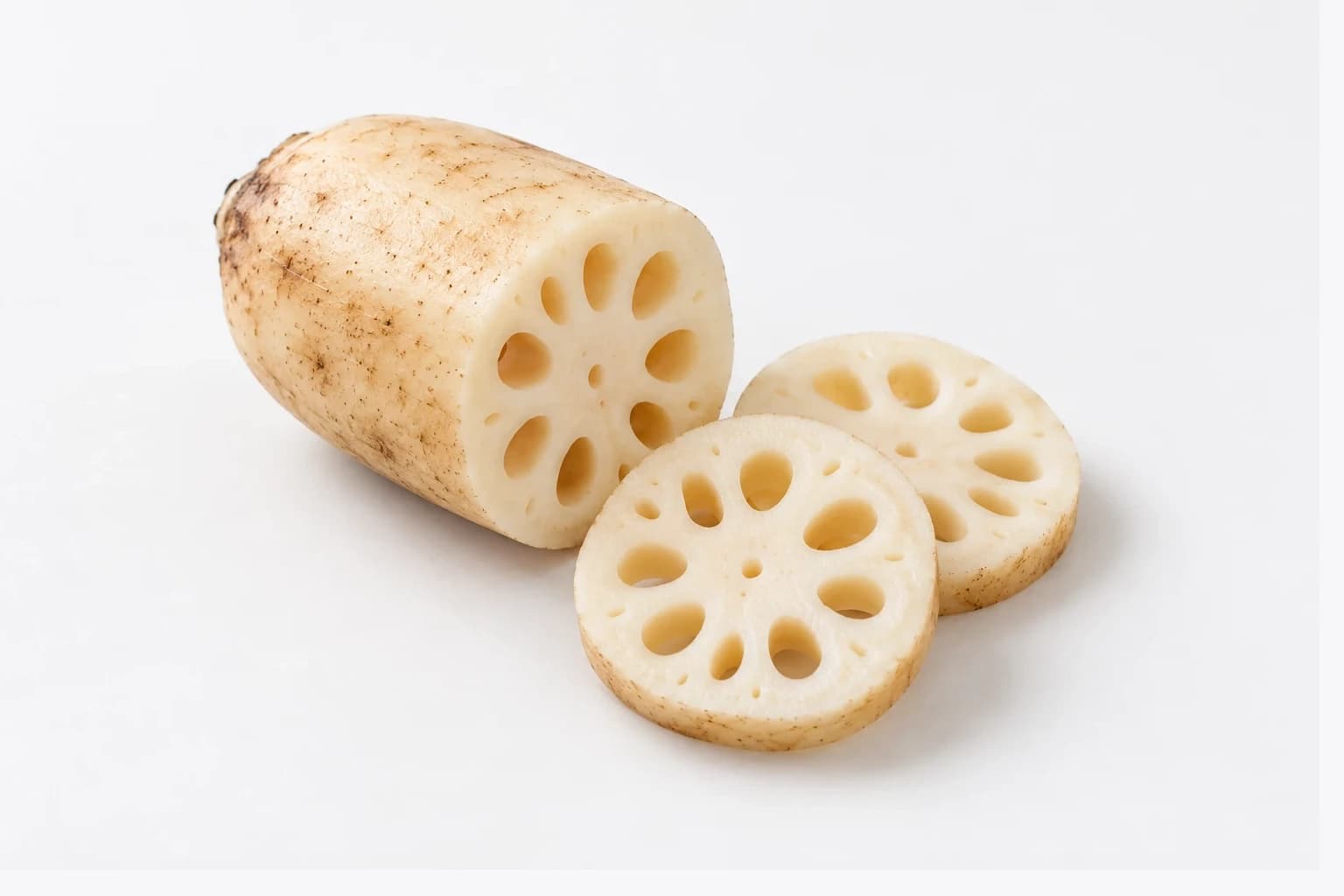
Lotus root is the underground stem of the lotus flower. It looks like a root but is a rhizome that creeps sideways through the mud, and the holes visible in a cut slice are air channels. Native to Asia, it has long been eaten in Korea, China and Japan. Its defining quality is a crisp, snappy texture; the flavour is mild and faintly sweet. Cut surfaces brown quickly, so slices are held in vinegar water before being braised, fried or stir-fried.
Scientific name Nelumbo nucifera
Lotus root is the rhizome of the lotus. It is classed as a root vegetable, and two rows in its table are unlike a root vegetable's.
Vitamin C at 44 mg and potassium at 556 mg.
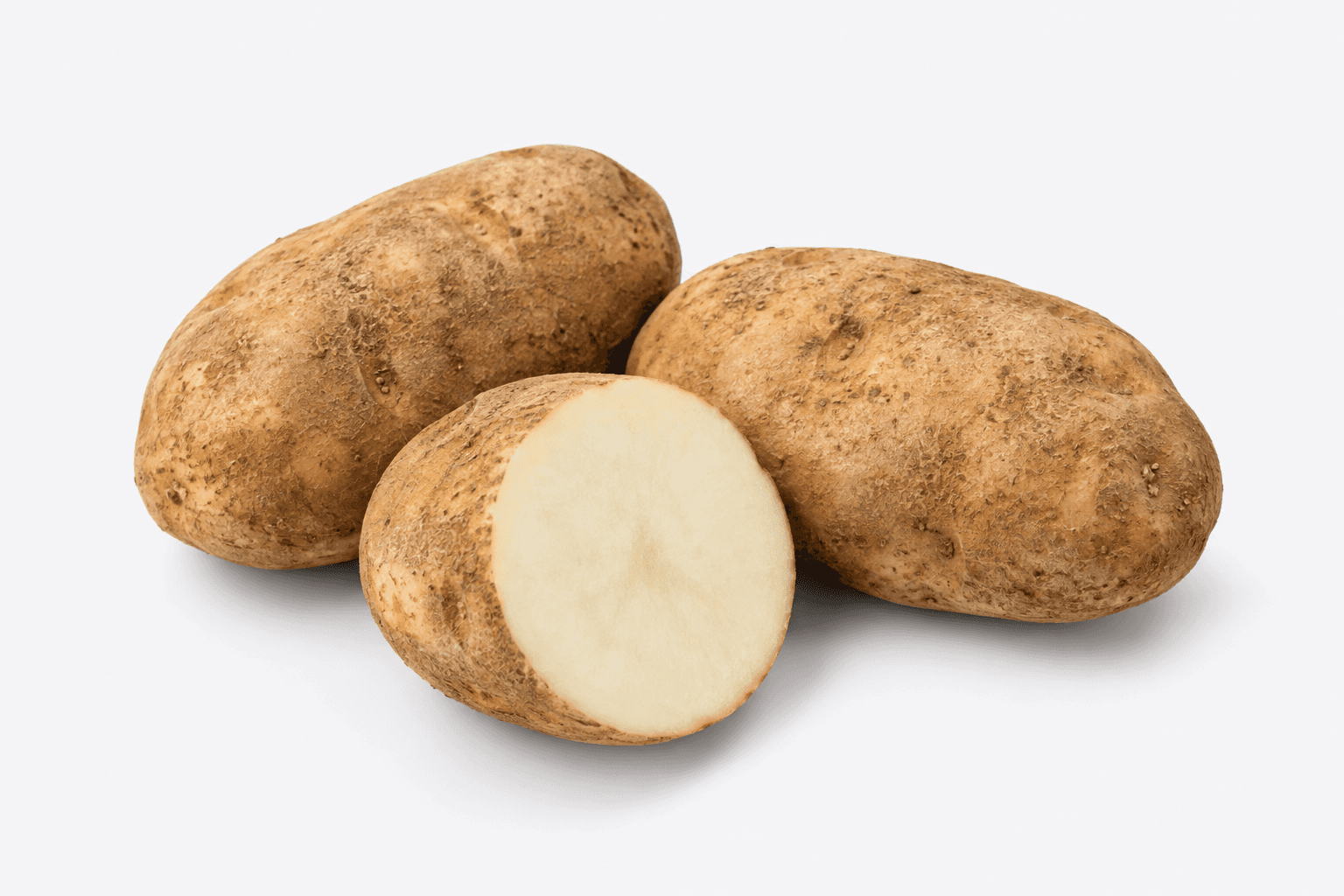
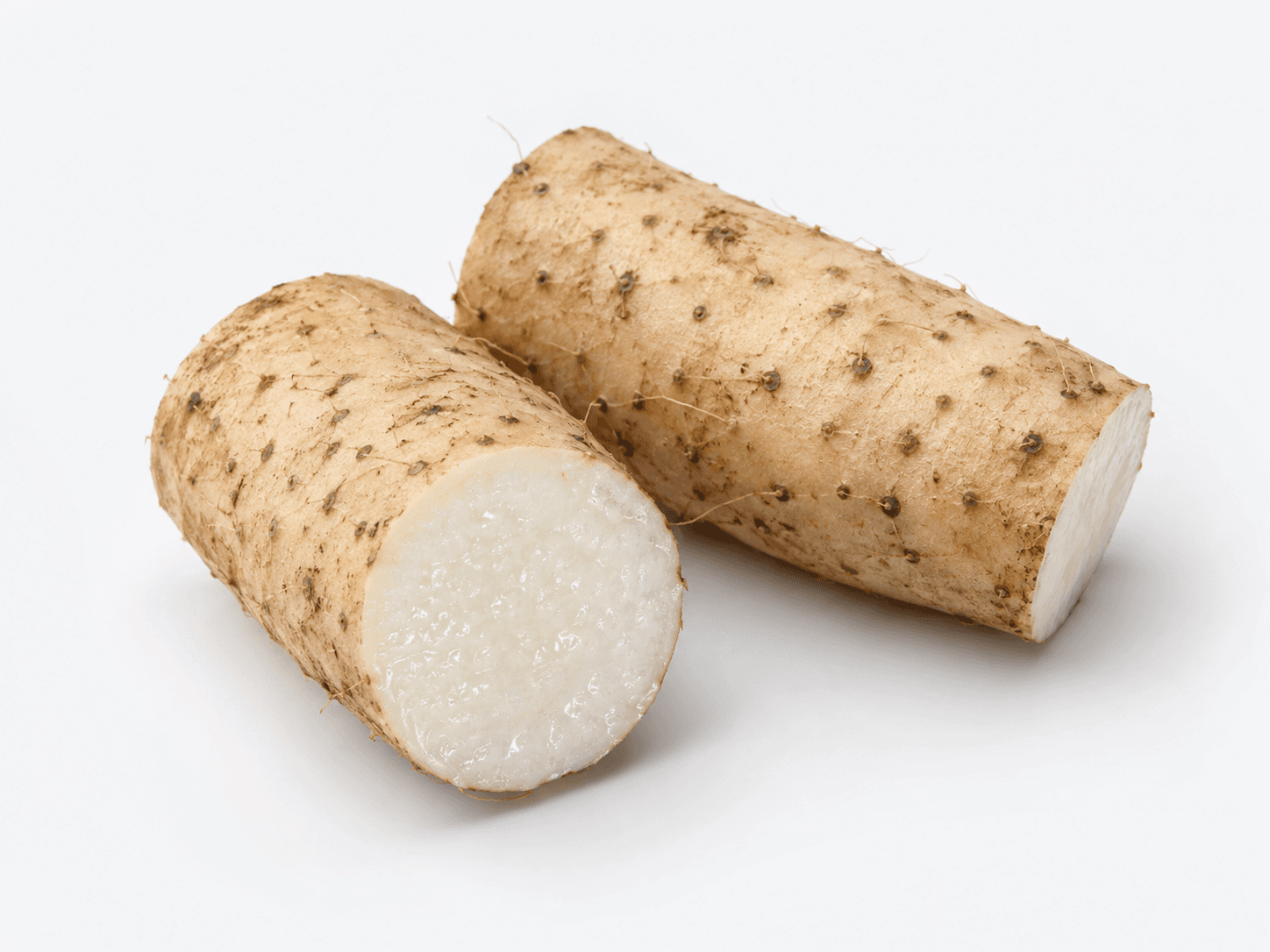
Potato carries 19.7 mg of vitamin C, sweet potato 2.4 mg, chicory root 5.0 mg. Lotus root runs from twice to ten times those, and 100 g covers 44% of the 100 mg adult recommendation.
But this site does not stop at "lotus root is high in vitamin C". It is almost never eaten raw, and vitamin C is heat-sensitive. That gap is set out below.
One thing to be clear about on evidence. This site found no human clinical trial of lotus root. Traditional uses — for bleeding, for coughs and the airways — are documented across East Asia, but this site does not put such claims in the same box as facts from the composition table. This page is an ingredient read through its composition.
Key benefits
- Nutrition data
Vitamin C 44 mg — but cooking does not leave it intact
Per 100 g of raw lotus root:
- 74 kcal, carbohydrate 17.2 g, fibre 4.9 g, protein 2.6 g, fat 0.1 g
- Vitamin C 44 mg, vitamin B6 0.258 mg, riboflavin 0.22 mg, thiamin 0.16 mg, folate 13 µg
- Potassium 556 mg, phosphorus 100 mg, calcium 45 mg, magnesium 23 mg, copper 0.257 mg, iron 1.16 mg, zinc 0.39 mg
- Sodium 40 mg
Why the 44 mg of vitamin C stands out:
Root vegetable (100 g) Vitamin C Lotus root 44 mg Potato 19.7 mg Chicory root 5.0 mg Sweet potato 2.4 mg Against an adult recommendation of 100 mg, that is 44% in 100 g — a rare figure for a root.
But stopping there would be wrong.
Vitamin C is heat-sensitive and water-soluble. And lotus root is almost always cooked — braised, pan-fried, deep-fried, steamed. Thin raw slices in a salad exist but are uncommon.
So "100 g of lotus root = 44% of a day's vitamin C" is a pre-cooking figure. How much survives depends heavily on method, and this site does not hold evidence to put a loss percentage on it. The general principle — shorter cooking and less water is better — is all that can be said.
Potassium at 556 mg is less sensitive to cooking. Minerals are not destroyed; they only leach into the water. Draining it throws them away, so methods where you eat the liquid, like braising, work in its favour.
Against an adult reference of 4,700 mg, that is 12% in 100 g — higher even than potato's 425 mg.
Fibre at 4.9 g is also high for a root, and much of the crisp texture comes from it.
Vitamin B6 at 0.258 mg is 15% of the 1.7 mg adult recommendation, used in amino acid metabolism and neurotransmitter synthesis.
Sodium at 40 mg is not negligible for a whole food. But the sodium in a lotus root dish comes mostly from the soy-and-sugar braising sauce, not the vegetable. That is a recipe question, not an ingredient one.
- Nutrition data
Browning and astringency — the heart of handling it
Cut lotus root and it browns quickly. It is the first problem anyone meets with this vegetable.
The cause is polyphenol oxidase. Polyphenols inside the root meet air, the enzyme oxidises them, and brown pigment forms. The same mechanism browns apples and potatoes. It is not spoilage and it is safe to eat.
There are three ways to stop it.
- Put it in water. It blocks the air; the simplest method
- Add a few drops of vinegar. Acid lowers the enzyme's activity and keeps the colour whiter
- Cook it quickly. Heat destroys the enzyme
But a long soak leaches out vitamin C and potassium, both being water-soluble. Keep the soak short — around ten minutes is enough.
The astringency comes from the same polyphenols (tannins), and the vinegar water reduces it too.
Texture by method is worth noting.
- For crisp, slice thin and blanch or stir-fry briefly. Less starch gelatinises and the crunch stays
- For soft and floury, cut thick and cook long — braising does this
- Deep-frying drives out water and lands between the two
The holes make it hard for sauce to penetrate. When braising, give it time, or cool it once and reheat — it absorbs as it cools.
Store it with the soil still on, wrapped in newspaper somewhere cool; it keeps longer that way. Washed, it browns and spoils faster. Cut pieces go in water in the fridge and should be used within two or three days.
- Not established
Traditional uses — and what is not confirmed
Lotus root carries several long-standing uses. Accounts of using it for nosebleeds and coughs, for the airways and for bleeding, survive across East Asia.
This site does not record those uses as benefits. It found no human trial that fed lotus root, measured a symptom and compared against a control.
That is not the same as "it does not work". Untested and ineffective are different things. But this site's rule is not to put the confirmed and the handed-down in the same box, and lotus root belongs to the latter.
What composition can explain, and no further:
- Vitamin C is required for collagen synthesis. Collagen is a structural protein of vessel walls and mucous membranes, which is why deficiency brings symptoms such as bleeding gums. But that is a story about correcting a deficiency, not about someone already replete eating more and bleeding less
- Fibre at 4.9 g works on bowel movement. That is a property of fibre in general
- That tannins are astringent is a fact of chemistry; whether eating them produces that action systemically is a separate question
The cautions.
Potassium at 556 mg is on the high side. People with reduced kidney function are sometimes restricting potassium. Talk to your clinician.
Do not eat it raw. Lotus grows in water, and freshwater aquatic plants can carry the encysted larvae of parasites such as Fasciolopsis buski. The same caution attaches to water chestnut and water dropwort. Thorough cooking removes the risk. Thin raw lotus root salads appear from time to time; unless the source is known and hygienically managed, this site does not recommend them.
Watch the sodium and sugar in braised dishes. The vegetable itself carries 40 mg of sodium; a soy-braised preparation carries several times that. That is the seasoning, not the ingredient.
How to eat it well
- Put slices straight into water. It stops the browning; a few drops of vinegar keeps them whiter.
- Keep the soak short, around ten minutes. Longer and vitamin C and potassium leach out.
- Thin and brief for crisp, thick and long for soft and floury.
- Braised dishes absorb more if you cool them once and reheat.
- Always cook it. It is an aquatic plant and carries a parasite risk raw.
- Eat the braising liquid and you recover the potassium that leached into it.
- Store it with the soil on, wrapped in newspaper somewhere cool.
- With kidney disease, note the 556 mg of potassium.
How to read the grades
Each benefit carries a label showing how far research on people supports it. Grades differ between items even within the same ingredient.
- Nutrition data
- A fact verifiable from food composition databases or health authorities. This is a different kind of statement from a clinical effect.
- Strong evidence
- Consistently confirmed across randomised controlled trials or meta-analyses.
- Moderate evidence
- Human studies exist, but effect sizes are small or results are mixed.
- Early research
- Cell or animal work, or small preliminary studies.
- Not established
- Commonly claimed, but not confirmed in studies on people.
What to watch out for
- No human clinical trial of lotus root was found. Traditional uses for bleeding and the airways are not recorded here as benefits.
- The 44 mg of vitamin C is the raw figure. It is almost always eaten cooked, so you do not take it across intact.
- Always cook it. As a freshwater aquatic plant it can carry encysted parasite larvae.
- Potassium is 556 mg, high among root vegetables. Talk to your clinician if your kidney function is reduced.
- Browning is not spoilage. It is polyphenol oxidase at work.
- A long soak leaches out vitamin C and potassium.
- The sodium and sugar in braised lotus root come from the sauce. The vegetable itself carries 40 mg of sodium.
Nutrition
Per 100 g of raw lotus root. It is almost always eaten cooked, and the 44 mg of vitamin C below is the raw figure — cooking costs a substantial share of it.
- Calories
- 74 kcal4%
- Carbohydrates
- 17.2 g6%
- Fiber
- 4.9 g18%
- Protein
- 2.6 g5%
- Fat
- 0.1 g<1%
- Vitamin C
- 44 mg49%
- Potassium
- 556 mg12%
- Phosphorus
- 100 mg8%
- Calcium
- 45 mg3%
- Magnesium
- 23 mg5%
- Vitamin B6
- 0.258 mg15%
- Vitamin B2
- 0.22 mg17%
- Vitamin B1
- 0.16 mg13%
- Copper
- 0.257 mg29%
- Iron
- 1.16 mg6%
- Zinc
- 0.39 mg4%
- Folate
- 13 µg3%
- Sodium
- 40 mg2%
Percentages are of the US FDA Daily Value for adults and children 4 and over. National reference intakes differ by sex and age.
Calculate this alongside other ingredients →
Key nutrients
Dishes with this ingredient
Sources
The databases and health authorities this article's nutrition figures and health statements draw on.