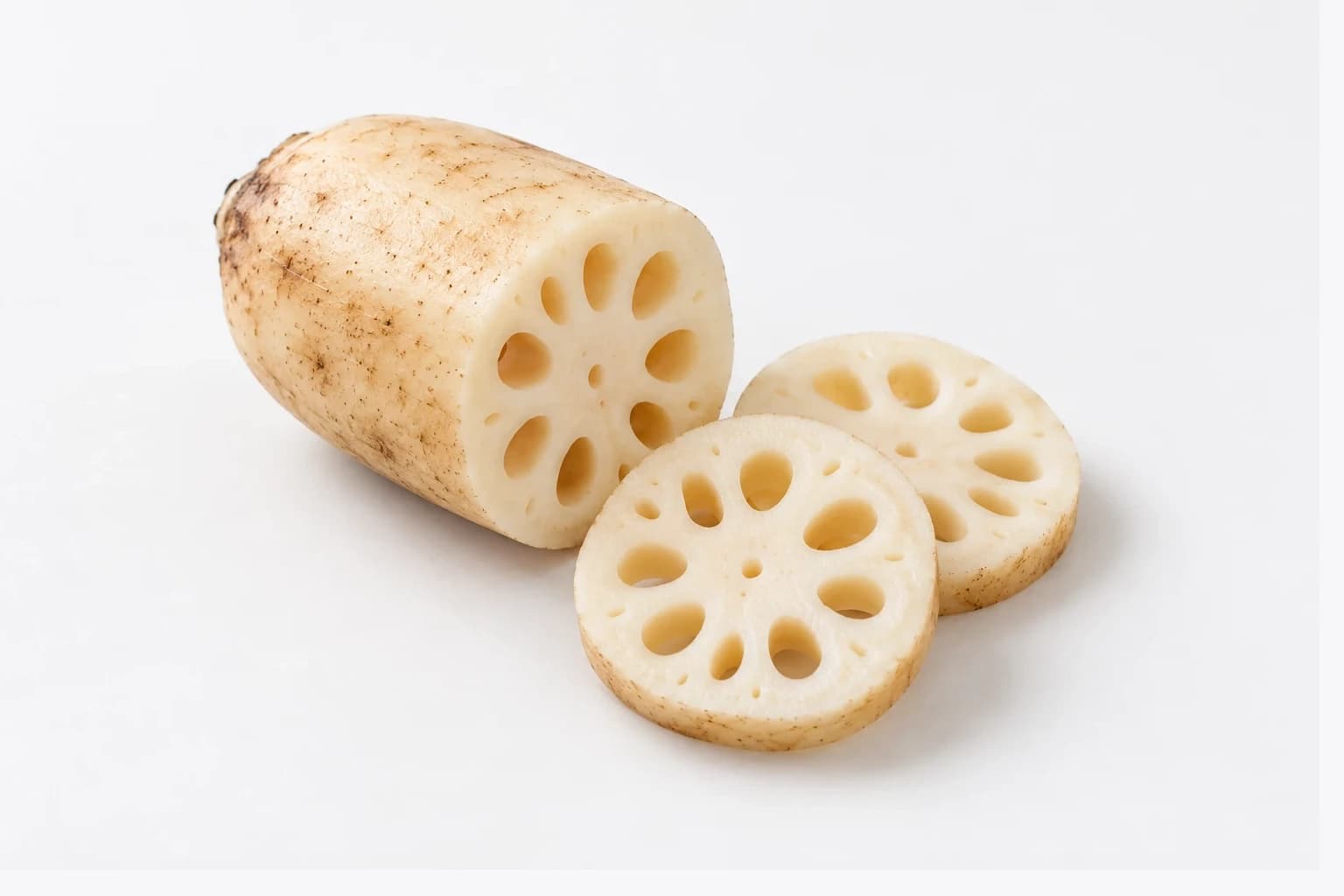
Vegetables
Nutrition dataLotus root
Raw lotus root carries 44 mg of vitamin C, 556 mg of potassium and 4.9 g of fibre per 100 g. But it is almost always eaten cooked, so you do not take that 44 mg across intact.
Perilla oil must not be heated and lotus root must be cooked. This recipe resolves that by sequence — blanch, take it off the heat, then dress.
2 servings15 min
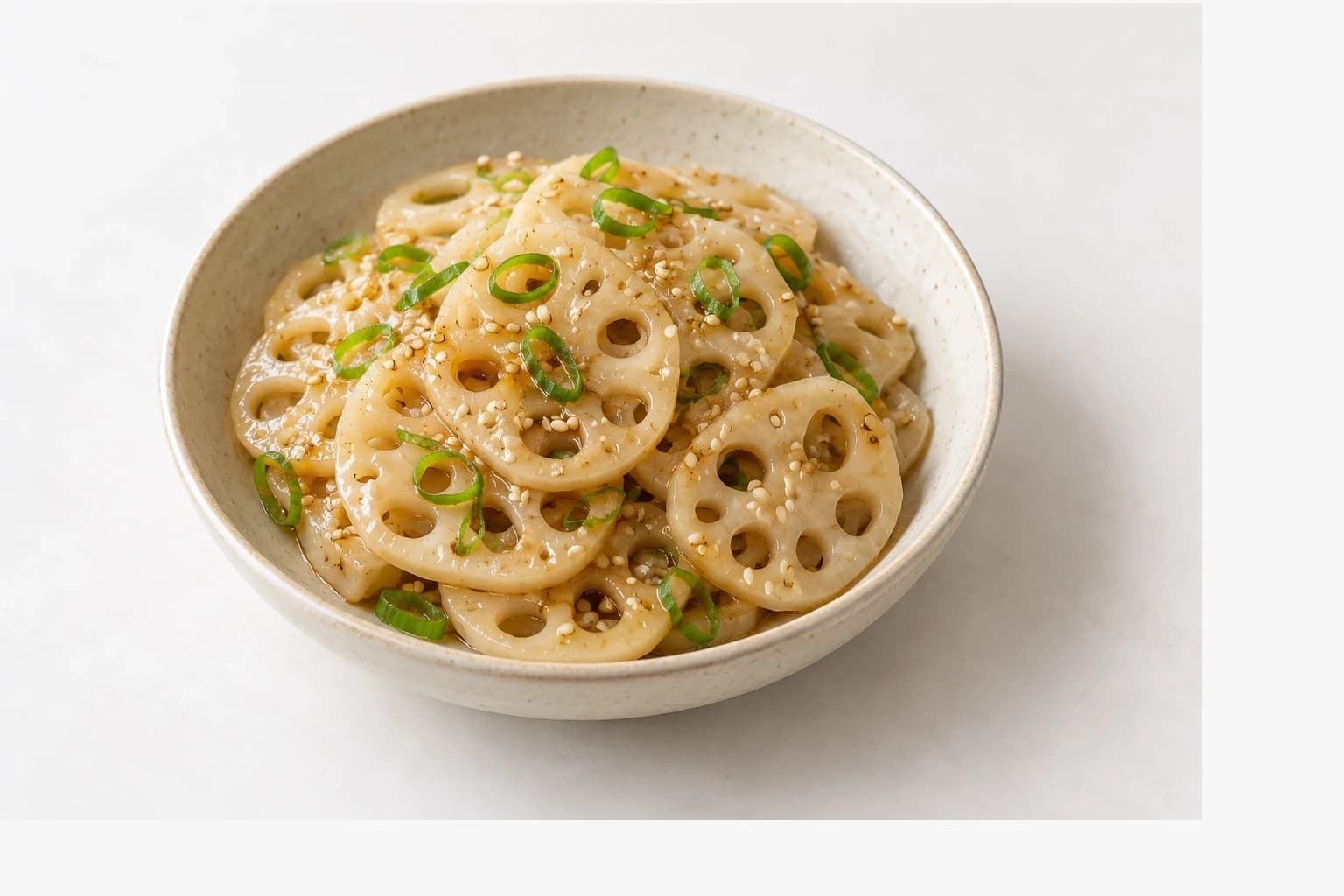
Peel the lotus root, slice it 3 mm thick and drop it straight into cold water with a tablespoon of vinegar.
Take it out within 10 minutes. A longer soak leaches vitamin C and potassium into the water.
Blanch in salted boiling water for 2 to 3 minutes only — enough to leave the crunch.
Drain and dry it well. Water left on it makes the perilla oil sit on the surface instead of coating.
With the heat completely off, toss the lotus root in a bowl with 1½ tbsp of perilla oil, 1 tsp of soy sauce and salt.
Crush the sesame seeds between your fingers as you scatter them and finish with spring onion.
This recipe resolves two opposing requirements by ordering them.
Lotus root must be cooked. Lotus grows in water, and freshwater aquatic plants can carry the encysted larvae of parasites such as Fasciolopsis buski. Thin raw lotus root salads come and go in fashion; this site does not recommend them.
Perilla oil must not be heated. Its alpha-linolenic acid has three double bonds, which makes it among the fastest-oxidising fats of any culinary oil, and its smoke point is low. Use it in a stir-fry and you lose the aroma and the ALA together.
So: blanch, kill the heat, then dress. The lotus root is cooked and the perilla oil never meets a flame.
The vinegar water does two jobs.
Cut lotus root browns because polyphenol oxidase goes to work. It is not spoilage but it looks poor. Acid lowers the enzyme's activity, keeping the colour white, and it reduces the astringent tannins at the same time.
But do not exceed ten minutes. Vitamin C and potassium are water-soluble and leach out. The 44 mg of vitamin C and 556 mg of potassium in 100 g of raw lotus root are the point of this dish; a long soak throws them away.
The 2-to-3-minute blanch has the same reasoning. Vitamin C is heat-sensitive, and a short blanch is what leaves the crunch. Boiled long it turns soft and floury — a texture that belongs in a braise.
Why it has to be dried well. Perilla oil does not mix with water. Left wet, the oil sits on top and the flavours stay separate.
Per serving:
| Per serving | |
|---|---|
| Lotus root 125 g | 93 kcal, fibre 6.1 g, vitamin C 55 mg (before cooking), potassium 695 mg |
| Perilla oil ¾ tbsp | about 93 kcal |
| Sesame seeds ½ tbsp | about 26 kcal |
| Total | about 210 kcal, fibre around 6 g |
The vitamin C is labelled "before cooking". It falls during soaking and blanching, and this site does not hold evidence to put a surviving figure on it.
Potassium at 695 mg is fairly high. People with reduced kidney function sometimes restrict potassium; talk to your clinician.
Follow the storage rules for perilla oil. Buy small bottles, refrigerate once opened, and use within a month or two. If it smells stale or like paint, throw it out. Rancid perilla oil erases the entire point of this dish.
Crush the sesame seeds between your fingers as you scatter them. The hull has to break for the aroma to come out; whole seeds pass through largely undigested.
Vegetables
Nutrition dataRaw lotus root carries 44 mg of vitamin C, 556 mg of potassium and 4.9 g of fibre per 100 g. But it is almost always eaten cooked, so you do not take that 44 mg across intact.
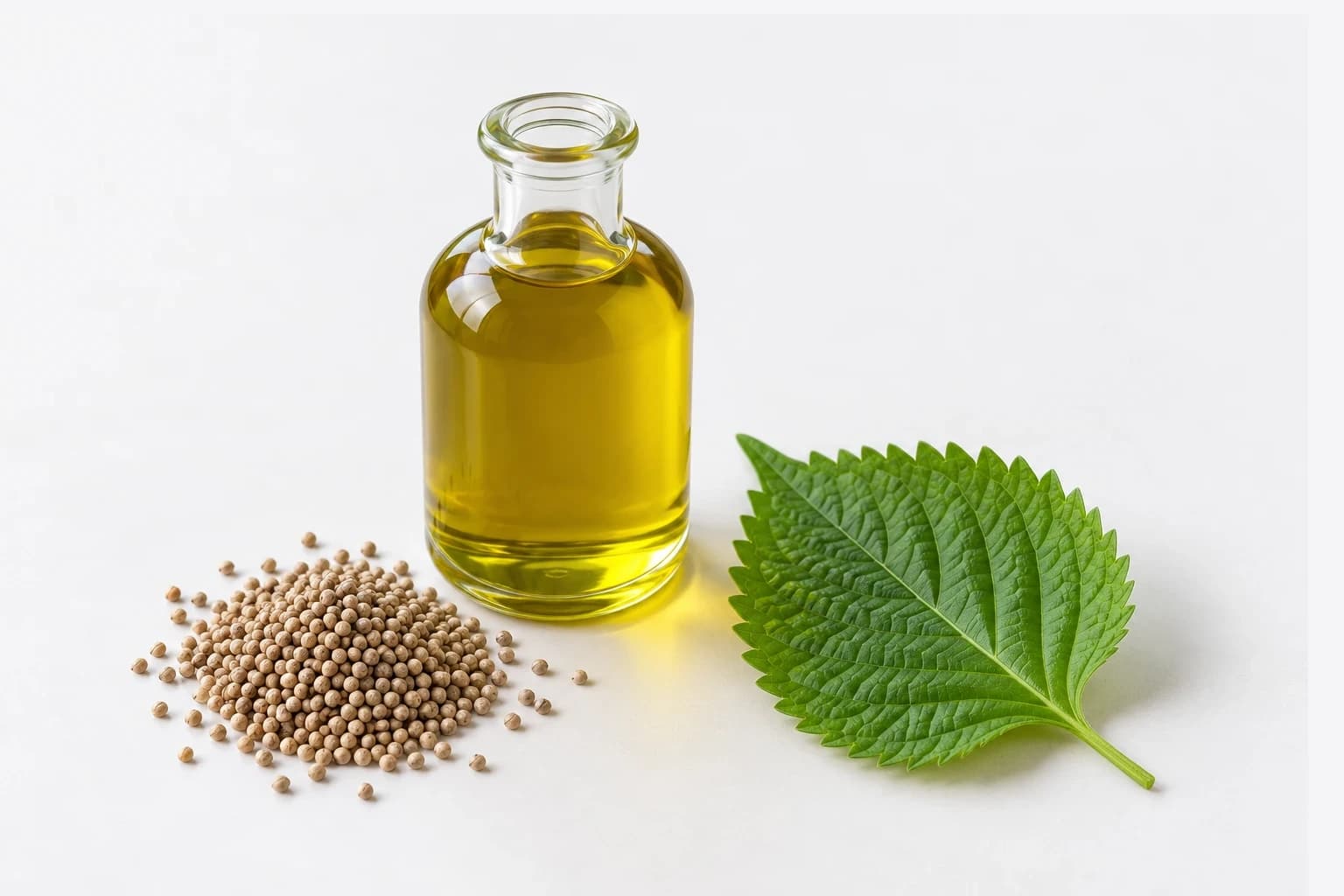
Oils & fats
Early researchIn a double-blind trial following 52 people for 12 months, a bone resorption marker fell. But what was measured was not bone mineral density — it was a heel ultrasound — and there were 52 participants.
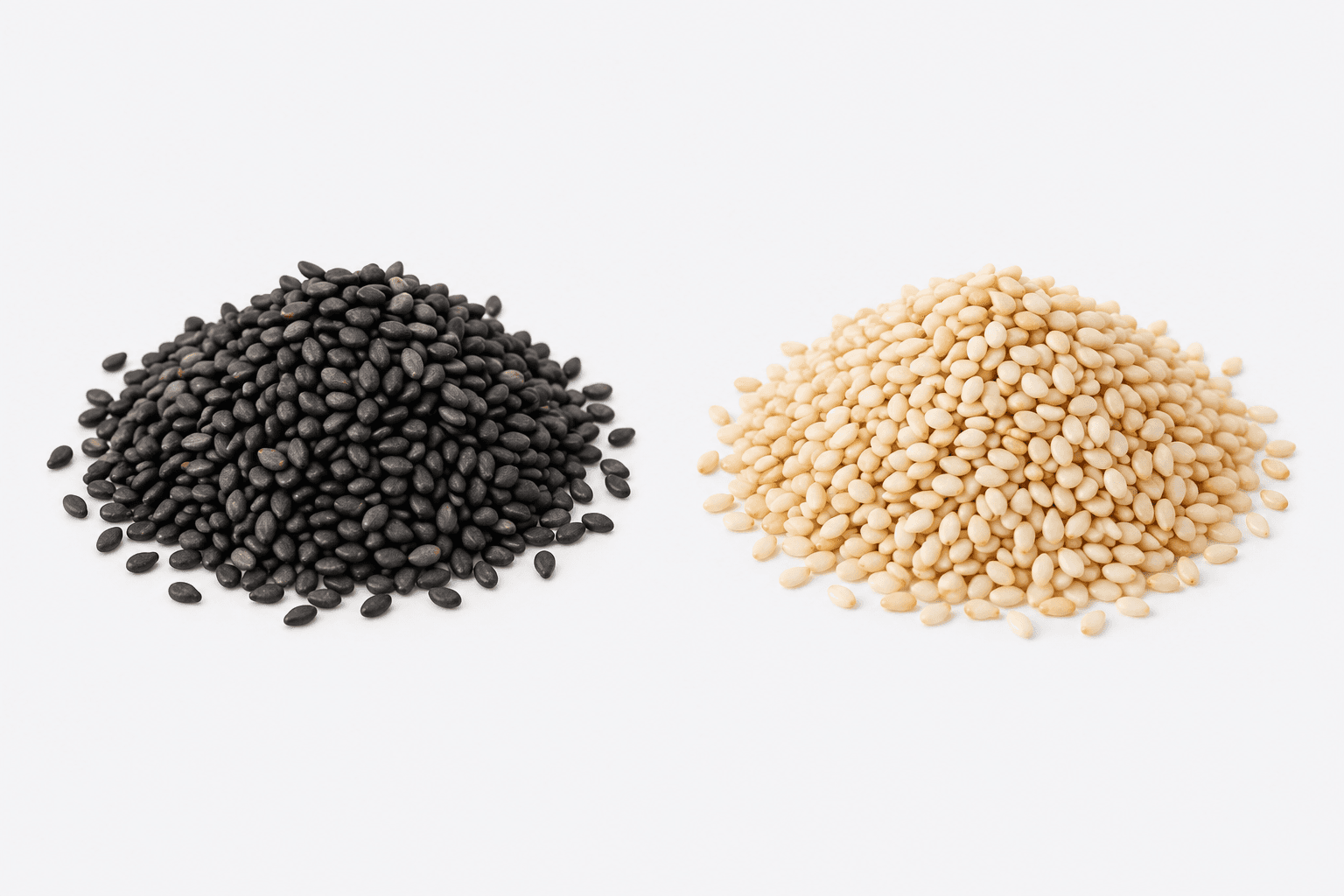
Nuts & seeds
Nutrition dataWhole sesame carries 975 mg of calcium per 100 g, far ahead of milk. Hull it and the figure drops to around 60 mg.