Contents
What it is
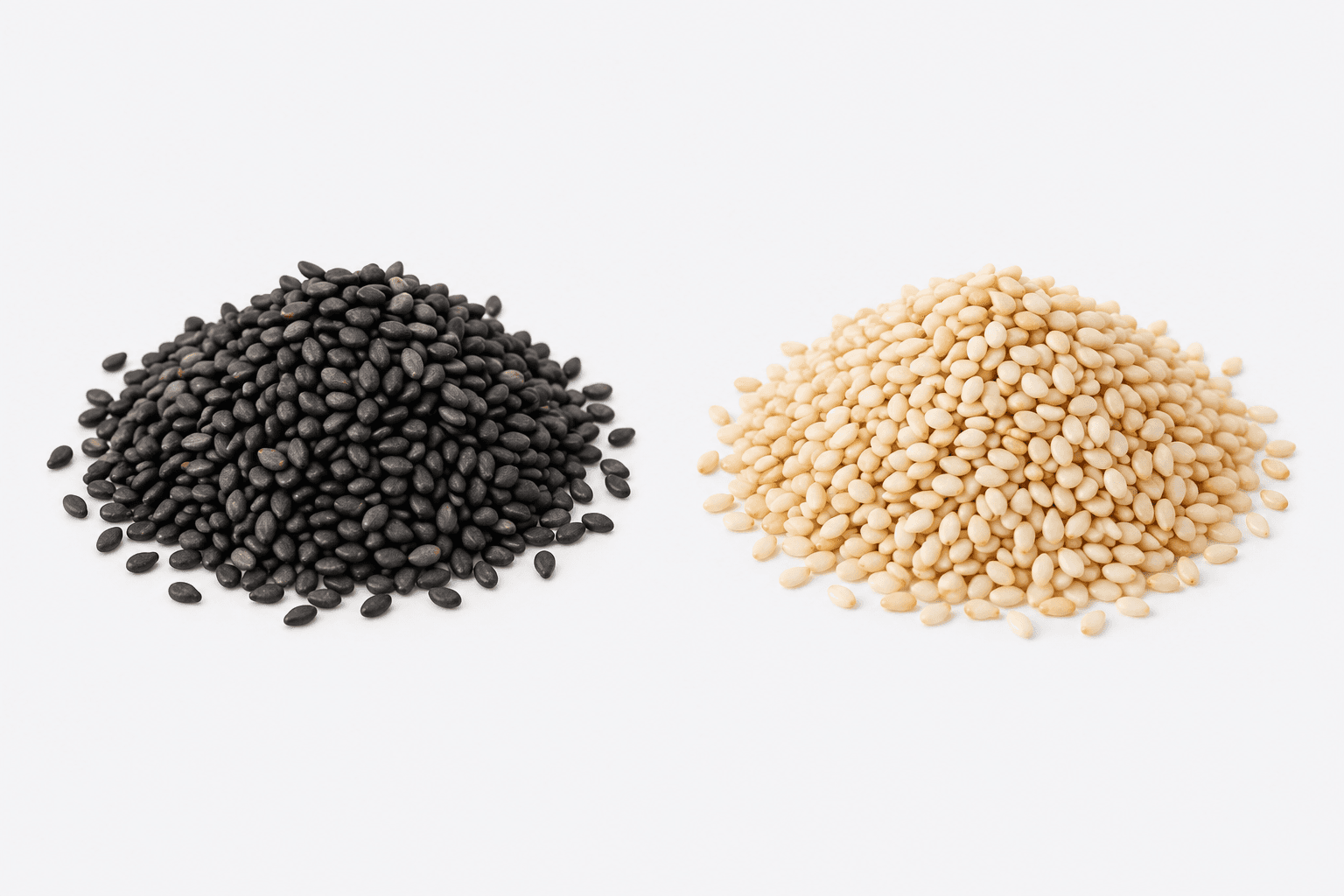
Sesame is the seed of an annual in its own family, thought to be native to Africa and among the oldest oilseed crops ever grown. When the pod ripens it splits open on its own and flings the seeds out, which is said to be where the phrase open sesame comes from. The seeds are tiny and hard-coated, so whole they pass largely undigested; toasting and then crushing or grinding them raises both the aroma and what the body can take up. Toasting lifts the aroma greatly but also makes the oil more prone to going rancid.
Scientific name Sesamum indicum
The calcium figure for sesame is striking: 975 mg per 100 g, more than eight times milk's 113 mg.
But the number comes with a condition. Almost all of that calcium sits in the hull. Hulled white sesame falls to around 60 mg per 100 g — a sixteen-fold difference. If you are eating sesame for calcium, which sesame matters first.
And a serving is one tablespoon, about 9 g, which is easy to forget.
Key benefits
- Nutrition data
Very high calcium density when unhulled
975 mg per 100 g with the hull on. Converted to a tablespoon (9 g) that is about 88 mg, short of a cup of milk (200 ml, roughly 226 mg). The density is high; the amount you actually get in one sitting is not.
- Nutrition data
Sesamin and sesamolin slow the fat from going rancid
These lignans are particular to sesame, and they are why sesame oil resists rancidity better than other vegetable oils. Human trials have found improvements in blood lipids, but they are small and not conclusive.
- Nutrition data
Iron and zinc alongside
Unhulled sesame holds 14.6 mg of iron and 7.8 mg of zinc per 100 g. This is non-heme iron, though, with low absorption — and sesame's own phytate and oxalate hinder it further. Pairing with vitamin C helps.
- Nutrition data
Toasting brings out both aroma and availability
The hull is tough enough that whole seeds pass straight through. They need to be toasted and lightly crushed, or thoroughly chewed, for the contents to be released. Toasting also creates the compounds behind the nutty aroma.
How to eat it well
- For calcium, choose unhulled seed — black or brown sesame. Polished white seed has lost most of it.
- Grind just before eating. Whole seeds pass through undigested.
- Keep toasted sesame sealed and refrigerated. At 49.7 g of fat it turns rancid easily at room temperature.
- Sesame oil has a low smoke point. It is a finishing oil, not a frying oil.
- A tablespoon over vegetables, salad or oatmeal is the realistic amount.
How to read the grades
Each benefit carries a label showing how far research on people supports it. Grades differ between items even within the same ingredient.
- Nutrition data
- A fact verifiable from food composition databases or health authorities. This is a different kind of statement from a clinical effect.
- Strong evidence
- Consistently confirmed across randomised controlled trials or meta-analyses.
- Moderate evidence
- Human studies exist, but effect sizes are small or results are mixed.
- Early research
- Cell or animal work, or small preliminary studies.
- Not established
- Commonly claimed, but not confirmed in studies on people.
What to watch out for
- Sesame is a major allergen, subject to mandatory labelling in several countries, and reactions can be severe.
- It carries 573 kcal per 100 g. A tablespoon is about 52 kcal, which accumulates if you pour generously.
- It contains oxalate. Avoid large amounts with a history of kidney stones.
- Sesame oil does not carry the seed's nutrition across. Calcium, protein and fibre barely survive into the oil.
- There is little evidence that black sesame beats white outright. The difference comes mostly from the hull.
Nutrition
Per 100 g of unhulled whole sesame seeds. A realistic serving is one tablespoon (about 9 g), so do not read these figures as an intake.
- Calories
- 573 kcal29%
- Carbohydrates
- 23.4 g9%
- Fiber
- 11.8 g42%
- Protein
- 17.7 g35%
- Fat
- 49.7 g64%
- Calcium
- 975 mg75%
- Iron
- 14.6 mg81%
- Magnesium
- 351 mg84%
- Zinc
- 7.8 mg71%
Percentages are of the US FDA Daily Value for adults and children 4 and over. National reference intakes differ by sex and age.
Calculate this alongside other ingredients →
Key nutrients
Dishes with this ingredient
Sources
The databases and health authorities this article's nutrition figures and health statements draw on.