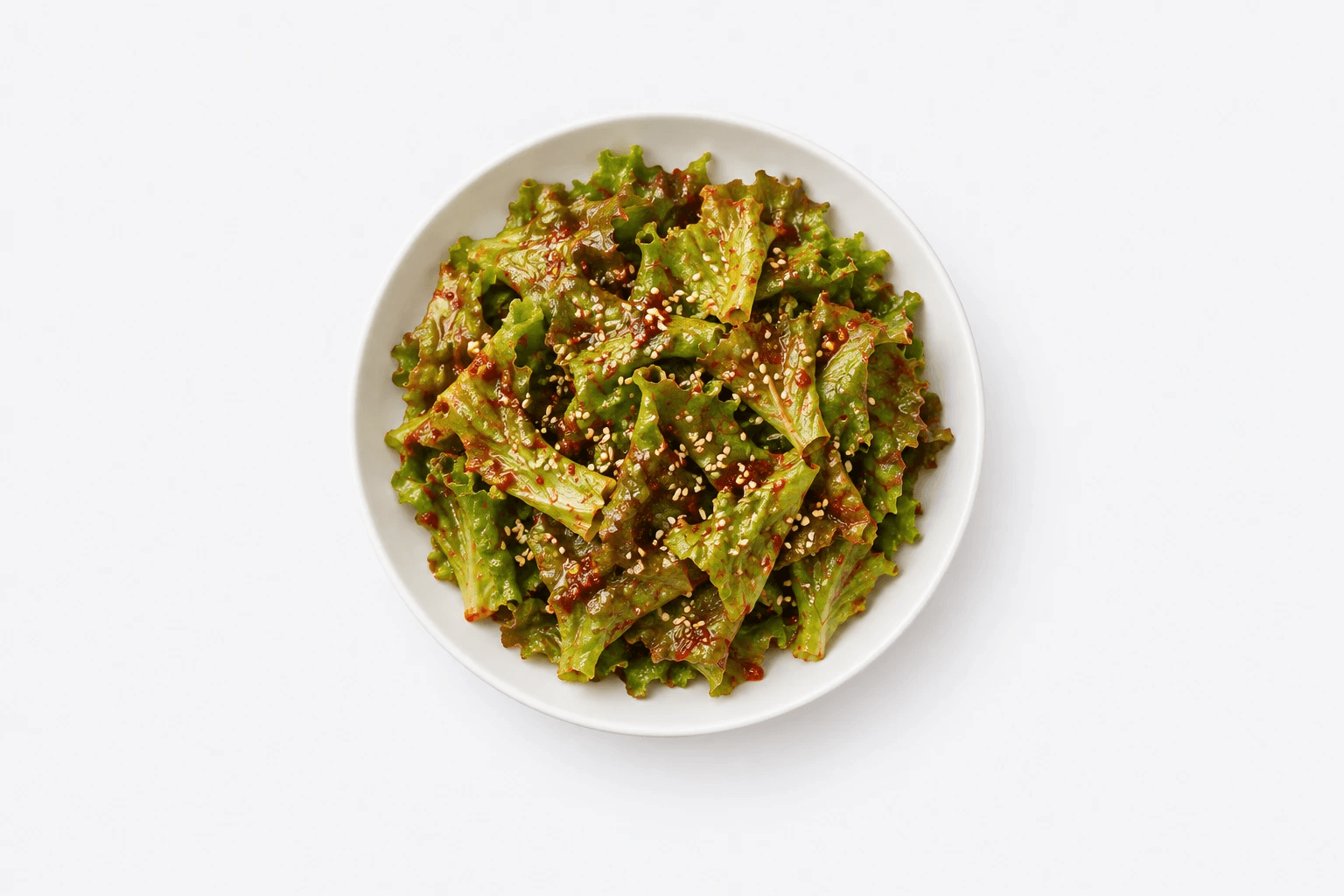
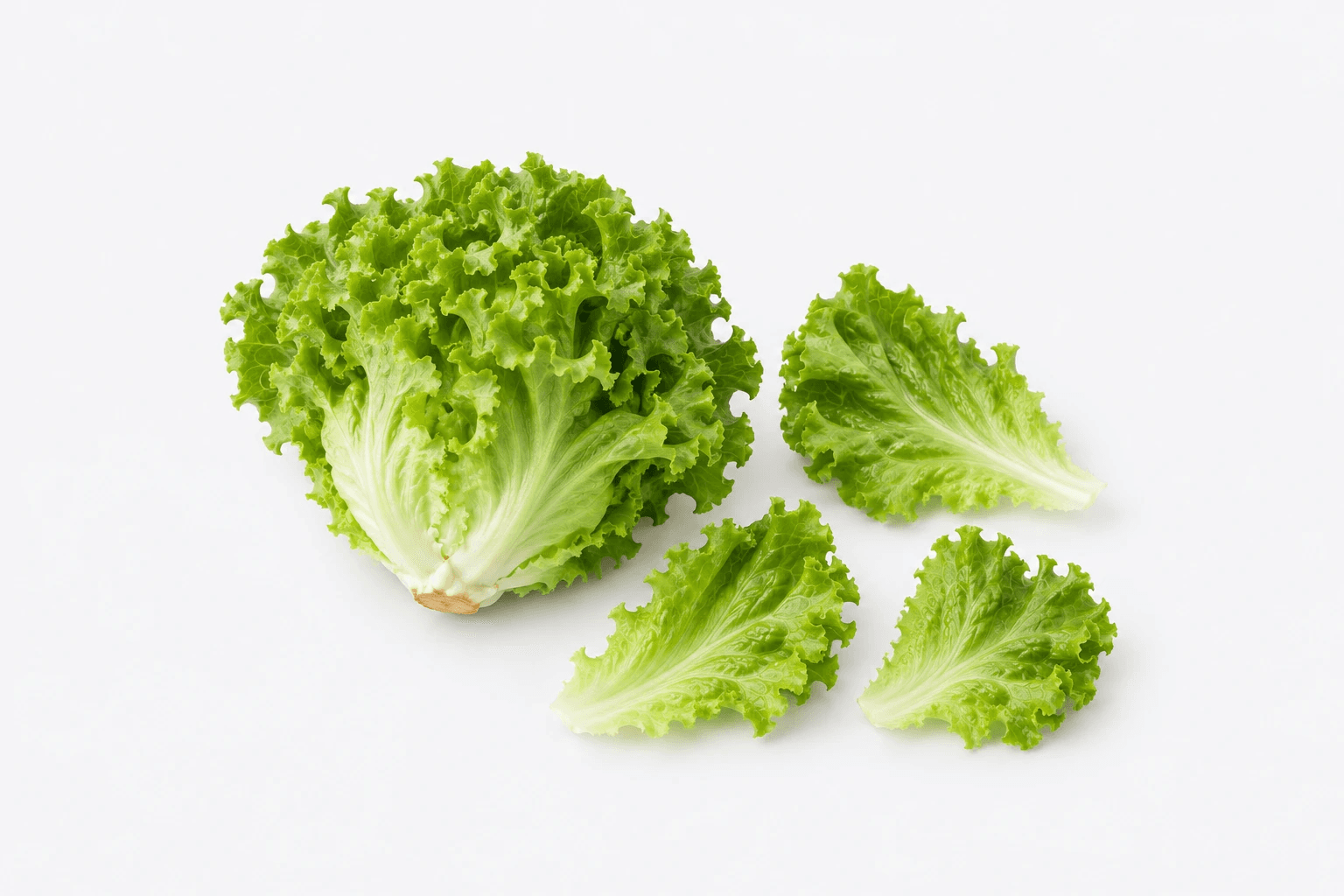
The purpose of this dish is to eat more lettuce.
As a wrap at a barbecue table, lettuce comes to two or three leaves, 10–15 g a meal. Dressed like this, the same meal carries 50 g.
What those 50 g bring:
| 100 g | One serving (50 g) |
|---|
| Energy | 15 kcal | 8 kcal |
| Vitamin A | 370 µg RAE | 185 µg |
| Folate | 38 µg | 19 µg |
| Fibre | 1.3 g | 0.65 g |
185 µg of vitamin A is a little over 20% of an adult's requirement. For something attached to 8 kcal, that is a good trade.
Using no heat is the point. Lettuce's folate and vitamin C are heat-sensitive, and no flame touches this dish.
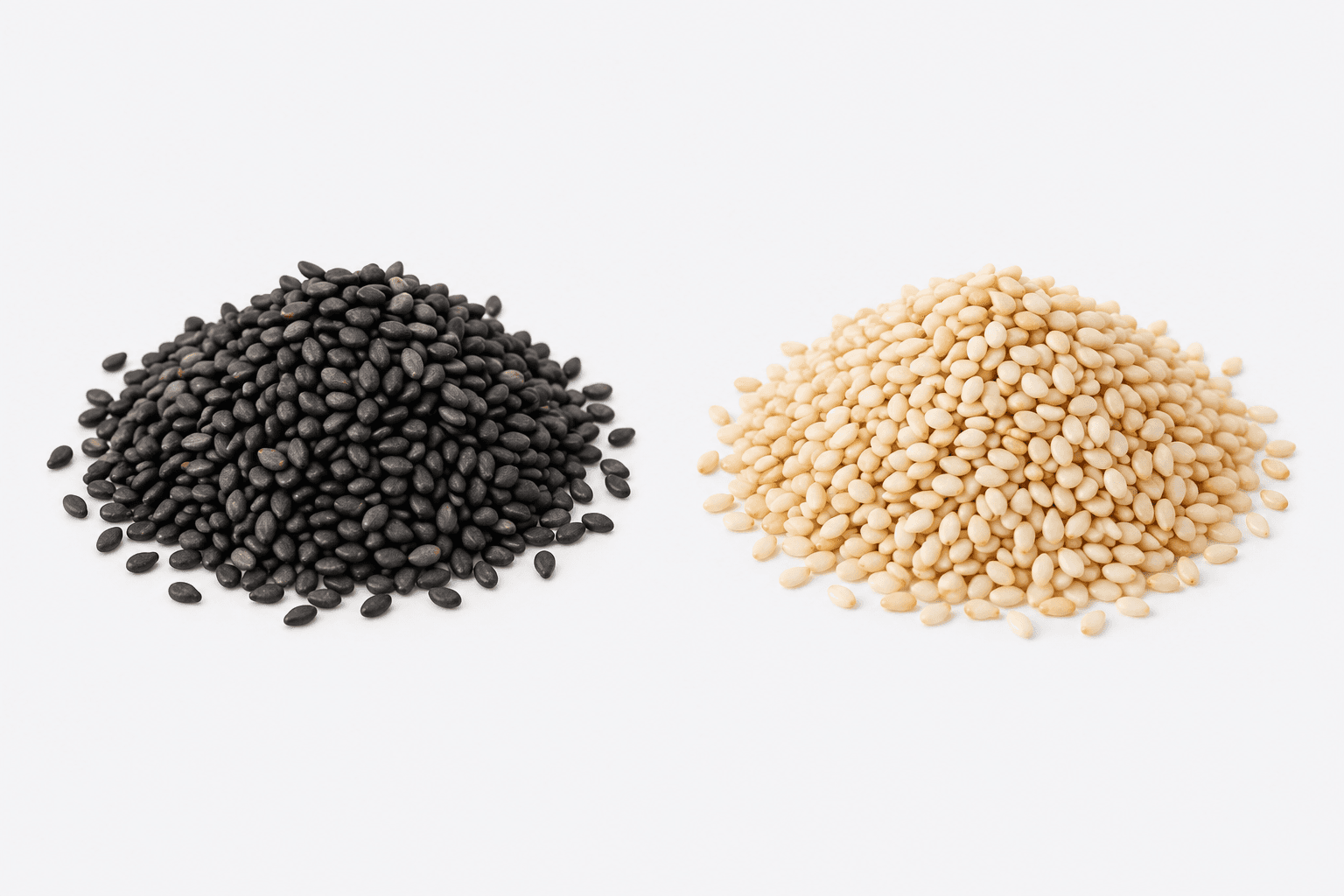
The sesame oil is not only for flavour. Lettuce's vitamin A (as beta-carotene) and vitamin K are fat-soluble, and absorption falls without fat. A teaspoon is enough — more and the leaves go heavy.
Why tear by hand. Cut surfaces brown on contact with air. A knife slices cells open in one clean line and exposes the enzymes all at once; tearing splits along the cell walls and leaves a less even face. The taste difference is small, but it holds its looks longer.
Why mix the dressing first. Poured straight onto leaves, soy sauce salts one spot and leaves the rest bland. Make the liquids uniform, then add the leaves.
A teaspoon of soy sauce instead of salt is about sodium: it carries roughly 300 mg, which across two servings is 150 mg each. To push the flavour, add vinegar rather than soy sauce — sourness covers for missing salt.
Why eat it immediately. Osmosis starts the moment salt touches the leaf. Five minutes brings water out; ten minutes and it has wilted. Dress it after everything else is on the table.
The claim that lettuce makes you sleepy is handled in the lettuce entry. In short, the sleep trials used a cultivar-specific extract capsule and seeds, not the leaf. If a plate of this makes you drowsy, the likelier causes are the size of the meal and what came with it.