Contents
What it is
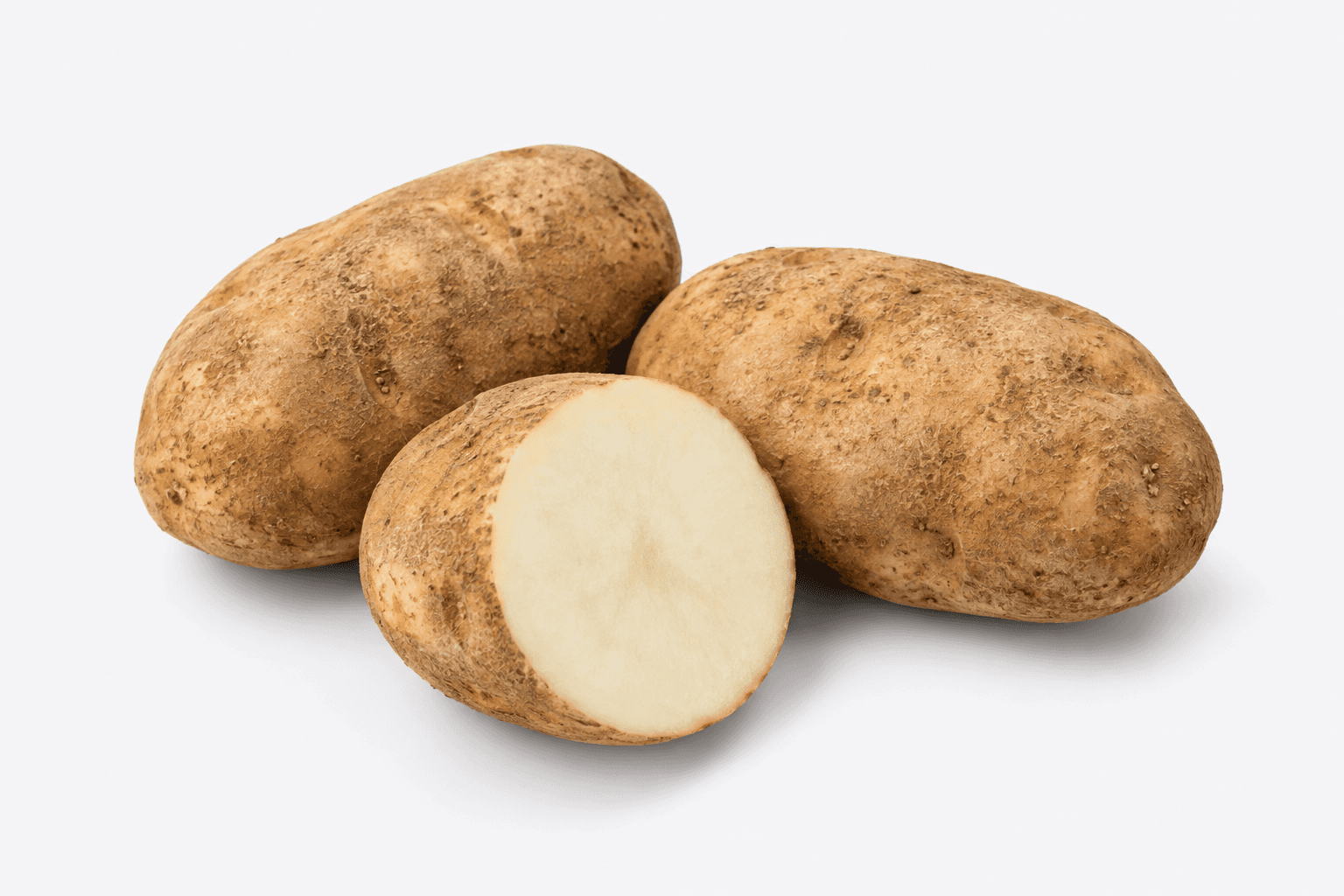
The potato is the tuber of a nightshade — not a root but a stem that swells underground — and a relative of tomato, aubergine and chilli. It is native to the Andes of South America and reached Europe in the sixteenth century. Exposed to light the skin greens and solanine, a toxic compound, builds up, so potatoes are kept dark and any green patches and sprouts are cut away. They divide by starch content into floury and waxy types: floury ones mash well, waxy ones hold their shape in a braise.
Scientific name Solanum tuberosum
Potatoes get called fattening and blood-sugar-spiking. A large 2024 analysis split that claim in two.
Taken as a whole, potato intake showed no significant association with type 2 diabetes risk. What did carry risk was fried potato — a hazard ratio of 1.12 above one serving a week.
Same vegetable. Boiled versus fried is what separated them.
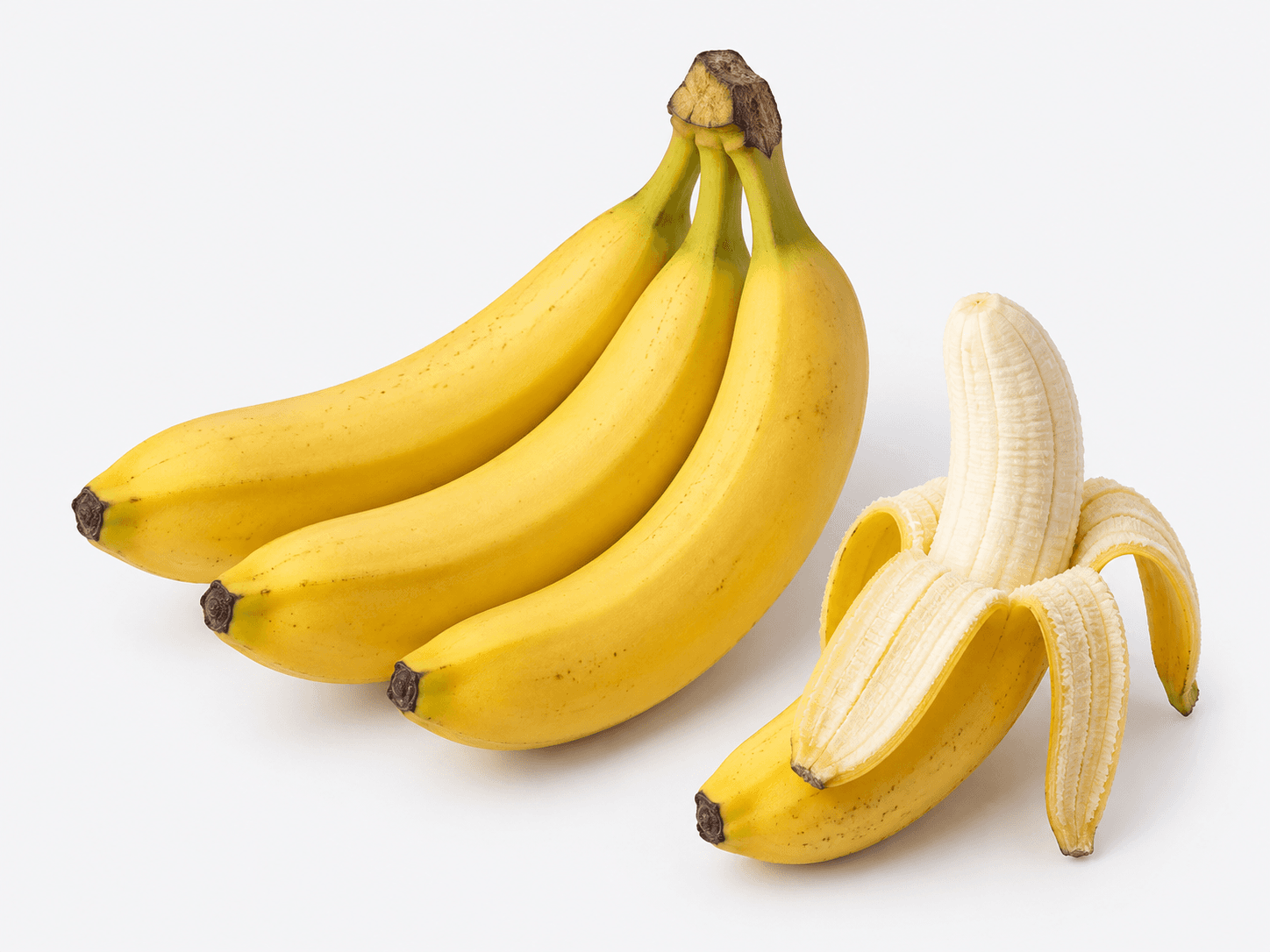
Nutritionally the potato does well. Potassium is 425 mg per 100 g, more than a banana's 358 mg, and vitamin C at 19.7 mg is respectable for a vegetable. Raw, it is 77 kcal — below cooked rice at 130 kcal.
The problem is that potatoes usually arrive at the table having met oil and salt.
Key benefits
- Moderate evidence
Potato itself showed no diabetes association — only fried potato did
[1]This is a prospective cohort analysis published in 2024. The results split along cooking method.
- Total potato intake: no significant association with type 2 diabetes risk
- Fried potato: hazard ratio 1.12 above one serving a week (95 % CI 1.03–1.22)
- Boiled or baked potato showed no significant increase in risk
Why the split? Partly the oil and calories that frying adds; partly the whole eating pattern that comes with frequent fried potato. Being observational, this analysis cannot say how much of each.
A qualifier belongs here. Cohort studies do not randomise, so other differences between people who eat fried potato often and people who do not get mixed into the result. The researchers adjusted for many of them, but adjustment does not remove them entirely.
Still, the practical implication is clear. This is not a reason to drop potatoes; it is a reason not to fry them.
- Nutrition data
More potassium than a banana
Potato holds 425 mg of potassium per 100 g — more than a banana's 358 mg. A medium potato (170 g) gives 723 mg, 21 % of the adult adequate intake of 3,500 mg.
Potassium works to shed sodium and so bears on blood pressure. Average sodium intake in Korea runs far above the recommendation, and in that context a potassium source counts.
Cooking method splits the outcome here too. Potassium dissolves readily in water, so peeling, dicing and boiling sends a good share of it down the drain. Steaming or baking whole, skin on, loses far less.
The opposite caution matters as well. People with reduced kidney function need to limit potassium. For them the recommendation runs the other way: dice the potato, soak it and boil it, deliberately leaching potassium out.
Vitamin B6 is 0.298 mg, around 20 % of the adult requirement per 100 g.
- Nutrition data
A rare starchy food that still carries vitamin C
Potato holds 19.7 mg of vitamin C per 100 g. Less than an orange's 53 mg, but potatoes are eaten in quantity — a medium one gives 33 mg, a third of the 100 mg adult requirement.
Historically this was the potato's role: in places where fresh fruit was scarce, potatoes held off scurvy.
Vitamin C is heat-sensitive. Boiling costs 30–50 %, plus whatever leaches into the water. Steaming or baking in the skin does better.
The starch deserves a word. A potato's glycaemic index varies widely with variety and preparation — mashed runs high, boiled and then cooled runs lower. Cooling converts some starch into resistant starch, which digests slowly. That is why potato salad produces a gentler blood sugar response than mash.
That said, clinical evidence for the health effects of resistant starch is still limited. A flatter glucose response is the part that is established.
How to eat it well
- Steam or bake with the skin on. It loses the least potassium and vitamin C, and the fibre is concentrated in the skin.
- Not frying is the practical conclusion of this page. Fried potato was the only form that carried risk in the study above.
- Boil, then cool for potato salad, and the blood sugar response flattens.
- Season with something other than salt. Most of the sodium in a potato dish is added afterwards.
- Potato instead of rice is about half the calories for the same weight. Increase the portion and that advantage disappears.
- If you must peel, peel thin. The nutrients concentrate just beneath the skin.
How to read the grades
Each benefit carries a label showing how far research on people supports it. Grades differ between items even within the same ingredient.
- Nutrition data
- A fact verifiable from food composition databases or health authorities. This is a different kind of statement from a clinical effect.
- Strong evidence
- Consistently confirmed across randomised controlled trials or meta-analyses.
- Moderate evidence
- Human studies exist, but effect sizes are small or results are mixed.
- Early research
- Cell or animal work, or small preliminary studies.
- Not established
- Commonly claimed, but not confirmed in studies on people.
What to watch out for
- Cut away any green parts and sprouts. They hold glycoalkaloids such as solanine, which in quantity cause nausea, vomiting and neurological symptoms. Cooking does not break them down well.
- Store cool and dark. Light drives the greening. Refrigeration is not recommended — cold raises sugar content, which produces more acrylamide on frying.
- Keep fried potato under once a week, the threshold in the study above.
- If kidney disease has you limiting potassium, potato needs care. Discuss preparation with your clinician.
- Crisps and chips bring sodium along with them. Check the sodium figure on the label.
Nutrition
Per 100 g of raw potato, flesh and skin. A medium potato is about 170 g. Frying multiplies the calories three- to fourfold for the same weight.
- Calories
- 77 kcal4%
- Protein
- 2.05 g4%
- Carbohydrates
- 17.5 g6%
- Fiber
- 2.1 g8%
- Potassium
- 425 mg9%
- Vitamin C
- 19.7 mg22%
- Vitamin B6
- 0.298 mg18%
- Magnesium
- 23 mg5%
Percentages are of the US FDA Daily Value for adults and children 4 and over. National reference intakes differ by sex and age.
Calculate this alongside other ingredients →
Key nutrients
Dishes with this ingredient
Compare with
Sources
The databases and health authorities this article's nutrition figures and health statements draw on.
- 1Potato Consumption and Risk of Type 2 Diabetes Mellitus: A Harmonized Analysis of 7 Prospective CohortsSystematic reviewsDjousse L, et al. J Nutr 2024PMID 39289134
- 2USDA FoodData CentralFood composition database
- 3MFDS Food Composition Database · 식품안전나라Food composition database
- 4NIH Office of Dietary SupplementsHealth authority
- 5PubMedResearch literature