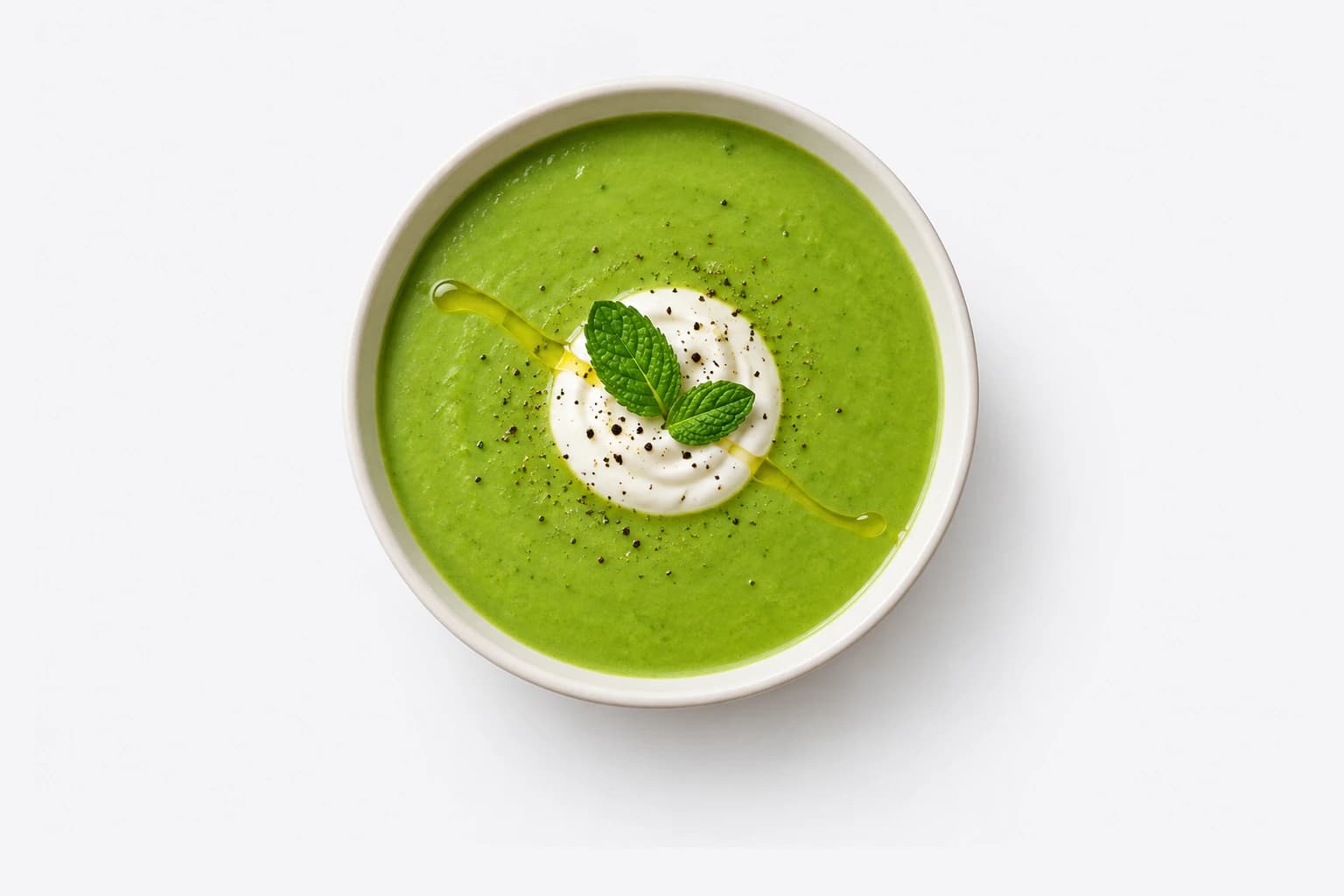
This recipe is designed around the fact that soup is unkind to nutrients.
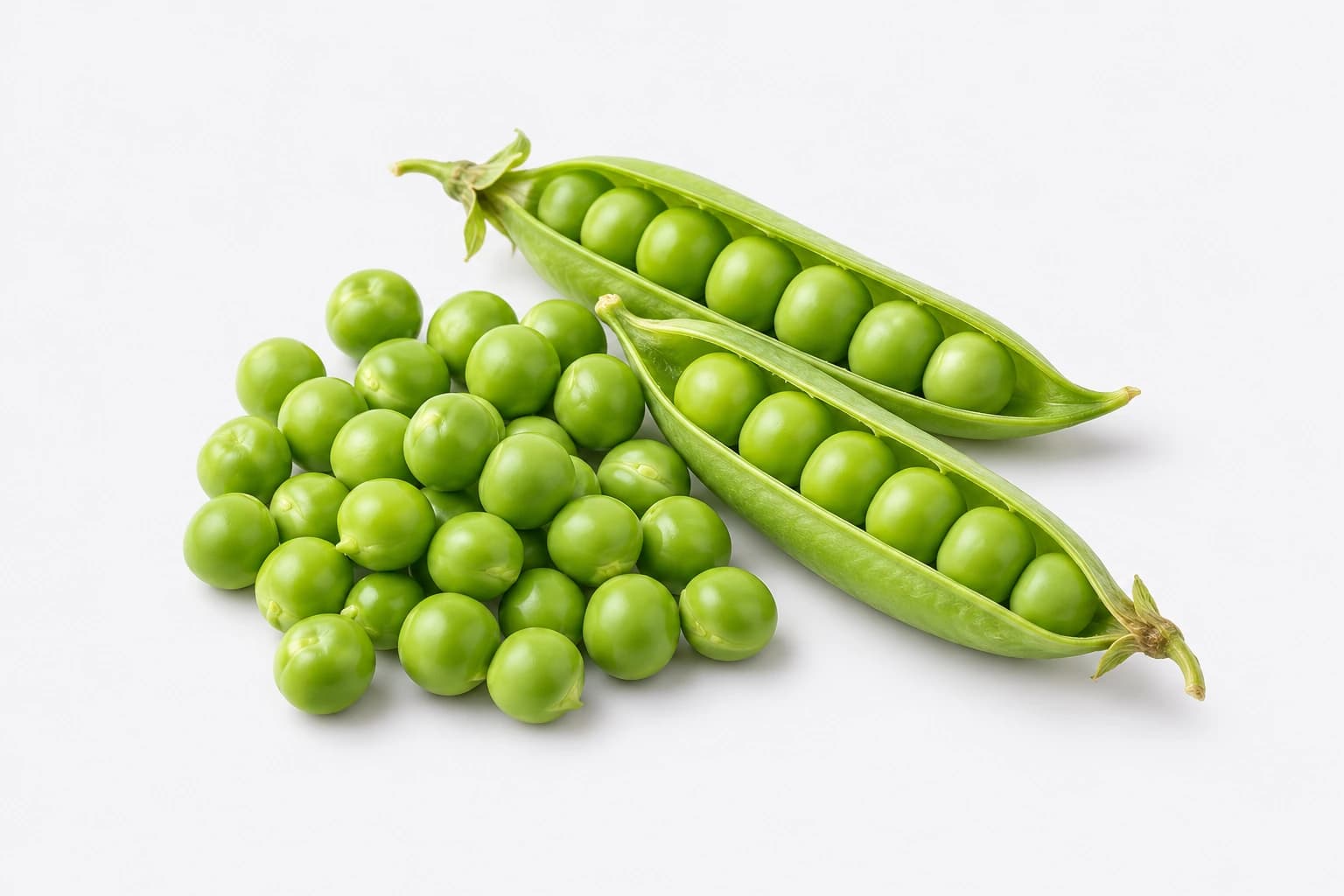
Green peas carry 40 mg of vitamin C per 100 g. That is 40% of the adult recommendation, and vitamin C is heat-sensitive and water-soluble. Soup is both — long cooking and plenty of water.
So two devices are built in.
First, the peas' boiling time is held to three minutes. The potato cooks for ten minutes first; the peas only enter for the last three. That loses less vitamin C than the usual order, where peas and potato go in together for thirteen.
Second, the cooking water is not thrown away. The vitamin C and potassium that leached out are in that water. A soup is a method that eats the water too, and that is its advantage — better in this respect than blanching and draining.
Even so, be honest: it is less than raw peas. Three minutes is still heat, and blending exposes the soup to oxygen. Soup is good as soup; if the aim is to keep the most vitamin C, blanch them and eat them in a salad instead.
Per serving:
| Per serving |
|---|
| Peas 150 g | 122 kcal, protein 8.1 g, fibre 8.6 g |
| Potato 60 g | about 46 kcal |
| Olive oil ½ tbsp | 60 kcal |
| Greek yoghurt 1 tbsp | about 10 kcal |
| Total | about 240 kcal, fibre around 9 g, protein around 9 g |
Nine grams of fibre is 32% of the daily value. And 9 g of protein inside 240 kcal — a rare density for a vegetable soup. It is because peas are a legume.
Why the potato.
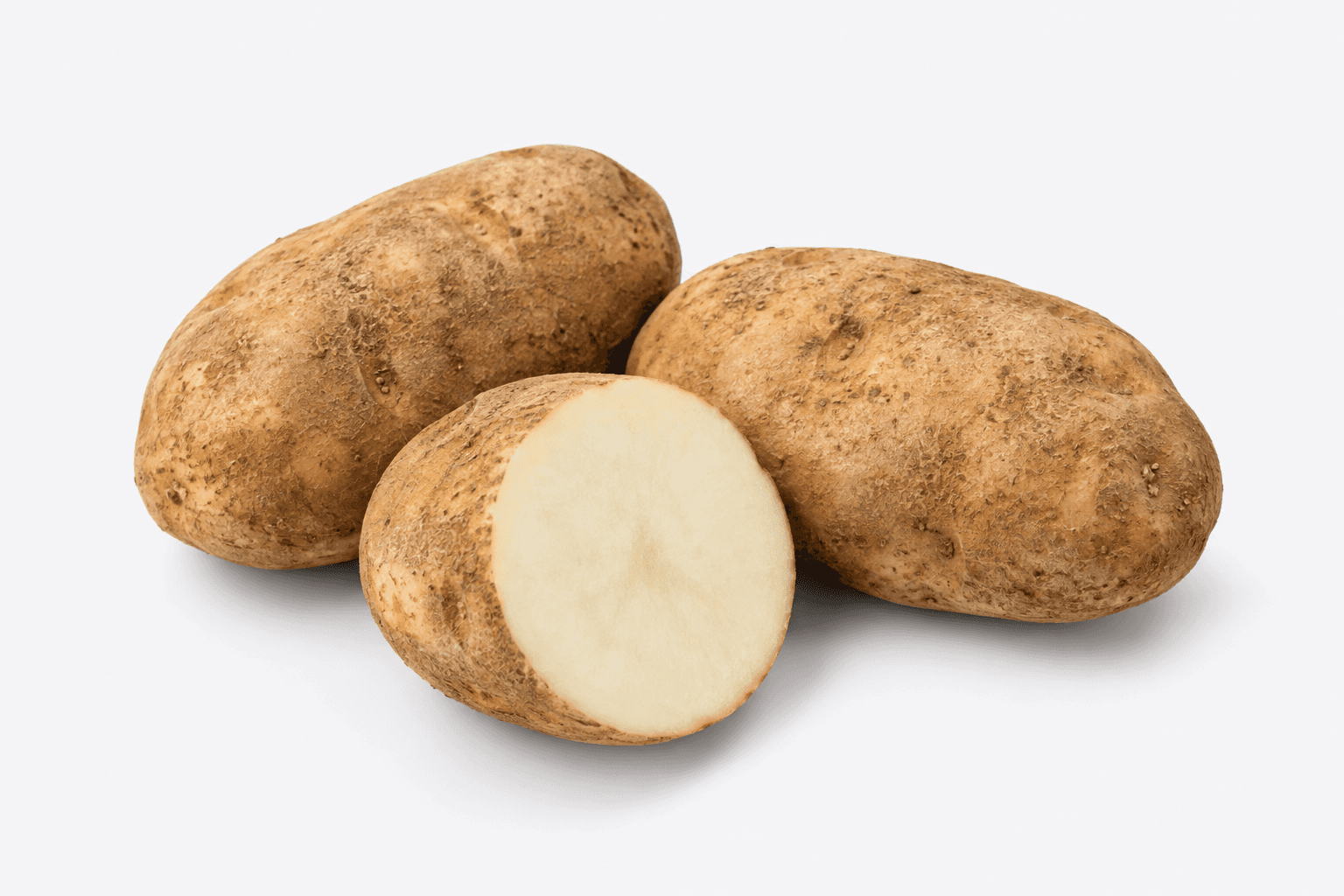
To build texture without cream or butter. The potato's starch, once blended, thickens the soup. Against a recipe with double cream, the fat and the calories drop sharply.
Why 1 cm dice. Large pieces take over 20 minutes, and the peas cannot be kept waiting that long. Diced small, it is done in ten.
Why only 30 seconds of garlic. Once garlic starts to brown it turns bitter and scorched-tasting. Lift the aroma over low heat and add the water straight away.
Why the mint goes in off the heat.
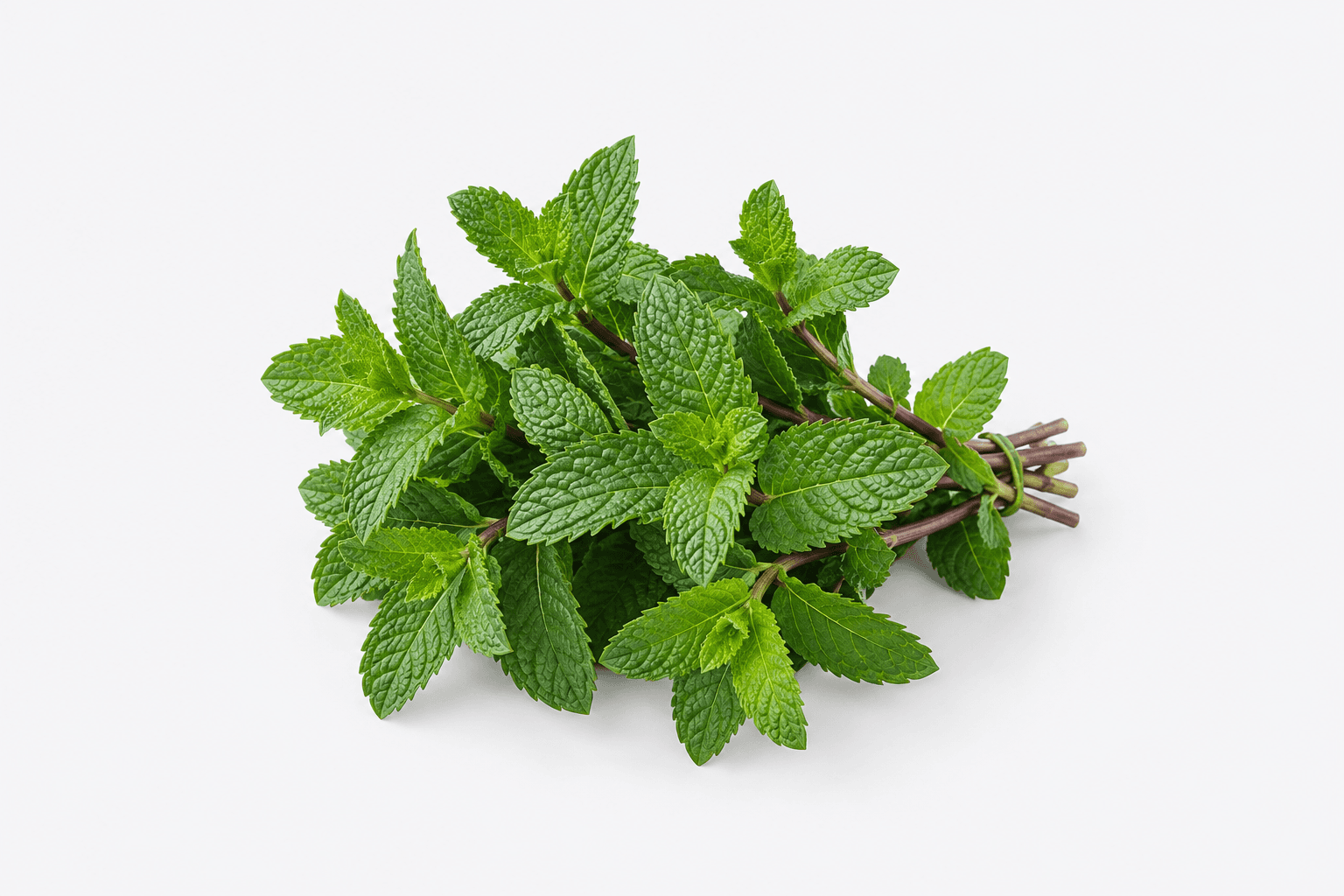
Mint's aroma is a volatile essential oil. Added to boiling liquid, it leaves with the steam. Off the heat, infused in residual warmth only, the aroma stays.
And use fresh mint. Dried mint has a different character and tastes medicinal in this soup.
Why frozen peas.
Frozen peas were blanched and flash-frozen right after harvest. Losses are small, so they sit close to fresh, and being already half-cooked, three minutes is enough. Frozen often beats out-of-season fresh peas.
Canned peas are not recommended here. They are already soft, so the texture dies, and the sodium is far higher. If you must, rinse them in a sieve and add them with the heat off.
Why the yoghurt on top. Its sourness lifts the sweetness of the peas. And the milk fat works in favour of absorbing the peas' lutein — lutein is fat-soluble. The tablespoon of olive oil does the same job.
But lutein is not a reason to call this soup good for your eyes. AREDS2, the largest trial of lutein supplementation, did not significantly reduce progression of macular degeneration in its primary analysis (hazard ratio 0.90, 95% CI 0.76 to 1.07).
With irritable bowel syndrome, cut the quantity. At 150 g of peas a serving, that is a fair amount of oligosaccharide. On a low-FODMAP diet, drop the peas to 80 g and add more potato.
It is good cold too. It thickens as it cools, so loosen it with a little water. In summer the cold version suits the mint better.