Contents
What it is
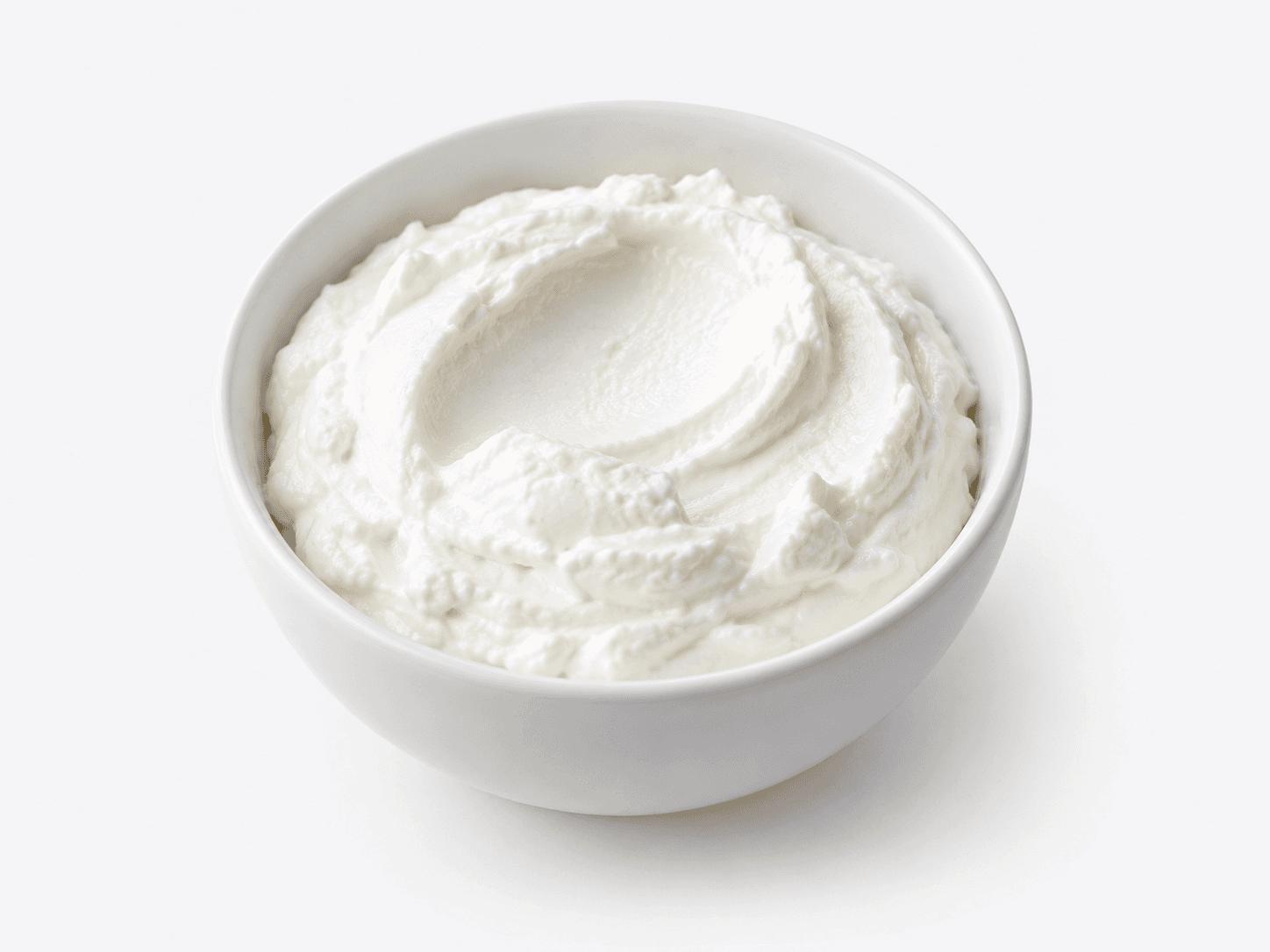
Greek yoghurt is yoghurt with the whey strained out. Up to the fermentation it is the same as ordinary yoghurt; what is added is a step of draining through cloth or spinning in a centrifuge. That leaves it thick, and weight for weight higher in protein and lower in lactose — because the lactose leaves with the whey. The sourness is more pronounced too. Some products on the shelf reach a similar thickness with added thickeners instead of straining, which the ingredient list will tell you.
The only thing that separates Greek yogurt from regular yogurt is that the whey has been strained out. No special culture, no added ingredient.
Remove the liquid and the same weight holds more solids, so protein climbs — 10.2 g per 100 g against about 3.5 g for plain yogurt, close to triple. Lactose leaves with the whey too, which is why many people find it easier on the stomach.
But the calcium dissolved in that whey leaves as well. You trade some calcium for the protein.
Key benefits
- Nutrition data
Far more protein for the same calories
Nonfat Greek yogurt runs 59 kcal and 10.2 g of protein per 100 g. That protein-to-calorie ratio keeps you full longer; trials swapping a snack for yogurt have found lower intake at the following meal.
- Nutrition data
It contains live cultures
Many products retain the bacteria used in fermentation. Trials have found benefit for antibiotic-associated diarrhoea and some digestive symptoms, but results vary greatly by strain and product. A label saying it contains cultures is not enough to predict an effect.
- Moderate evidence
Lower lactose, so often easier to digest
Fermentation breaks down part of the lactose, and straining removes more of it. People who feel uncomfortable after milk often handle Greek yogurt fine. It is not lactose-free, though.[1]
- Nutrition data
A practical way to keep up vitamin B12
B12 occurs naturally only in animal foods. At 0.75 µg per 100 g, Greek yogurt is a realistic route to maintaining it on a diet that cuts back on meat.
How to eat it well
- Buy plain, always. Sweetened tubs can exceed 10 g of sugar per 100 g. Add fruit or honey yourself and control it.
- With fruit and nuts it gains fibre, which extends the fullness.
- It does not take heat. Boiling kills the cultures and curdles the protein. In a sauce, stir it in off the heat at the end.
- If the sourness is too sharp, mash in a ripe banana instead of honey — sweetness with no added sugar.
- Used as a dressing base in place of mayonnaise, it cuts the fat dramatically.
How to read the grades
Each benefit carries a label showing how far research on people supports it. Grades differ between items even within the same ingredient.
- Nutrition data
- A fact verifiable from food composition databases or health authorities. This is a different kind of statement from a clinical effect.
- Strong evidence
- Consistently confirmed across randomised controlled trials or meta-analyses.
- Moderate evidence
- Human studies exist, but effect sizes are small or results are mixed.
- Early research
- Cell or animal work, or small preliminary studies.
- Not established
- Commonly claimed, but not confirmed in studies on people.
What to watch out for
- With significant lactose intolerance Greek yogurt may still cause symptoms. The lactose is reduced, not removed.
- Milk protein allergy is a separate matter. Unlike lactose, it does not disappear with fermentation.
- Sweetened and flavoured versions are closer to dessert. Check the sugar line on the back.
- If you are on immunosuppressive treatment, discuss live-culture products with your clinician.
- Some tubs labelled 'Greek style' are not strained at all but thickened with additives. The protein figure gives it away.
Nutrition
Per 100 g of plain nonfat Greek yogurt. Whole-milk versions run about 97 kcal, and sweetened ones carry far more sugar.
- Calories
- 59 kcal3%
- Carbohydrates
- 3.6 g1%
- Sugars
- 3.2 g
- Protein
- 10.2 g20%
- Fat
- 0.4 g<1%
- Calcium
- 110 mg8%
- Iodine
- ~42 µg28%
- Phosphorus
- 135 mg11%
- Vitamin B12
- 0.75 µg31%
Percentages are of the US FDA Daily Value for adults and children 4 and over. National reference intakes differ by sex and age.
Calculate this alongside other ingredients →
Key nutrients
- Protein
- Probiotics
- Calcium
- Vitamin B12
- Phosphorus
Dishes with this ingredient
Compare with
Sources
The databases and health authorities this article's nutrition figures and health statements draw on.
- 1Lactose malabsorption from yogurt, pasteurized yogurt, sweet acidophilus milk, and cultured milk in lactase-deficient individualsClinical trialSavaiano DA, et al. Am J Clin Nutr 1984PMID 6439026
- 2USDA FoodData CentralFood composition database
- 3European Food Safety Authority (EFSA)Health authority
- 4Cochrane LibrarySystematic reviews
- 5PubMedResearch literature