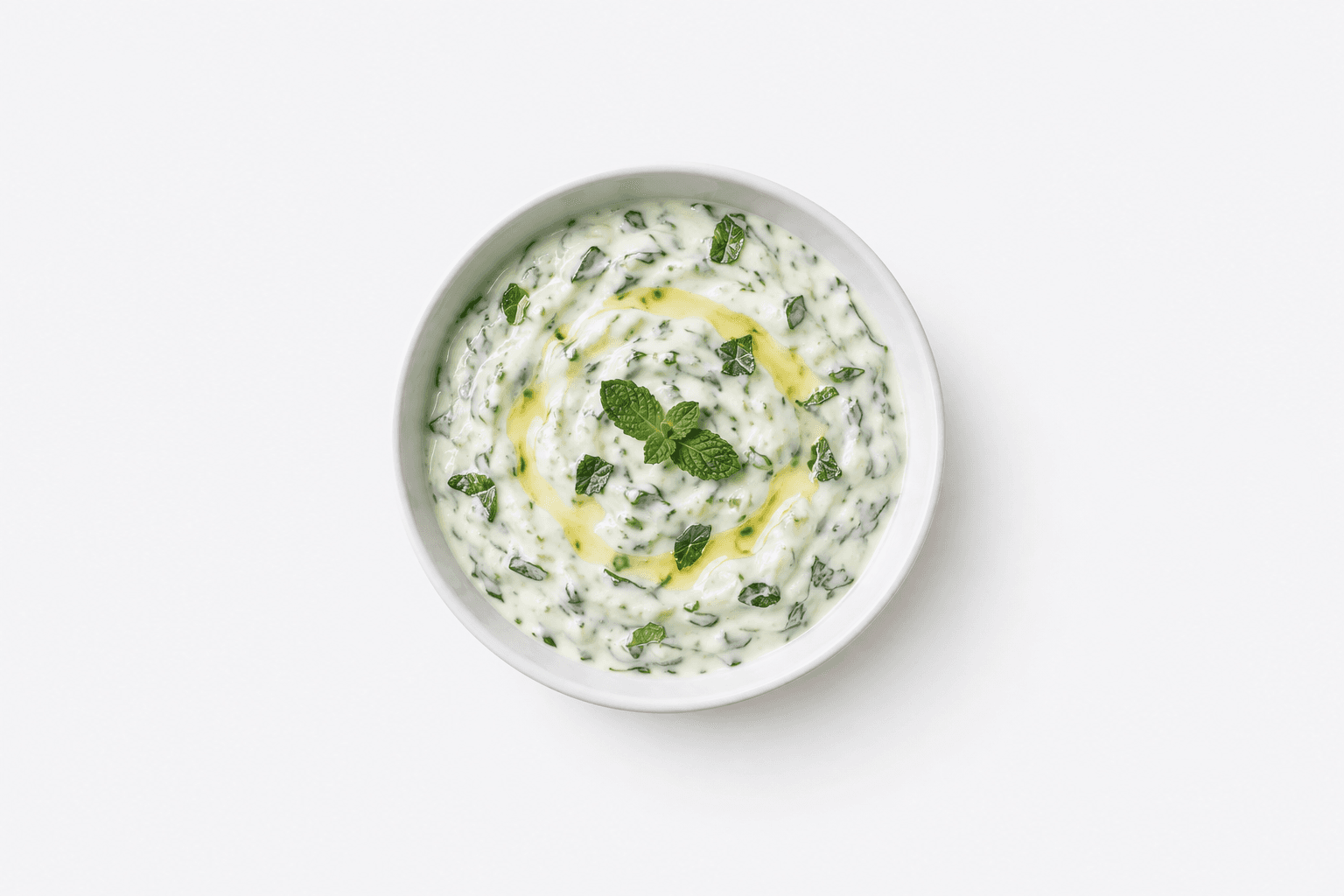
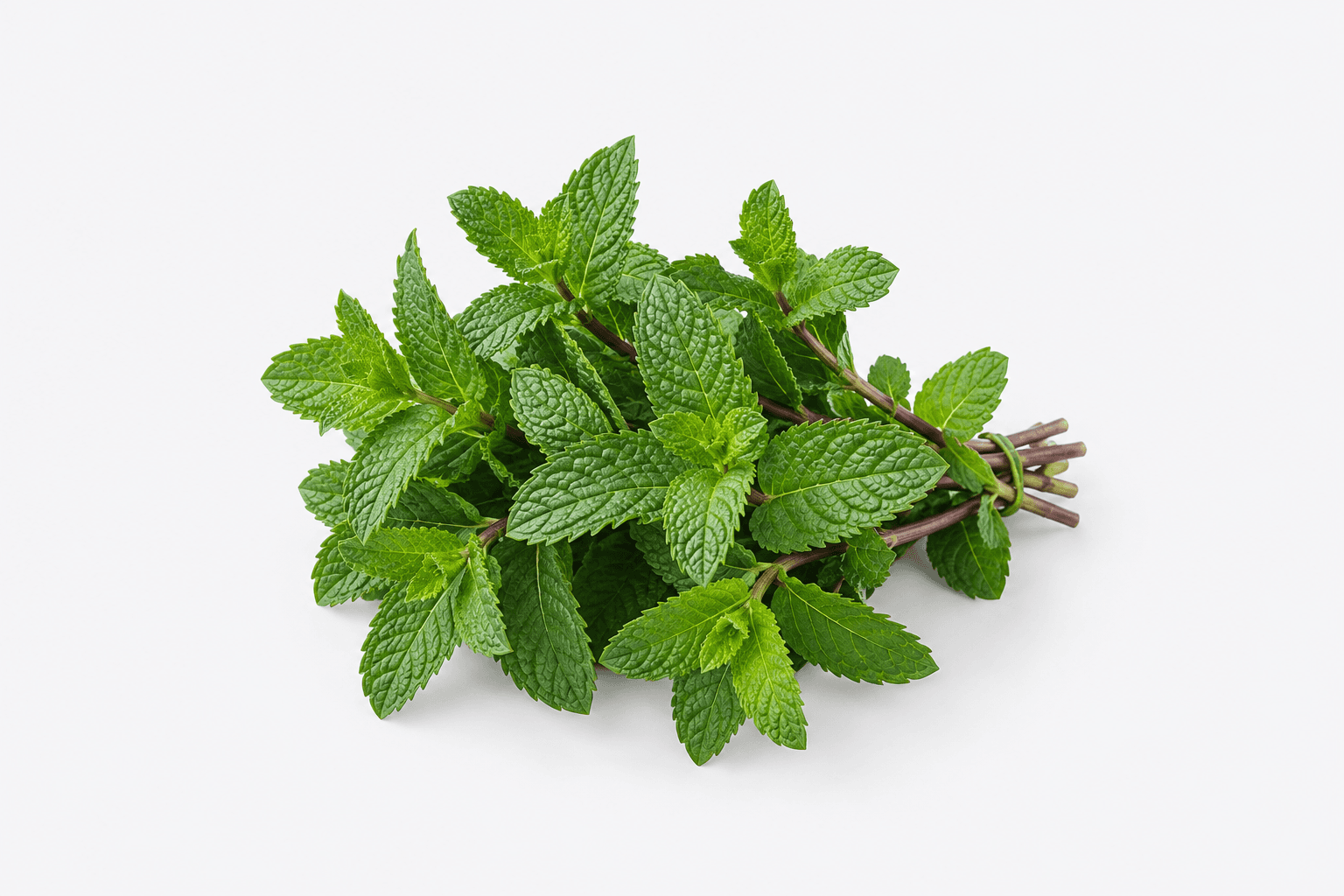
Not chopping the mint is about both colour and aroma. A blade crushes the cells and exposes oxidising enzymes, so the leaves blacken fast. Torn by hand there is far less cut surface, and they stay green much longer. Aroma behaves the same way: chopped mint is strong at first and fades quickly.
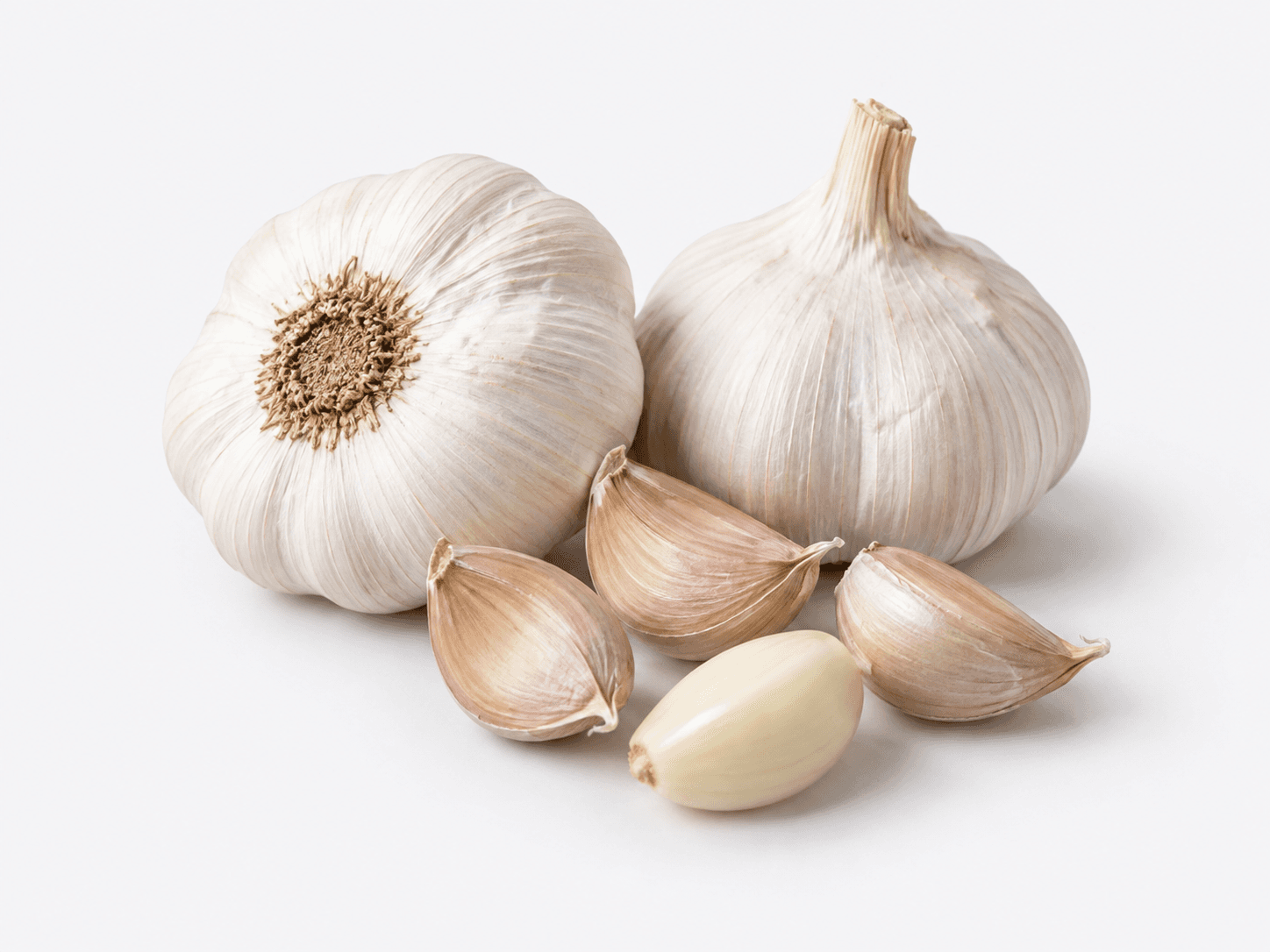
Crushing the garlic and removing it is about allicin. Grated garlic produces it in quantity and it keeps building inside the yoghurt. Steeping a crushed clove for 15 minutes and lifting it out brings the aroma in without leaving the burn.
One thing needs stating plainly. You may have heard that mint is used for irritable bowel syndrome. That evidence is for enteric-coated peppermint oil capsules, each holding 180–225 mg of essential oil.
The 15 g of mint in this sauce is a different thing entirely — whole leaf, no coating, and nowhere near that concentration of oil. There is no evidence that mint used as a herb does anything for IBS. You make this sauce because it tastes good.
The composition tells the same story. Fresh mint holds 243 mg of calcium and 5.08 mg of iron per 100 g, but the 15 g here works out to 36 mg of calcium and 0.8 mg of iron — less again once it is split four ways. Mint is a seasoning, not a source of nutrients.
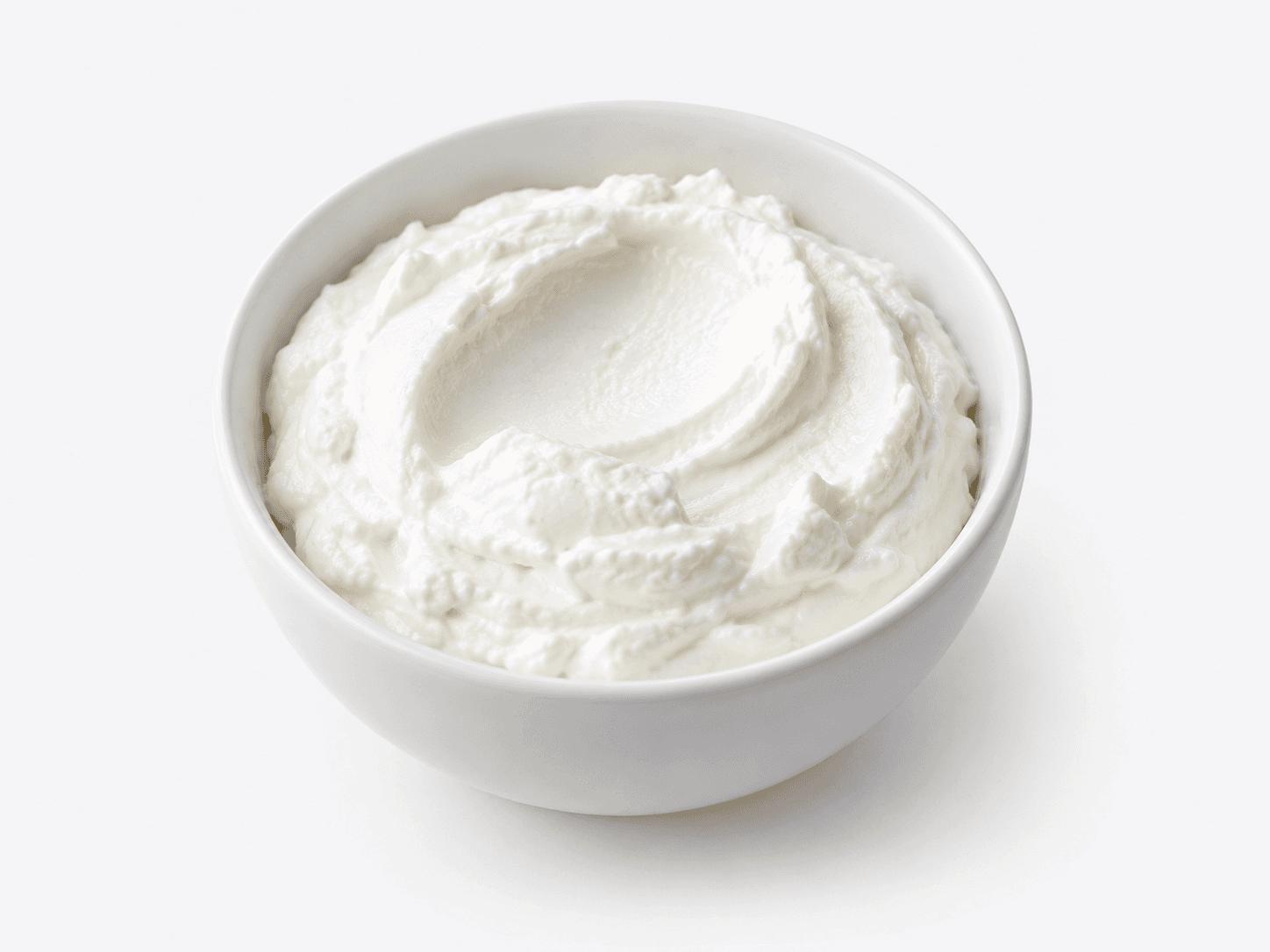
What the yoghurt brings is another matter: 200 g of Greek yoghurt holds roughly 20 g of protein.
Take care if you have reflux. Menthol relaxes the lower oesophageal sphincter and can worsen symptoms. A spoonful of sauce is unlikely to matter, but some people are sensitive to mint.
What to put it on — roast lamb, chicken, roasted vegetables, potatoes. It works especially well beside rich food.