Contents
What it is
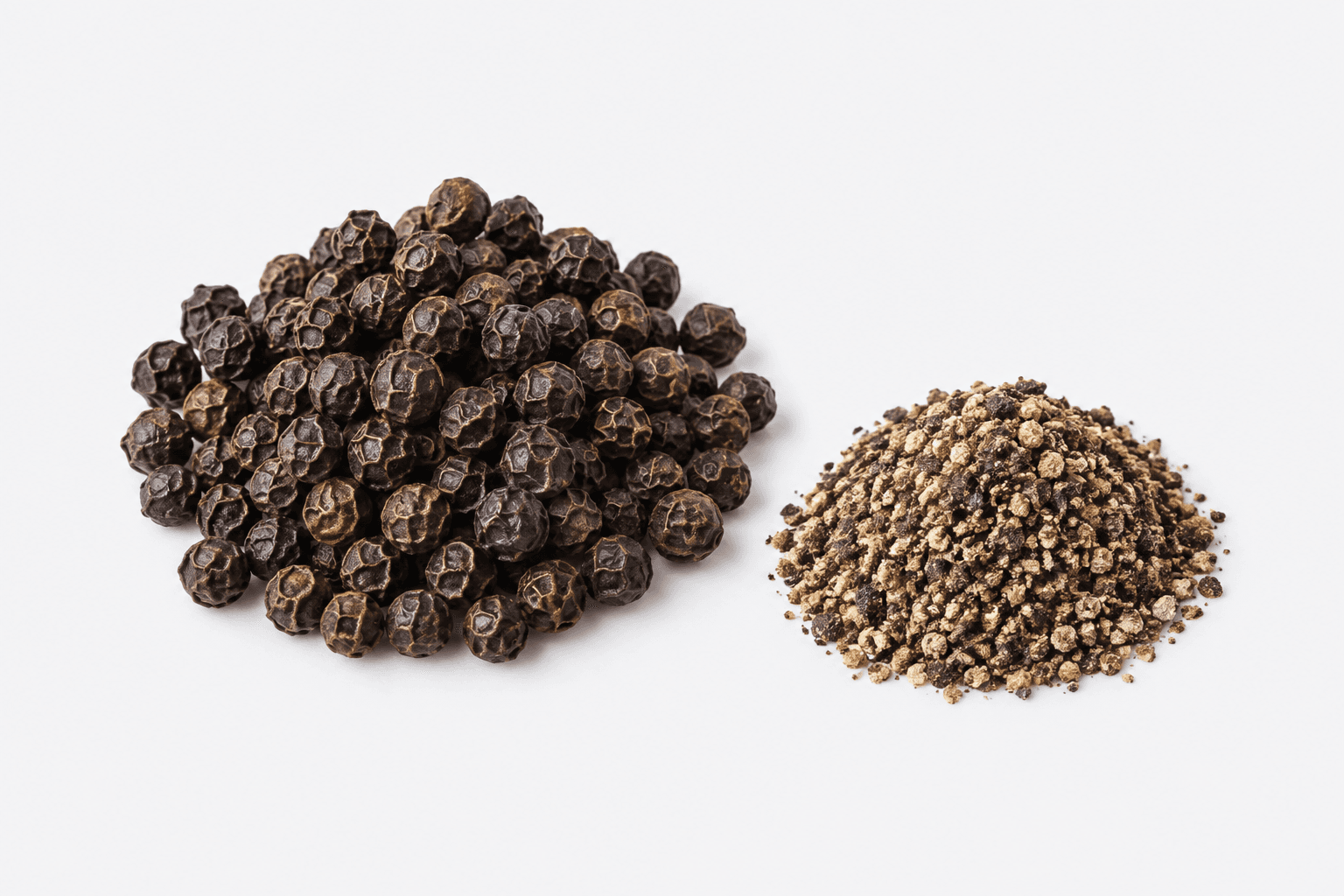
Black pepper is the dried fruit of a climbing vine in the pepper family. It is native to the Malabar coast of southwest India and was once among the reasons Europe went looking for a sea route to Asia. Unripe berries dried whole become black pepper; ripe berries with the skin removed become white pepper — the same fruit, handled differently. Its heat comes from piperine, not from the capsaicin of chillies. The aroma is volatile, so it is best ground at the moment of use and added late.
Scientific name Piper nigrum
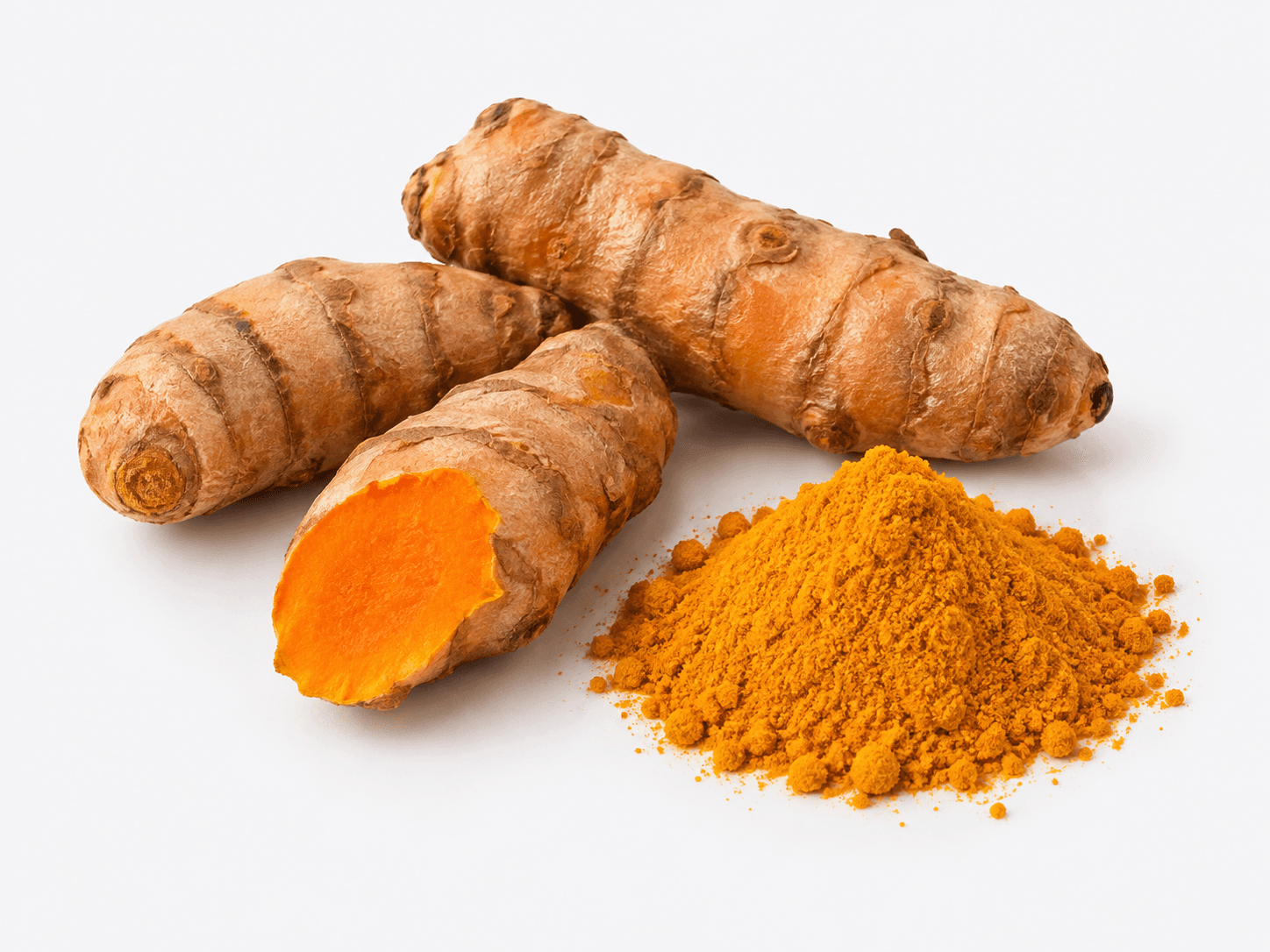
You have probably seen 'with black pepper extract' on a turmeric supplement. Almost all of that traces back to one 1998 paper.
Researchers at St. John's Medical College in India gave 2 g of curcumin alone, then with 20 mg of piperine, and compared blood levels. The result was a 2,000 % rise in bioavailability. The number is striking enough to have been cited for 27 years.
Fewer people know the size of that trial. Ten healthy adult volunteers.
This page does not tell you to stop using pepper. Pepper is a spice for flavour and nothing replaces it there. But it is worth knowing what the '2,000 %' actually stands on.
Key benefits
- Early research
Piperine raised curcumin absorption — in a trial of ten
[1]The 1998 study in Planta Med looked at both rats and humans.
The human part: healthy volunteers given 2 g of curcumin alone showed blood levels that were undetectable or very low. With 20 mg of piperine, concentrations were far higher from 0.25 to 1 hour after the dose (p < 0.001 at 1 h), and bioavailability rose 2,000 %. No adverse effects were reported.
The rat part: curcumin 2 g/kg with piperine 20 mg/kg raised bioavailability by 154 % — an order of magnitude below the human figure.
What belongs alongside this trial.
- Ten participants. At that size individual variation cannot be resolved.
- Blood levels rose; symptoms did not improve. Absorption is an intermediate marker.
- 2 g of curcumin is a supplement dose, orders of magnitude above the turmeric in a plate of curry.
- One author was affiliated with the company producing the piperine extract (Bioperine). That does not make the result wrong, but it is a fact to read it with.
Using turmeric and pepper together is an old cooking practice and a good one. It does not mean you are reproducing this trial's 2,000 %.
- Not established
The other claimed effects are not established
Piperine is credited with boosting metabolism, reducing inflammation, aiding digestion and fighting cancer. Most of that is test-tube and animal work.
Human trials exist but run to a few dozen participants with mixed results. There is no large randomised trial with disease endpoints.
Two claims come up constantly.
- 'Pepper speeds metabolism and burns fat' — cell and animal studies have moved thermogenesis-related markers, but weight loss in humans is not established.
- 'Pepper aids digestion' — animal studies show piperine stimulating digestive enzyme secretion. The clinical meaning in people is unconfirmed.
Raising absorption cuts both ways. Piperine can affect the metabolism of drugs, not just curcumin. If you take high-dose piperine as a supplement, check interactions with your clinician. Culinary amounts are not the concern.
- Nutrition data
The numbers in the table are not the amount you eat
Per 100 g, black pepper holds 12.8 mg of manganese, 9.71 mg of iron, 1,330 mg of potassium and 25.3 g of fibre. On paper it looks impressive.
But 100 g is an entire pepper mill. A grind is 0.1–1 g, so divide those figures by a hundred to a thousand.
Realistic amount Manganese Iron A pinch (0.1 g) 0.013 mg 0.01 mg 1 tsp (2.3 g) 0.29 mg 0.22 mg 100 g (the table) 12.8 mg 9.71 mg Pepper is not a source of nutrients. Plenty of spice articles highlight mineral figures; for those numbers to mean anything you would have to eat pepper as a side dish.
The reason to use pepper is flavour. And it lets you use less salt, which is a real benefit — given average sodium intake in Korea, that is a firmer gain than anything piperine offers.
How to eat it well
- Grind it just before use. Piperine and the aroma compounds are volatile; pre-ground pepper fades with time.
- Add it off the heat. Long cooking drives the aroma off.
- Leaning on pepper instead of salt genuinely helps cut sodium.
- Pairing it with turmeric is a good habit. Just do not expect the trial's number.
- Buy peppercorns and grind them. The aroma keeps far longer. Store sealed and dark.
- Many of pepper's compounds are fat-soluble, so it carries further when used with oil.
How to read the grades
Each benefit carries a label showing how far research on people supports it. Grades differ between items even within the same ingredient.
- Nutrition data
- A fact verifiable from food composition databases or health authorities. This is a different kind of statement from a clinical effect.
- Strong evidence
- Consistently confirmed across randomised controlled trials or meta-analyses.
- Moderate evidence
- Human studies exist, but effect sizes are small or results are mixed.
- Early research
- Cell or animal work, or small preliminary studies.
- Not established
- Commonly claimed, but not confirmed in studies on people.
What to watch out for
- High-dose piperine supplements can interact with medication. Piperine affects drug-metabolising enzymes. If you take any medicine, discuss it with your clinician. Culinary amounts do not apply.
- With reflux or gastritis, large amounts of pepper can aggravate symptoms.
- The efficacy of curcumin itself is a separate question. Better absorption means little if the clinical effect is unestablished.
- Cases of liver injury associated with turmeric supplements have been reported. Approach high-dose supplements cautiously.
- Pepper allergy is rare but exists.
Nutrition
Per 100 g of ground black pepper. A pinch to a gram is what you actually use — under a hundredth of this table.
- Calories
- 251 kcal13%
- Fiber
- 25.3 g90%
- Manganese
- 12.8 mg557%
- Vitamin K
- 164 µg137%
- Iron
- 9.71 mg54%
- Potassium
- 1330 mg28%
- Calcium
- 443 mg34%
Percentages are of the US FDA Daily Value for adults and children 4 and over. National reference intakes differ by sex and age.
Calculate this alongside other ingredients →
Key nutrients
Dishes with this ingredient
Sources
The databases and health authorities this article's nutrition figures and health statements draw on.
- 1Influence of piperine on the pharmacokinetics of curcumin in animals and human volunteersClinical trialShoba G, et al. Planta Med 1998PMID 9619120
- 2USDA FoodData CentralFood composition database
- 3European Food Safety Authority (EFSA)Health authority
- 4NIH Office of Dietary SupplementsHealth authority
- 5PubMedResearch literature