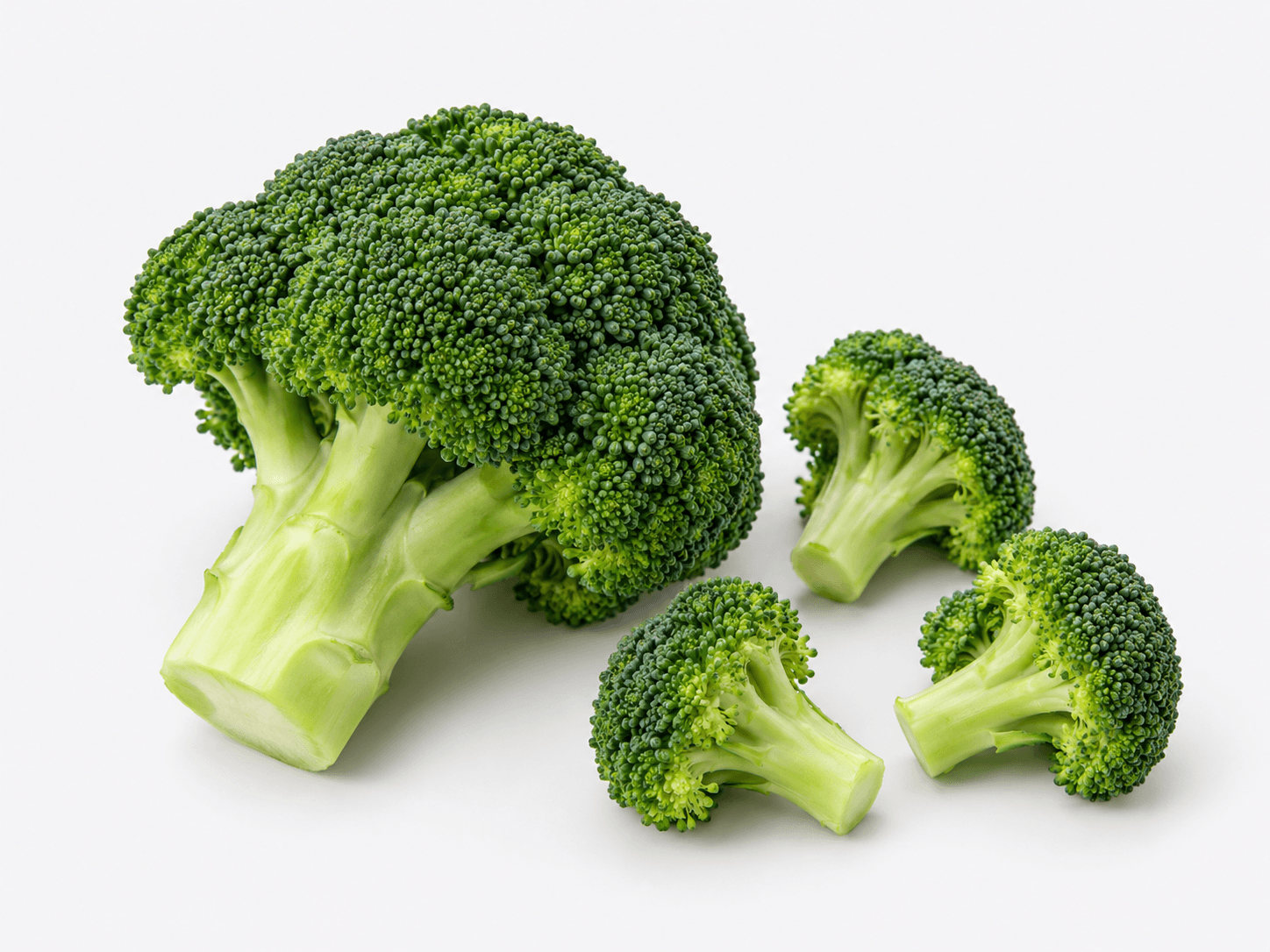
Vegetables
Early researchBroccoli
Broccoli's key compound, sulforaphane, only forms when the vegetable is cut or chewed. One cooking choice changes how much survives.
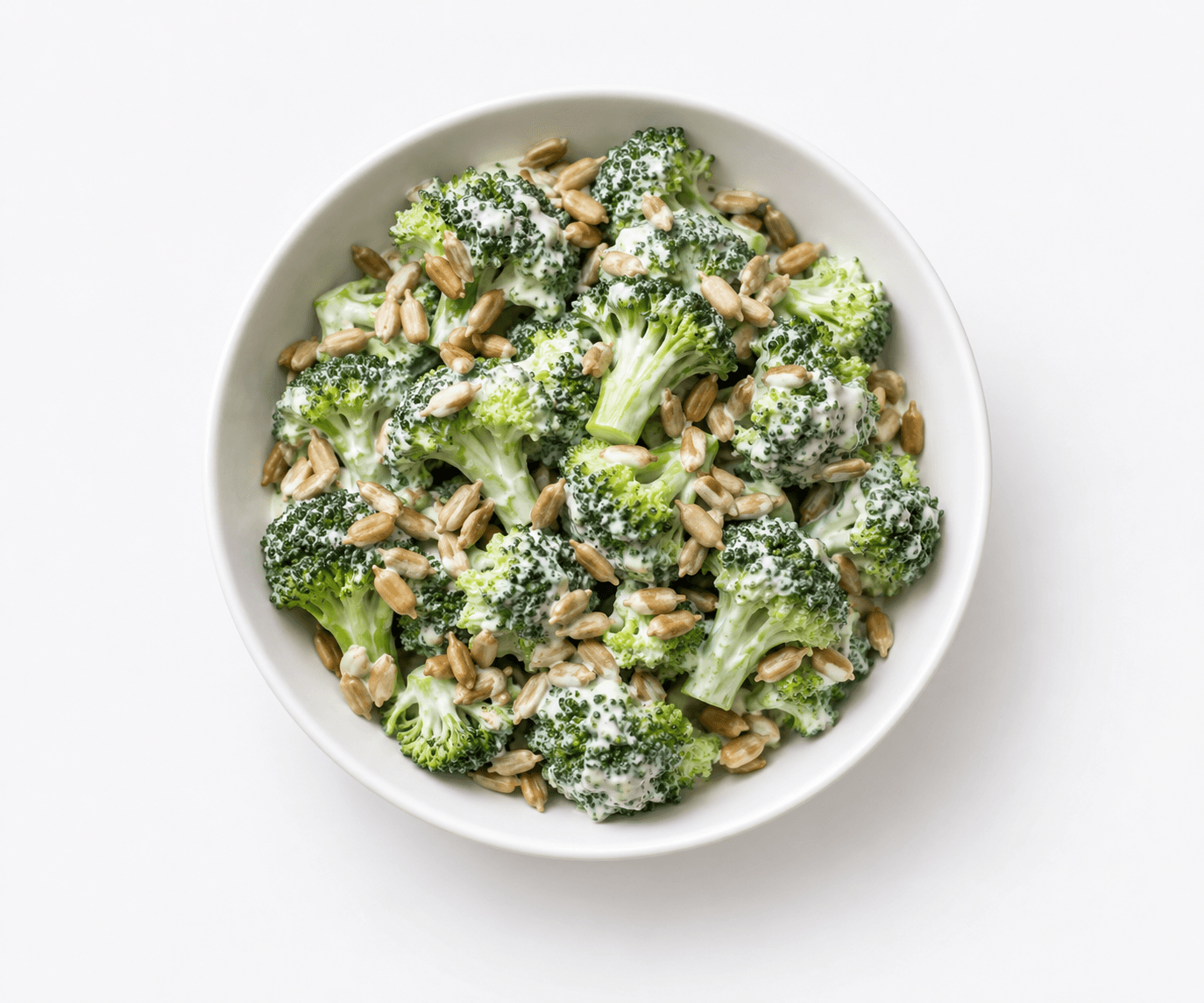
Boil broccoli too long and you destroy the enzyme that makes sulforaphane. A 30-second blanch and a yoghurt dressing is the whole recipe.
2 servings15 min
Mince the garlic finely and leave it ten minutes.
Cut the broccoli into bite-sized florets. Peel the stem and use it too — it holds more fibre than the florets.
Blanch in boiling water for 30 seconds to a minute only. Lift it out as soon as the colour brightens.
Rinse in cold water to stop the cooking and drain completely.
Toast the sunflower seeds in a dry pan for two minutes over low heat.
Mix the Greek yoghurt with the minced garlic, lemon juice, salt and pepper for the dressing.
Toss the broccoli with the dressing just before eating and scatter the seeds over.
The 30-second blanch is about myrosinase, the enzyme that converts glucosinolates into sulforaphane. It is heat-sensitive, so prolonged cooking destroys the enzyme first — and then no sulforaphane gets made at all.
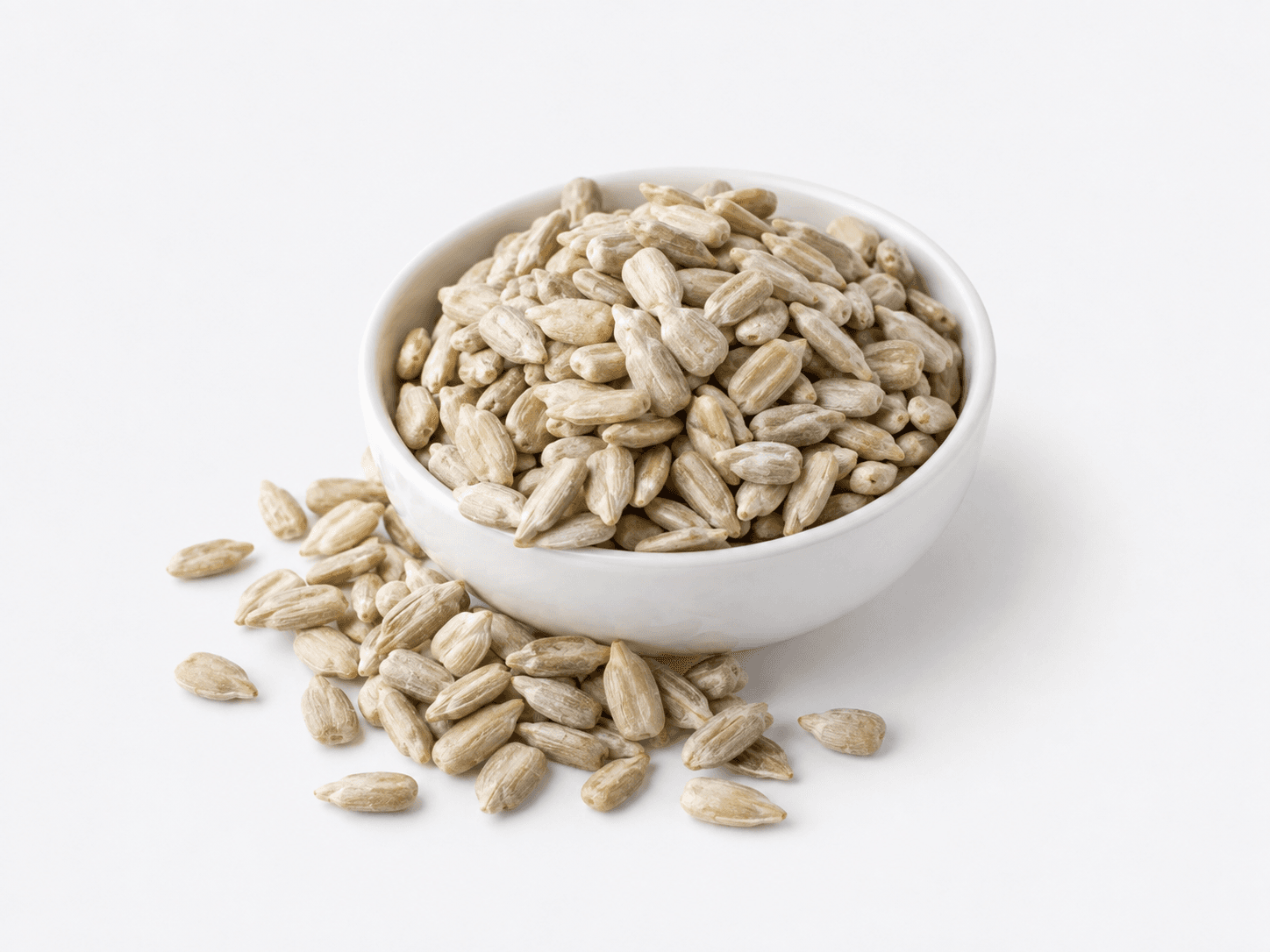
The sunflower seeds are not only for crunch. A 30 g handful carries 10.6 mg of vitamin E, 70 % of the daily requirement. And the fat in the yoghurt helps absorb broccoli's fat-soluble compounds — use fat-free yoghurt and that part disappears.
Vegetables
Early researchBroccoli's key compound, sulforaphane, only forms when the vegetable is cut or chewed. One cooking choice changes how much survives.
Nuts & seeds
Nutrition data35.2 mg of vitamin E per 100 g — a handful covers 70 % of the daily requirement. That handful is also 175 kcal.
Dairy & eggs
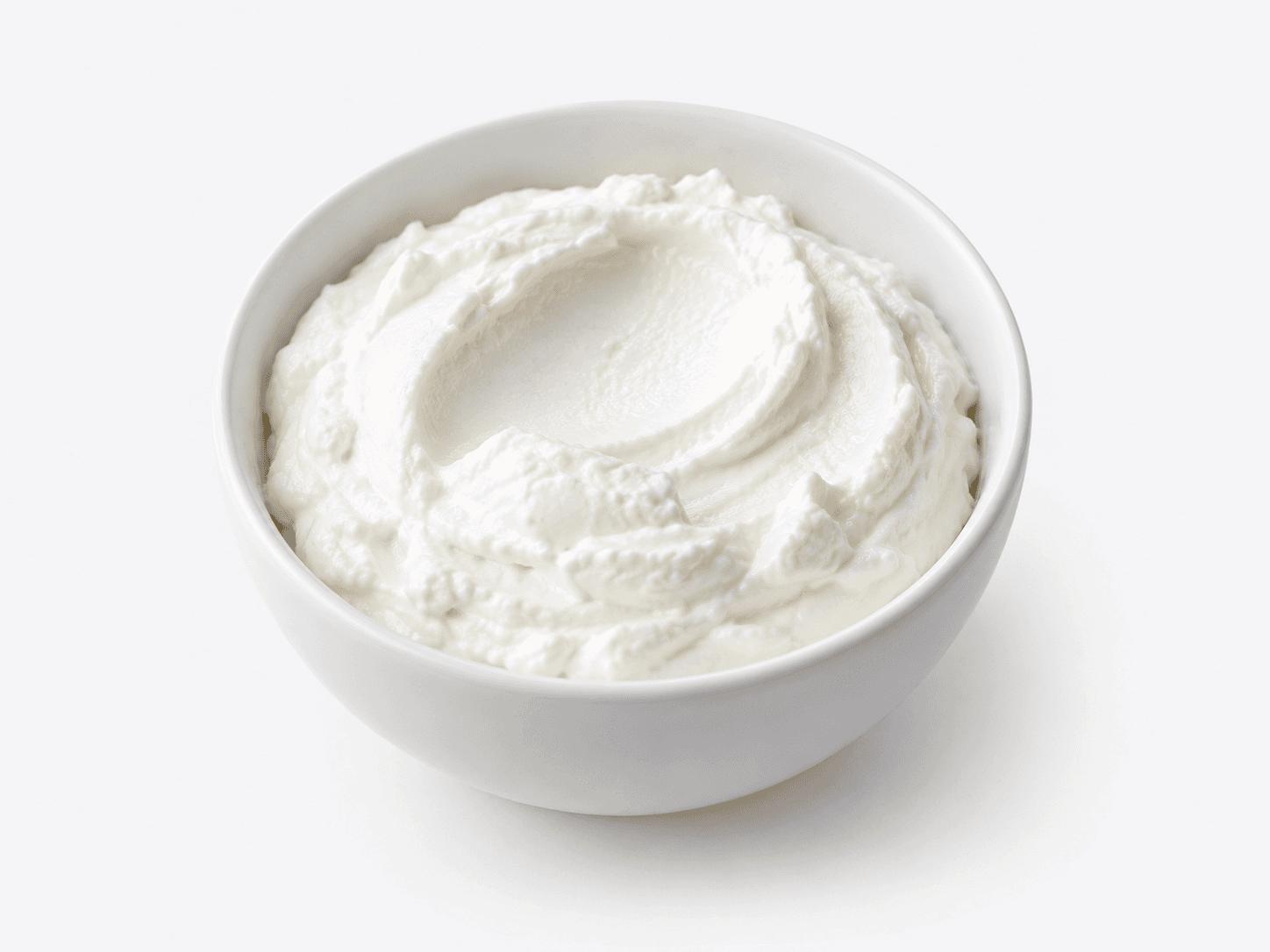
Moderate evidenceIt has nearly three times the protein of regular yogurt not because of any special ingredient, but because the liquid was removed. Calcium goes down in the same step.
Vegetables
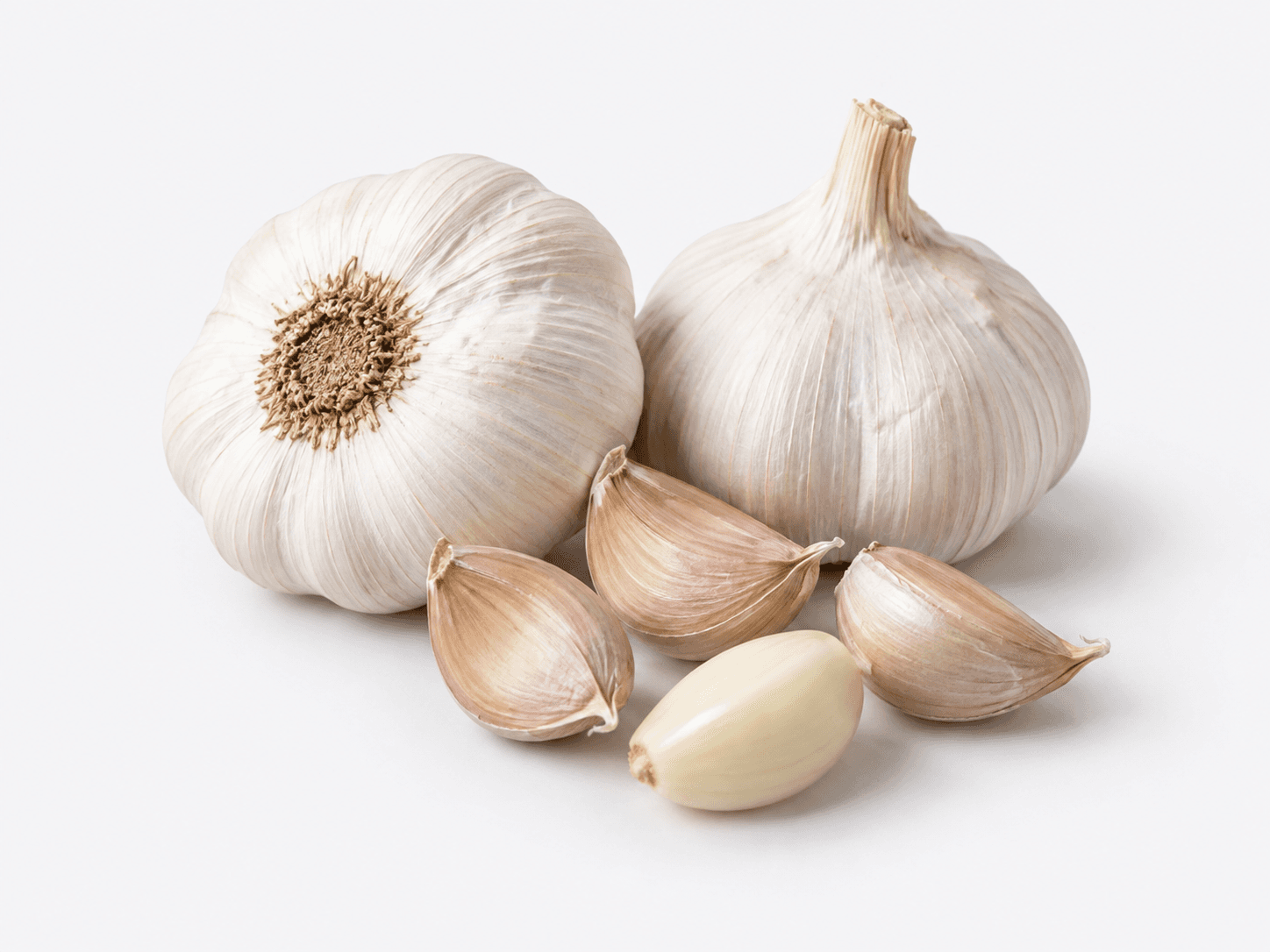
Moderate evidenceThe evidence for garlic points to a modest drop in blood pressure and cholesterol. The trick is to crush it and wait ten minutes before it hits the heat.