Contents
What it is
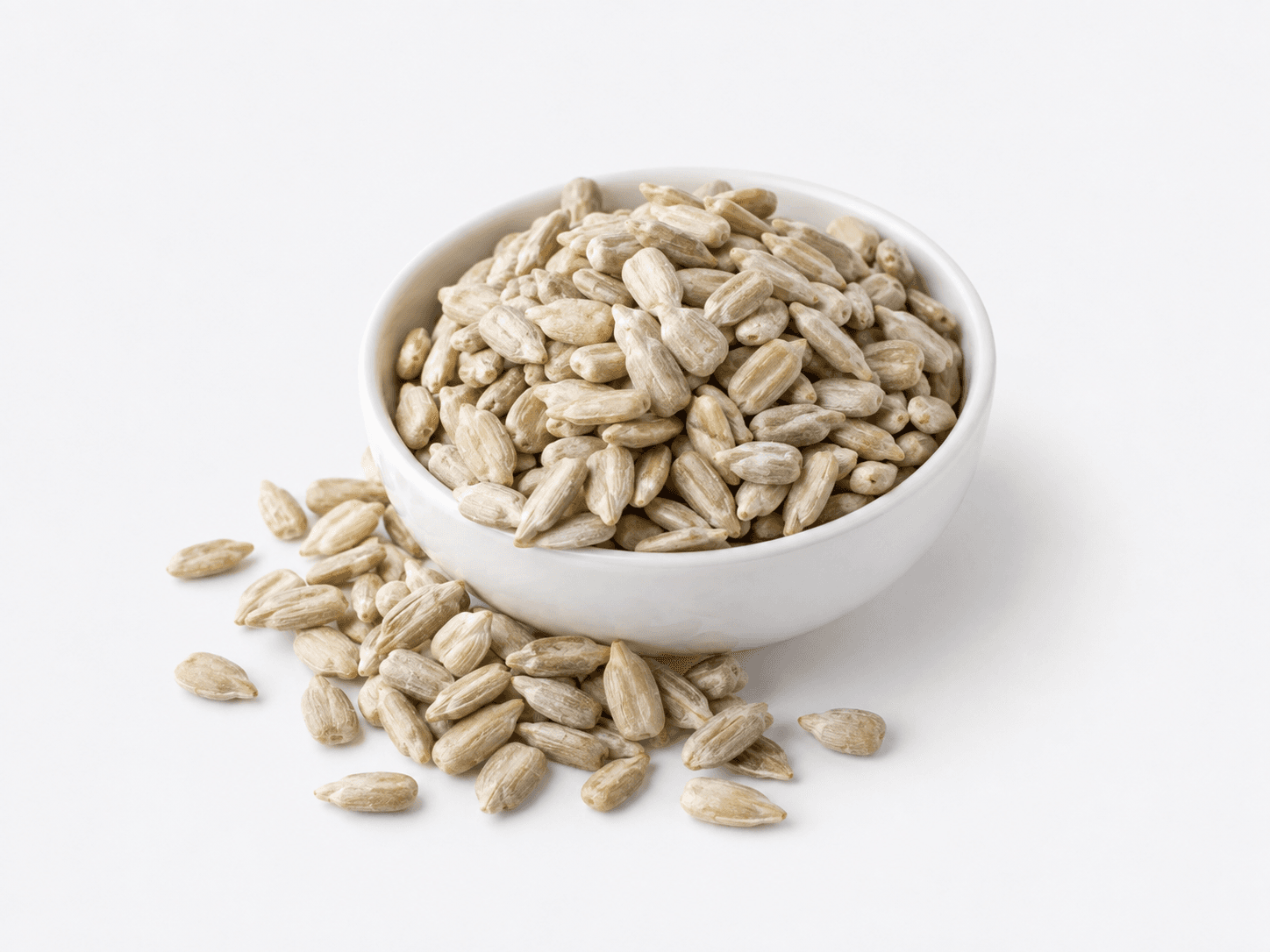
Sunflower seeds are the seeds of the sunflower, a plant native to North America and in the same genus as the Jerusalem artichoke. What looks like a single bloom is in fact hundreds of small flowers packed together, and each of those sets one seed. The striped hull is removed to eat the kernel, though in some places the seeds are roasted and cracked in the shell. The crop is also grown widely for pressing, which is where sunflower oil comes from. The seeds are high in fat and concentrate vitamin E. They go rancid quickly, so keep them sealed.
Scientific name Helianthus annuus
Getting vitamin E from food is harder than it sounds. Of its eight forms, only alpha-tocopherol meets the human requirement, and not many foods carry much of it.
Sunflower seeds sit at the top of that short list. 35.2 mg per 100 g — more than double the 15 mg adult reference, and more than almonds (25.6 mg).
But the same 100 g is 584 kcal. The practical content of this article is about where a 'handful' ends.
Key benefits
- Nutrition data
35.2 mg of vitamin E — among the highest of any food
35.2 mg of alpha-tocopherol per 100 g, or 235 % of the 15 mg adult reference.
At 30 g to a handful, that is 10.6 mg — 70 % of the daily requirement. Matching that from most other foods takes a considerable quantity.
Vitamin E sits in cell membranes and breaks the chain reaction that oxidises polyunsaturated fatty acids. The more fat a food carries, the more it needs alongside it — and sunflower seeds carry 51.5 g of fat together with their vitamin E. An oily seed that protects itself.
- Nutrition data
Magnesium, selenium and folate come with it
Per 100 g: 325 mg magnesium, 53 µg selenium, 227 µg folate, 1.8 mg copper and 1.48 mg vitamin B1.
A 30 g handful gives 98 mg of magnesium — around a quarter of an adult's daily reference — and 16 µg of selenium, about 30 % of the 55 µg requirement.
Vitamin B1 is notably high at 1.48 mg per 100 g. Three handfuls would clear an adult's 1.1–1.2 mg requirement several times over, and it is a nutrient that runs short on a diet built on refined grains.
- Nutrition data
A handful is 175 kcal — that is the point of this article
584 kcal per 100 g, with 51.5 g of fat. A 30 g handful is 175 kcal.
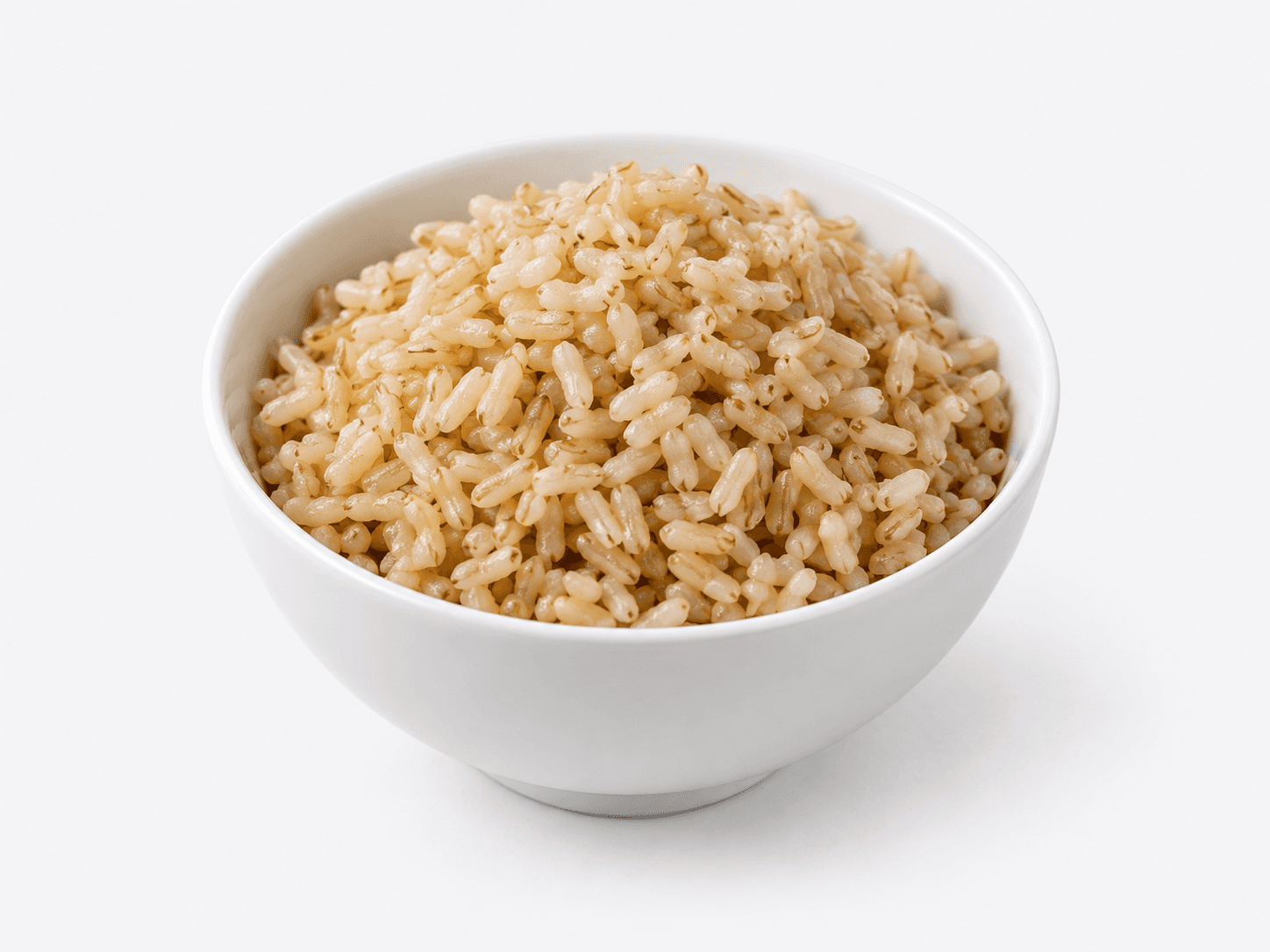
A bowl of rice is about 300 kcal, so a handful is a little over half a bowl. Two handfuls is a full bowl.
The difficulty is that sunflower seeds do not fill you the way rice does. Eat from the bag and you lose track. The 8.6 g of fibre and 20.8 g of protein do provide some satiety, but the unit you chew is small, so there is nothing pacing you.
Portion them into a small bowl. That is the single most useful piece of advice about this food.
How to eat it well
- Serve them in a small bowl. Eat from the bag and one handful becomes three. For this food, that is the most practical advice there is.
- Buy unsalted. Salted versions add a meaningful amount of sodium.
- In-shell slows you down because you have to spit the shells. If you want to eat less, that helps.
- Store sealed, in the fridge or freezer. Half fat means they go rancid quickly at room temperature. A bitter taste or a paint-like smell means they already have.
- Scattering them over salad or yoghurt, or stirring them into rice, controls the amount better than eating them on their own.
How to read the grades
Each benefit carries a label showing how far research on people supports it. Grades differ between items even within the same ingredient.
- Nutrition data
- A fact verifiable from food composition databases or health authorities. This is a different kind of statement from a clinical effect.
- Strong evidence
- Consistently confirmed across randomised controlled trials or meta-analyses.
- Moderate evidence
- Human studies exist, but effect sizes are small or results are mixed.
- Early research
- Cell or animal work, or small preliminary studies.
- Not established
- Commonly claimed, but not confirmed in studies on people.
What to watch out for
- This is a different story from vitamin E supplements. A meta-analysis of 19 randomised trials (135,967 people) found that high-dose vitamin E supplements of 400 IU a day or more raised all-cause mortality by 39 per 10,000 (95 % CI 3–74). That is supplement research, not food-level intake. The 10.6 mg in a handful of sunflower seeds is about 16 IU.
- They are energy-dense. 584 kcal per 100 g — with weight management, 'healthy snack' is exactly the framing that lets the quantity slip.
- Seed allergy is possible. Sunflower seed allergy is separate from tree nut allergy.
- Eating a lot of them in shell can lead to undigested shell fragments compacting — a particular concern in children.
- On a phosphorus-restricted renal diet, note the 660 mg per 100 g.
Nutrition
Approximate values per 100 g edible portion.
- Calories
- 584 kcal29%
- Fat
- 51.5 g66%
- Protein
- 20.8 g42%
- Fiber
- 8.6 g31%
- Vitamin E
- 35.2 mg235%
- Magnesium
- 325 mg77%
- Selenium
- 53 µg96%
- Folate
- 227 µg57%
- Vitamin B1
- 1.48 mg123%
- Copper
- 1.8 mg200%
Percentages are of the US FDA Daily Value for adults and children 4 and over. National reference intakes differ by sex and age.
Calculate this alongside other ingredients →
Key nutrients
Dishes with this ingredient
Sources
The databases and health authorities this article's nutrition figures and health statements draw on.
- 1USDA FoodData CentralFood composition database
- 2NIH Office of Dietary SupplementsHealth authority
- 3European Food Safety Authority (EFSA)Health authority
- 4Meta-analysis: high-dosage vitamin E supplementation may increase all-cause mortalityMeta-analysisMiller ER 3rd, et al. Ann Intern Med 2005PMID 15537682