Contents
What it is
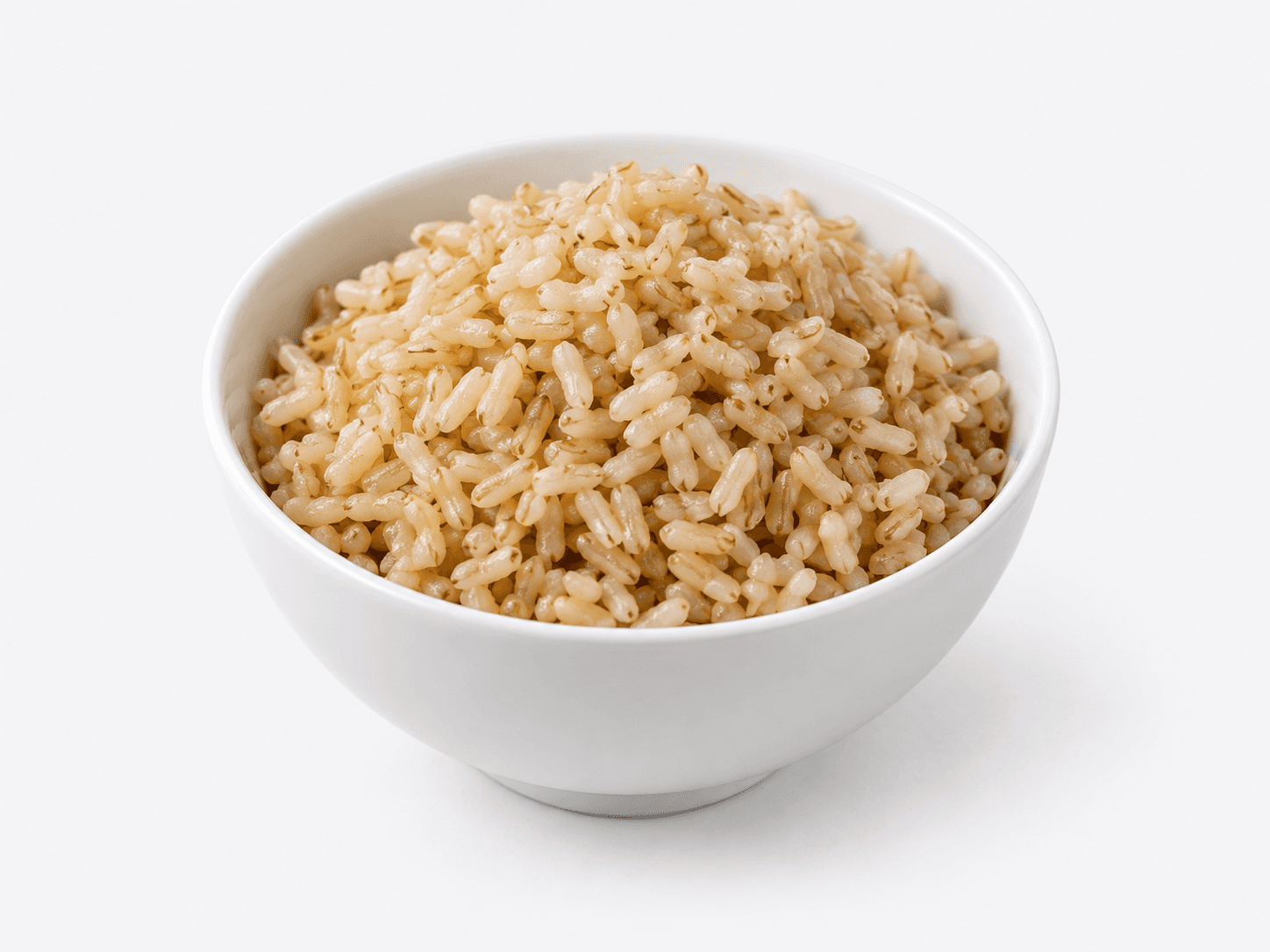
Brown rice is rice with only the inedible hull removed, so the bran layer and the germ are still attached. It is the same grain as white rice — the difference is how much is milled away, and taking off the bran is what makes it white. The remaining bran gives it a tan colour and a chewier, coarser bite, and it resists water, so it needs a longer soak and more liquid. The bran contains oil, which means brown rice goes rancid faster than white; buy it in small amounts and keep it cool.
Scientific name Oryza sativa
Brown rice is rice with only the hull removed, leaving the bran and germ in place. Milling those off is what makes white rice — and they are where the fibre, minerals and B vitamins live.
But the expectation that brown rice will 'control your blood sugar' runs ahead of the research. The evidence for whole grains is strongest in cohort studies that followed people for decades; measure glycaemic markers directly in a few-week trial and the change is far smaller.
And keeping the bran means keeping the inorganic arsenic too. That part usually goes unmentioned.
Key benefits
- Moderate evidence
People eating more whole grains had less type 2 diabetes
[1][2]Pooling prospective cohorts, each extra 50 g of whole grain a day was associated with 24 % lower type 2 diabetes risk (relative risk 0.761, 95 % CI 0.700–0.828). A separate meta-regression estimated that three servings a day (45 g of whole grain ingredients) carried 20 % lower risk than half a serving (7.5 g).
That is the observational half. The 37 randomised trials in the same analysis are much quieter. Fasting glucose fell by 0.103 mmol/L (about 1.9 mg/dL), and HbA1c fell 0.06 % but the confidence interval crossed zero — not significant. Insulin resistance was the same story.
Read it this way: a diet high in whole grains over decades tracks with lower diabetes risk, but eating brown rice for a few weeks will not visibly move your numbers. For context, some authors of that analysis work at a supplement company's research institute.
- Nutrition data
It keeps the minerals that milling removes
Per 100 g of cooked rice: 39 mg magnesium, 0.97 mg manganese, 5.8 µg selenium, 0.18 mg vitamin B1. The manganese alone clears 40 % of an adult's daily reference in 100 g.
These sit mostly in the bran and germ. Mill them away and they go with it — which is why many countries add B vitamins back into white rice.
- Nutrition data
There is less fibre in it than people assume
Cooked brown rice carries 1.6 g of fibre per 100 g. A 210 g bowl is about 3.4 g. With an adult target of 25–30 g a day, three bowls of brown rice gets you to a little over 10 g.
Using brown rice to meet your fibre target does not work. The same weight of cooked lentils has 7.9 g — five times as much. Brown rice earns its place by being there instead of white rice, not by its fibre total.
How to eat it well
- Soak at least two hours, preferably overnight. Water has to get through the bran layer for it to cook evenly, and it digests more easily.
- Discard the soaking water and cook in fresh. Some inorganic arsenic leaches out with it.
- Cooking in excess water and draining it removes the most arsenic — think of it like pasta. You lose water-soluble vitamins along with it.
- Do not jump straight to 100 % brown rice. Start at a third mixed into white rice and build up; your gut adapts.
- Germinated brown rice needs less soaking and has a softer texture.
How to read the grades
Each benefit carries a label showing how far research on people supports it. Grades differ between items even within the same ingredient.
- Nutrition data
- A fact verifiable from food composition databases or health authorities. This is a different kind of statement from a clinical effect.
- Strong evidence
- Consistently confirmed across randomised controlled trials or meta-analyses.
- Moderate evidence
- Human studies exist, but effect sizes are small or results are mixed.
- Early research
- Cell or animal work, or small preliminary studies.
- Not established
- Commonly claimed, but not confirmed in studies on people.
What to watch out for
- Inorganic arsenic concentrates in the bran. Rice takes up arsenic from soil as it grows, and it settles toward the outside of the grain. Brown rice carries more inorganic arsenic than white. At an adult's bowl or two a day, European food safety authorities do not treat this as a problem — but rice products alone are not advised as a staple for infants. Mixing grains is the simplest answer.
- Phytate interferes somewhat with iron, zinc and calcium absorption. Soaking and germinating reduce it. Worth considering if you are meeting your iron needs on a plant-based diet.
- With a sensitive gut or after bowel surgery, the coarse bran fibre can be hard going.
- On a potassium- or phosphorus-restricted renal diet, note that brown rice has more phosphorus than white (103 mg per 100 g).
Nutrition
Per 100 g of cooked brown rice. A bowl at 210 g is a little over twice this table. Dry brown rice swells roughly two and a half times when cooked, and runs around 370 kcal per 100 g dry.
- Calories
- 123 kcal6%
- Carbohydrates
- 25.6 g9%
- Fiber
- 1.6 g6%
- Protein
- 2.7 g5%
- Magnesium
- 39 mg9%
- Manganese
- 0.97 mg42%
- Selenium
- 5.8 µg11%
- Vitamin B1
- 0.18 mg15%
- Vitamin B3
- 2.6 mg16%
Percentages are of the US FDA Daily Value for adults and children 4 and over. National reference intakes differ by sex and age.
Calculate this alongside other ingredients →
Key nutrients
By health concern
Dishes with this ingredient
Compare with
Sources
The databases and health authorities this article's nutrition figures and health statements draw on.
- 1Systematic Review and Meta-Analysis of Human Studies to Support a Quantitative Recommendation for Whole Grain Intake in Relation to Type 2 DiabetesMeta-analysisChanson-Rolle A, et al. PLoS One 2015PMID 26098118
- 2Effects of whole grains on glycemic control: a systematic review and dose-response meta-analysis of prospective cohort studies and randomized controlled trialsMeta-analysisYing T, et al. Nutr J 2024PMID 38664726
- 3USDA FoodData CentralFood composition database
- 4MFDS Food Composition Database · 식품안전나라Food composition database
- 5European Food Safety Authority (EFSA)Health authority
- 6World Health Organization · Healthy dietHealth authority
- 7PubMedResearch literature