Contents
What it is
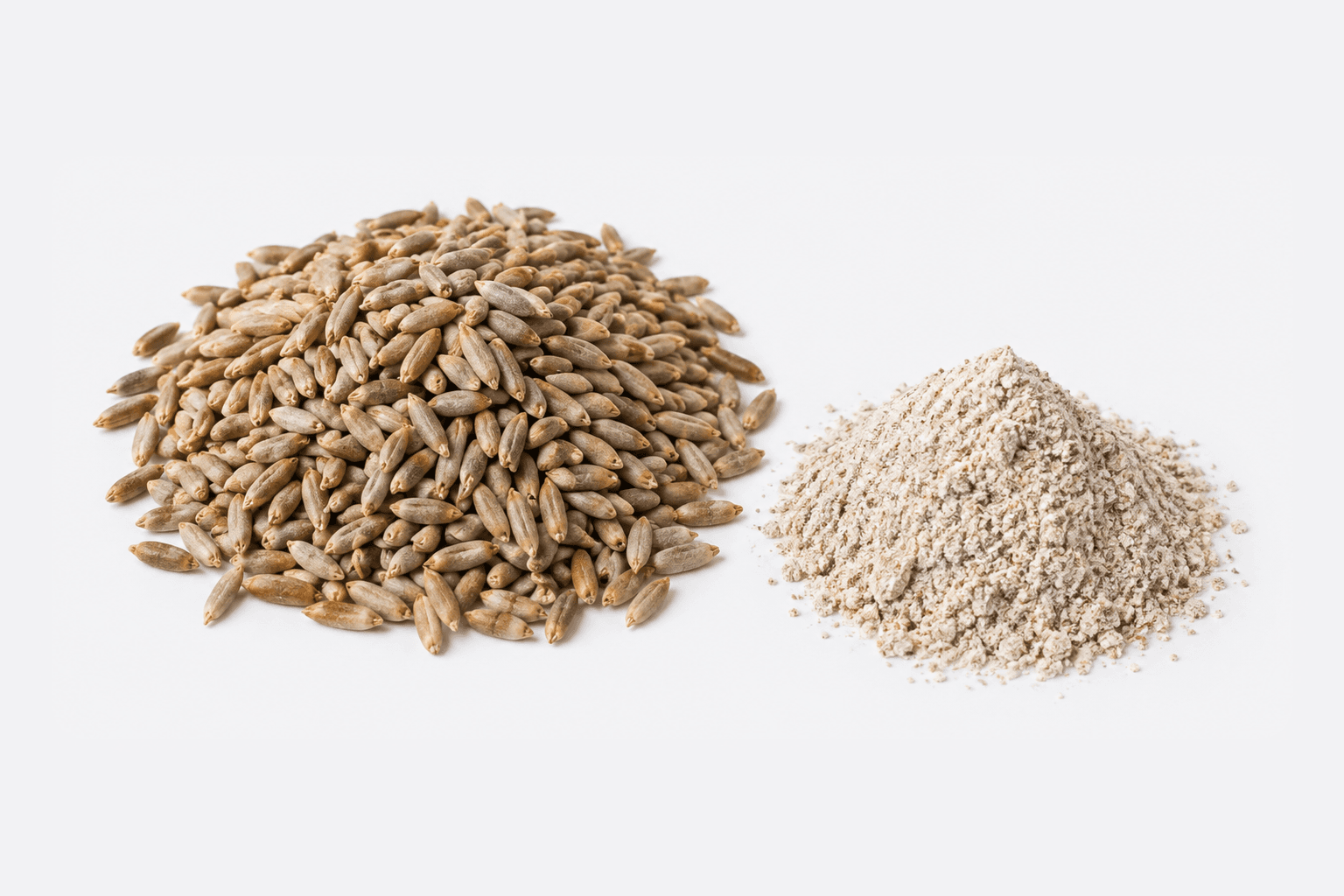
Rye is a cereal grass that tolerates cold and poor soil far better than wheat, which is why it became the bread grain of northern and eastern Europe where wheat struggles. It does contain gluten, but not the kind that builds an elastic network, so rye bread does not rise like wheat bread and comes out dense and heavy. In exchange, compounds called pentosans hold a great deal of water, keeping the crumb moist for days. The strong tradition of fermenting rye as sourdough has to do with how the dough behaves too.
Scientific name Secale cereale
The most interesting result on rye runs against expectation.
2009, Nutrition Journal. A team at Lund University in Sweden gave 12 healthy adults rye products for breakfast and measured blood glucose, insulin, ghrelin and subjective satiety over 180 minutes, with white wheat bread as the reference.
The expected part — whole grain rye breads and endosperm rye products produced significantly lower insulinaemic indices than white wheat bread (p < 0.05).
The unexpected part — rye bran bread produced a significantly higher insulinaemic index than every other rye product. The one with the most fibre gave the worst result.
Why that matters. The simple rule that more fibre means better glycaemia does not hold in this data. The authors' own observation points the same way: the acute insulin response correlated better with the "glycaemic profile" than with the glycaemic index. In other words, what separated insulin demand was not how high the glucose peaked but how long and how gently it stayed up.
But it is 12 people, and an acute study of one meal over three hours.
Key benefits
- Early research
Whole grain rye beat white wheat bread on insulin; rye bran went the other way
[1]2009, Nutrition Journal. A crossover trial from the Division of Applied Nutrition and Food Chemistry at Lund University.
The design:
- 12 healthy adults
- Rye products made from endosperm, whole grain or bran, produced by different methods — baking, simulated sourdough baking and boiling — served as breakfasts in random order
- White wheat bread as the reference
- Blood glucose, serum insulin, plasma ghrelin and subjective satiety measured over 180 minutes
- A new measure, the glycaemic profile, defined as the duration of the incremental postprandial glucose response divided by its incremental peak (min/mM)
The results:
- Whole grain rye breads and endosperm rye products gave significantly lower insulinaemic indices than white wheat bread (p < 0.05).
- Rye bran bread gave a significantly higher insulinaemic index than all the other rye products.
- The acute insulin response correlated better with the glycaemic profile than with the glycaemic index.
- Endosperm rye bread and whole grain rye bread with lactic acid produced a significantly higher glycaemic profile than rye bran bread, white wheat bread, and the wheat and whole grain rye porridges.
- A lower insulin peak went with less severe late postprandial hypoglycaemia (r = 0.38, p < 0.001), and that hypoglycaemia correlated negatively with subjective satiety at 180 minutes (r = −0.28, p < 0.05).
- A lower insulin peak also went with a milder recovery of plasma ghrelin at 180 minutes (r = 0.34, p < 0.01).
How to read the bran result. Rye bran is the fibre-rich fraction. It produced the worst insulin response of the rye products tested. It is a case where whole grain being good does not mean that adding more bran is better. A grain with its structure intact is not the same as flour with bran stirred back in.
The satiety observation is also interesting. When insulin spiked and fell, late hypoglycaemia followed, and that hypoglycaemia ate into fullness three hours later. It is data that speaks to the folk claim that a glucose spike leaves you hungry sooner — but the correlation is weak at −0.28.
The limits are clear.
First, twelve people. It points a direction, no more.
Second, it is an acute study of three hours after one meal. It does not answer what happens to diabetes or weight over time.
Third, all were healthy adults. People with diabetes may respond differently.
Hence the early grade.
- Nutrition data
15.1 g of fibre — more than whole wheat
Per 100 g of dry rye grain:
- 338 kcal, protein 10.3 g, fat 1.63 g
- Of 75.9 g of carbohydrate, 15.1 g is fibre — sugar is 0.98 g
- Magnesium 110 mg, potassium 510 mg
- Manganese 2.58 mg — above the adequate intake
- Iron 2.63 mg, zinc 2.65 mg, selenium 13.9 µg
- Thiamine 0.316 mg, niacin 4.27 mg, vitamin B6 0.294 mg
- Sodium 2 mg
The 15.1 g of fibre is the core of this grain. More than whole wheat (12.2 g) and more than oats (10.6 g) — near the top of commonly eaten grains.
Rye's fibre is mostly arabinoxylan. It holds water and makes the dough sticky, which is why rye bread is denser and heavier than wheat bread.
Sugar is effectively absent at 0.98 g.
One distinction matters here: these figures are for the grain. Most shop "rye bread" is blended with a substantial proportion of wheat flour, which drops the fibre considerably. Check where rye flour sits in the ingredient list. If rye is not first, it is closer to wheat bread.
Do not judge by colour. Caramel colouring and molasses darken many loaves.
Magnesium at 110 mg and manganese at 2.58 mg are the mineral strengths.
- Not established
Rye contains gluten — and a word on sourdough
This entry corrects a common belief.
"Rye is gluten-free" is false. Rye, with wheat and barley, is a gluten-containing grain. People with coeliac disease must avoid rye too.
The confusion arises because rye's gluten behaves differently from wheat's. Rye has gliadin but little glutenin, so it cannot form the elastic gluten network wheat does. That is why rye bread is dense and does not rise — not because there is no gluten in it.
A word on sourdough. Rye bread is traditionally made with a sourdough starter. Rye dough has to be acidic for its enzyme activity to be controlled and for the loaf to bake properly — the practice began as a baking necessity, not a flavour or health choice.
The claim that sourdough fermentation reduces phytate and so aids mineral absorption has laboratory support. But randomised evidence that eating sourdough bread improves people's iron or zinc status is thin.
That the whole grain rye bread with lactic acid sat on the favourable side of the glycaemic profile in the trial above is interesting, but it is one condition in a twelve-person study.
The honest summary: what can be said about rye today is the composition table (15.1 g of fibre) and one acute trial in twelve people. The health effects of sourdough are not yet at that level.
How to eat it well
- Check whether rye flour comes first in the ingredient list. If wheat leads, the fibre falls far short of the figures above.
- Do not choose by colour. Many loaves are darkened with caramel colouring.
- Slice rye bread thin. It is dense, so a slice weighs and counts more than wheat bread.
- Soak the grain 6–8 hours, then boil 45–60 minutes. Cook it ahead if you are mixing it into rice.
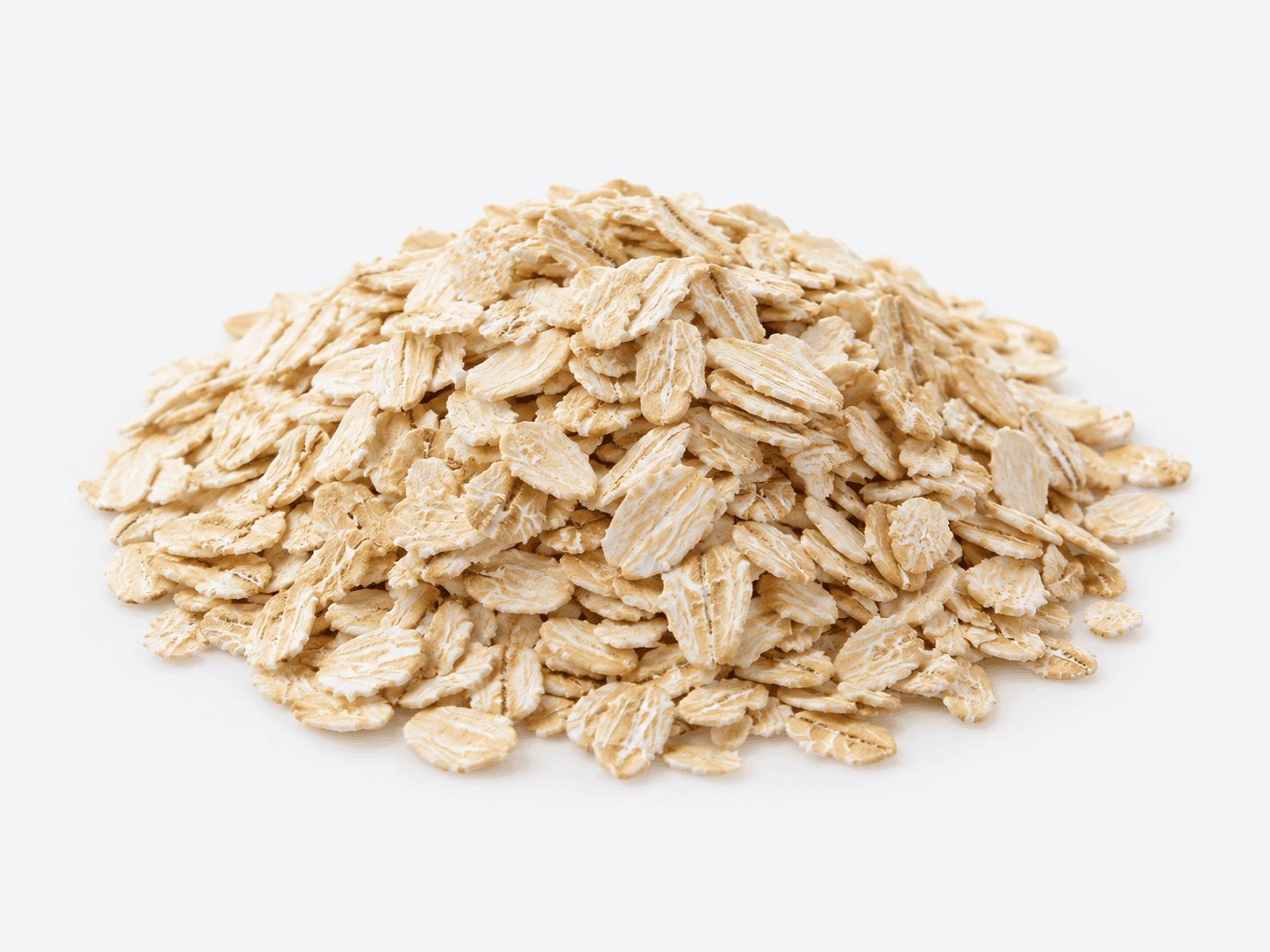
- Rye flakes work like oats and cook into a soft porridge.
- A sudden jump in fibre brings gas. Raise your fluid alongside it and build over several days.
- There is little in the trial above to justify buying bran and adding more of it.
How to read the grades
Each benefit carries a label showing how far research on people supports it. Grades differ between items even within the same ingredient.
- Nutrition data
- A fact verifiable from food composition databases or health authorities. This is a different kind of statement from a clinical effect.
- Strong evidence
- Consistently confirmed across randomised controlled trials or meta-analyses.
- Moderate evidence
- Human studies exist, but effect sizes are small or results are mixed.
- Early research
- Cell or animal work, or small preliminary studies.
- Not established
- Commonly claimed, but not confirmed in studies on people.
What to watch out for
- Avoid rye with coeliac disease or gluten intolerance. Rye is a gluten-containing grain. "Rye is gluten-free" is wrong.
- The trial above measured the acute response of 12 healthy adults. It did not look at diabetes or weight over time.
- Rye bran bread had a higher insulinaemic index than the other rye products. This is not grounds to add more bran.
- Check how much rye is actually in a shop loaf. The table above is for the grain.
- With IBS, rye is high in fructans and therefore high-FODMAP.
- Ergot contamination was historically a problem with rye. Modern commercial supply is controlled, but avoid grain of unclear origin.
- Sourdough's effect on mineral absorption is not established in human trials.
Nutrition
Per 100 g of dry rye grain. A slice of rye bread is 30–40 g, and most rye breads are blended with wheat, so these figures do not transfer directly.
- Calories
- 338 kcal17%
- Protein
- 10.3 g21%
- Carbohydrates
- 75.9 g28%
- Fiber
- 15.1 g54%
- Sugars
- 0.98 g
- Magnesium
- 110 mg26%
- Potassium
- 510 mg11%
- Manganese
- 2.58 mg112%
- Iron
- 2.63 mg15%
- Zinc
- 2.65 mg24%
- Selenium
- 13.9 µg25%
- Vitamin B1
- 0.316 mg26%
Percentages are of the US FDA Daily Value for adults and children 4 and over. National reference intakes differ by sex and age.
Calculate this alongside other ingredients →
Key nutrients
Sources
The databases and health authorities this article's nutrition figures and health statements draw on.
- 1Endosperm and whole grain rye breads are characterized by low post-prandial insulin response and a beneficial blood glucose profileClinical trialRosén LA, et al. Nutrition Journal 2009PMID 19781071
- 2USDA FoodData CentralFood composition database
- 3NIH Office of Dietary SupplementsHealth authority
- 4European Food Safety Authority (EFSA)Health authority
- 5PubMedResearch literature