Contents
What it is
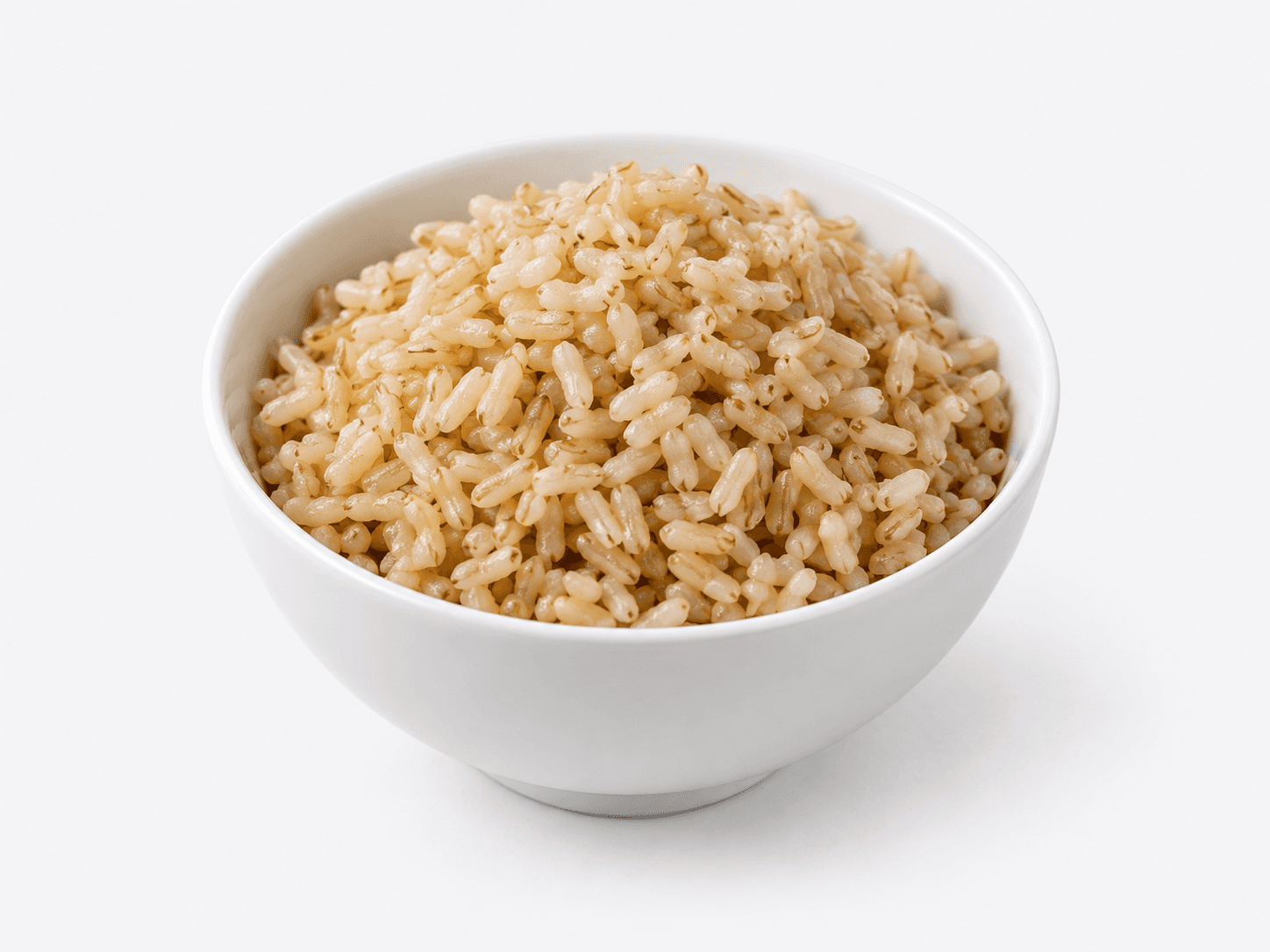
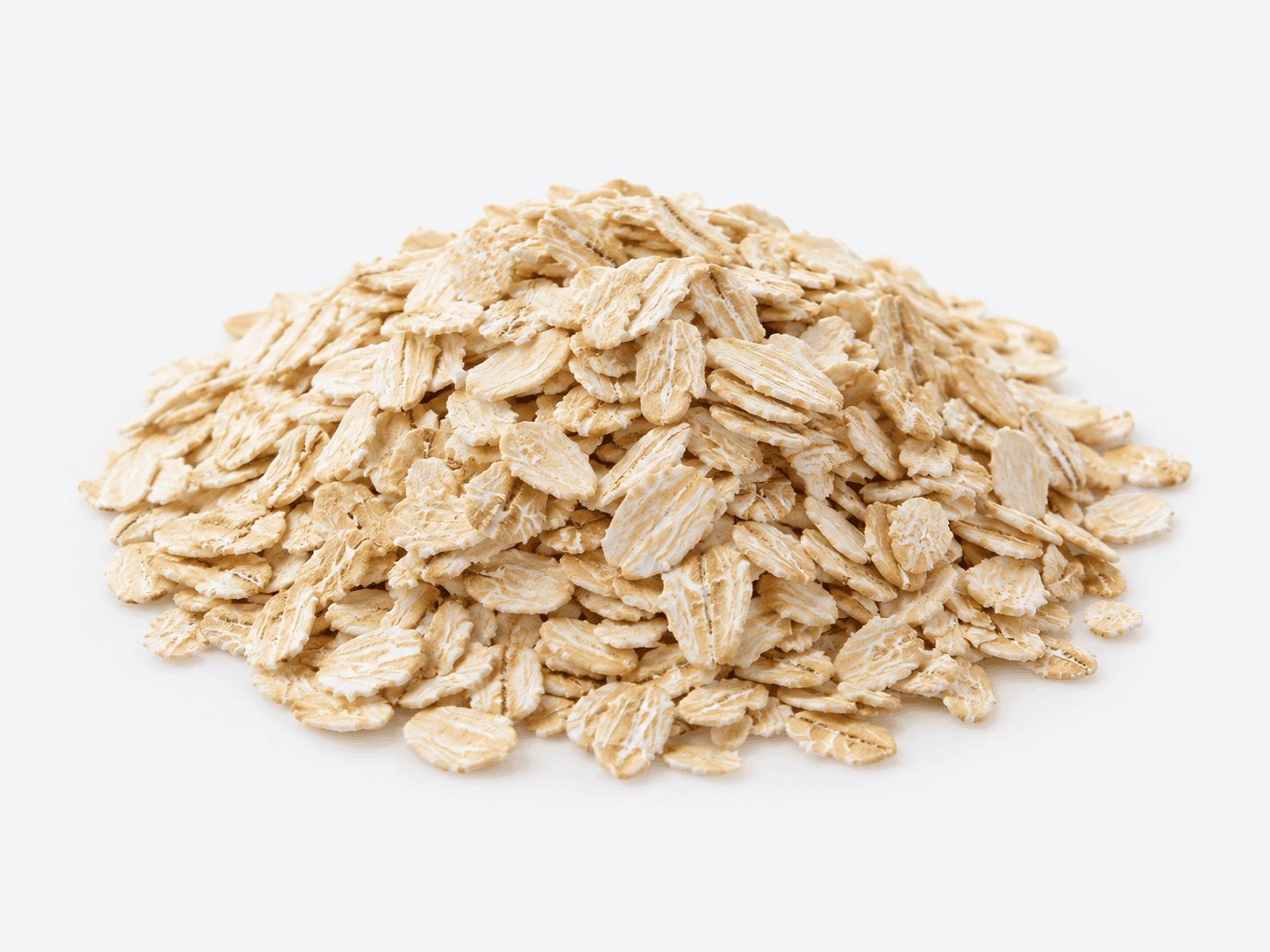
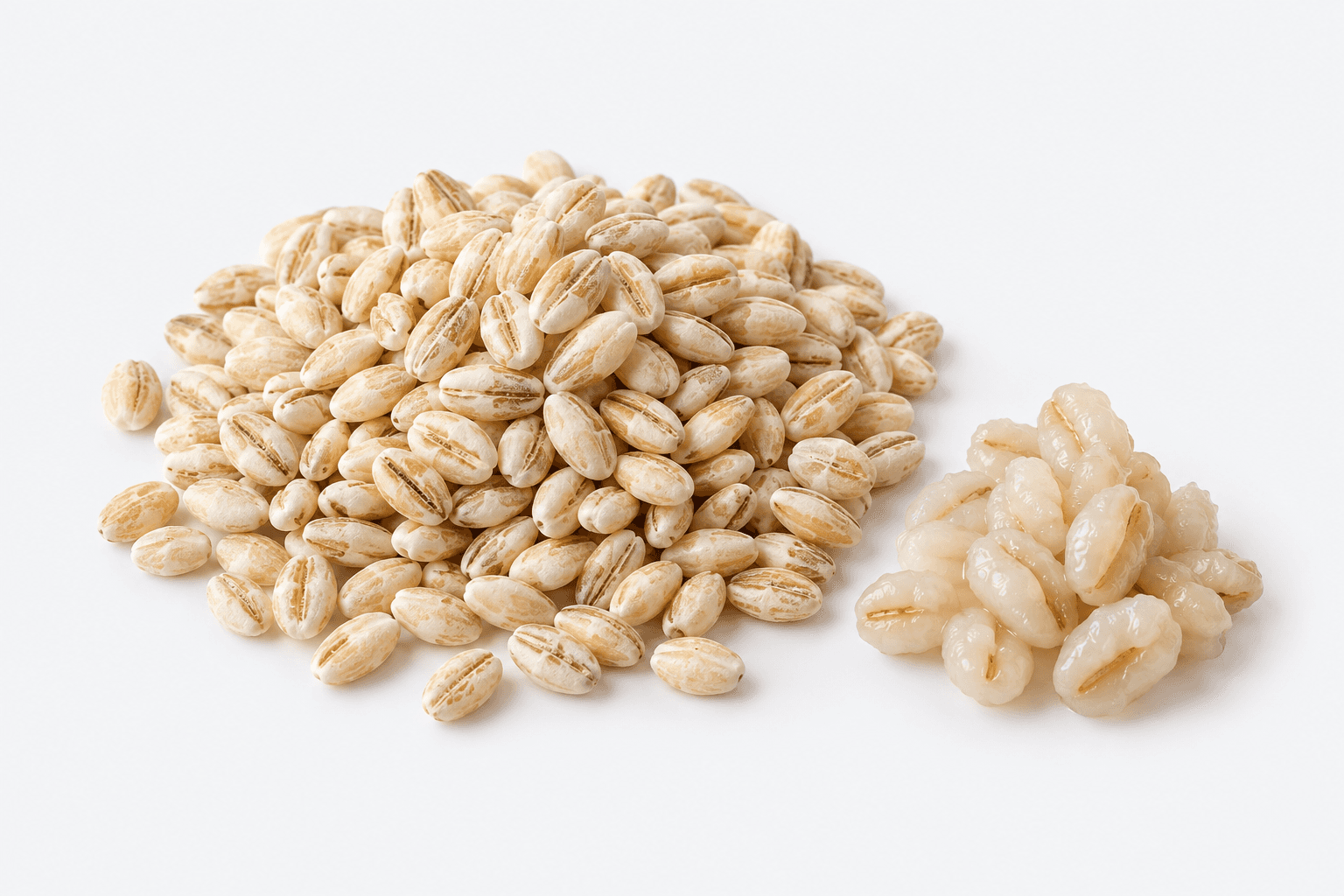
Barley is an annual cereal in the grass family and one of the first crops ever farmed, in the Fertile Crescent of western Asia. Pearled and pressed barley for mixing into rice, the roasted grain brewed as barley tea, and the malt behind beer and whisky all come from this one plant. The hull is tough, so the grain is usually polished or rolled before use. It is coarser and chewier than rice and much less sticky, so mixing it in makes for a lighter bowl.
Scientific name Hordeum vulgare
Barley is one of the oldest grains eaten in Korea, yet today it mostly turns up mixed into rice or brewed as tea. Nutritionally that is an undersell.
The active part is beta-glucan — the same viscous soluble fibre as in oats. It dissolves into a gel that traps bile acids on their way out. The liver then pulls cholesterol from the blood to make replacements, and LDL falls.
Glucose is a different story. A 2026 meta-analysis of 31 trials found barley flattens the curve for the first two hours after a meal, while fasting glucose and HbA1c did not budge. One half of the story is settled; the other is not.
Key benefits
- Strong evidence
It lowers LDL and non-HDL cholesterol
[1]A meta-analysis pooled 14 randomised controlled trials (615 people). At a median 6.5 g of barley beta-glucan a day for four weeks, LDL fell 0.25 mmol/L — about 9.7 mg/dL (95 % CI −0.30 to −0.20). Non-HDL cholesterol fell 0.31 mmol/L at a median 6.9 g.
Apolipoprotein B did not change significantly. And the non-HDL analysis carried extreme between-trial variation (I² = 98 %), which the authors flagged as unexplained heterogeneity.
Note what the dose refers to: 6.5 g of beta-glucan, not 6.5 g of barley. Whole barley is roughly 4–6 % beta-glucan, so reaching the trial dose takes well over 100 g of dry grain. A spoonful stirred into rice does not get there. The EFSA-approved claim threshold is 3 g a day.
- Moderate evidence
It lowers post-meal glucose — for two hours
[2]A 2026 meta-analysis of 31 controlled trials (660 intervention, 665 control) found barley lowered postprandial glucose by 10.5 mg/dL at 30 minutes, 12.4 mg/dL at 60 and 7.0 mg/dL at 120. By 180 minutes there was no difference.
Insulin fell at 30 and 60 minutes as well.
But fasting glucose and HbA1c showed no significant change. So the evidence supports 'it flattens the curve of a meal', not 'it improves long-term glycaemic control'. The authors closed by asking for higher-quality trials.
- Nutrition data
Selenium and fibre are the case against white rice
Cooked pearled barley carries 3.8 g of fibre per 100 g, plus 8.6 µg of selenium and 0.26 mg of manganese. The same weight of cooked white rice has around 0.3 g of fibre.
Energy is 123 kcal, essentially the same as white rice's ~130. The fibre goes up more than tenfold at the same calorie cost.
One caveat: pearling grinds off the hull and bran. The more it is polished, the softer the grain cooks and the less beta-glucan and fibre survive. The figures above sit closest to whole, lightly pearled barley.
How to eat it well
- Soak it. Whole barley wants 2–3 hours, pearled 30 minutes. Unsoaked, it cooks slower than rice and you get two textures in one pot.
- Start at about 30 % barley to 70 % rice. Going straight to half is where most people quit.
- If cholesterol is the goal, one bowl is not enough. The trial dose (6.5 g beta-glucan) means barley-led meals two or three times a day. The EFSA threshold of 3 g is the realistic target.
- Barley tea is not a beta-glucan source. It is an infusion of roasted grain; almost no soluble fibre crosses into the water. As hydration it is fine.
- Cooled barley rice gains resistant starch — which is the quiet argument for eating it as a cold mixed bowl.
How to read the grades
Each benefit carries a label showing how far research on people supports it. Grades differ between items even within the same ingredient.
- Nutrition data
- A fact verifiable from food composition databases or health authorities. This is a different kind of statement from a clinical effect.
- Strong evidence
- Consistently confirmed across randomised controlled trials or meta-analyses.
- Moderate evidence
- Human studies exist, but effect sizes are small or results are mixed.
- Early research
- Cell or animal work, or small preliminary studies.
- Not established
- Commonly claimed, but not confirmed in studies on people.
What to watch out for
- Barley contains gluten. Coeliac disease or wheat allergy rules out barley too — including barley tea, beer and malt extract. This is where it differs from oats.
- With IBS, the fructans can bring gas and bloating. Barley is restricted on a low-FODMAP diet.
- Raise your water intake alongside it. A sudden jump in soluble fibre without more fluid makes the gut less comfortable, not more.
- If you take diabetes medication, flattening the post-meal curve can shift when a low hits. Measure while you change the diet.
- Barley grass powder is a different food. The beta-glucan evidence does not transfer to it.
Nutrition
Per 100 g of cooked pearled barley. Dry barley nearly triples in weight when cooked, so a spoonful stirred into rice is a fraction of this table. Dry barley runs around 350 kcal per 100 g.
- Calories
- 123 kcal6%
- Protein
- 2.3 g5%
- Carbohydrates
- 28.2 g10%
- Fiber
- 3.8 g14%
- Magnesium
- 22 mg5%
- Selenium
- 8.6 µg16%
- Manganese
- 0.26 mg11%
- Vitamin B3
- 2.1 mg13%
- Iron
- 1.3 mg7%
Percentages are of the US FDA Daily Value for adults and children 4 and over. National reference intakes differ by sex and age.
Calculate this alongside other ingredients →
Key nutrients
- Beta-glucan
- Fiber
- Selenium
- Manganese
- Vitamin B3
By health concern
Dishes with this ingredient
Sources
The databases and health authorities this article's nutrition figures and health statements draw on.
- 1A systematic review and meta-analysis of randomized controlled trials of the effect of barley β-glucan on LDL-C, non-HDL-C and apoB for cardiovascular disease risk reduction(i-iv)Meta-analysisHo HV, et al. Eur J Clin Nutr 2016PMID 27273067
- 2Effect of Barley Intervention on Glycemic Control and Insulin Sensitivity in Adults: A Systematic Review and Meta-Analysis of 31 Controlled TrialsMeta-analysisNematizadeh M, et al. Nutr Rev 2026PMID 41651462
- 3USDA FoodData CentralFood composition database
- 4European Food Safety Authority (EFSA)Health authority
- 5NIH Office of Dietary SupplementsHealth authority
- 6PubMedResearch literature