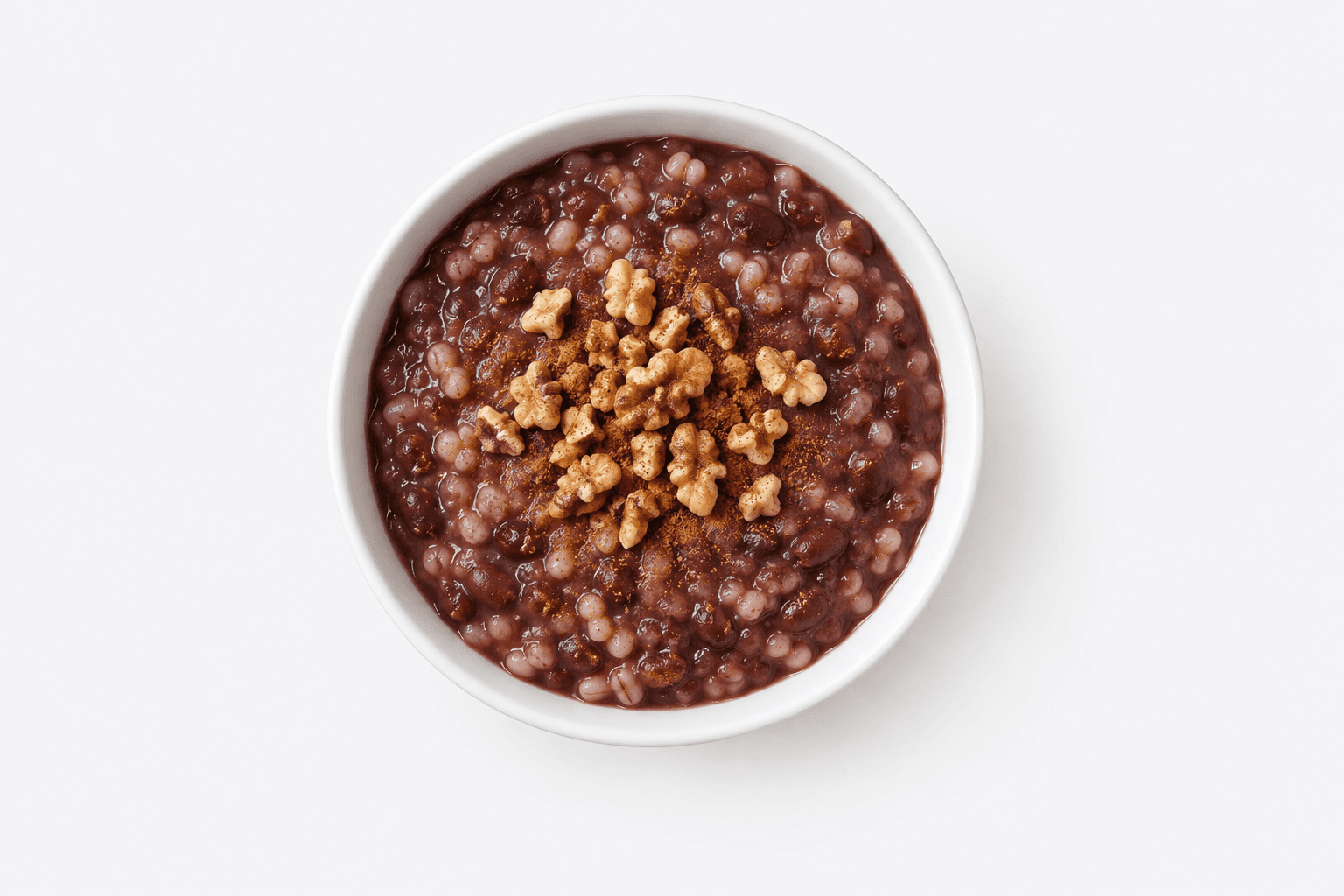
Leaving out the sugar is the whole dish.
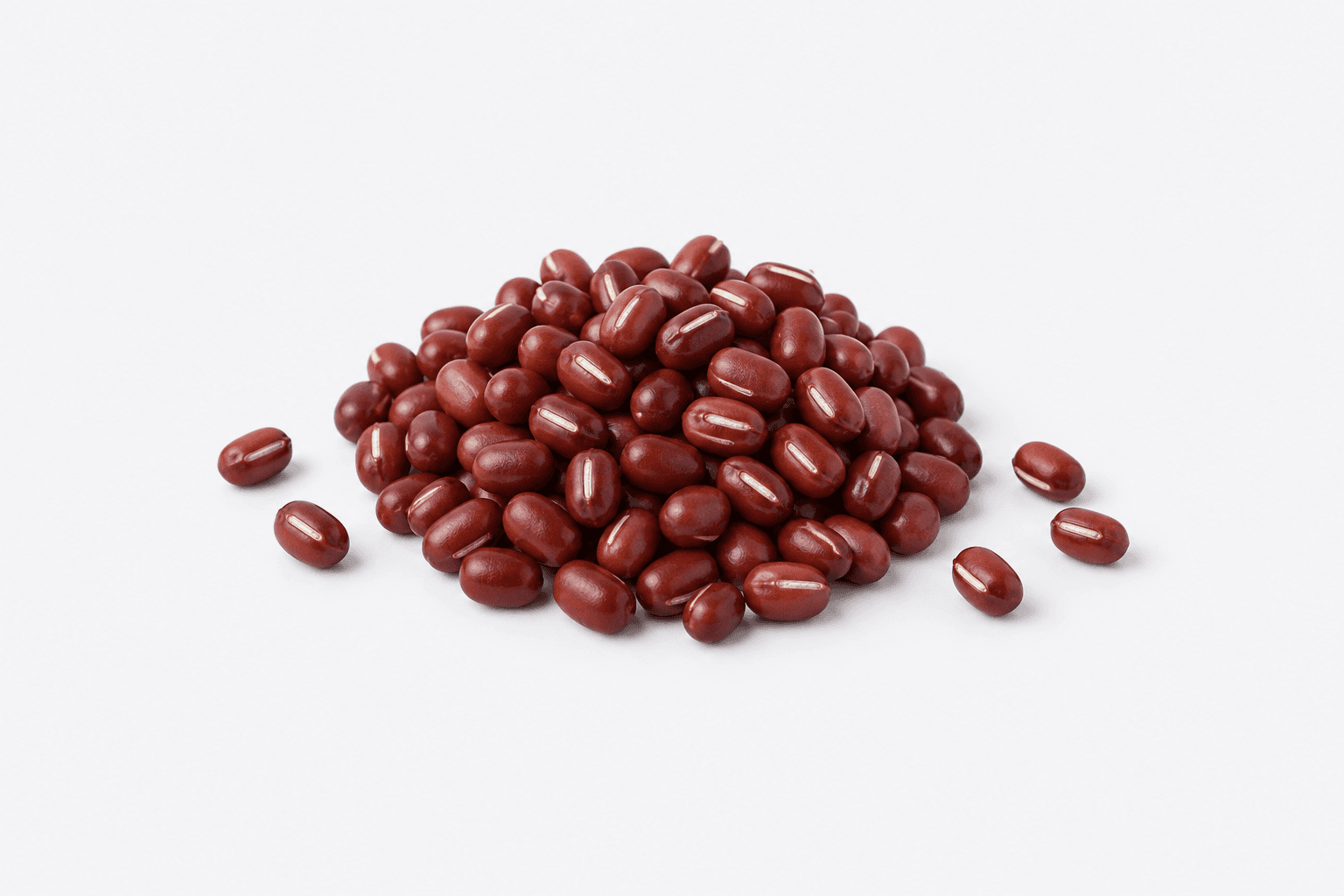
The clinical evidence on adzuki comes from the pulse category. Meta-analyses of randomised trials found pulse intake lowering LDL — and what those trials fed was boiled beans, beans in soups and salads.
That is not how adzuki is usually eaten.
| Form | What comes with the beans |
|---|
| Sweet red bean paste | Sugar at 40–50% of the beans' weight |
| Patbingsu | Paste + condensed milk + syrup |
| Sweet red bean bun | Paste + the sugar in the bread |
| This porridge | Half a teaspoon of salt |
Expecting the pulse benefit while eating a paste that is 40% sugar does not add up.
The first water goes out because of adzuki's saponins and tannins, the source of its astringency. Some water-soluble compounds leave with them, so it is a trade — if the astringency does not bother you, skip the step.
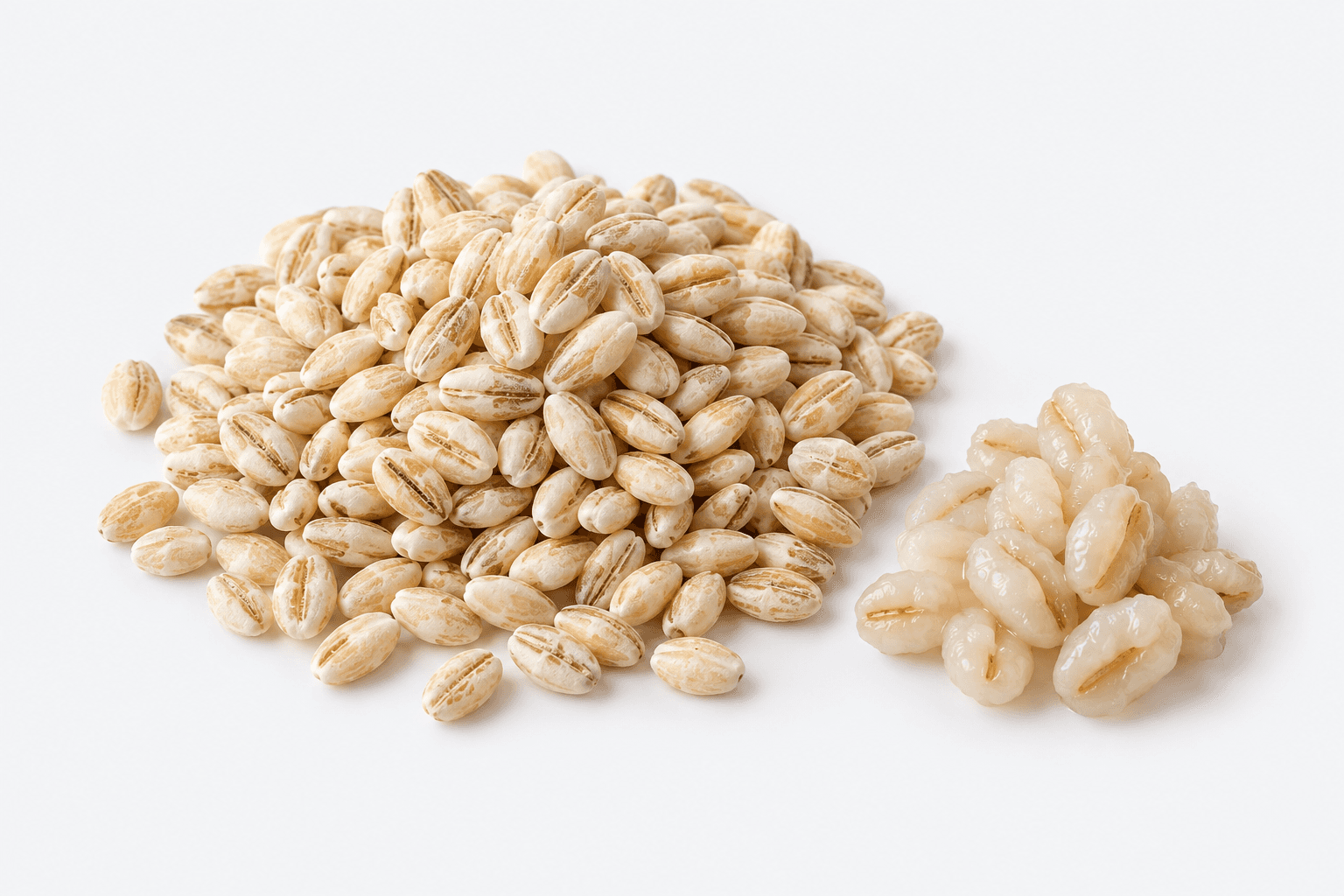
Adzuki does not need soaking. Unlike soybeans, its hard coat takes up water slowly. Soaking shortens the cooking but is not required. The barley does need it — it breaks down faster than the beans, which is why it goes in later.
The salt is not there to make it salty. A small amount of salt makes sweetness more noticeable. The sweetness already in the beans and barley comes forward, so it does not taste flat without sugar.
The numbers. For three servings, from 120 g of beans, 60 g of barley and 30 g of walnuts:
- About 25 g of fibre — 8.3 g each, a third of the daily target
- About 750 µg of folate (raw basis), mostly from the beans. An hour of boiling loses a fair share of it, though
- About 750 kcal — 250 kcal each
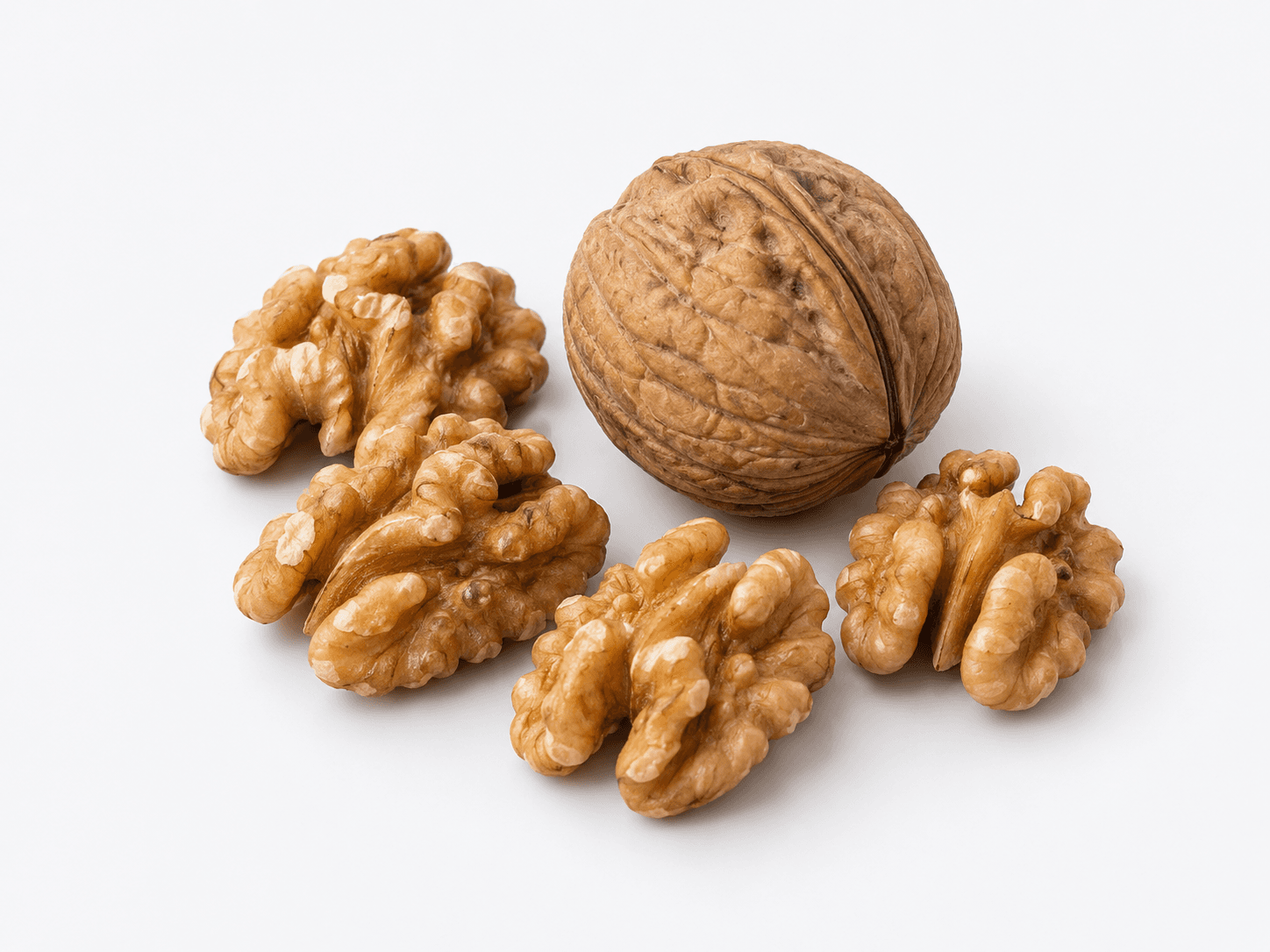
The walnuts go on last for texture. Porridge is soft all the way through, with nothing to chew; toasted walnuts fill that gap. Never high heat — walnuts are 65% fat and scorch fast.
Take care if you restrict potassium for kidney disease. Dry adzuki holds 1,250 mg per 100 g, and this recipe uses 120 g.