Grains & legumes
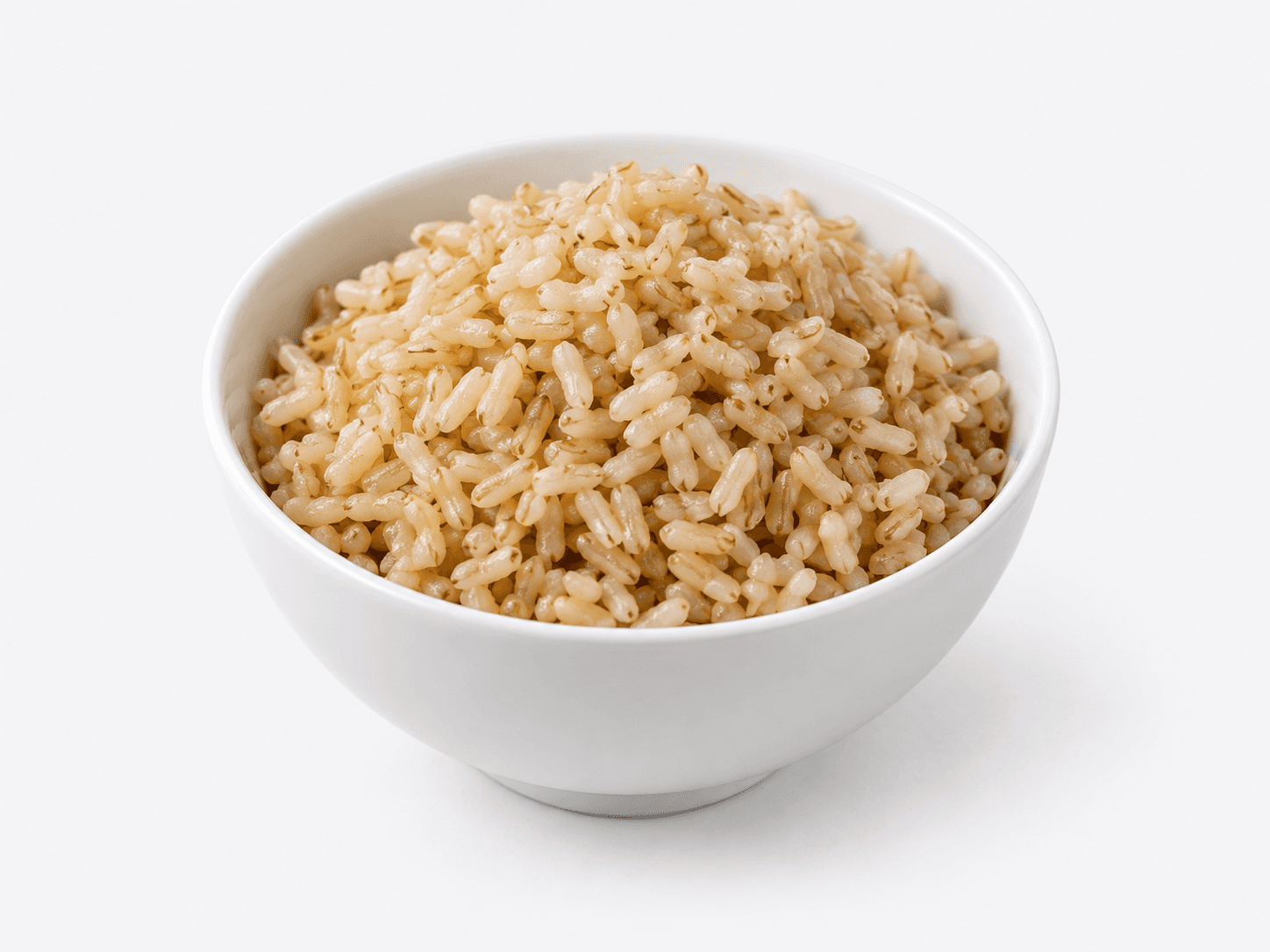
Brown rice
People who eat more whole grains consistently show less type 2 diabetes. In randomised trials, though, the glycaemic markers barely moved.
Cooked, per 100 g, the calories are nearly identical while quinoa carries 1.6 times the protein, 1.75 times the fibre and 1.6 times the magnesium. Brown rice has rows quinoa does not.
Grains & legumes
People who eat more whole grains consistently show less type 2 diabetes. In randomised trials, though, the glycaemic markers barely moved.
Grains & legumes
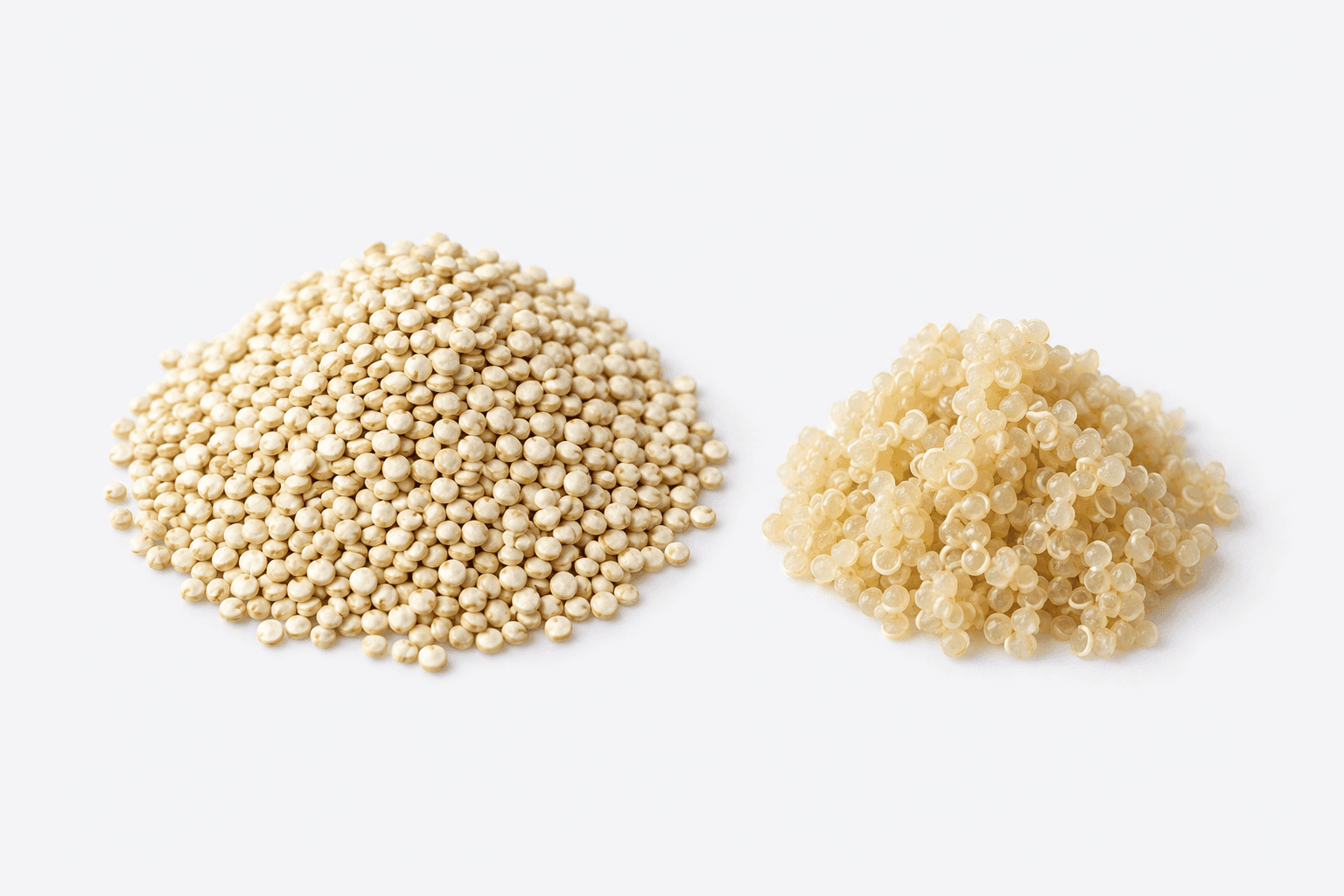
Cooked quinoa holds 4.4 g of protein per 100 g. It does contain all the essential amino acids, but not in an amount that meets your protein needs.
Brown rice — Leads on
Quinoa — Leads on
Per 100 g edible portion. Only rows where both have a figure are shown, and no winner is marked for items like calories or sugars where more is not better.
Basis for these figures
| Nutrition | Brown rice | Quinoa |
|---|---|---|
| Calories | 123 kcal | 120 kcal |
| Protein | 2.7 g | 4.4 g |
| Carbohydrates | 25.6 g | 21.3 g |
| Fiber | 1.6 g | 2.8 g |
| Magnesium | 39 mg | 64 mg |
| Manganese | 0.97 mg | 0.631 mg |
Compared cooked, 100 g to 100 g, the energy is effectively the same: 123 kcal against 120. At that same energy quinoa leads on protein, 4.4 g against 2.7 g, on fibre, 2.8 g against 1.6 g, and on magnesium, 64 mg against 39 mg. Its 42 µg of folate and 1.49 mg of iron are rows the brown rice table does not have at all.
The protein gap widens on quality, not just quantity. Grain protein is usually short on lysine; quinoa is one of the few plant proteins with a full spread of essential amino acids. So the same 4.4 g is worth more in a meal that has no beans alongside it.
That does not mean brown rice only loses. Selenium at 5.8 µg, thiamin at 0.18 mg and niacin at 2.6 mg are rows quinoa's table lacks, and manganese actually runs higher in brown rice, 0.97 mg against 0.631.
One thing has to be said on the rice side — inorganic arsenic. Rice grows in flooded paddies and takes up more arsenic from soil than other grains, and the arsenic concentrates in the bran. So brown rice carries more of it than white. The US Food and Drug Administration maintains guidance specifically on rice intake in infants. Rinsing and boiling in plenty of water, then draining, removes a substantial share. This is not an argument to drop brown rice; it is an argument against eating one grain and only that grain.
Quinoa has saponins. They are the bitter coating on the seed and they dissolve in water. Packaged quinoa is usually pre-rinsed, but rubbing it in a sieve under running water leaves less bitterness.
Alternating is the sensible answer. Both beat white rice, and neither gives a reason to eat it every single day.