Nuts & seeds
Walnut
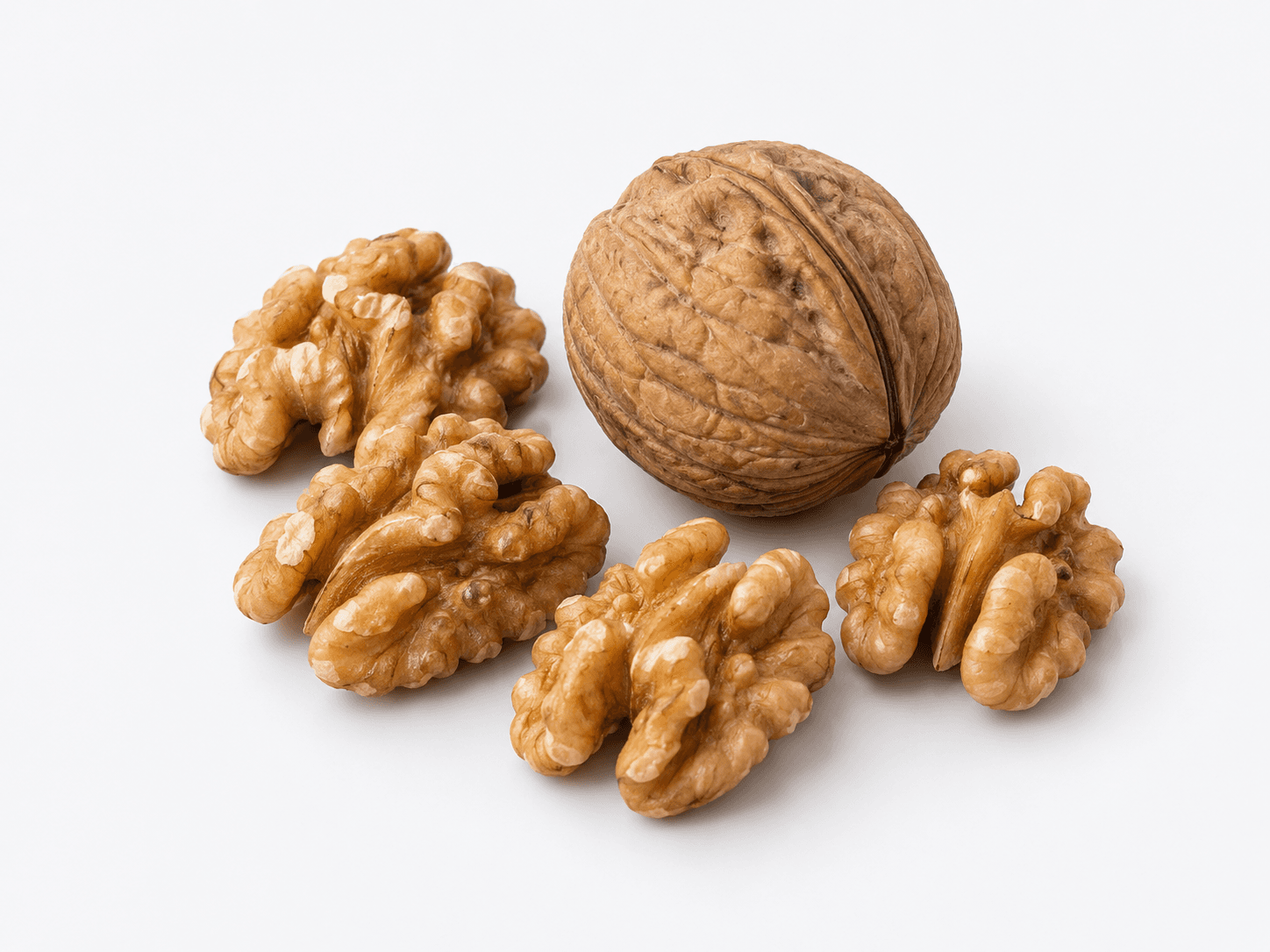
Walnuts carry 9.1 g of ALA per 100 g, an order of magnitude beyond other nuts. But the rate at which ALA converts to EPA and DHA is very low.
The walnut's 9.1 g of omega-3 is a row the pecan table does not have at all. The pecan is the fattier of the two at 72 g, and leads on manganese and zinc.
Nuts & seeds
Walnuts carry 9.1 g of ALA per 100 g, an order of magnitude beyond other nuts. But the rate at which ALA converts to EPA and DHA is very low.
Nuts & seeds
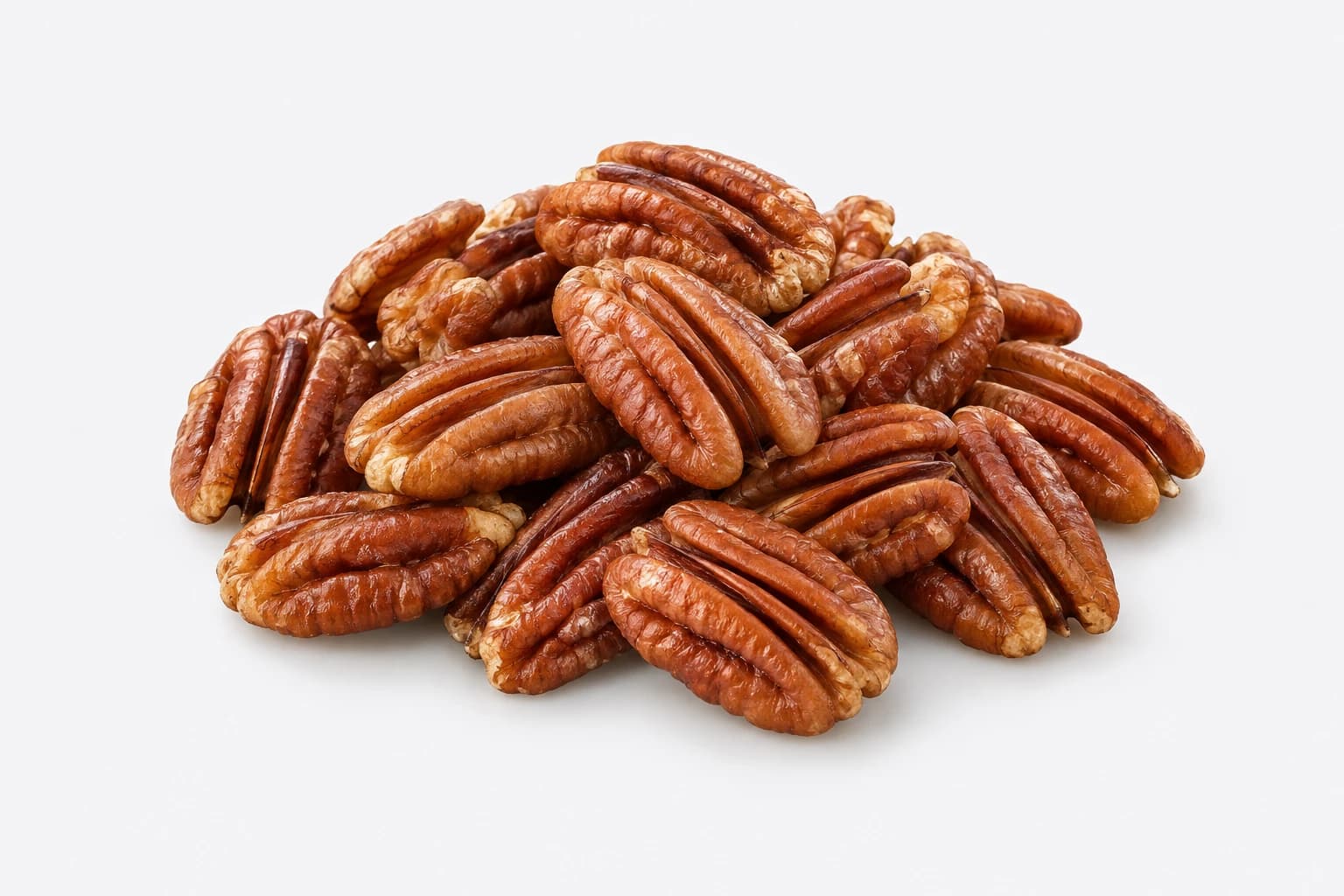
The 2021 trial did something unusual: it ran an add arm and a substitute arm at once. Both lowered total cholesterol, LDL, triglycerides and apolipoprotein B, while the control did not move. But the dose was 68 g a day and each arm held 16–18 people.
Walnut — Leads on
Pecans — Leads on
Per 100 g edible portion. Only rows where both have a figure are shown, and no winner is marked for items like calories or sugars where more is not better.
Basis for these figures
| Nutrition | Walnut | Pecans |
|---|---|---|
| Calories | 654 kcal | 691 kcal |
| Protein | 15.2 g | 9.17 g |
| Fat | 65.2 g | 72.0 g |
| Carbohydrates | 13.7 g | 13.9 g |
| Fiber | 6.7 g | 9.6 g |
| Magnesium | 158 mg | 121 mg |
| Copper | 1.6 mg | 1.2 mg |
They are cousins in the same family and both figures are for 100 g raw, so the table reads straight.
The biggest gap is omega-3: 9.1 g for the walnut, and no row at all for the pecan. The walnut carries far more alpha-linolenic acid than any other nut, and that is what makes it distinctive.
But a caveat this site repeats attaches here. The walnut's omega-3 is plant alpha-linolenic acid, not the EPA and DHA of fish. The body does convert it, but at a low rate, so a handful of walnuts does not stand in for a fillet of mackerel. They share a name, not a molecule.
Protein also goes to the walnut, 15.2 g against 9.17 — about 1.7 times. The pecan sits at the low end for protein among nuts.
The pecan's own rows are clear. Fat 72 g against 65.2, fibre 9.6 g against 6.7, and manganese at 4.5 mg and zinc at 4.53 mg are rows the walnut table lacks. Potassium at 410 mg and phosphorus at 277 mg are the pecan's too. Energy runs slightly higher, 691 kcal against 654.
Both have LDL evidence, but of different character. The walnut is graded moderate for lowering it a little; the pecan trial is interesting because LDL fell even in the arm that simply added pecans to the usual diet. That trial, though, used 68 g a day — more than two handfuls — with sixteen people per arm. It is not a result to lean on heavily.
In short: walnut for omega-3 and protein, pecan for fibre, manganese and zinc. Both are fatty enough to go rancid quickly, so sealed storage in the fridge or freezer is the safe choice.