Seafood
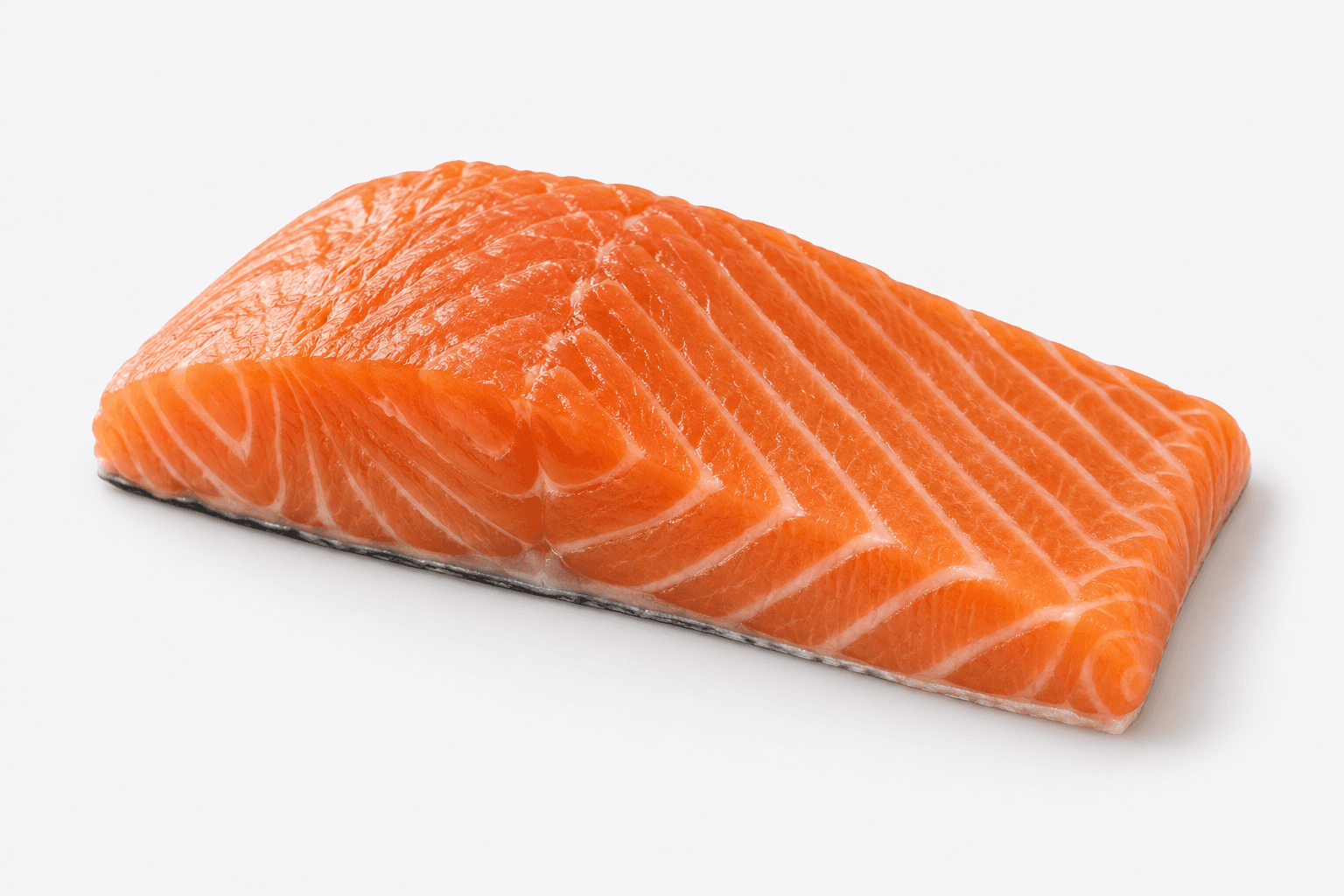
Salmon
One portion covers a large share of your weekly omega-3 and delivers vitamin D — a nutrient almost no other food supplies in useful amounts.
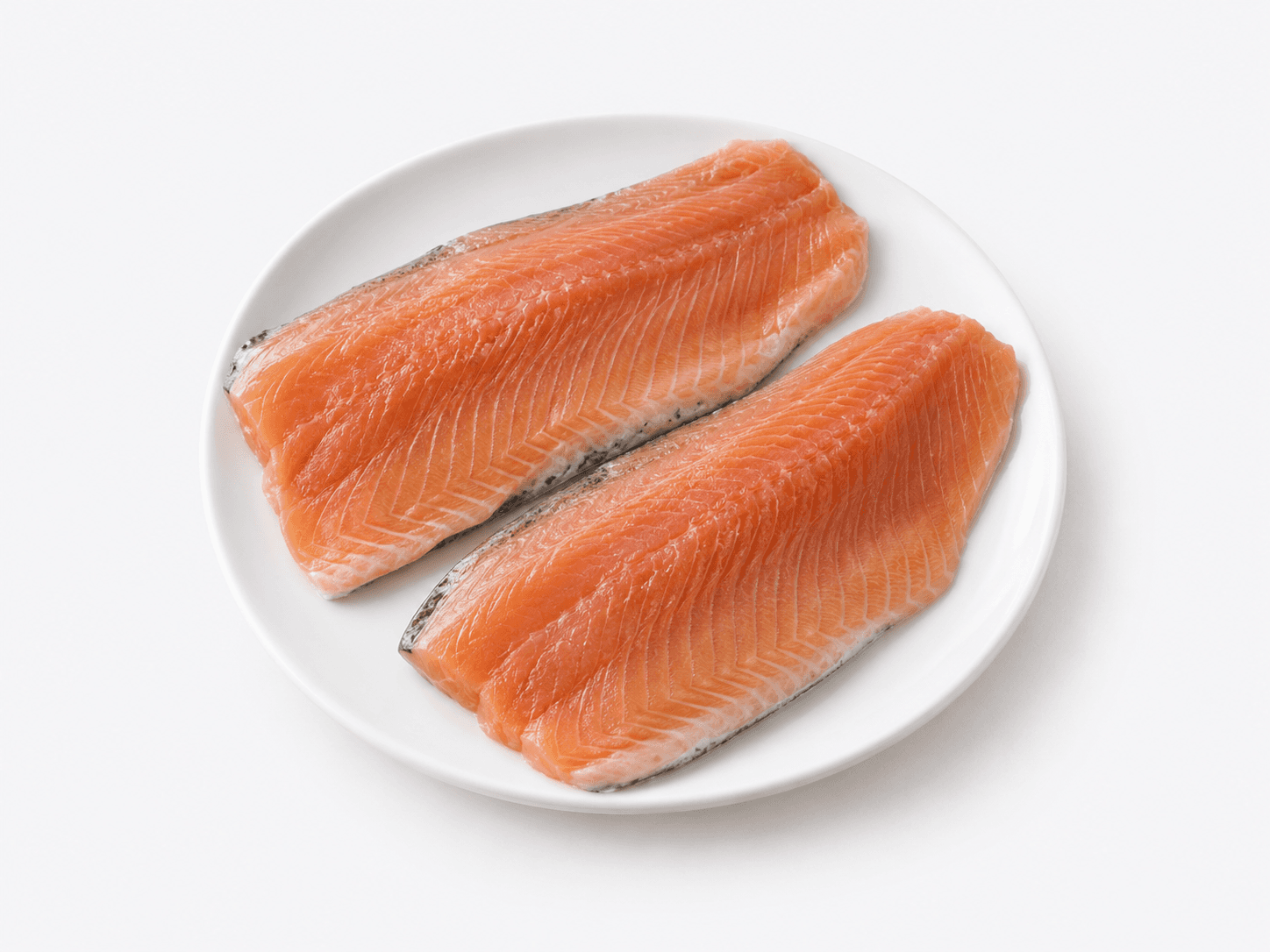
Trout brings 19.9 g of protein at 141 kcal, essentially matching salmon. But its omega-3 is 0.73 g against 2.2 g — while its vitamin D is actually higher.
Seafood
One portion covers a large share of your weekly omega-3 and delivers vitamin D — a nutrient almost no other food supplies in useful amounts.
Salmon — Leads on
Trout — Leads on
Per 100 g edible portion. Only rows where both have a figure are shown, and no winner is marked for items like calories or sugars where more is not better.
Basis for these figures
| Nutrition | Salmon | Trout |
|---|---|---|
| Calories | 208 kcal | 141 kcal |
| Protein | 20.4 g | 19.9 g |
| Fat | 13.4 g | 6.2 g |
| Omega-3 | 2.2 g | 0.73 g |
| Vitamin D | 11 µg | 15.9 µg |
| Vitamin B12 | 3.2 µg | 4.3 µg |
| Potassium | 363 mg | 377 mg |
| Selenium | 24 µg | 23.6 µg |
The bases match here, so the table reads straight. Both figures are for 100 g of raw farmed fillet: Atlantic salmon and rainbow trout.
Protein is effectively identical, 20.4 g against 19.9 g. Yet the energy is 208 kcal against 141 — trout at two-thirds. The whole difference is fat: 13.4 g against 6.2 g. If you want protein while watching calories, trout is the efficient choice.
That same fat is the reason to pick salmon. Omega-3 runs 2.2 g against 0.73 g, three times over, and it is this fat that the triglyceride evidence rests on. If omega-3 is the point, trout does not substitute for salmon.
Vitamin D, though, goes the other way. Trout carries 15.9 µg against salmon's 11, with half the fat. Vitamin D content follows the feed and the species, not simply the amount of fat. Vitamin B12 also favours trout, 4.3 µg against 3.2, and vitamin E at 2.34 mg is a row the salmon table does not have.
Selenium and potassium are near enough the same — 23.6 µg against 24, and 377 mg against 363.
So: if you eat fish for the omega-3, salmon is the clear answer. If you are looking at protein per calorie and at vitamin D, trout wins, and it is usually cheaper. Alternating the two across the week is a sensible way to hit fish twice — just remember that in a trout week, less omega-3 came with it.