Nuts & seeds
Peanuts
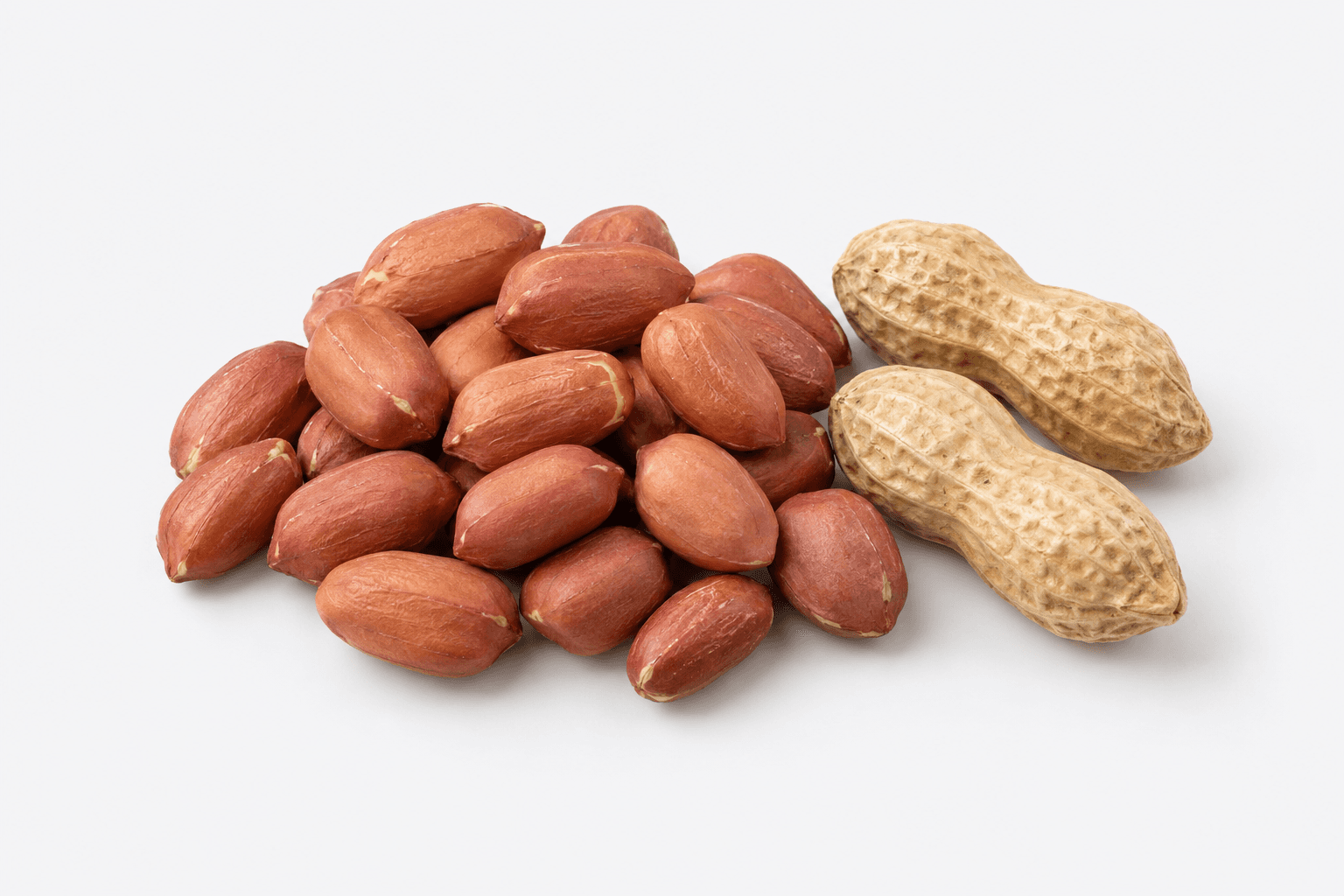
Across three cohorts of 206,000 people, mortality risk ran 17–21 % lower. Peanut butter showed no such association.
Calories and fat are nearly identical. Almonds carry 25.6 mg of vitamin E against 4.9 — five times — while the cohort that held up across 200,000 people was built on the cheapest nut of all.
Nuts & seeds
Across three cohorts of 206,000 people, mortality risk ran 17–21 % lower. Peanut butter showed no such association.
Nuts & seeds
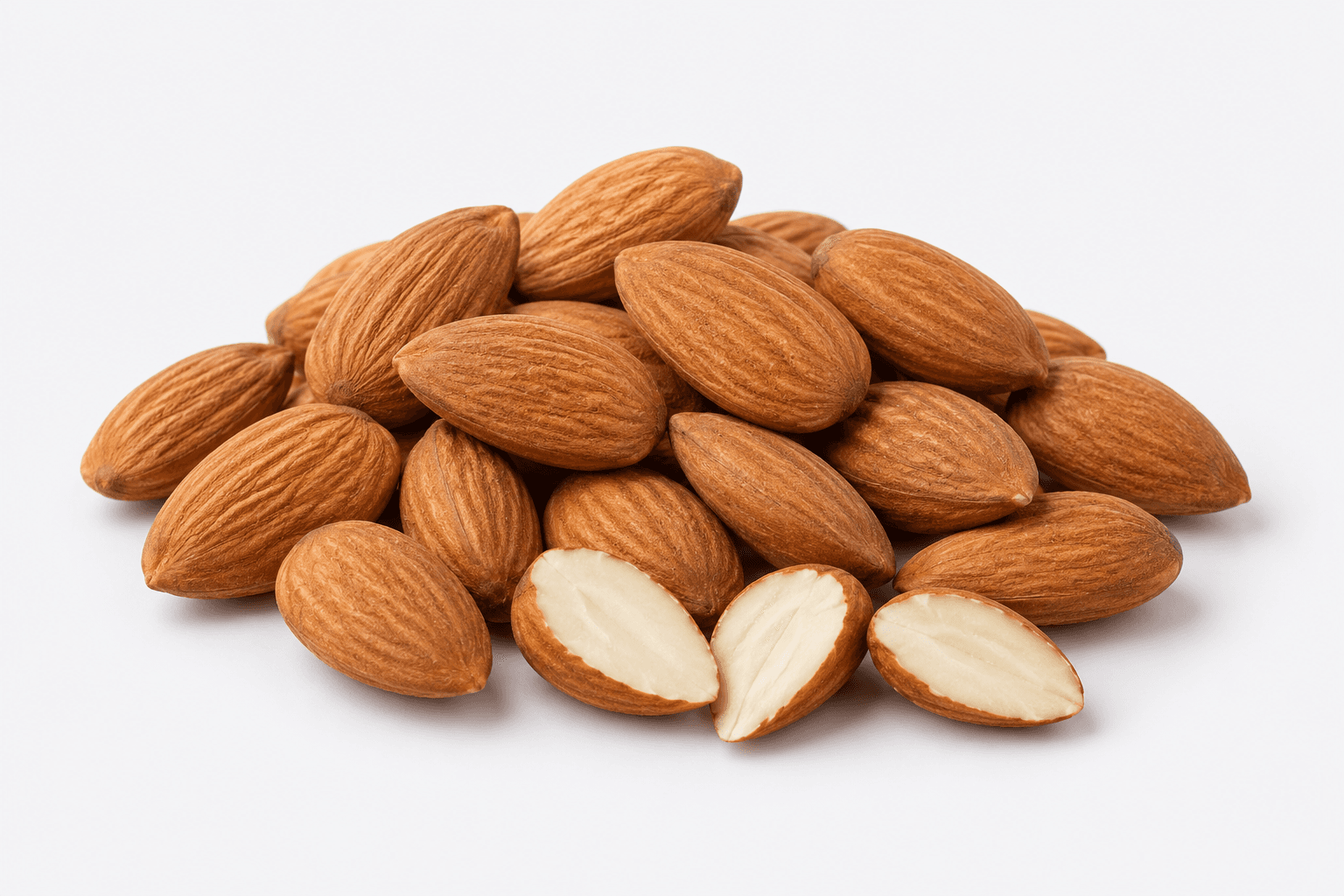
Thirty grams of almonds carries 7.7 mg of vitamin E — half the 15 mg adult daily requirement. The reason all those calories do not show up on the scale is that the fat is not fully absorbed.
Peanuts — Leads on
Almond — Leads on
Per 100 g edible portion. Only rows where both have a figure are shown, and no winner is marked for items like calories or sugars where more is not better.
| Nutrition | Peanuts | Almond |
|---|---|---|
| Calories | 587 kcal | 579 kcal |
| Protein | 24.4 g | 21.2 g |
| Fat | 49.7 g | 49.9 g |
| Carbohydrates | 21.3 g | 21.6 g |
| Fiber | 8.4 g | 12.5 g |
| Vitamin E | 4.9 mg | 25.6 mg |
| Magnesium | 178 mg | 270 mg |
Start with the classification: the peanut is not a nut but the seed of a legume, ripening underground. Its nutrient profile overlaps so closely with tree nuts, though, that both cooking and research treat it as one.
The top rows are nearly the same. 587 kcal against 579, fat 49.7 g against 49.9, protein 24.4 g against 21.2. For an equal handful, the difference is not something you would notice.
They separate on micronutrients. Vitamin E runs 4.9 mg against 25.6 — more than five times. Almonds top this site's vitamin E ranking, and a 30 g handful covers over half an adult's daily requirement. Calcium at 269 mg is a row the peanut table does not have, and fibre goes to almonds as well, 12.5 g against 8.4.
The peanut wins rows too. Niacin at 14.4 mg and folate at 97 µg are absent from the almond table, and potassium at 634 mg is the peanut's.
The most interesting thing, though, sits outside the table. Most nut-and-mortality research has been done in white, higher-income populations; a 2015 study looked separately at low-income Americans and 200,000 residents of Shanghai. The findings held — and what the Shanghai cohort ate was, in practice, peanuts. The authors wrote in their conclusion that peanuts, being inexpensive, could be a cost-effective means of cardiovascular health. Citing price as a reason is rare in a nutrition paper.
The cautions differ. Peanuts stored damp can grow moulds that produce aflatoxin, so any that are soft or bitter should be discarded, and they are among the foods most associated with severe allergy. Almonds are fatty enough that the oil goes rancid with time.
In short, almonds for vitamin E and calcium; peanuts for price and the weight of epidemiology behind them.