Dairy & eggs
Egg
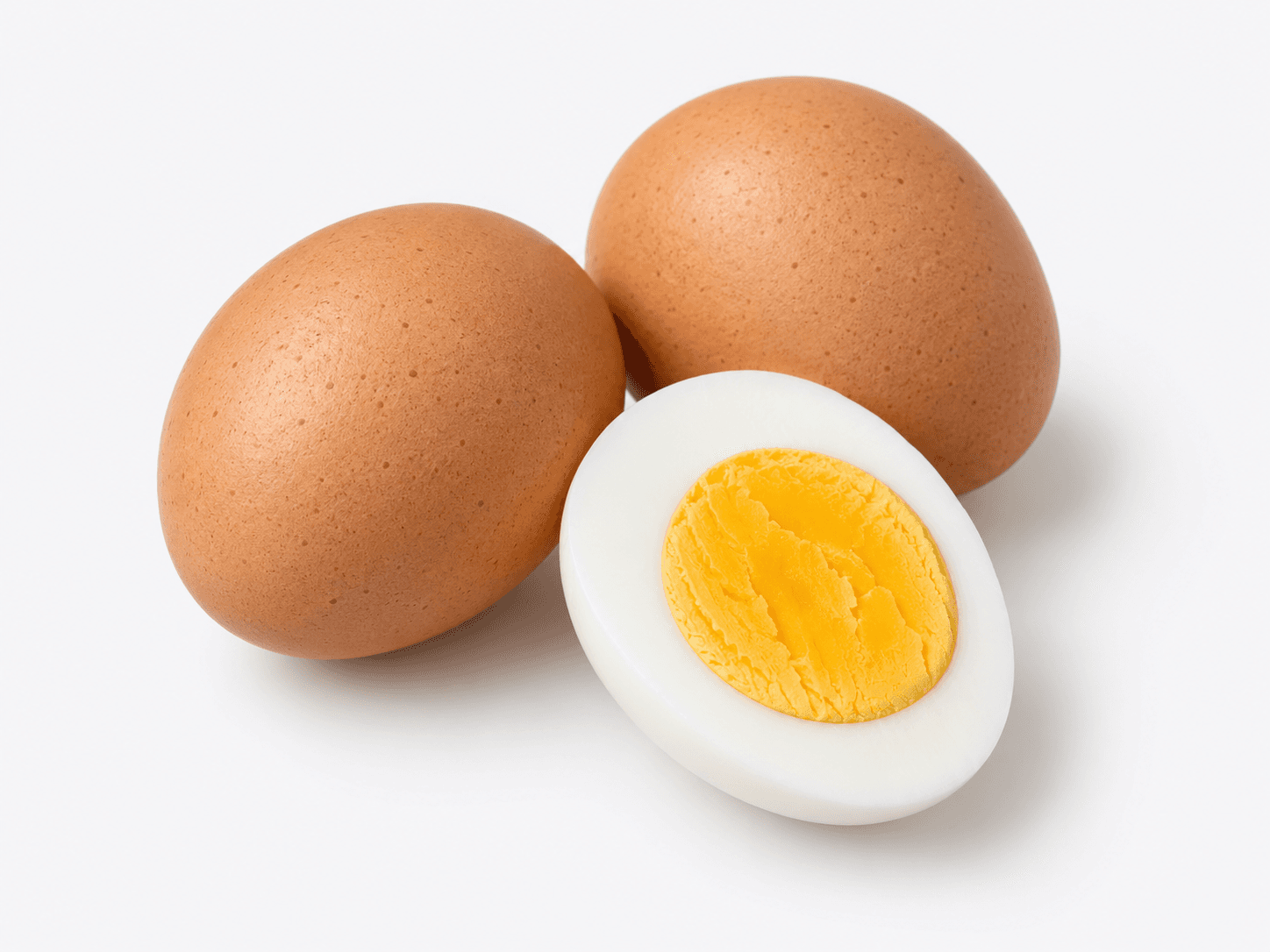
The advice to limit yolks because of their cholesterol has been overturned. What remains is choline, a nutrient far fewer people talk about.
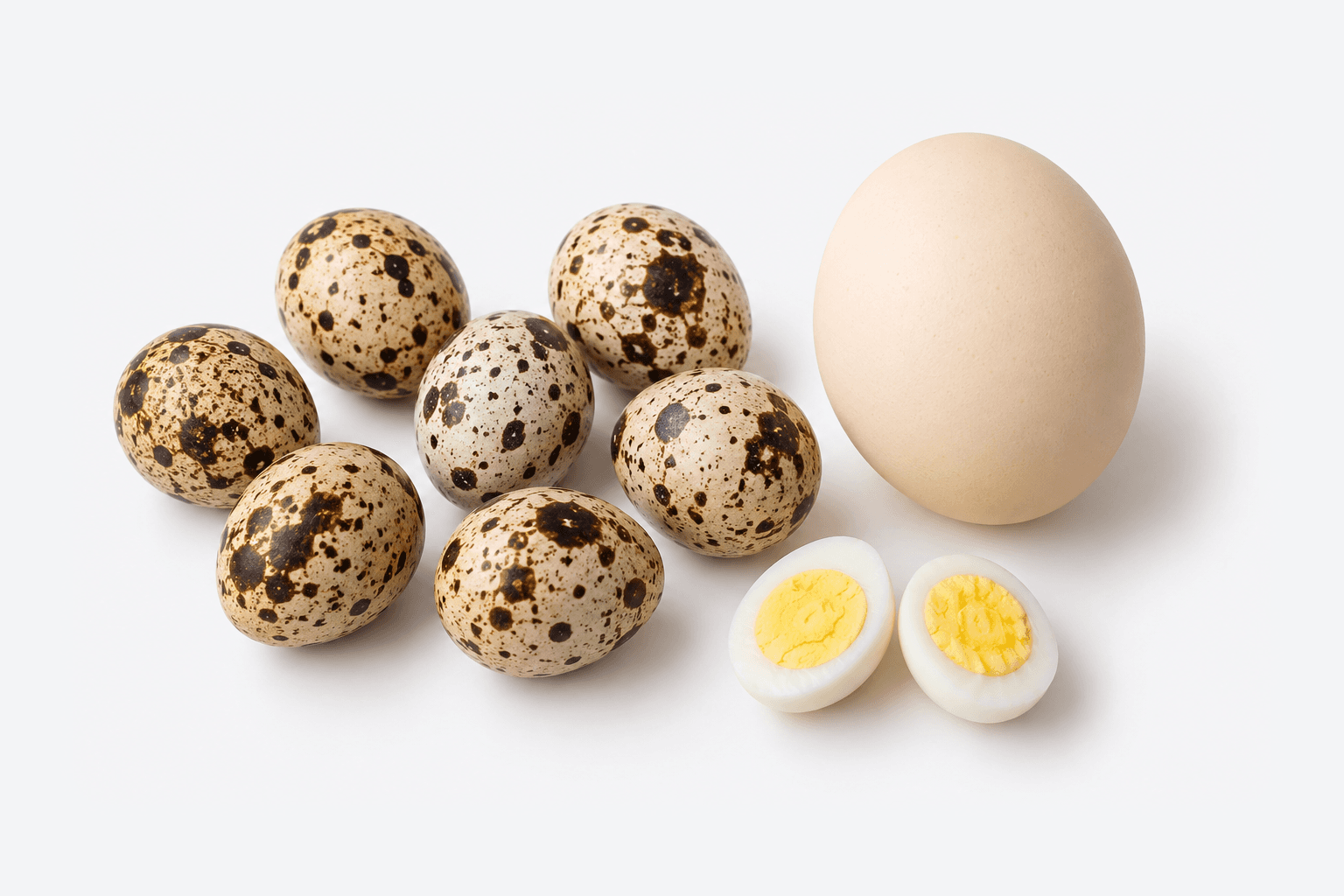
The quail egg runs slightly higher in energy and fat, and its 3.65 mg of iron is a row the chicken egg lacks. But 100 g is eleven quail eggs against two chicken eggs.
Dairy & eggs
The advice to limit yolks because of their cholesterol has been overturned. What remains is choline, a nutrient far fewer people talk about.
Dairy & eggs
At 844 mg per 100 g, the cholesterol is double a hen's egg. But one quail egg is 9 g, so it carries about 76 mg — less than a hen's egg (about 206 mg). Change the unit and the conclusion flips.
Egg — Leads on
About equal
Quail eggs — Leads on
Per 100 g edible portion. Only rows where both have a figure are shown, and no winner is marked for items like calories or sugars where more is not better.
Basis for these figures
| Nutrition | Egg | Quail eggs |
|---|---|---|
| Calories | 143 kcal | 158 kcal |
| Protein | 12.6 g | 13.0 g |
| Fat | 9.5 g | 11.1 g |
| Vitamin A | 160 µg | 156 µg |
| Vitamin B12 | 0.89 µg | 1.58 µg |
Match the count first. The 100 g in the table is about two large chicken eggs, or eleven quail eggs. Egg for egg, a chicken egg is more than five times the size. Everything below is on an equal-weight basis.
At equal weight the quail egg is slightly richer: 158 kcal against 143, fat 11.1 g against 9.5, protein 13.0 g against 12.6. There is one reason for all of it — a quail egg is proportionally more yolk. Fat and the fat-soluble compounds live in the yolk, so a higher yolk share lifts every one of those rows together.
Three rows belong to the quail egg alone: iron at 3.65 mg, riboflavin at 0.79 mg and folate at 66 µg. Vitamin B12 also goes its way, 1.58 µg against 0.89 — nearly double.
The chicken egg has more rows of its own: iodine 49 µg, selenium 30.7 µg, vitamin D 2 µg, vitamin E 1.05 mg, zinc 1.3 mg, and lutein at 503 µg. Choline favours it too, 294 mg against 263.
And one caveat attaches equally to both. The meta-analysis of 17 randomised trials cited on this site's quail egg page found that increasing egg intake raised LDL by 8.14 mg/dL. That result is about eggs in general, not quail eggs in particular, so swapping one for the other does not sidestep it.
In short, the nutritional differences are explained almost entirely by yolk ratio rather than by species. Quail eggs for iron, riboflavin and folate; chicken eggs for lutein, iodine and vitamin D.