Contents
What it is
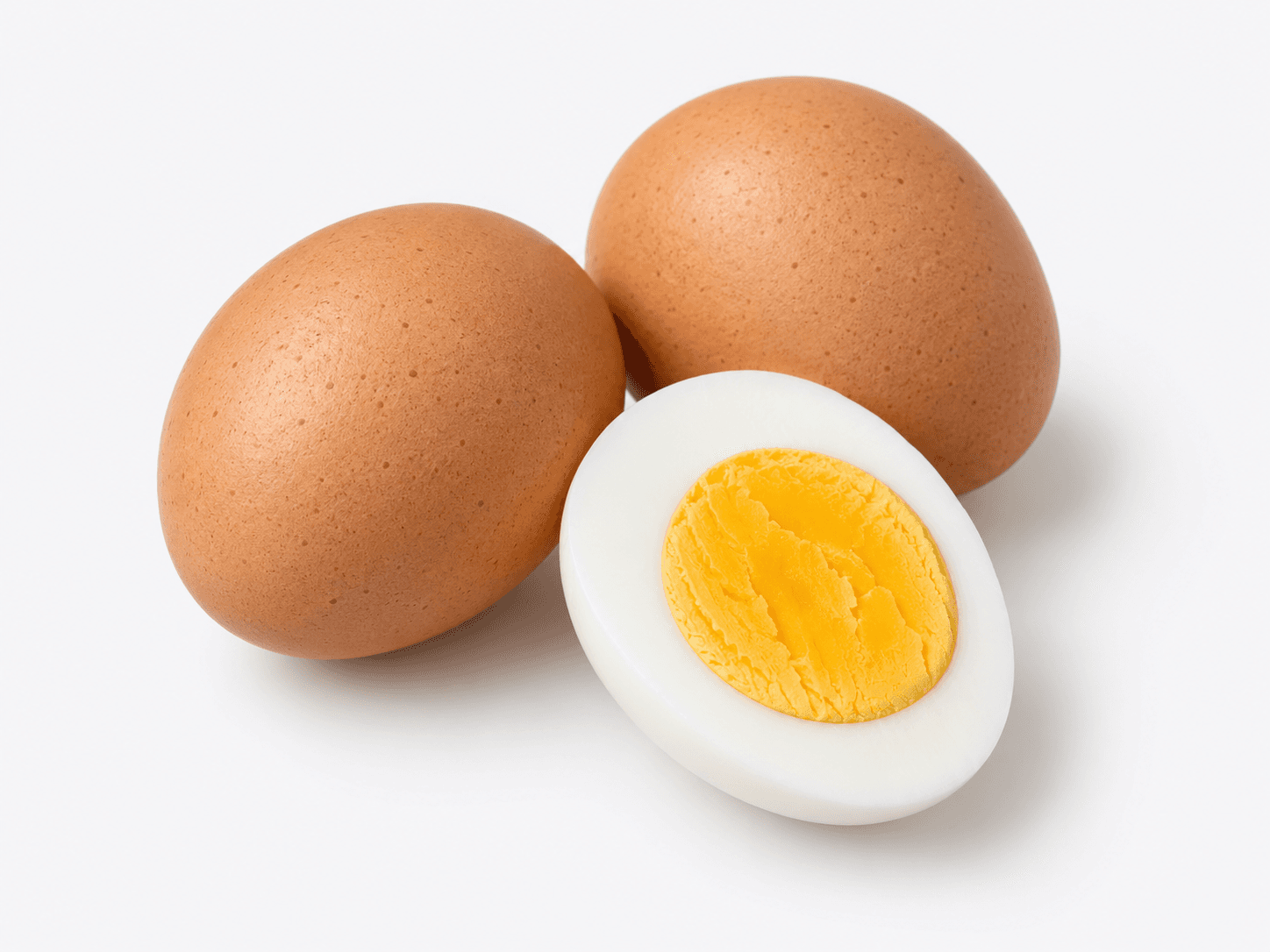
An egg is what a hen lays, and the key to understanding it is that white and yolk are two quite different substances. The white is mostly water and protein with almost no fat; the yolk holds the fat, the fat-soluble vitamins, the choline and the iron. They also set at different temperatures — the white firms first and the yolk later — and cooking between those two points is exactly what gives a soft-boiled egg. Shell colour reflects the breed of hen and has nothing to do with nutrition.
For decades eggs travelled with the warning to keep yolks to one a day. A yolk carries about 186 mg of cholesterol, and older guidance set a 300 mg daily ceiling.
Then the 2015–2020 US Dietary Guidelines removed that numeric limit. Evidence had accumulated that dietary cholesterol affects blood cholesterol less than assumed: the body makes most of its own and dials production down when intake rises.
Removing the cap does not mean unlimited. It means the reason to avoid eggs is no longer as strong as it was.
Key benefits
- Nutrition data
The most balanced protein by amino acid profile
Egg protein contains every essential amino acid in sufficient amount, which is why it has long served as the reference against which other proteins are scored. A large egg holds about 6 g.
- Nutrition data
Almost unrivalled as a source of choline
Choline builds cell membranes and the neurotransmitter acetylcholine, and it is needed for fetal brain development in pregnancy. Few foods carry much of it, so most people fall short of the recommendation. One egg supplies roughly 147 mg — one of the only realistic ways to meet it.
- Nutrition data
Lutein and zeaxanthin in a well-absorbed form
The yolk holds far less lutein than spinach by weight, but it comes packaged with fat, which raises absorption. These pigments accumulate in the macula, where they are thought to reduce light damage.
- Nutrition data
One of the few natural sources of vitamin D
2 µg per 100 g. Not a large amount, but the list of foods that naturally contain vitamin D is short — oily fish, egg yolk and mushrooms is close to all of it.
How to eat it well
- Do not discard the yolk. Choline, lutein, vitamin D and B12 are nearly all in it. White-only leaves you with protein alone.
- Soft-cooked digests marginally better than hard-cooked. The difference is small, and raw egg is actually absorbed less well.
- Avoid long cooking over high heat. The grey-green rim on a yolk is iron sulphide, and it costs you flavour and texture.
- Eaten with vegetables, the yolk's fat raises absorption of their carotenoids.
- Boiled eggs keep about a week refrigerated, better left in the shell.
How to read the grades
Each benefit carries a label showing how far research on people supports it. Grades differ between items even within the same ingredient.
- Nutrition data
- A fact verifiable from food composition databases or health authorities. This is a different kind of statement from a clinical effect.
- Strong evidence
- Consistently confirmed across randomised controlled trials or meta-analyses.
- Moderate evidence
- Human studies exist, but effect sizes are small or results are mixed.
- Early research
- Cell or animal work, or small preliminary studies.
- Not established
- Commonly claimed, but not confirmed in studies on people.
What to watch out for
- Egg is a major allergen, particularly common in young children.
- Raw egg carries salmonella risk. Pregnant people, young children, older adults and anyone immunocompromised should eat them fully cooked.
- Even without the cap, familial hypercholesterolaemia or diabetes makes the individual response variable. Discuss it with your doctor.
- What you eat eggs with may matter more than the eggs. The risk attached to a bacon-and-sausage breakfast is not the egg's doing.
- Washing shells before storage strips the protective cuticle and makes bacterial entry easier, not harder.
Nutrition
Per 100 g of whole egg without shell — about two large eggs.
- Calories
- 143 kcal7%
- Carbohydrates
- 0.7 g<1%
- Protein
- 12.6 g25%
- Fat
- 9.5 g12%
- Choline
- 294 mg53%
- Vitamin B12
- 0.89 µg37%
- Iodine
- 49 µg33%
- Selenium
- 30.7 µg56%
- Vitamin D
- 2 µg10%
- Vitamin A
- 160 µg18%
- Vitamin E
- 1.05 mg7%
- Lutein
- 503 µg
- Zinc
- 1.3 mg12%
Percentages are of the US FDA Daily Value for adults and children 4 and over. National reference intakes differ by sex and age.
Calculate this alongside other ingredients →
Key nutrients
Dishes with this ingredient
Compare with
Sources
The databases and health authorities this article's nutrition figures and health statements draw on.