Contents
What it is
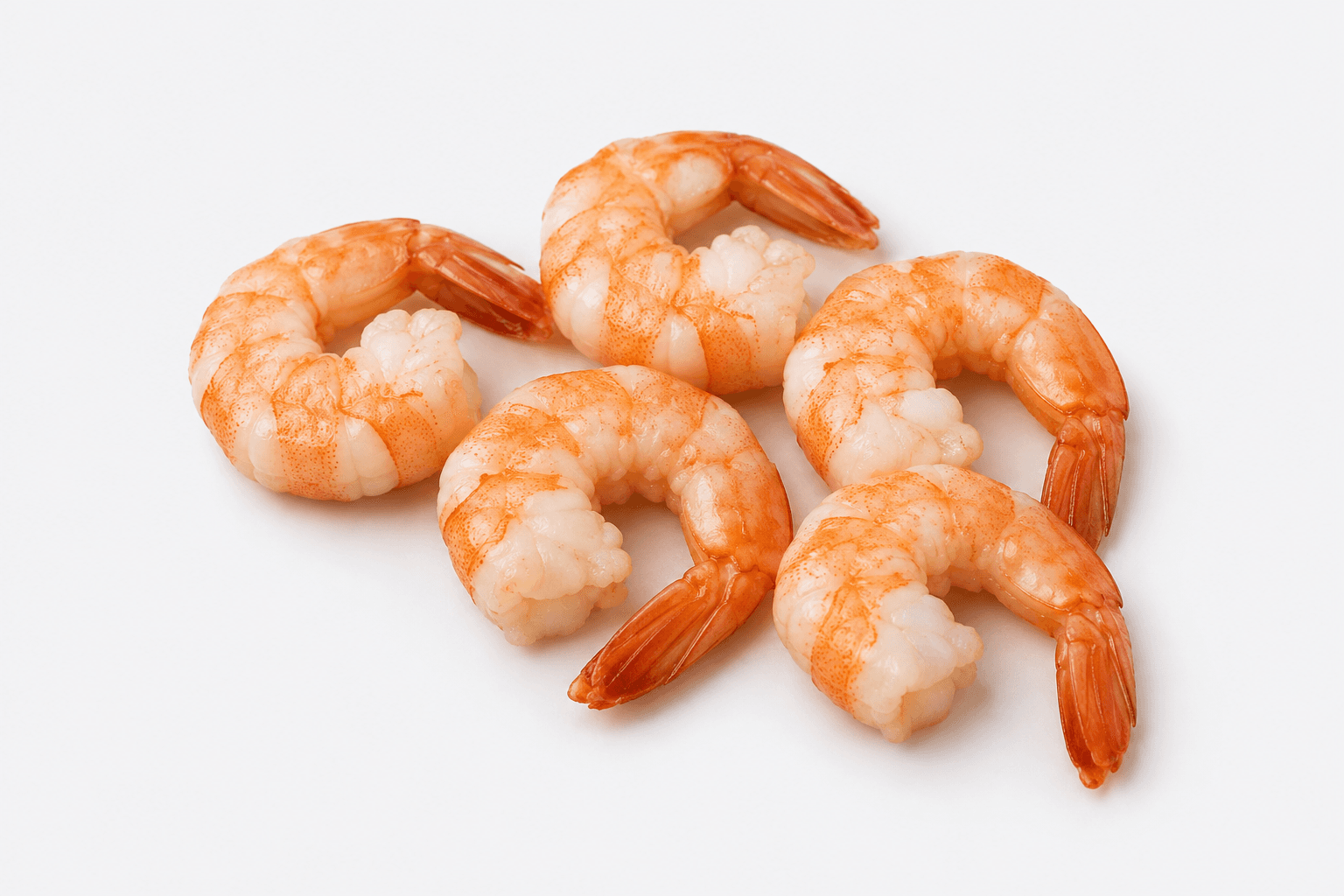
Shrimp are crustaceans with a hard outer shell. They turn red when cooked because astaxanthin in the shell is normally bound to a protein that makes it look blue-grey; heat unfolds that protein and releases the pigment's true red. The dark line along the back is the gut, and on larger shrimp it is tidier to pull it out. The muscle contracts fast with heat and toughens almost immediately, so brief cooking is the whole trick — when the tail curls inward, it is done. Shrimp is one of the classic shellfish allergens.
Shrimp spent decades on the avoid list because of cholesterol. At 211 mg per 100 g, the number is genuinely high.
Then a randomised crossover trial at Rockefeller University in 1996 took the assumption head on. The finding: shrimp raised LDL, but raised HDL more, so the ratios did not worsen — and triglycerides actually fell.
The field has since settled on saturated fat and overall dietary pattern mattering more to blood cholesterol than dietary cholesterol itself. Shrimp carries just 1.7 g of fat per 100 g.
Key benefits
- Moderate evidence
High in cholesterol, yet the lipoprotein ratios held
[1]A randomised crossover trial in people with normal lipids compared a low-fat diet containing 300 g of shrimp a day (590 mg of dietary cholesterol) against a baseline matched for fat but with only 107 mg of cholesterol.
On the shrimp diet LDL rose 7.1 % (P = 0.014). HDL rose 12.1 % (P = 0.0001). Because HDL rose more than LDL, neither the total-to-HDL nor the LDL-to-HDL ratio worsened.
Triglycerides fell 13 % (P = 0.004).
In the same trial, an egg diet matched for cholesterol (two large eggs, 581 mg a day) raised LDL 10.2 % against only 7.6 % for HDL, trending toward worse ratios. The shrimp diet came out better than the egg diet on both ratios and triglycerides.
The limits are plain. It is a 1996 study, small, and only in people whose lipids were normal. And 300 g a day is not a realistic portion. Still, the case that shrimp is dangerous because of its cholesterol does not come from here.
- Nutrition data
49.5 µg of selenium — 90 % of the daily requirement
Cooked shrimp carries 49.5 µg of selenium per 100 g. The adult requirement is 55 µg, so one plate covers most of it.
Selenium goes into antioxidant enzymes (glutathione peroxidase) and thyroid hormone metabolism. Intake varies widely by region with soil selenium — seafood is less exposed to that variation.
Vitamin B12 is 1.66 µg, 69 % of the 2.4 µg requirement. Choline is 135 mg.
Selenium is toxic in excess, though. The upper limit is 400 µg a day, and it becomes a question when supplements stack on top. Food alone rarely gets there.
- Nutrition data
22.8 g of protein in 119 kcal
Cooked shrimp is 119 kcal, 22.8 g of protein and 1.7 g of fat per 100 g.
That is below chicken breast (165 kcal, 31 g protein) in energy and about half of salmon's 208 kcal.
But cooking overturns these figures easily. Battered and deep-fried, the energy per 100 g more than doubles and the fat rises with it. The numbers above are for boiled or grilled shrimp.
How to eat it well
- Boil, grill or steam. The moment it is deep-fried, the profile above stops meaning anything.
- Do not overcook. Shrimp protein contracts fast and turns rubbery. A 'C' shape is right; an 'O' has gone too far.
- The shells make a good stock for flavour — though not a way to get calcium.
- Thaw frozen shrimp slowly in the fridge. Rushing it at room temperature or under water wrecks the texture.
- Many are sold brined. If the label lists phosphates or salt, count the sodium.
How to read the grades
Each benefit carries a label showing how far research on people supports it. Grades differ between items even within the same ingredient.
- Nutrition data
- A fact verifiable from food composition databases or health authorities. This is a different kind of statement from a clinical effect.
- Strong evidence
- Consistently confirmed across randomised controlled trials or meta-analyses.
- Moderate evidence
- Human studies exist, but effect sizes are small or results are mixed.
- Early research
- Cell or animal work, or small preliminary studies.
- Not established
- Commonly claimed, but not confirmed in studies on people.
What to watch out for
- Crustacean allergy is common and usually lifelong. Tropomyosin is the main culprit, and shrimp, crab and lobster cross-react. Anaphylaxis is possible.
- Check the sodium. Treatment with phosphate and salt solutions to retain moisture is widespread; the USDA entry for that product is 947 mg of sodium per 100 g.
- With gout, be careful. Crustaceans are a high-purine food.
- Know the source before eating them raw. Vibrio and other pathogens are a real risk. With liver disease or immune suppression, skip raw shellfish.
- The trial above is a 1996 study in a small number of people with normal lipids. If you are being treated for dyslipidaemia, talk to your doctor.
Nutrition
Approximate values per 100 g edible portion.
- Calories
- 119 kcal6%
- Protein
- 22.8 g46%
- Fat
- 1.7 g2%
- Selenium
- 49.5 µg90%
- Vitamin B12
- 1.66 µg69%
- Phosphorus
- 306 mg24%
- Choline
- 135 mg25%
- Zinc
- 1.6 mg15%
- Vitamin E
- 2.2 mg15%
- Magnesium
- 37 mg9%
Percentages are of the US FDA Daily Value for adults and children 4 and over. National reference intakes differ by sex and age.
Calculate this alongside other ingredients →
Key nutrients
By health concern
Dishes with this ingredient
Sources
The databases and health authorities this article's nutrition figures and health statements draw on.