Vegetables
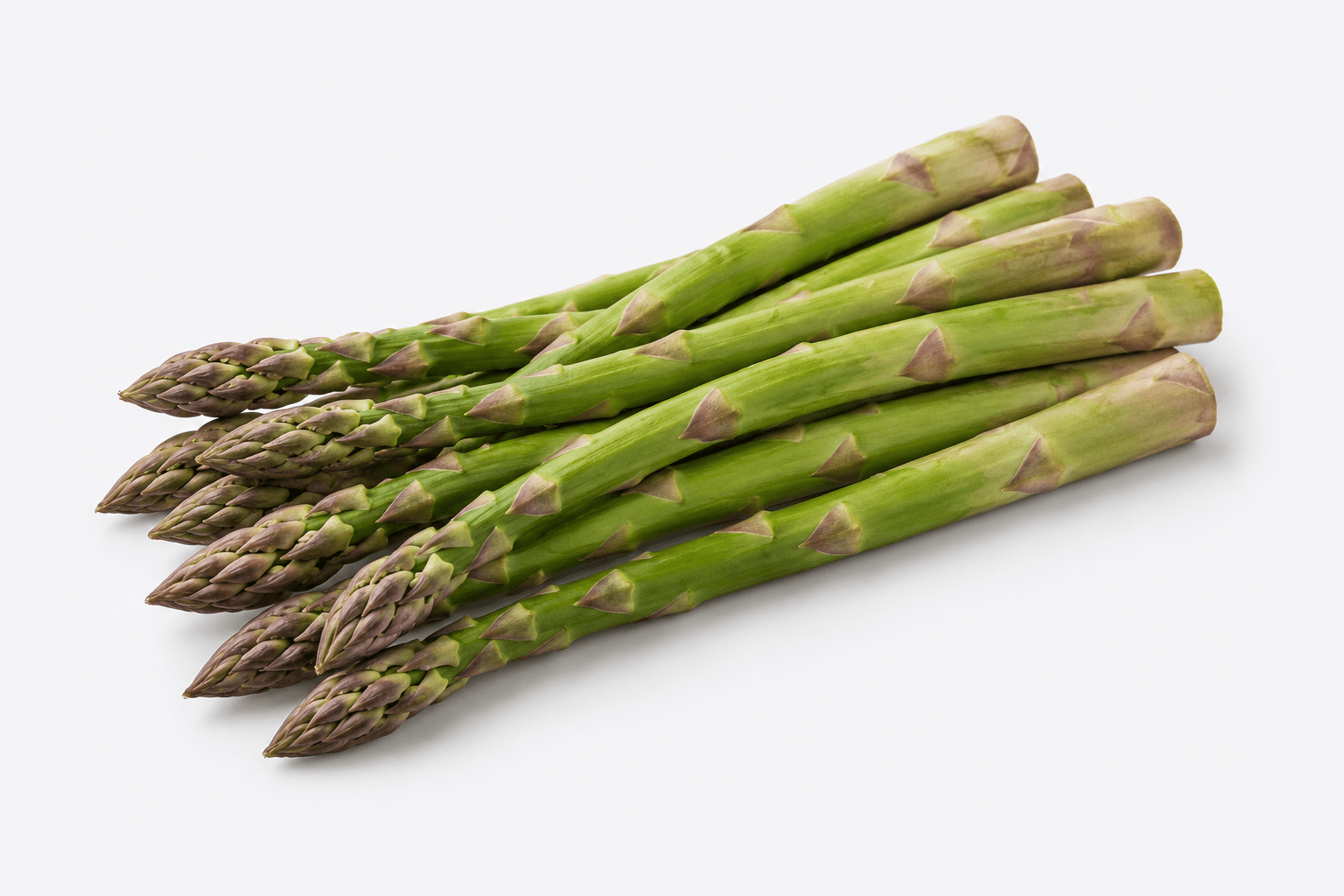
Moderate evidenceAsparagus
52 µg of folate and 41.6 µg of vitamin K for 20 kcal. And in a study of 6,909 people, close to 60% could not smell asparagus in their urine — it is genetic.
Asparagus takes three minutes, prawns take two. Cook them together and one of them is ruined.
2 servings15 min
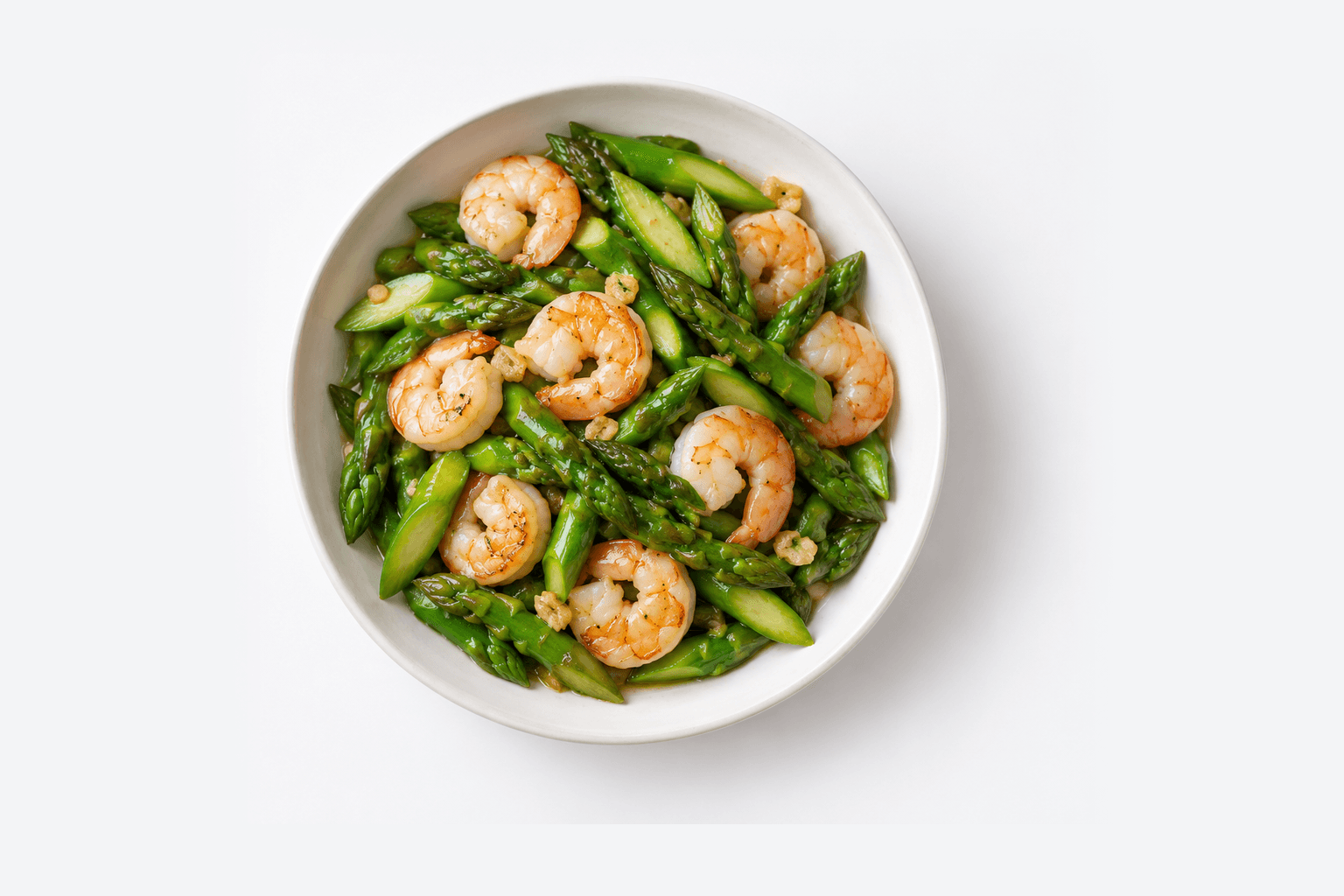
Snap the base off the asparagus by hand. It breaks at the line between woody and tender. If the spears are thick, peel the lower third.
Cut into 5 cm pieces on the diagonal. The angle widens the cut face, so they cook faster.
Press the prawns dry with kitchen paper. Wet prawns steam instead of frying.
Heat 1 tbsp of olive oil and stir-fry the asparagus over high heat for three minutes. When the colour turns vivid green, move it to a plate.
In the same pan, add the remaining oil and the chopped garlic for 30 seconds, then the prawns once it smells right.
Give the prawns two minutes, until they curl into a C. Return the asparagus, season with salt and pepper and toss for 30 seconds more.
Off the heat, squeeze the lemon in. Squeezed over the flame, the aroma leaves.
Cooking them separately is the whole recipe. Asparagus needs three minutes, prawns two. Together, either the prawns toughen or the asparagus stays raw.
A prawn curled into a C is right; an O has gone too far. Muscle protein contracts with heat and pulls the body round, and a full circle means the water has already been squeezed out.
The olive oil is here for absorption. Asparagus's vitamin K (41.6 µg per 100 g), vitamin E (1.13 mg) and beta-carotene (449 µg) are all fat-soluble. Blanched without fat, the same amount is absorbed less well.
The lemon is for the iron. Asparagus carries 2.14 mg per 100 g, high for a vegetable, but non-haem and absorbed at only 2–10%. Vitamin C in the same place raises that. Squeezing it after the heat is off is because vitamin C is heat-sensitive.
Why snap the base by hand. A knife tells you nothing about where the fibres turn woody. Bending the spear breaks it exactly there.
The urine smell is normal. So is not noticing it — in a study of 6,909 people, 58% of men and 61.5% of women could not smell it. It is a difference in the olfactory receptor genes.
Vegetables
Moderate evidence52 µg of folate and 41.6 µg of vitamin K for 20 kcal. And in a study of 6,909 people, close to 60% could not smell asparagus in their urine — it is genetic.
Seafood
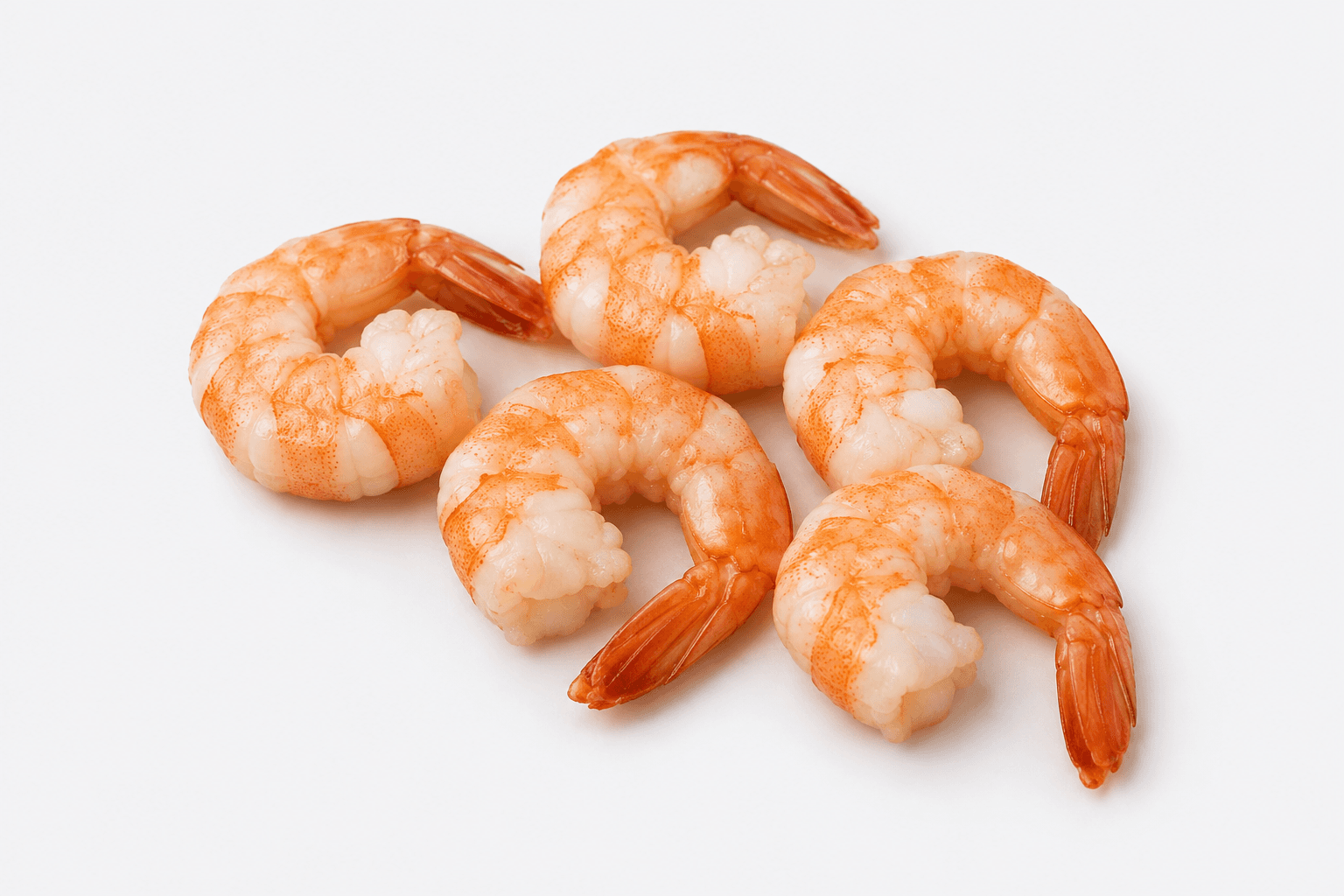
Moderate evidence22.8 g of protein, 1.7 g of fat and 49.5 µg of selenium per 100 g. Even at 300 g a day, lipoprotein ratios did not worsen.
Vegetables
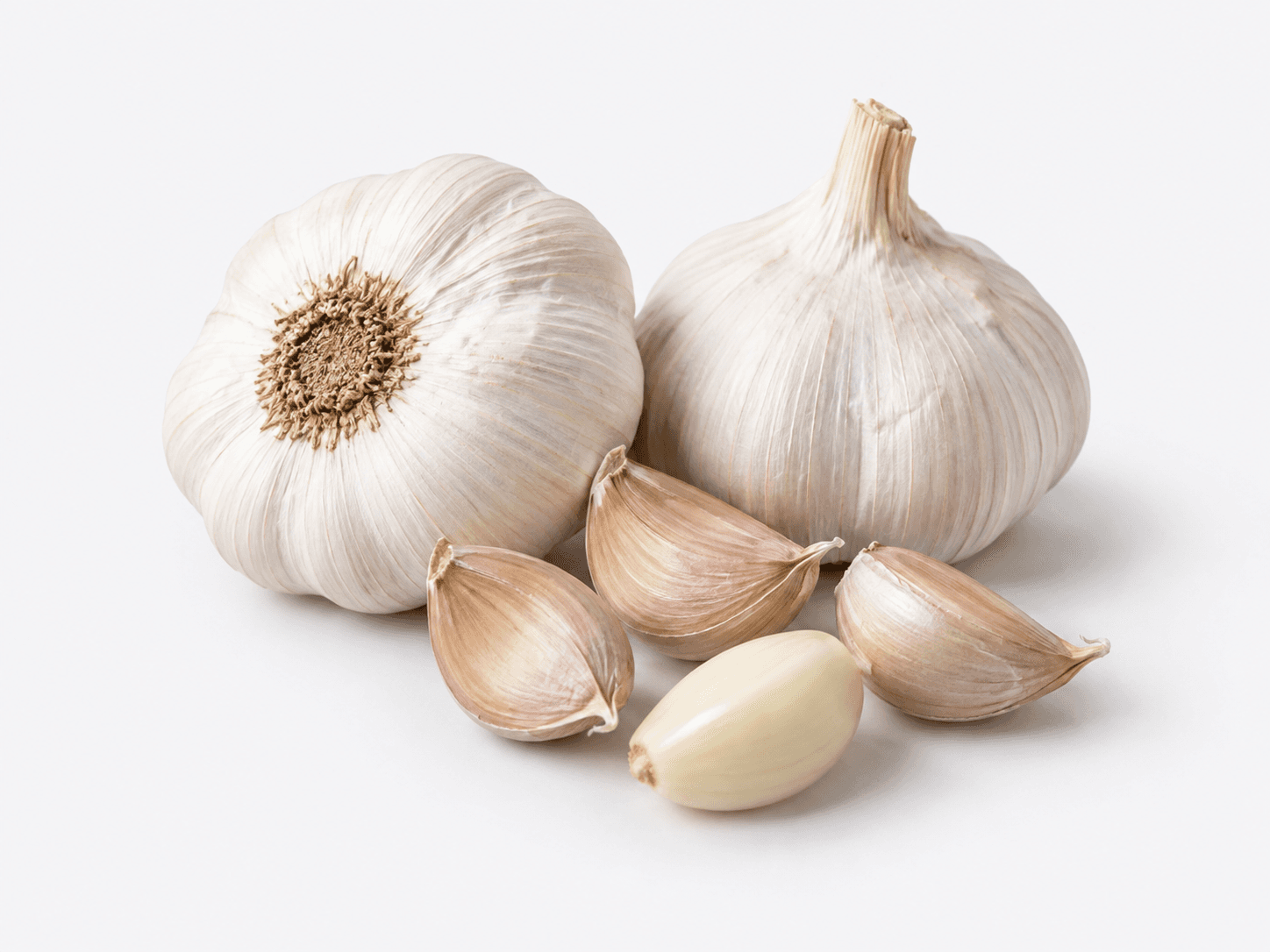
Moderate evidenceThe evidence for garlic points to a modest drop in blood pressure and cholesterol. The trick is to crush it and wait ten minutes before it hits the heat.
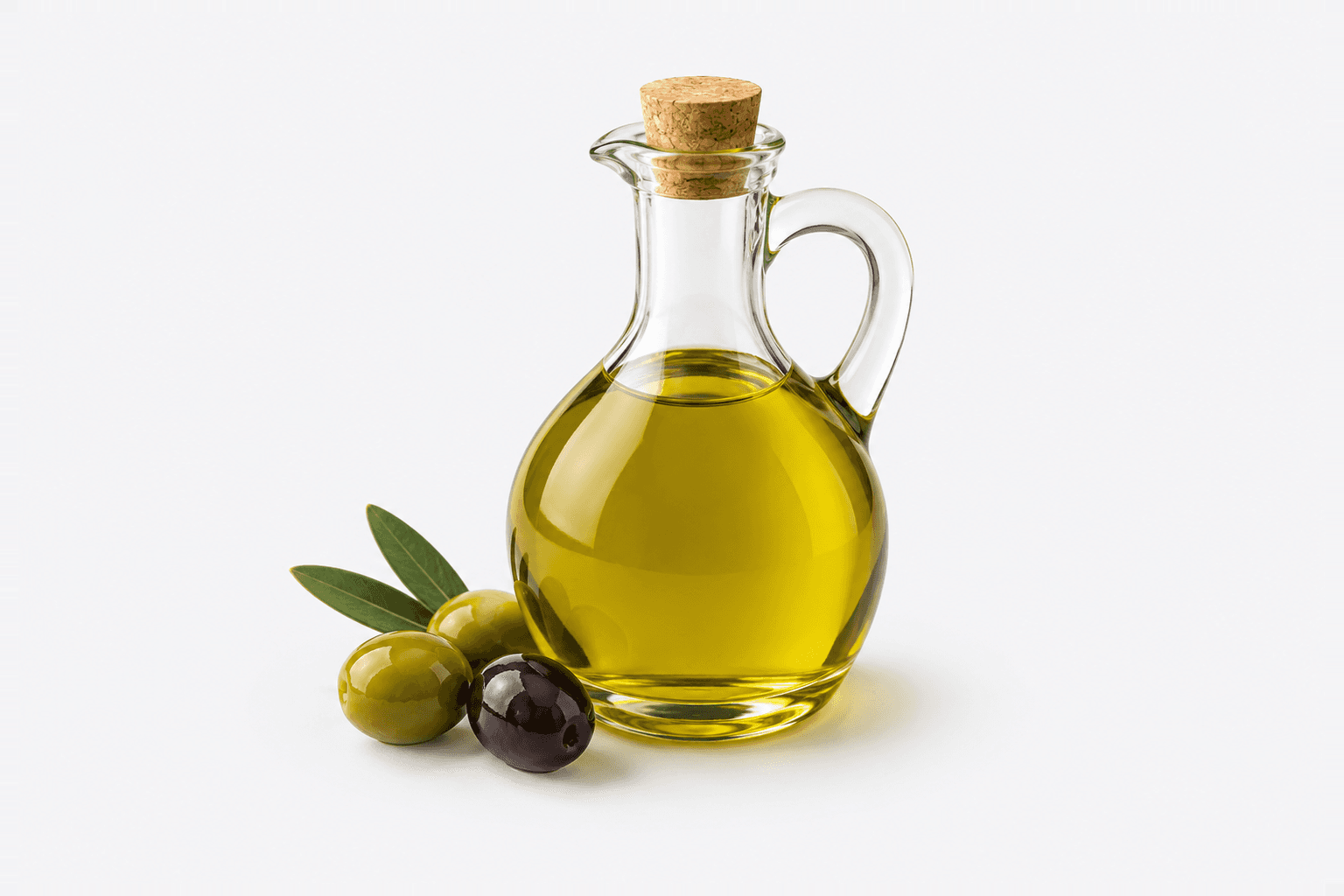
Oils & fats
Strong evidenceCardiovascular events were 31 % lower in a randomised trial of 7,447 people. Against other vegetable oils, though, there was no difference.