Contents
What it is
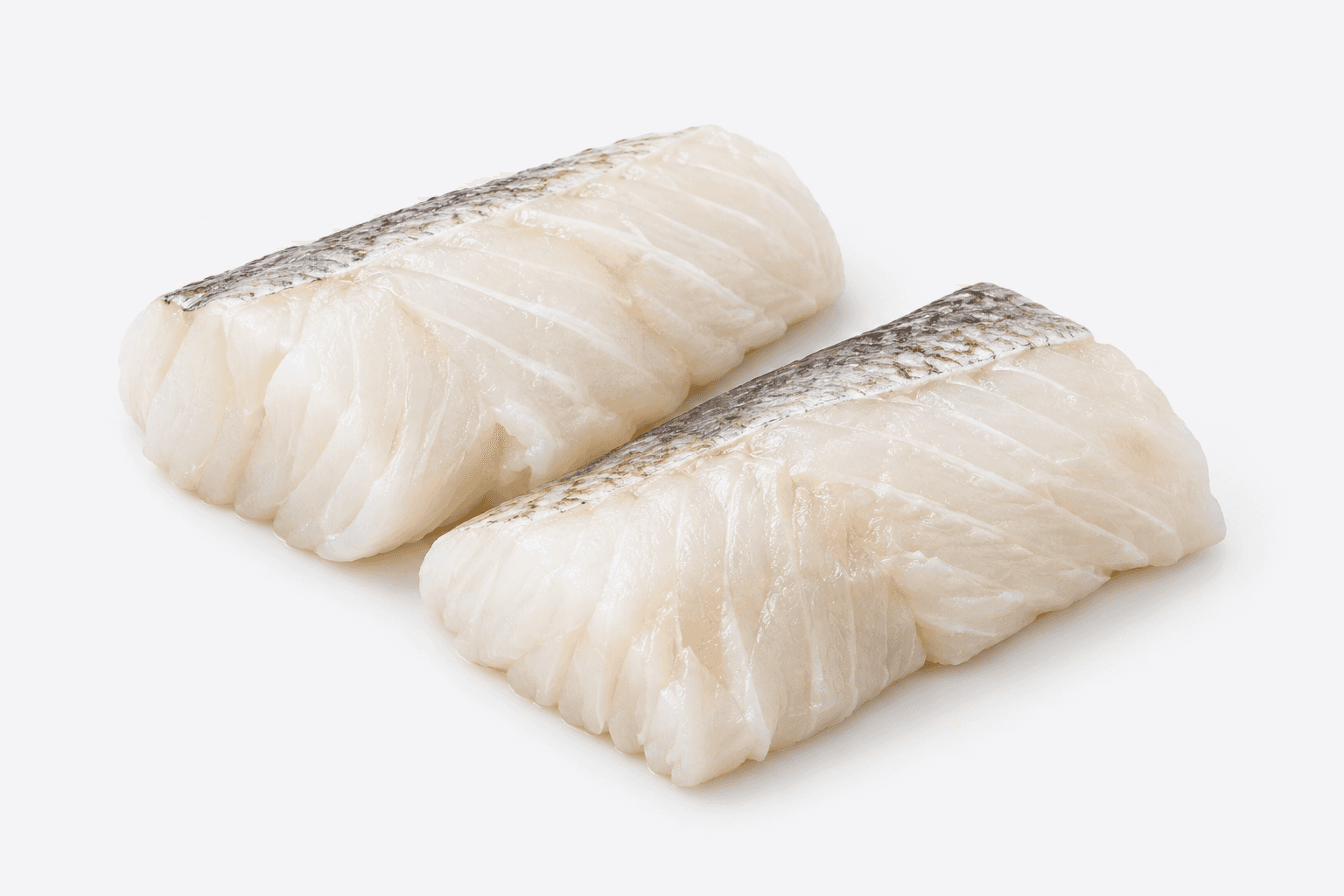
Cod is a white-fleshed fish of cold seas, named in Korean for its large mouth. It lives in the East and South Seas of Korea and across the North Pacific. There is almost no fat in the flesh, so it tastes clean and flakes in large leaves; the fat is concentrated in the liver instead. Winter is its season, and it is most often simmered in a clear soup. Its roe and gills are salted into jeotgal and the dried fish has a name of its own, so it is a fish whose parts and preparations carry separate names. The flesh is delicate and breaks up if cooked too long.
Scientific name Gadus macrocephalus
Cod is a white fish with almost no fat: 0.67 g per 100 g, with 17.8 g of protein at 82 kcal.
And there is an interesting pair of clinical papers. One came out well; the other found nothing. The picture only makes sense with both.
2007, Diabetes Care. Nineteen insulin-resistant people ate two diets for four weeks each.
- A cod protein diet
- A BPVEM diet — lean beef, pork, veal, eggs, milk and milk products
The two diets were built to differ only in protein source, matched for dietary fibre and for the ratio of monounsaturated, polyunsaturated and saturated fat (1.1 : 1.8 : 1.0).
The method is this trial's strength. Insulin sensitivity was measured with a hyperinsulinaemic-euglycaemic clamp — not a questionnaire, not fasting glucose, but the most accurate method the field has.
Insulin sensitivity improved significantly on the cod protein diet (p=0.027).
But then 2020, Nutrients. Thirty people with metabolic syndrome took 4 g of cod protein hydrolysate daily for eight weeks.
No difference from placebo for insulin, glucose or GLP-1. None for lipids or body composition either.
Both are true. Seeing what separates them is the point of this page.
Key benefits
- Early research
A result from the best available method, and a result that vanished when it became a supplement
[1][2]2007, Diabetes Care — done with food.
- 19 insulin-resistant people, crossover, four weeks per diet
- Cod protein diet versus BPVEM (beef, pork, veal, eggs, milk and milk products)
- Built to differ only in protein source, matched on fibre and on the fatty acid ratio (monounsaturated 1.1 : polyunsaturated 1.8 : saturated 1.0)
- Insulin sensitivity (M/I) measured by hyperinsulinaemic-euglycaemic clamp
- Beta-cell function estimated from oral glucose tolerance test parameters
Outcome Result Insulin sensitivity (M/I) significantly improved (p=0.027) Disposition index (beta-cell function × M/I) strong tendency (p=0.055) — not significant Diet × baseline M/I interaction p=0.022 30-min C-peptide to glucose ratio in low-M/I subjects strong tendency (p=0.065) — not significant The clamp is the reference method in this field. Insulin is infused at a fixed rate while glucose is held normal, and the glucose needed to do that is measured. It is far more accurate than fasting glucose or HOMA. The trial was small, but the measurement was real.
Look at the last three rows, though. Only insulin sensitivity was significant; the rest are "tendencies". p=0.055 and p=0.065 did not clear the threshold. The paper says so, and so does this site.
2020, Nutrients — done with a supplement.
- 30 people with metabolic syndrome, double-blind parallel groups, 15 per arm, eight weeks
- 4 g of cod protein hydrolysate daily, or placebo
- Primary outcomes: fasting and postprandial glucose
Outcome Result Insulin no difference between groups Glucose, fasting and postprandial no difference between groups GLP-1 no difference between groups Triacylglycerol fell in both groups, no difference between them Total cholesterol, LDL fell within both groups from baseline, no difference between them Body composition no difference The conclusion sentence is that it had no effect.
How should the two be read together?
First, the intervention differs. 2007 changed the protein source across the whole diet. 2020 added a 4 g supplement to the usual diet. One is the result of replacing meat, eggs and milk with fish; the other is the result of adding a powder.
Second, the dose differs. Filling most of a diet's protein with cod for four weeks is not the same scale as 4 g of hydrolysate a day.
Third, the populations differ — insulin resistance versus metabolic syndrome.
Fourth, both are small. Nineteen and thirty.
Fifth, and this matters. In the 2020 trial, total cholesterol and LDL fell in both groups — including placebo. Taking part in a trial changes how people eat. Without a between-group comparison, changes like that get mistaken for effects.
The honest conclusion:
- Using fish protein in place of red and processed meat is the direction the 2007 trial supports
- Buying a cod protein supplement to add on top is not supported by the 2020 trial
- Nineteen people and thirty. This is not settled evidence
- The grade here is "early research"
- Nutrition data
17.8 g of protein and 33.1 µg of selenium for 82 kcal
Per 100 g of raw cod fillet:
- 82 kcal, protein 17.8 g, fat 0.67 g, carbohydrate 0 g
- Selenium 33.1 µg
- Phosphorus 203 mg, potassium 413 mg, magnesium 32 mg
- Choline 65.2 mg, vitamin B12 0.91 µg, vitamin B6 0.245 mg, vitamin B3 2.06 mg
- Vitamin D 0.9 µg, vitamin A 12 µg
- Sodium 54 mg, cholesterol 43 mg
Protein per calorie is what this fish is. 17.8 g at 82 kcal. A 120 g portion is 21 g of protein for 98 kcal.
Cod, 100 g Chicken breast, 100 g Energy 82 kcal 165 kcal Protein 17.8 g 31.0 g Fat 0.67 g 3.6 g Less protein than chicken breast, and less energy too. Matching the protein takes more cod, but the calories stay low.
The 33.1 µg of selenium stands out. The adult requirement is 55 µg, so 100 g covers 60%. A portion nearly covers the day. Selenium is comparatively scarce in Korean soils, which makes food sources worth counting.
The 0.67 g of fat defines cod. That is both its advantage and its limit. The advantage — low energy, mild flavour, suits any cooking method. The limit is the next section.
Choline at 65.2 mg is decent, not egg territory but high for a fish.
Sodium is low at 54 mg. But that is fresh cod. Salted or dried cod is another matter entirely: drying concentrates everything into the same 100 g, and salting multiplies the sodium many times over.
Choosing and cooking. White fish flakes apart easily. High heat for too long turns it dry. Take cod off the heat just as the centre turns opaque, and add it to soups near the end for a short cook.
Cod is classed among the lower-mercury fish. Still, during pregnancy follow the official guidance on which fish and how much.
- Not established
"It's fish, so omega-3" — cod has a tenth of salmon's
This entry sorts through a common misunderstanding.
Omega-3 is the usual reason given for eating fish. But fish are not interchangeable.
EPA and DHA side by side, per 100 g:
EPA DHA Total Cod 0.064 g 0.12 g 0.18 g Salmon 0.862 g 1.1 g 1.96 g Salmon holds about eleven times as much. 100 g of cod does not reach a tenth of 100 g of salmon.
The reason is simple. Cod is a white fish that stores almost no fat in its flesh. With 0.67 g of fat there, omega-3 cannot be abundant within it. Salmon, mackerel and sardines — the fish with oil in the flesh — are the omega-3 fish.
So where is cod's fat? In the liver.
This distinction matters. Cod stores its fat in the liver. That is why cod liver oil exists, and why it has long been used as a source of omega-3 and of vitamins A and D.
Cod flesh and cod liver oil are different foods.
- Cod flesh — protein and selenium, 0.67 g of fat, 0.18 g of EPA plus DHA
- Cod liver oil — pure fat, with concentrated omega-3 and vitamins A and D
Eating cod does not deliver the benefits of cod liver oil. And cod liver oil carries enough vitamin A to need its own caution about excess — handled separately in this site's cod liver oil entry.
So why eat cod? The reasons are elsewhere.
- 17.8 g of protein for 82 kcal — good protein per calorie
- 33.1 µg of selenium — a portion nearly covers the day
- In the 2007 trial, insulin sensitivity improved when it replaced protein from red meat, eggs and dairy
That third point is the key one. The trial did not add cod; it replaced other protein with it. The value of cod is in what it displaces.
How to eat it well
- A 120 g portion is 21 g of protein for 98 kcal.
- Replace rather than add. The 2007 trial swapped protein from red meat, eggs and dairy for cod.
- Do not expect omega-3 — 0.18 g of EPA plus DHA per 100 g, under a tenth of salmon's.
- Take it off the heat as the centre turns opaque. Overcooking dries it out.
- Add it to soup near the end and cook it briefly.
- Salted and dried products carry very different sodium. Do not apply the fresh figure of 54 mg to them.
- Cod liver oil is a different food. Eating cod does not substitute for it.
- The flesh flakes easily, so turn it as few times as you can.
How to read the grades
Each benefit carries a label showing how far research on people supports it. Grades differ between items even within the same ingredient.
- Nutrition data
- A fact verifiable from food composition databases or health authorities. This is a different kind of statement from a clinical effect.
- Strong evidence
- Consistently confirmed across randomised controlled trials or meta-analyses.
- Moderate evidence
- Human studies exist, but effect sizes are small or results are mixed.
- Early research
- Cell or animal work, or small preliminary studies.
- Not established
- Commonly claimed, but not confirmed in studies on people.
What to watch out for
- The 2020 follow-up was a complete null. Eight weeks of 4 g cod protein hydrolysate moved neither insulin, glucose, GLP-1, lipids nor body composition against placebo.
- The 2007 trial held 19 people, and only insulin sensitivity was significant. The rest were "tendencies" (p=0.055, p=0.065) that did not clear the threshold.
- Not an omega-3 source — 0.18 g of EPA plus DHA per 100 g.
- Do not confuse it with cod liver oil, which carries enough vitamin A to require its own caution.
- Salted and dried cod differ greatly in sodium.
- During pregnancy, follow official guidance on fish type and amount.
- With a fish allergy, cod counts.
Nutrition
Per 100 g of raw Atlantic cod fillet. A portion is usually 100–150 g. Dried or salted cod carries a very different amount of sodium.
- Calories
- 82 kcal4%
- Protein
- 17.8 g36%
- Fat
- 0.67 g<1%
- Selenium
- 33.1 µg60%
- Phosphorus
- 203 mg16%
- Potassium
- 413 mg9%
- Choline
- 65.2 mg12%
- Vitamin B12
- 0.91 µg38%
- Vitamin B6
- 0.245 mg14%
- Vitamin B3
- 2.06 mg13%
- Magnesium
- 32 mg8%
- Vitamin D
- 0.9 µg5%
- Omega-3
- 0.20 g
- Sodium
- 54 mg2%
Percentages are of the US FDA Daily Value for adults and children 4 and over. National reference intakes differ by sex and age.
Calculate this alongside other ingredients →
Key nutrients
Dishes with this ingredient
Sources
The databases and health authorities this article's nutrition figures and health statements draw on.
- 1Dietary cod protein improves insulin sensitivity in insulin-resistant men and women: a randomized controlled trialClinical trialOuellet V, et al. Diabetes Care 2007PMID 17682120
- 2Supplementation with Low Doses of a Cod Protein Hydrolysate on Glucose Regulation and Lipid Metabolism in Adults with Metabolic Syndrome: A Randomized, Double-Blind StudyClinical trialJensen C, et al. Nutrients 2020PMID 32635503
- 3USDA FoodData CentralFood composition database
- 4PubMedResearch literature
- 5NIH Office of Dietary SupplementsHealth authority