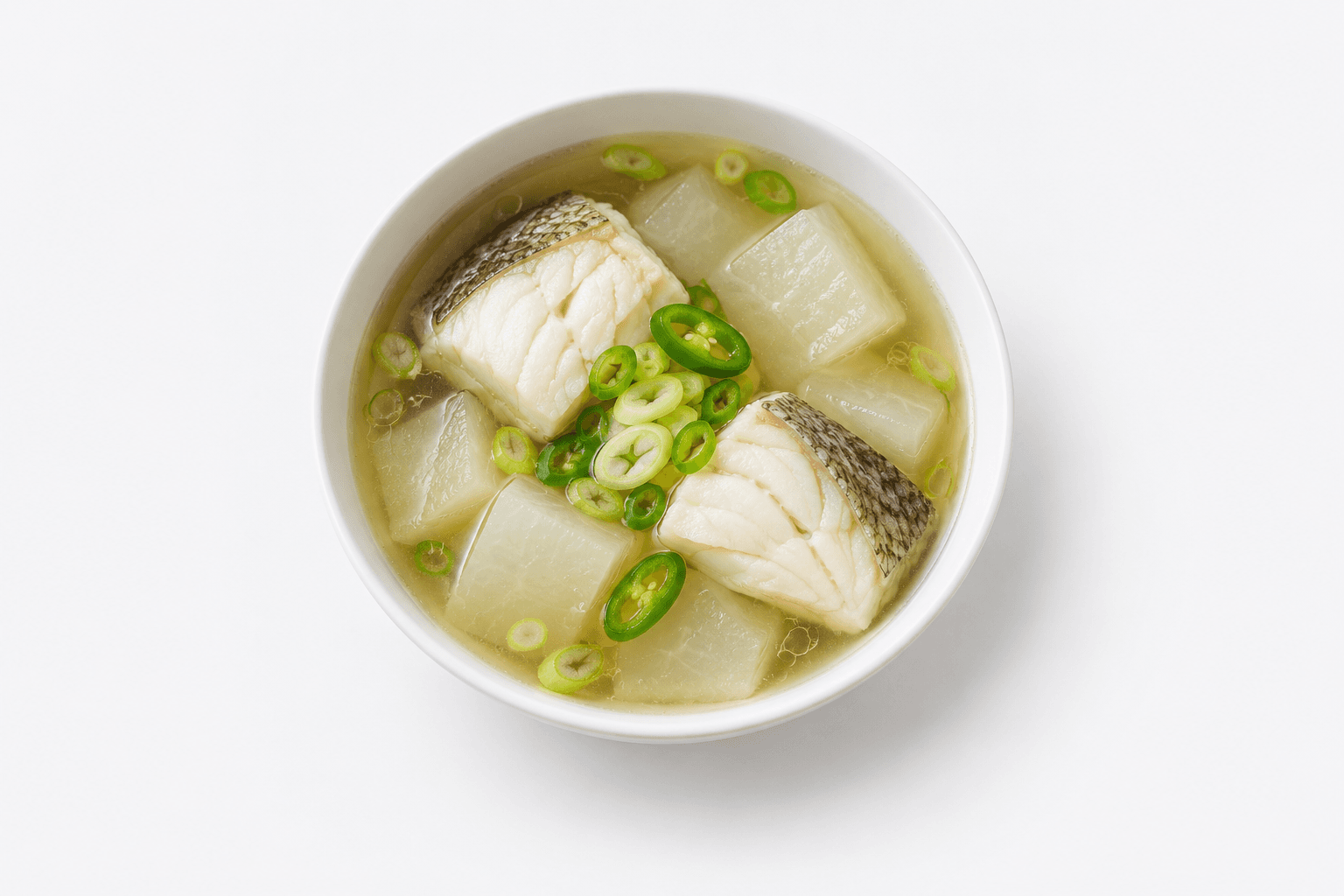
Two rules here: do not boil it long, and salt it last.
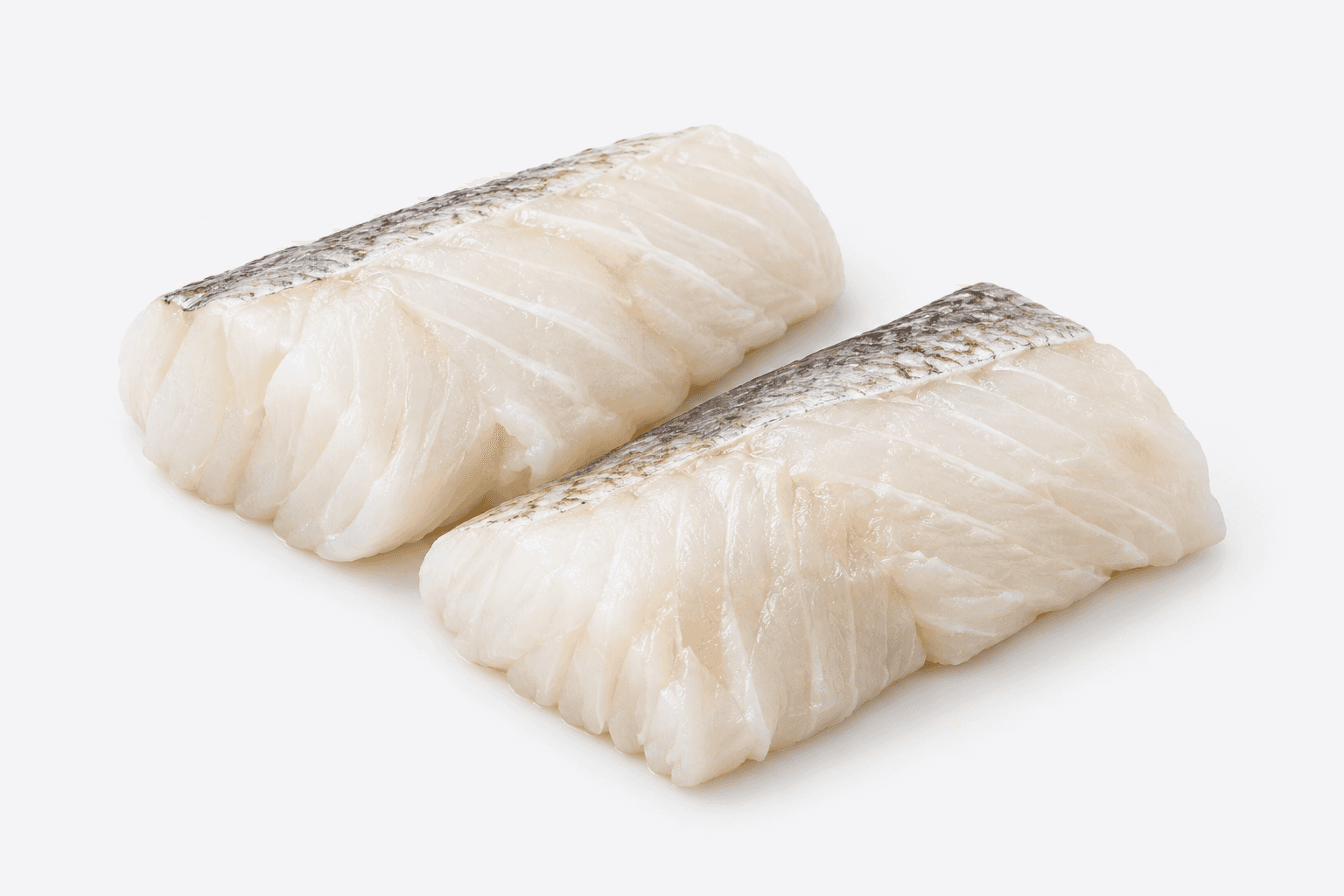
First, why cod. In the 2007 Diabetes Care trial, 19 insulin-resistant people ate a cod protein diet and a beef, pork, veal, egg and milk diet for four weeks each. Insulin sensitivity was significantly better on cod (p=0.027).
What matters is that the trial did not add cod. It replaced other protein. So this soup is built for the place a meat broth held.
Keep expectations accurate too. It held 19 people, and a 2020 follow-up using a cod protein supplement moved neither glucose, insulin, lipids nor body composition. This is not settled.
Per serving:
| Per serving |
|---|
| Cod 120 g | 98 kcal, protein 21 g, fat 0.8 g |
| Selenium | about 40 µg — 72% of the daily requirement |
| Radish 100 g | almost no energy, vitamin C |
| Sodium (including broth) | about 450 mg |
The sodium needs saying out loud. The 120 g of cod itself holds 65 mg. The broth is the problem. A teaspoon of soup soy sauce is about 300 mg and a quarter teaspoon of salt about 290 mg. Divided in two, a bowl still lands around 450 mg. Against the WHO's under-2,000 mg a day, one bowl is 22% of the day.
Leave the broth and it falls to less than half that. Eating the solids and leaving most of the liquid is the simplest fix.
Why salt at the end. The liquid reduces while it cooks. Seasoning set at the start comes out salty at the finish. Tasting just before you kill the heat means using less salt.
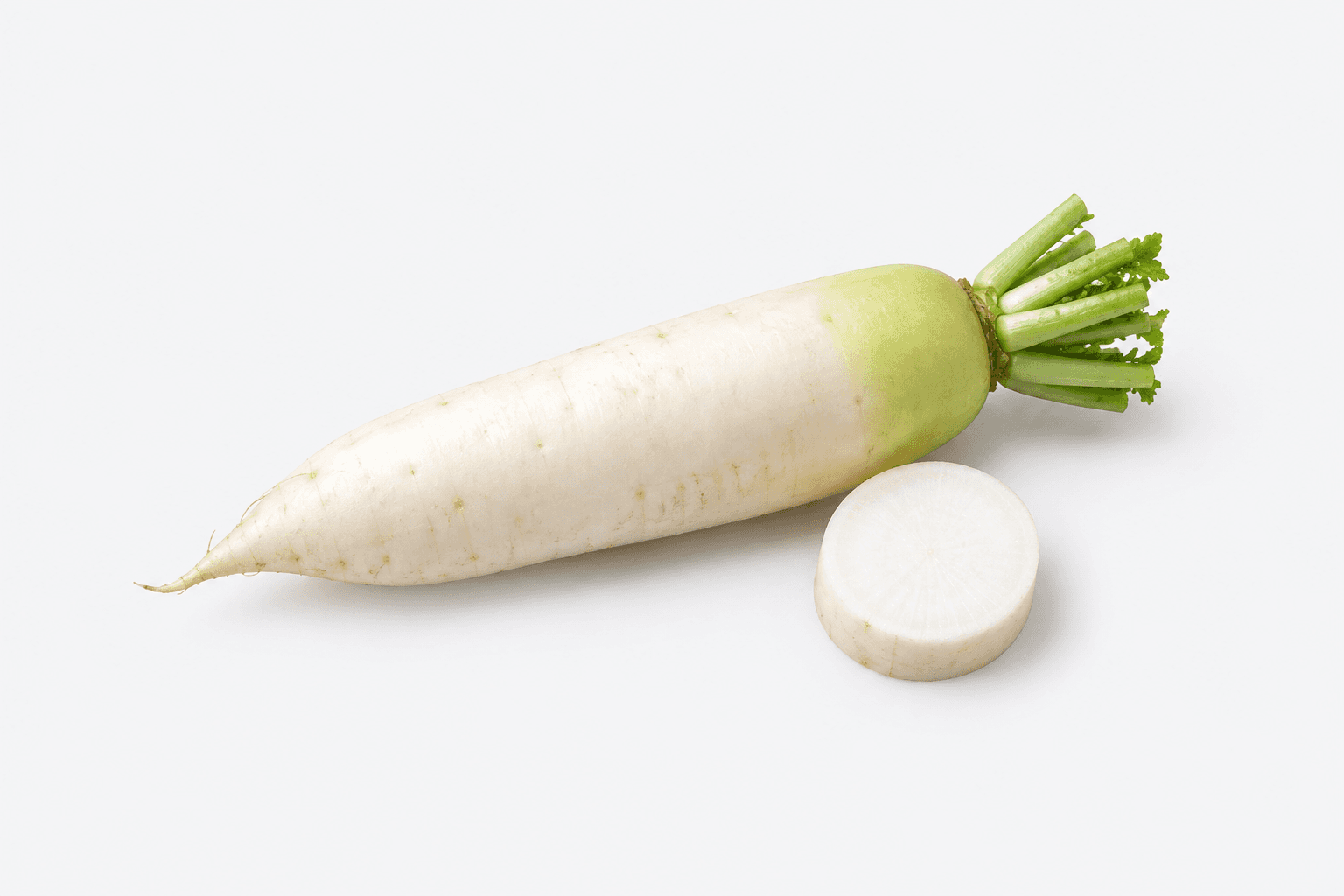
Why cook the radish first. Radish sweetens as it cooks. Ten minutes to translucency puts sweetness into the broth, so less salt is needed. Added at the same time as the cod, the radish is still raw when the fish has dried out.
Why choose the section. Radish is sweetest at the top and most pungent at the tail, because the pungent compounds concentrate at the root tip. A clear soup wants the middle.
Why only 5–7 minutes. Cod is a white fish with 0.67 g of fat per 100 g. With no fat, it has no margin for overcooking. The moment the centre turns opaque is the end; after that it only loses water and goes dry.
Do not stir. White fish falls apart. Once it is in, move the pan rather than the fish.
Do not expect omega-3. Cod holds 0.18 g of EPA plus DHA per 100 g, under a tenth of salmon's. Cod's fat is in the liver, not the flesh — that is cod liver oil. Eating cod and taking cod liver oil are different things.
With frozen cod, thaw it slowly in the fridge. Rushed at room temperature or in water, the flesh goes soft.
Salted or dried cod does not suit this recipe. The sodium is in another league.