Contents
What it is
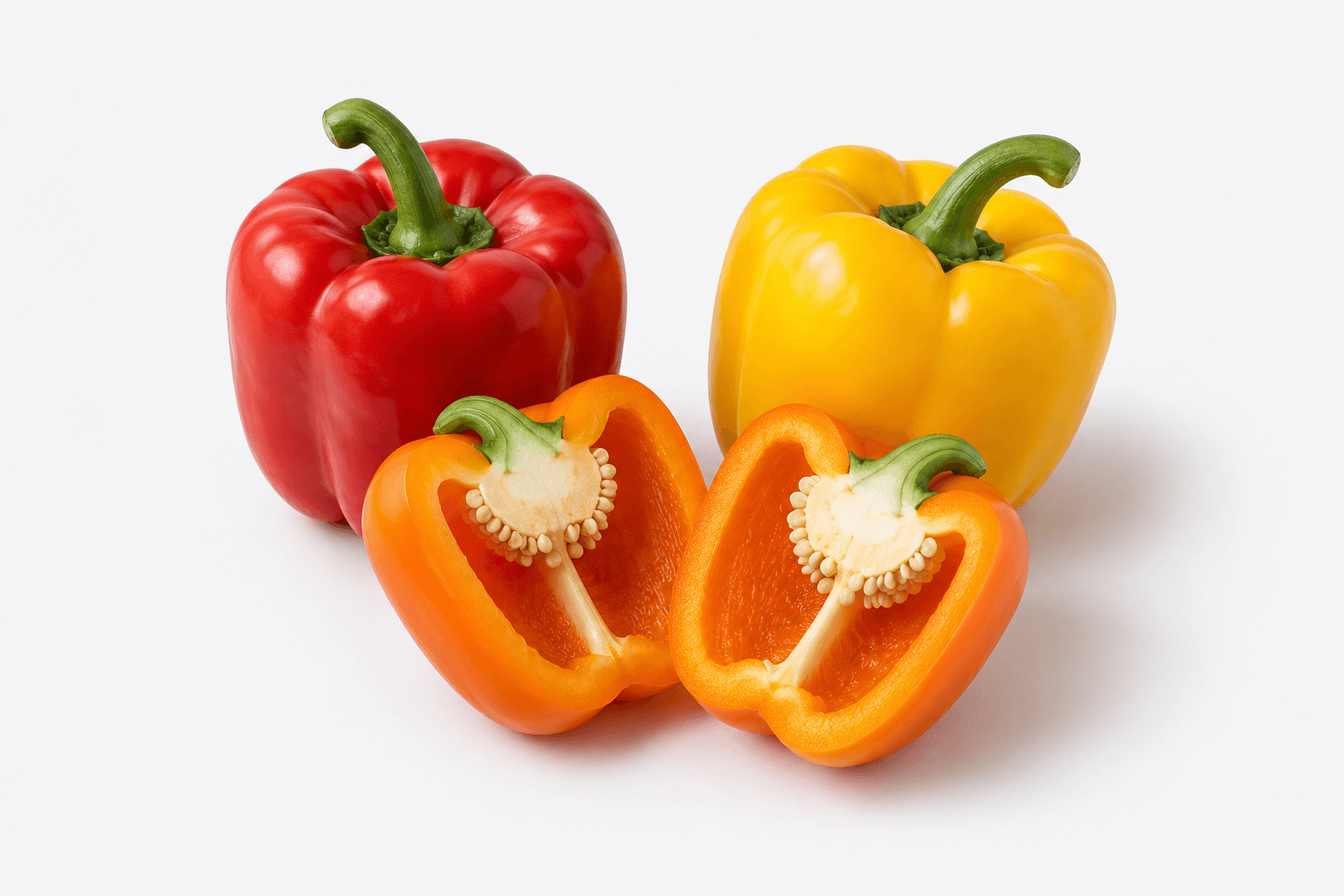
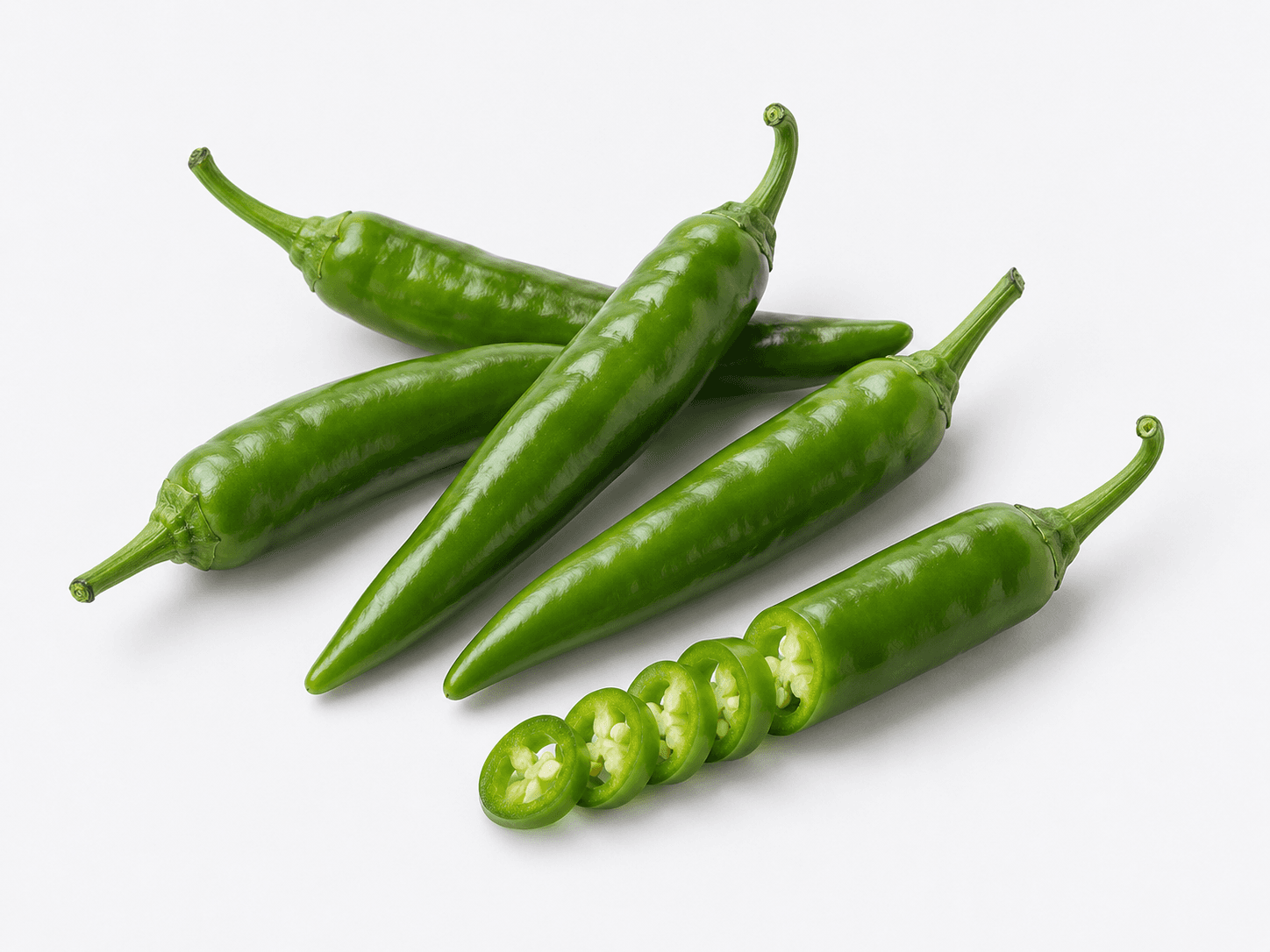
The chilli is the fruit of a nightshade — the same species as the bell pepper. It is native to Central and South America and spread worldwide after Columbus, reaching Korea in the sixteenth or seventeenth century. Its heat comes from capsaicin, which is not a taste at all but a stimulation of pain receptors. Capsaicin is concentrated not in the seeds but in the white pith they attach to, so removing that placenta takes most of the heat with it. Dried and ground it becomes gochugaru, and fermented it forms the base of gochujang.
Scientific name Capsicum annuum
Claims about chilli usually start with capsaicin and metabolism — generating heat, burning fat. The clinical evidence in that direction is actually weak.
The more interesting finding is elsewhere. Pooling large cohorts from the United States, China, Italy and Iran, people who regularly ate spicy food consistently had lower mortality. Four countries, over half a million people, and virtually no disagreement between the studies.
It is observational, and eating spicy food says nothing definitive about the rest of someone's diet. Even so, results this clean are unusual.
Key benefits
- Moderate evidence
Regular spicy food eaters had lower mortality
[1]A meta-analysis of four prospective cohorts covering chilli pepper, chilli sauce and chilli oil, following 564,748 adults for a median 9.7 years in the US, China, Italy and Iran.
Compared with people who rarely ate spicy food (none or under once a week), regular consumers had 12 % lower all-cause mortality (hazard ratio 0.88, 95 % CI 0.86–0.90). I² was 0 % — the four countries' results barely diverged, a level of consistency rare in nutritional epidemiology.
Death from cardiac disease was 18 % lower (0.82, 0.73–0.91, I² = 0 %), while cerebrovascular death was not significant (0.79, 0.53–1.17, I² = 72 %).
- Moderate evidence
In the Italian cohort, the threshold was four times a week
[2]Looking closely at one of the individual studies gives a sense of the quantity. The Moli-sani cohort in Italy followed 22,811 people for a median 8.2 years and recorded 1,236 deaths.
Eating chilli more than four times a week came with 23 % lower all-cause mortality than rarely or never (0.77, 0.66–0.90), 34 % lower cardiovascular death (0.66, 0.50–0.86), 44 % lower ischaemic heart disease death (0.56, 0.35–0.87), and 61 % lower cerebrovascular death (0.39, 0.20–0.75).
The relationship held after adjusting for adherence to a Mediterranean diet. The limits of observational work remain, though — of the known cardiovascular biomarkers, only serum vitamin D accounted for any of the association, and only marginally. Why it happens has not been explained.
- Nutrition data
144 mg of vitamin C per 100 g — but nobody eats 100 g
Raw red chilli holds 144 mg of vitamin C per 100 g, close to three times an orange (53 mg). Vitamin B6 is high at 0.51 mg, and 534 µg of beta-carotene converts to 48 µg RAE of vitamin A.
But nobody eats 100 g of chilli. A Korean cheongyang pepper is a little over 10 g. That is why this site excludes chilli from its 'foods high in this nutrient' rankings. The per-100 g figures are correct, but recommending a source on that basis would mislead.
In practice, chilli earns its place not through nutrient totals but by letting you cut salt without losing flavour. In a Korean diet where sodium is the problem, that is not a small thing.
How to eat it well
- Capsaicin dissolves in fat. When heat lingers, water does nothing. The fat and casein in milk or yoghurt clear it far faster.
- Capsaicin concentrates in the seeds and the white pith. Scrape that out to tone the heat down; the flesh alone is milder than people expect.
- Vitamin C is heat-sensitive. Eating green chillies raw preserves it best.
- Drying destroys much of the vitamin C but keeps the carotenes. Do not count chilli powder as a vitamin C source.
- Wash your hands with soap afterwards and keep them away from your eyes. Oily capsaicin does not rinse off with water alone.
How to read the grades
Each benefit carries a label showing how far research on people supports it. Grades differ between items even within the same ingredient.
- Nutrition data
- A fact verifiable from food composition databases or health authorities. This is a different kind of statement from a clinical effect.
- Strong evidence
- Consistently confirmed across randomised controlled trials or meta-analyses.
- Moderate evidence
- Human studies exist, but effect sizes are small or results are mixed.
- Early research
- Cell or animal work, or small preliminary studies.
- Not established
- Commonly claimed, but not confirmed in studies on people.
What to watch out for
- With reflux or gastritis, symptoms can worsen. That said, the idea that spicy food causes ulcers is an old misconception — the culprits are H. pylori and painkillers.
- With irritable bowel syndrome, it can trigger pain and diarrhoea.
- With haemorrhoids or an anal fissure, discomfort may increase.
- Spicy and salty tend to travel together. Chilli itself has no sodium, but gochujang and seasoned chilli pastes usually arrive with salt. What links to gastric cancer risk is the salt, not the heat.
- Topical capsaicin creams burn strongly at first. Keep them away from eyes and mucous membranes.
Nutrition
Approximate values per 100 g edible portion.
- Calories
- 40 kcal2%
- Carbohydrates
- 8.8 g3%
- Fiber
- 1.5 g5%
- Vitamin C
- 144 mg160%
- Vitamin B6
- 0.51 mg30%
- Vitamin A
- 48 µg5%
- Beta-carotene
- 534 µg
- Potassium
- 322 mg7%
- Vitamin K
- 14 µg12%
Percentages are of the US FDA Daily Value for adults and children 4 and over. National reference intakes differ by sex and age.
Calculate this alongside other ingredients →
Key nutrients
Dishes with this ingredient
Sources
The databases and health authorities this article's nutrition figures and health statements draw on.
- 1Association of Spicy Chilli Food Consumption With Cardiovascular and All-Cause Mortality: A Meta-Analysis of Prospective Cohort StudiesMeta-analysisOfori-Asenso R, et al. Angiology 2021PMID 33657876
- 2Chili Pepper Consumption and Mortality in Italian AdultsResearch literatureBonaccio M, et al. J Am Coll Cardiol 2019PMID 31856971
- 3USDA FoodData CentralFood composition database
- 4MFDS Food Composition Database · 식품안전나라Food composition database
- 5NIH Office of Dietary SupplementsHealth authority
- 6PubMedResearch literature