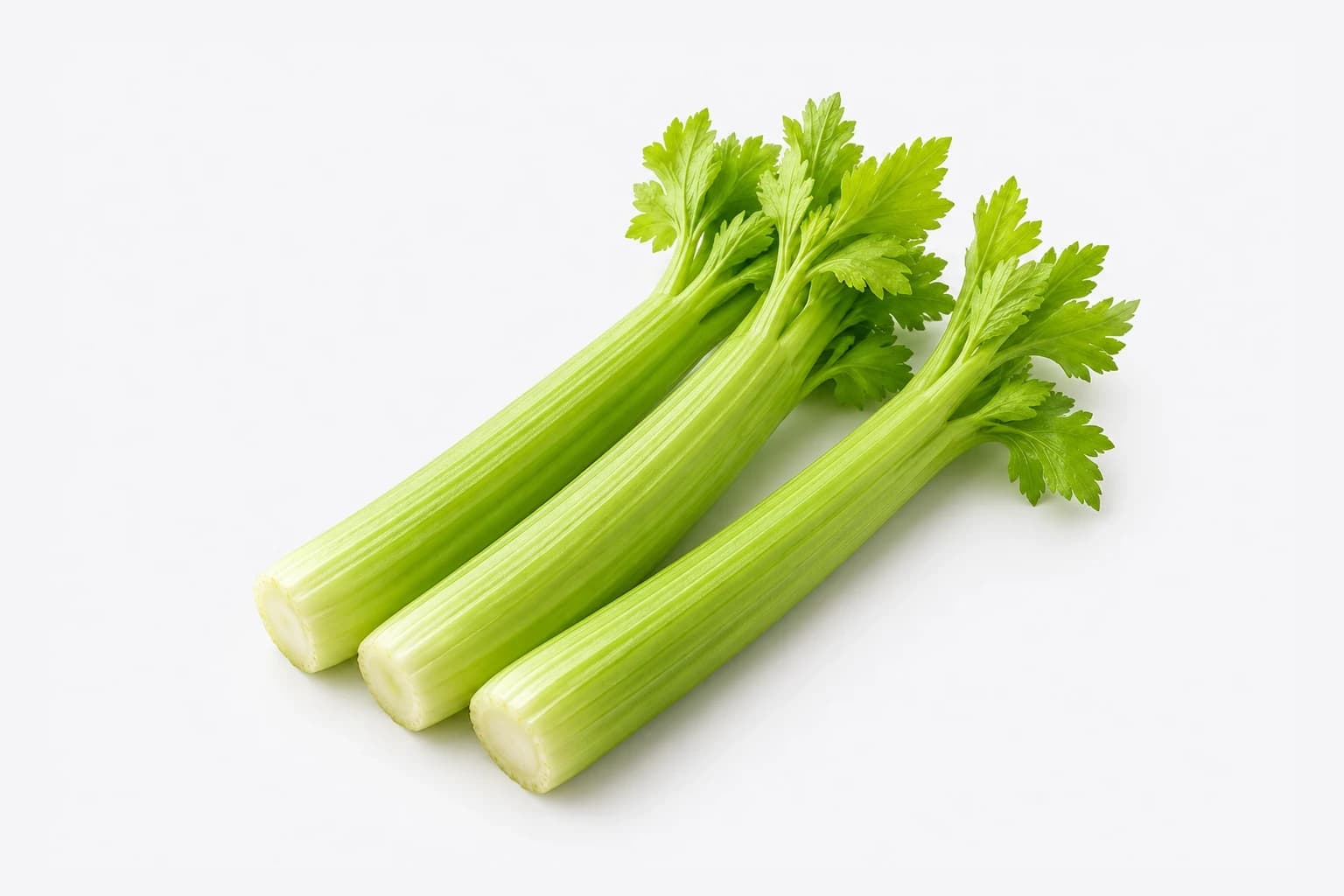
Vegetables
Early researchCelery
In a 2022 trial, systolic pressure fell from 141 to 130 mmHg, measured by 24-hour ambulatory monitoring — a good method. But what participants took was not celery stalks. It was 1.34 g a day of extract from the seed.
The trial where blood pressure fell 11 mmHg used celery seed extract capsules, not celery. This stir-fry is not built for that effect — it is built to keep the crunch and to need less seasoning.
2 servings15 min
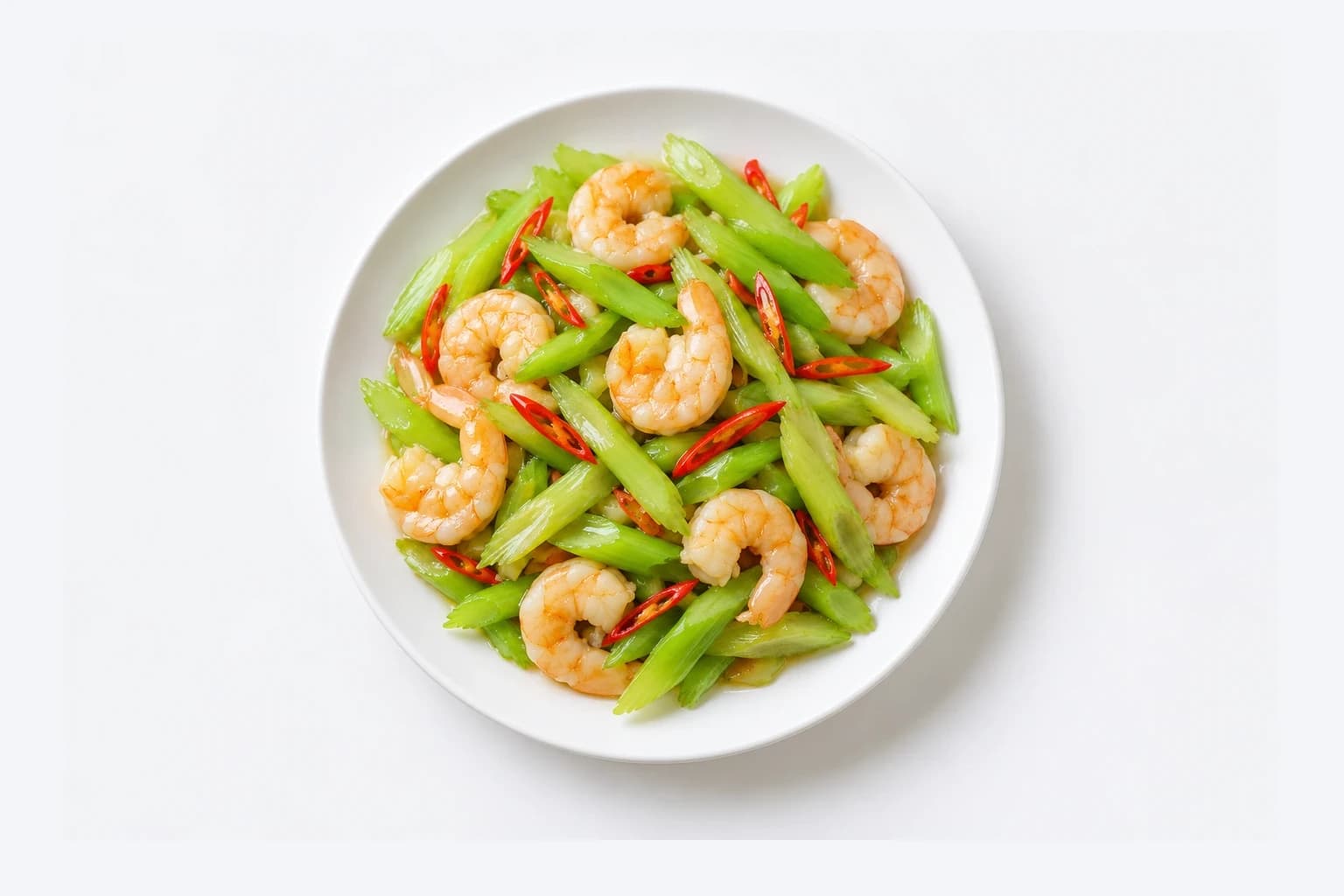
Pull the leaves off the celery and peel the tough outer fibres — one pass of a vegetable peeler down the outside. Skip this and no amount of cooking makes it tender.
Cut the stalks on the diagonal, 1 cm wide. Cut thick and the crunch survives the pan.
Dry the shrimp completely. Wet shrimp steams instead of frying.
Heat the pan thoroughly over high heat, add the oil, then the shrimp.
One and a half to two minutes — until the surface turns pink and the bodies just start to curl — then take them out. The shrimp are not finished here.
In the same pan, add the garlic and chilli and stir-fry for 20 seconds. Move on before the garlic browns.
Add the celery and stir-fry over high heat for 1 minute 30 seconds. Only the surface cooks; the inside is still crisp.
Return the shrimp, add 1/2 tsp soy sauce and the pepper, and stir-fry 30 seconds more.
Take the pan off the heat and stir in the sesame oil. It goes in off the heat.
First, what this recipe does not promise.
In a 2022 trial in Phytotherapy Research, 24-hour ambulatory blood pressure fell from 141.2 to 130.0 mmHg. What that trial gave was 1.34 g a day of celery seed extract in capsules. Not celery stalks.
There is no way to eat 1.34 g of seed extract as a vegetable. Celery seed is a separate spice, and the extract is that concentrated again. So do not expect this stir-fry to drop your blood pressure by 11 mmHg.
Then why make it? Two reasons. It is low in energy, and its crunch makes it worth eating with less seasoning.
Per serving:
| Per serving | |
|---|---|
| Celery 100 g | 14 kcal, potassium 260 mg, vitamin K 29.3 µg |
| Shrimp 100 g | 119 kcal, protein 22.8 g, selenium 49.5 µg |
| Oil and seasoning | about 60 kcal |
| Total | about 195 kcal, protein 23 g |
The sodium has to be said out loud.
Celery is high in sodium for a vegetable — 80 mg per 100 g. Lettuce holds 28 mg and broccoli 33 mg, so this is two to three times as much. Celery carries a little saltiness of its own.
Which is why only 1/2 tsp of soy sauce goes in — about 150 mg. With the 160 mg from 200 g of celery and the shrimp's own sodium, the whole pan lands near 700 mg, so about 350 mg a plate.
Use celery's saltiness and you do not need salt. That is celery's actual job in this recipe — not a blood pressure effect, but standing in for the seasoning.
Why peel the outer fibres. Most of celery's stringiness comes from fibre bundles running lengthwise along the outside of the stalk. They do not soften with cooking. One pass with a peeler takes twenty seconds and changes the texture completely.
Why cut 1 cm thick. Cut thin and it goes limp inside 90 seconds. Thick cuts let you get a cooked outside and a crisp centre.
Why the shrimp go in twice. Shrimp are done in 90 seconds to two minutes. Start them with the celery and they turn rubbery. Sear them, take them out, and send them back for the last 30 seconds — and both stop where they should.
Why the heat must be high. Celery is 95% water. On low heat that water comes out and you are braising, not frying. Get the pan hot first.
Why the sesame oil goes in last. Its aroma compounds are volatile, and its smoke point is low. Added over the flame, the smell leaves.
Do not throw out the celery leaves. They are more aromatic than the stalks. Use them in stock, or chop them over the finished dish.
An allergy note belongs here. Celery is one of the 14 allergens the European Union requires to be declared. Reactions are uncommon but can be serious. Mention it if you are serving guests.
This recipe has nothing to do with celery juice cleanses. That claim has no human trials behind it.
Vegetables
Early researchIn a 2022 trial, systolic pressure fell from 141 to 130 mmHg, measured by 24-hour ambulatory monitoring — a good method. But what participants took was not celery stalks. It was 1.34 g a day of extract from the seed.
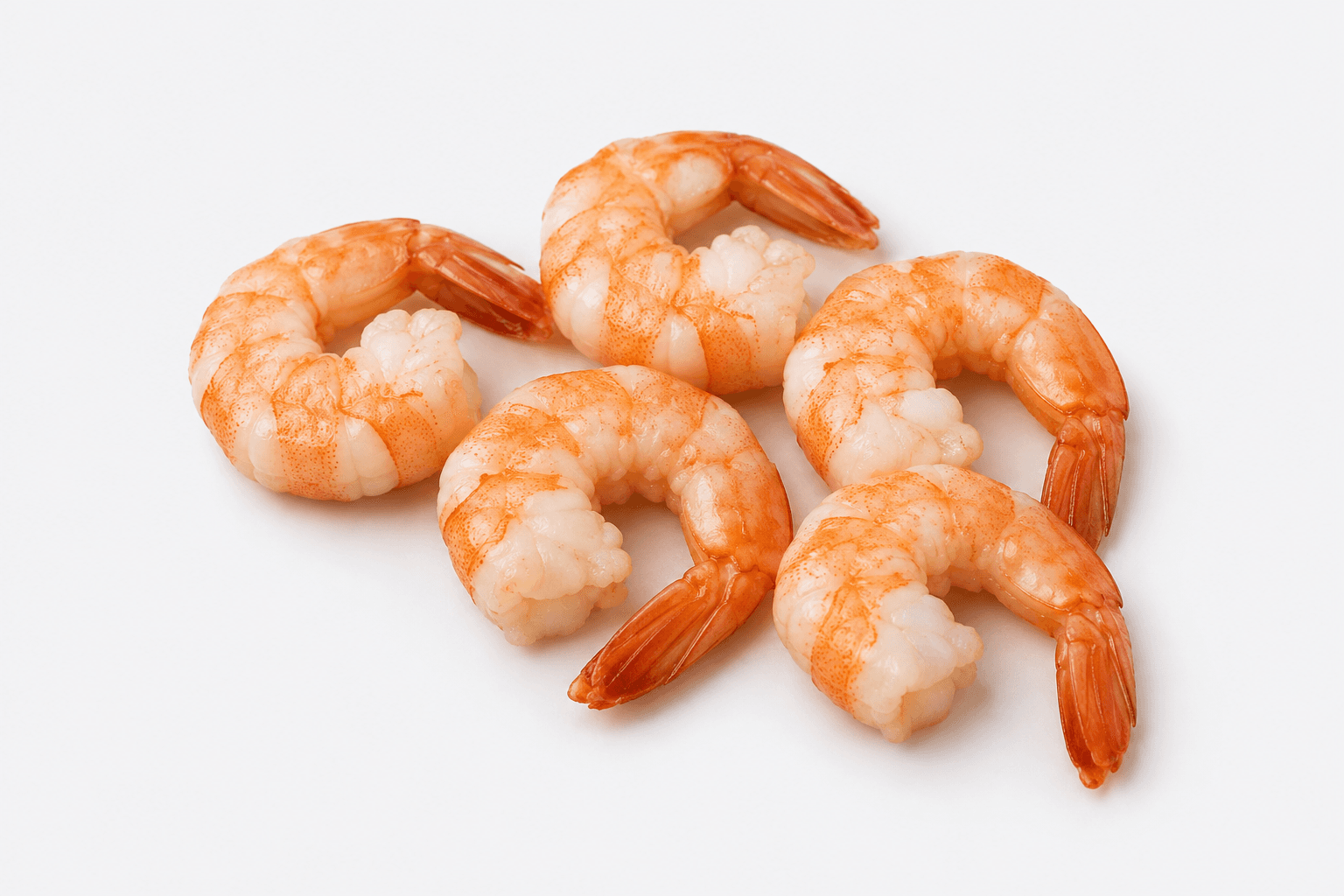
Seafood
Moderate evidence22.8 g of protein, 1.7 g of fat and 49.5 µg of selenium per 100 g. Even at 300 g a day, lipoprotein ratios did not worsen.
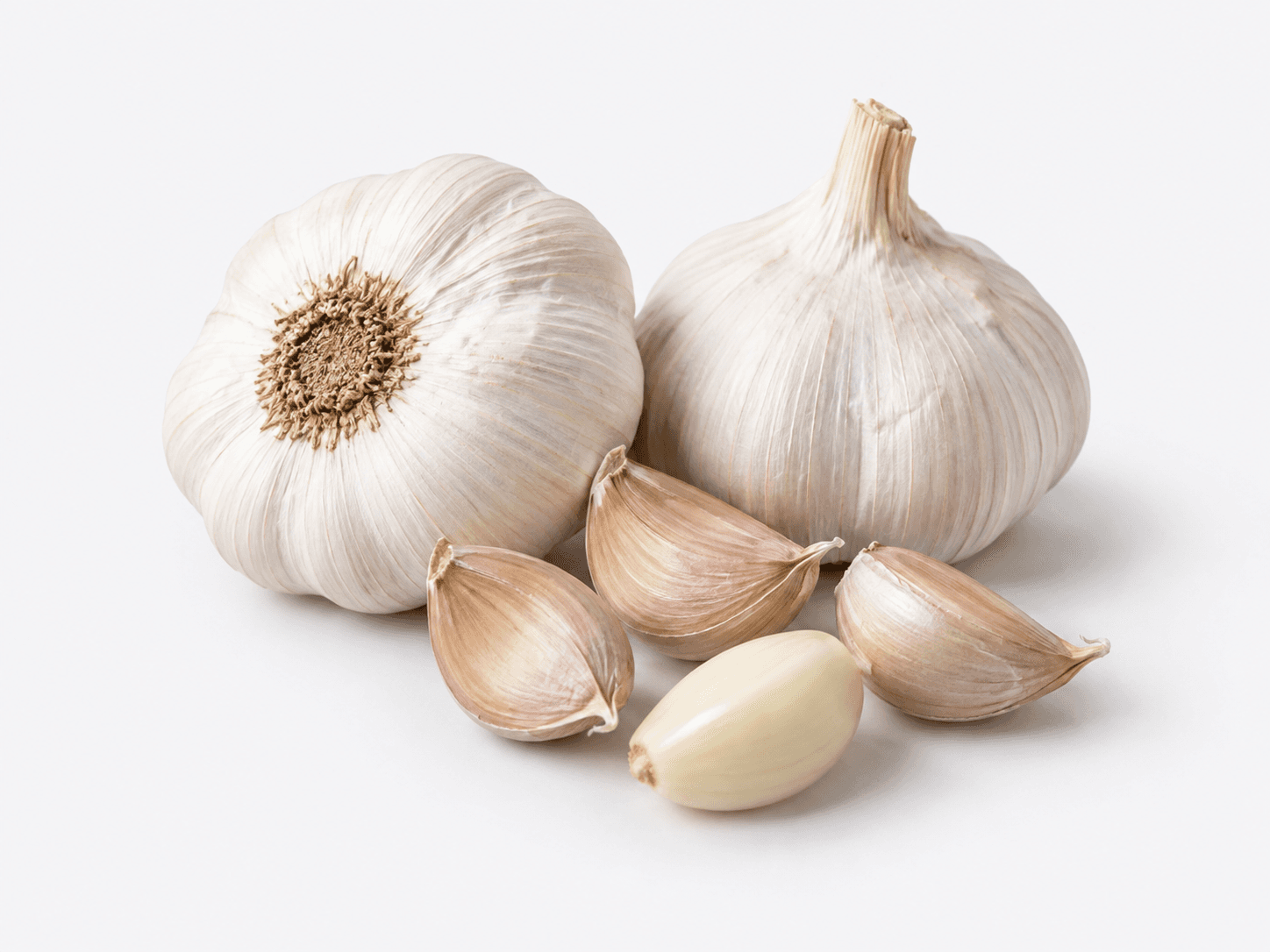
Vegetables
Moderate evidenceThe evidence for garlic points to a modest drop in blood pressure and cholesterol. The trick is to crush it and wait ten minutes before it hits the heat.