Contents
What it is
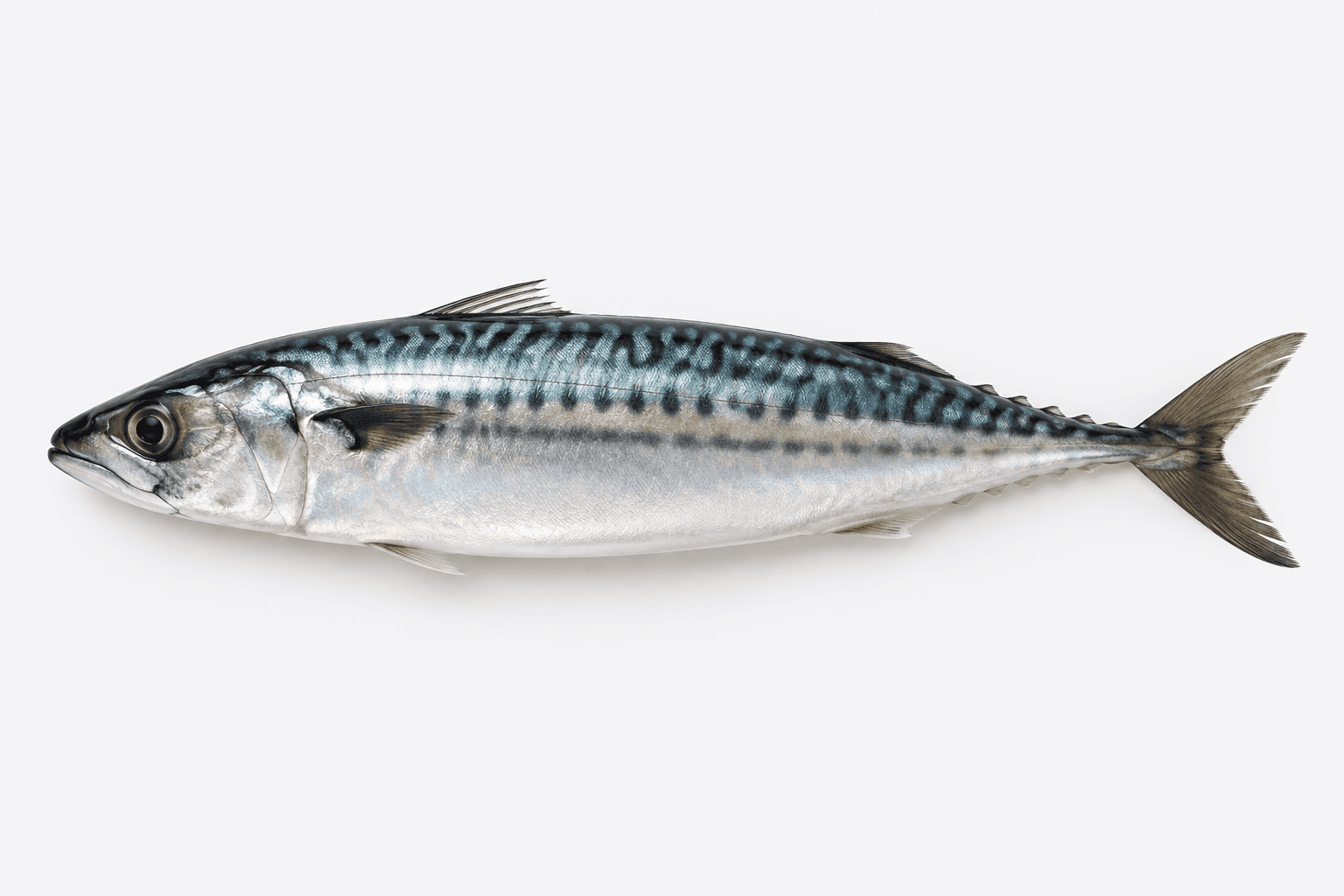
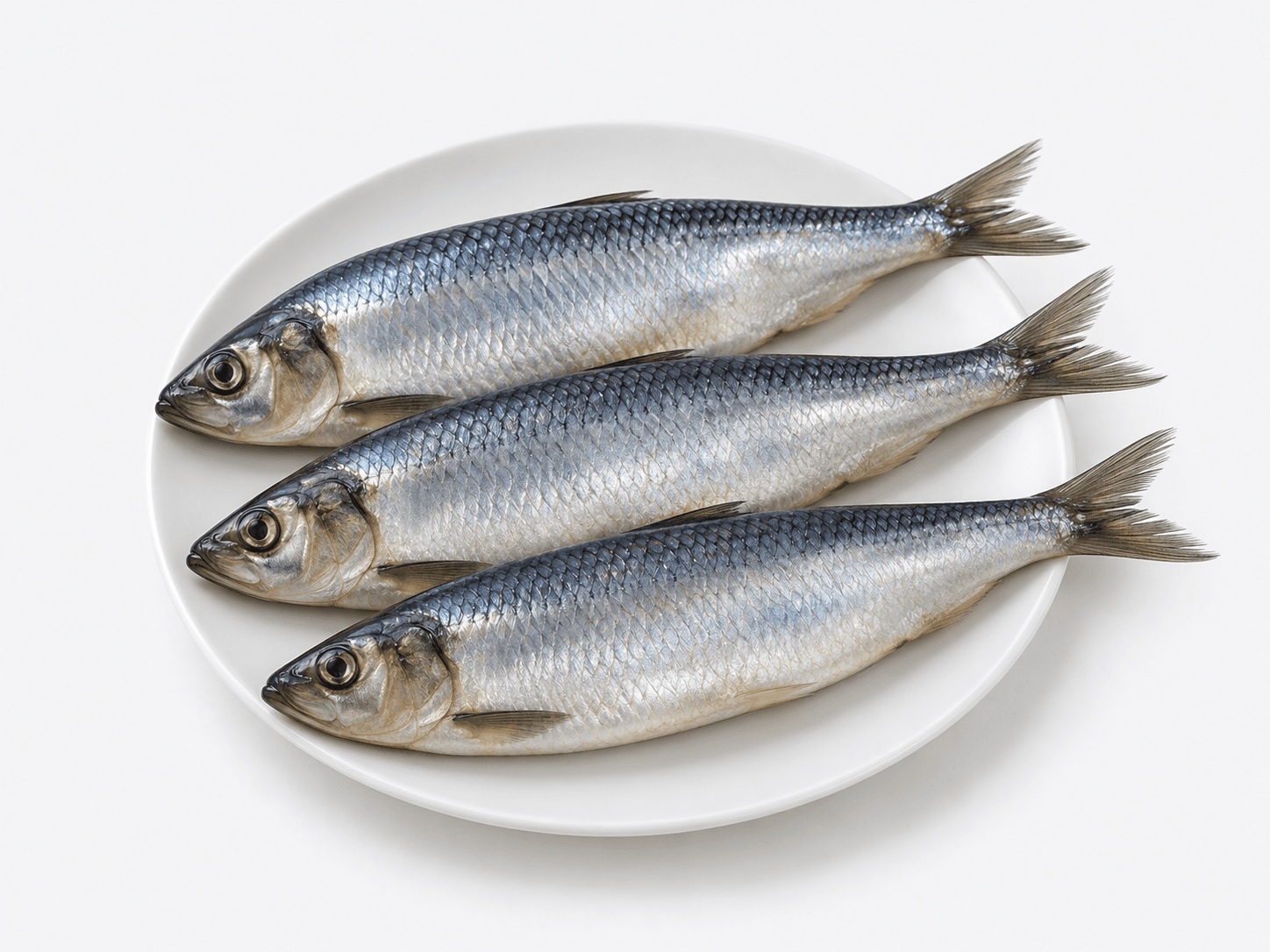
Herring is an oily, blue-backed fish that moves in great shoals through cold seas. It is spread across the North Atlantic and North Pacific and is caught in Korea's East Sea too. The flesh is rich with fat and full of fine bones. Europe has long traditions of salting, smoking and pickling it in vinegar, while in Korea it is dried outdoors through repeated winter freezing and thawing, as gwamegi. Being so fatty, it also turns rancid quickly, so freshness matters.
Scientific name Clupea
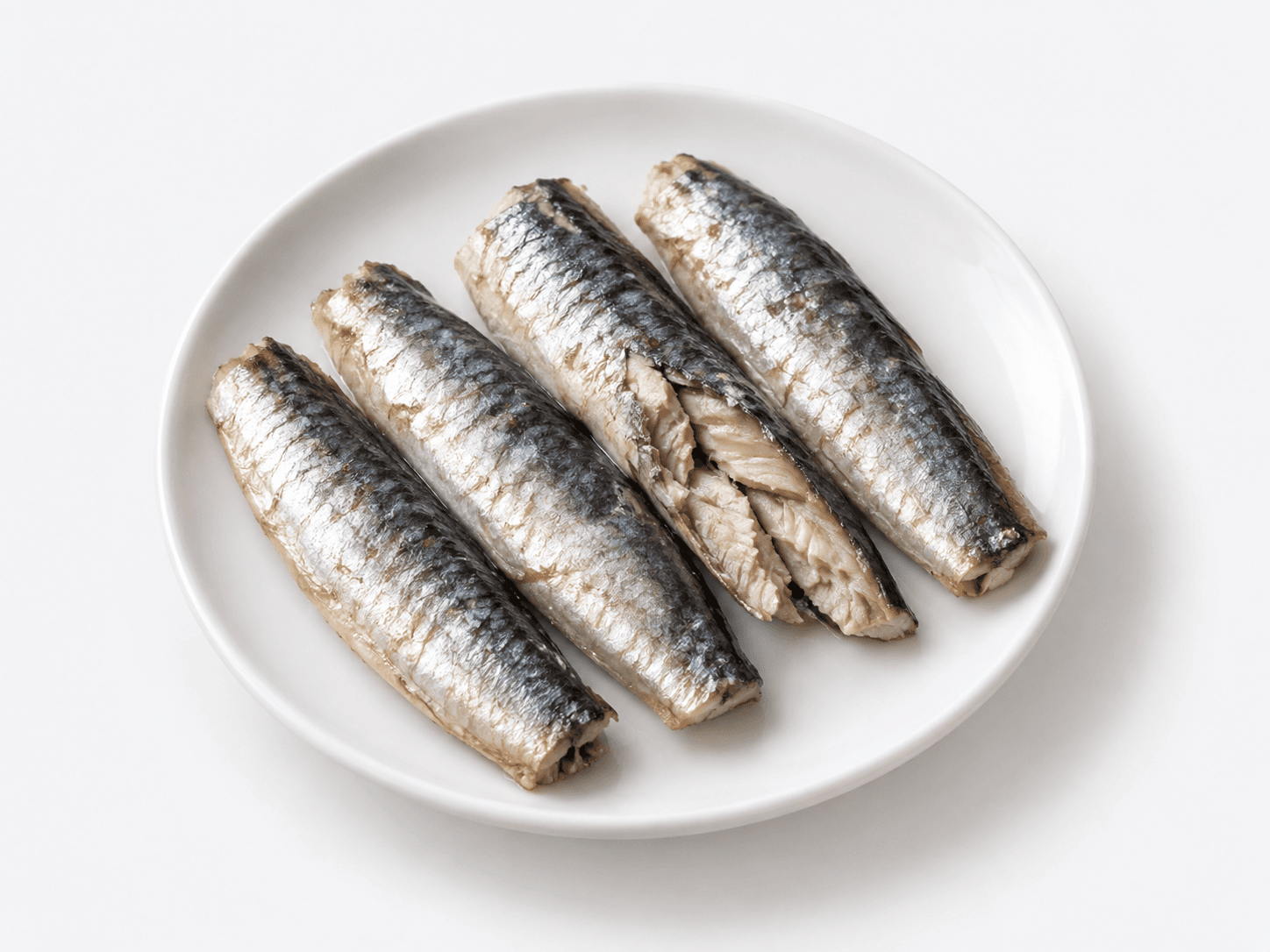
In Korea, herring usually arrives as gwamegi — half-dried through repeated freezing and thawing in the winter sea wind.
What stands out in the composition table is vitamin B12. 13.7 µg per 100 g: more than five times an adult's 2.4 µg daily reference, and fifteen times an egg's 0.89 µg. On this site only oysters (16 µg) carry more.
Omega-3 is high too at 1.57 g — behind salmon (2.6 g) and mackerel (2.2 g), but not by much.
Key benefits
- Nutrition data
13.7 µg of vitamin B12 — over five times the daily reference
13.7 µg per 100 g, against an adult reference of 2.4 µg. One portion brings in several days' worth.
Vitamin B12 is found in meaningful amounts only in animal foods. It builds red blood cells and maintains the myelin sheath around nerves; a shortage brings anaemia and neurological symptoms together.
But B12 is stored in the liver for years, and there is a ceiling on how much the body absorbs at once. Steady intake matters more than a large single dose. After gastric surgery, or on long-term acid suppression, food-borne B12 may not be absorbed well enough — a blood test is the way to know.
- Moderate evidence
1.57 g of omega-3 — though the expectation needs adjusting
[1]EPA and DHA together come to 1.57 g per 100 g. Behind salmon (2.6 g) and mackerel (2.2 g), and seven times canned tuna's 0.22 g.
But the hopes attached to omega-3 outrun the evidence. In a Cochrane review of 86 randomised trials (162,796 people), increasing omega-3 lowered triglycerides by about 15 % (high certainty) while making essentially no difference to all-cause mortality or cardiovascular events. Coronary events fell slightly, but 167 people had to take it for one to benefit.
The authors noted the evidence comes largely from supplement trials, with little on eating fish.
- Nutrition data
4.2 µg of vitamin D and 36.5 µg of selenium
Vitamin D is 4.2 µg, about level with sardines (4.8 µg). Short of eel (23.3 µg) or mackerel (16 µg), but since so few foods contain vitamin D at all, that still places it high on the list.
The 36.5 µg of selenium is around two-thirds of the 55 µg daily reference. Calcium is 57 mg and potassium 327 mg.
Gwamegi loses water as it dries. Compared gram for gram, its nutrients are more concentrated — and so is its energy.
How to eat it well
- Do not grill it hard and long. Omega-3 degrades with heat and oxygen. Medium heat or a 180 °C oven treats it better.
- Gwamegi is traditionally wrapped with laver, sea mustard and raw garlic, and there is a reason that combination stuck: the garlic's bite and the seaweed cut through the oiliness.
- Lemon or vinegar reduces the fishy note and slows fat oxidation.
- Salt-cured herring carries a great deal of sodium. Fresh or frozen is better where you can get it.
- Cook prepared fish promptly. Oily fish left at room temperature develops histamine.
How to read the grades
Each benefit carries a label showing how far research on people supports it. Grades differ between items even within the same ingredient.
- Nutrition data
- A fact verifiable from food composition databases or health authorities. This is a different kind of statement from a clinical effect.
- Strong evidence
- Consistently confirmed across randomised controlled trials or meta-analyses.
- Moderate evidence
- Human studies exist, but effect sizes are small or results are mixed.
- Early research
- Cell or animal work, or small preliminary studies.
- Not established
- Commonly claimed, but not confirmed in studies on people.
What to watch out for
- Watch for histamine. Oily fish such as mackerel and herring develop histamine when poorly stored, causing hives, flushing and headache. Cooking does not destroy it. Keep the cold chain intact.
- Gwamegi is sold semi-dried. Hygiene during production and storage matters, and if your immunity is compromised, cooking it is the safer choice.
- With gout, take care. Oily fish is among the higher-purine foods.
- Salted and smoked versions raise the sodium considerably.
- Avoid with a fish allergy.
- On anticoagulants, discuss high-dose omega-3 supplements with a clinician.
Nutrition
Per 100 g of raw herring flesh. Gwamegi, the semi-dried form, concentrates these figures as it loses water.
- Calories
- 158 kcal8%
- Protein
- 18.0 g36%
- Fat
- 9.0 g12%
- Vitamin B12
- 13.7 µg571%
- Omega-3
- 1.57 g
- Vitamin D
- 4.2 µg21%
- Selenium
- 36.5 µg66%
- Calcium
- 57 mg4%
- Potassium
- 327 mg7%
Percentages are of the US FDA Daily Value for adults and children 4 and over. National reference intakes differ by sex and age.
Calculate this alongside other ingredients →
Key nutrients
Dishes with this ingredient
Sources
The databases and health authorities this article's nutrition figures and health statements draw on.
- 1Omega-3 fatty acids for the primary and secondary prevention of cardiovascular diseaseMeta-analysisAbdelhamid AS, et al. Cochrane Database Syst Rev 2020PMID 32114706
- 2USDA FoodData CentralFood composition database
- 3MFDS Food Composition Database · 식품안전나라Food composition database
- 4NIH Office of Dietary SupplementsHealth authority
- 5Cochrane LibrarySystematic reviews
- 6PubMedResearch literature