Vegetables
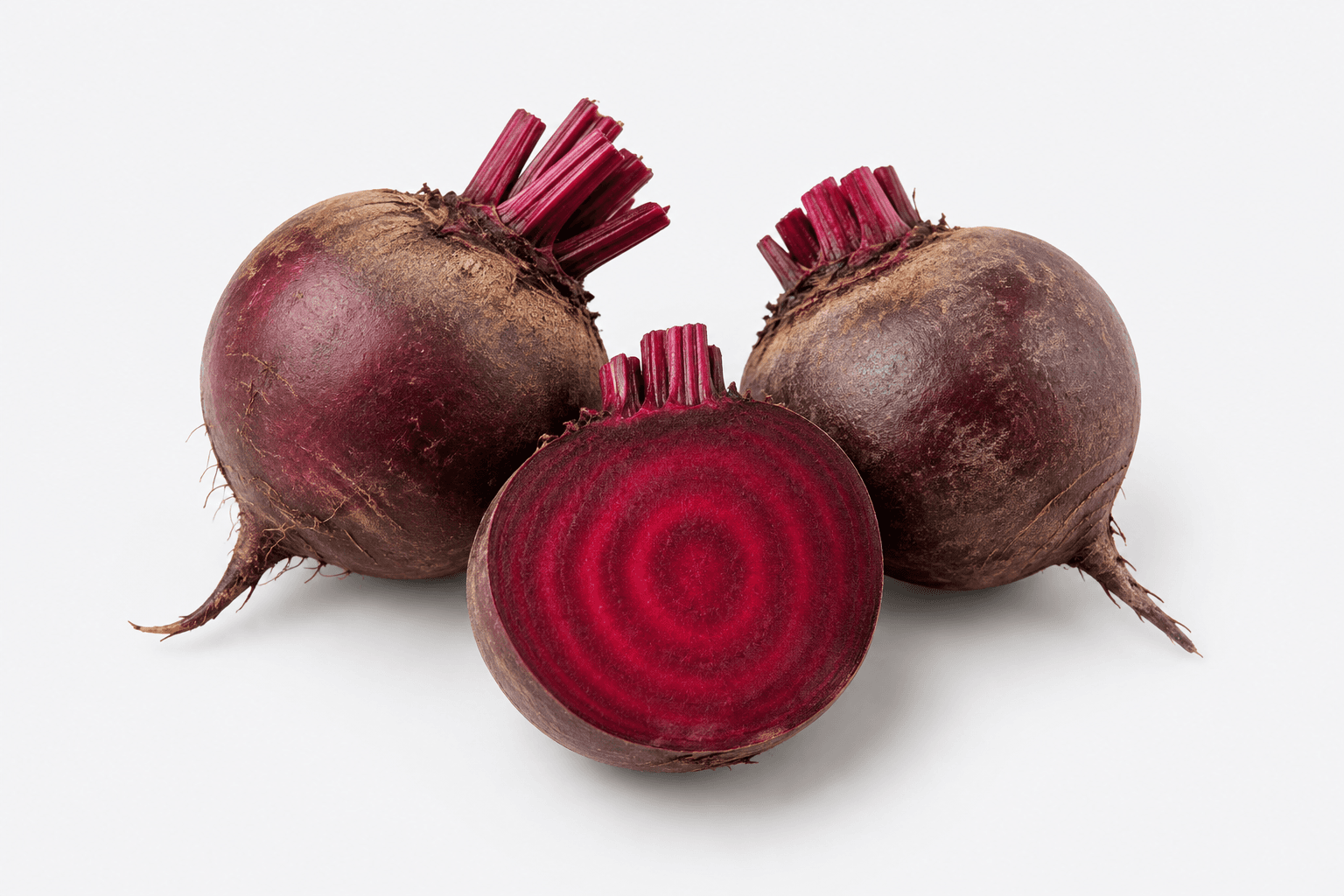
Beetroot
Beet nitrate converts to nitric oxide, which widens blood vessels. That is why it keeps appearing in exercise physiology studies.
On blood pressure, beetroot is the only ingredient on this site graded strong; spinach is moderate. Yet the composition table goes to spinach on nearly every row.
Vegetables
Beet nitrate converts to nitric oxide, which widens blood vessels. That is why it keeps appearing in exercise physiology studies.
Vegetables
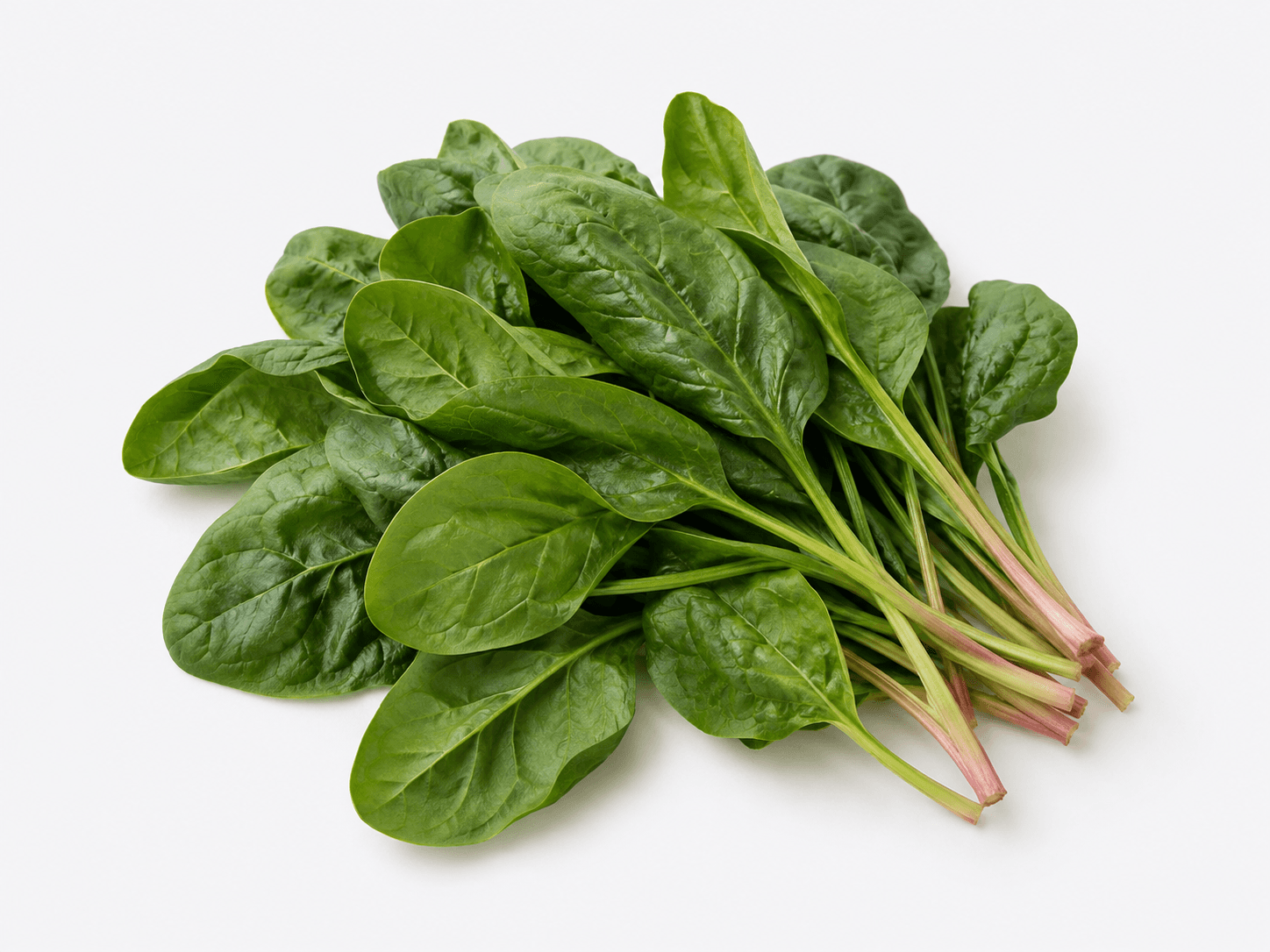
"Spinach equals iron" is only half true. The real value sits in folate, vitamin K, and the lutein that accumulates in your eyes.
Beetroot — Leads on
Spinach — Leads on
Per 100 g edible portion. Only rows where both have a figure are shown, and no winner is marked for items like calories or sugars where more is not better.
| Nutrition | Beetroot | Spinach |
|---|---|---|
| Calories | 43 kcal | 23 kcal |
| Protein | 1.6 g | 2.9 g |
| Carbohydrates | 9.6 g | 3.6 g |
| Fiber | 2.8 g | 2.2 g |
| Folate | 109 µg | 194 µg |
| Potassium | 325 mg | 558 mg |
On the table alone it is not a contest. Spinach leads on potassium, 558 mg against 325, on magnesium, 79 mg against a blank, and on folate, 194 µg against 109 — and vitamin K at 483 µg and beta-carotene at 5,626 µg are rows the beetroot table does not have at all. At 23 kcal against 43, spinach is half the energy.
On blood pressure, though, beetroot is ahead. It is the only ingredient on this site graded strong for blood pressure; spinach sits at moderate. Same mechanism, different grade — because the volume of research differs. Randomised trials using beetroot juice have piled up far higher.
The mechanism is shared. Nitrate is converted to nitrite by bacteria in the mouth, then to nitric oxide in the body, which relaxes the vessel wall. One practical note follows from that: since the first step happens in the mouth, antibacterial mouthwash has been reported to blunt the effect.
Spinach carries a caveat beetroot does not: oxalate. The table shows 2.7 mg of iron, but a good share of it is bound by the plant's own oxalate and poorly absorbed. Blanching leaches oxalate into the water, which is exactly what the Korean habit of blanching before dressing achieves.
Beetroot's caveat is the colour. Betalain can turn urine reddish for a day, which is harmless. At 6.8 g of sugar it is on the sweet side for a vegetable.
In short, pick beetroot if blood pressure is the aim and spinach for micronutrients across the board. They are not really competing; they do different jobs.