Dairy & eggs
Greek yogurt
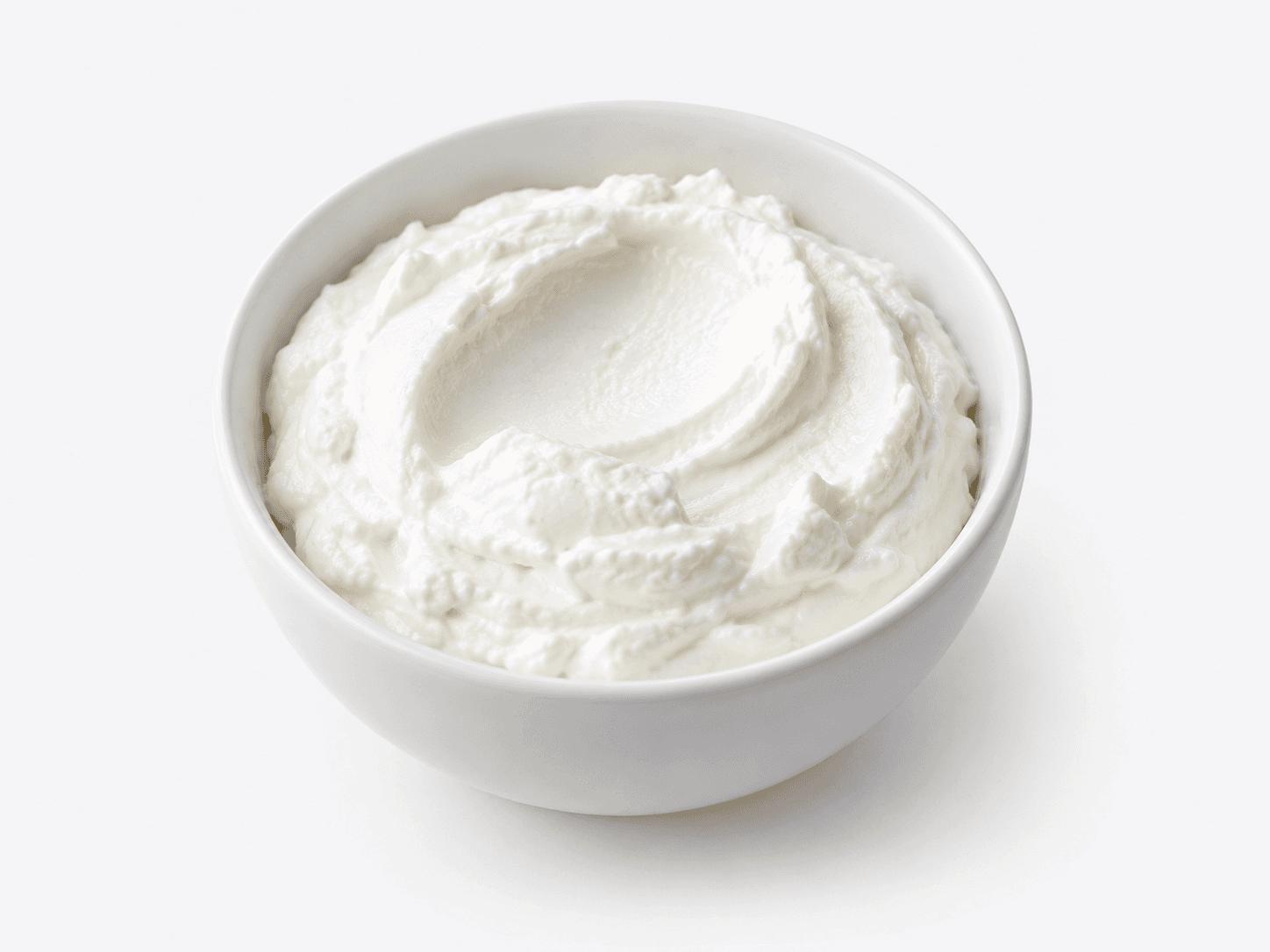
It has nearly three times the protein of regular yogurt not because of any special ingredient, but because the liquid was removed. Calcium goes down in the same step.
Greek yoghurt carries 2.7 times the protein; kefir carries a far wider range of microbes. But "more strains" and "better for you" are different claims.
Dairy & eggs
It has nearly three times the protein of regular yogurt not because of any special ingredient, but because the liquid was removed. Calcium goes down in the same step.
Dairy & eggs
Pooling the randomised trials, blood pressure, CRP, cholesterol, blood sugar and weight all stayed put. Two things changed: fasting insulin, and lactose digestion.
Greek yogurt — Leads on
Kefir — Leads on
Per 100 g edible portion. Only rows where both have a figure are shown, and no winner is marked for items like calories or sugars where more is not better.
Basis for these figures
| Nutrition | Greek yogurt | Kefir |
|---|---|---|
| Calories | 59 kcal | 43 kcal |
| Protein | 10.2 g | 3.79 g |
| Fat | 0.4 g | 1.02 g |
| Carbohydrates | 3.6 g | 4.77 g |
| Vitamin B12 | 0.75 µg | 0.29 µg |
| Calcium | 110 mg | 130 mg |
| Phosphorus | 135 mg | 105 mg |
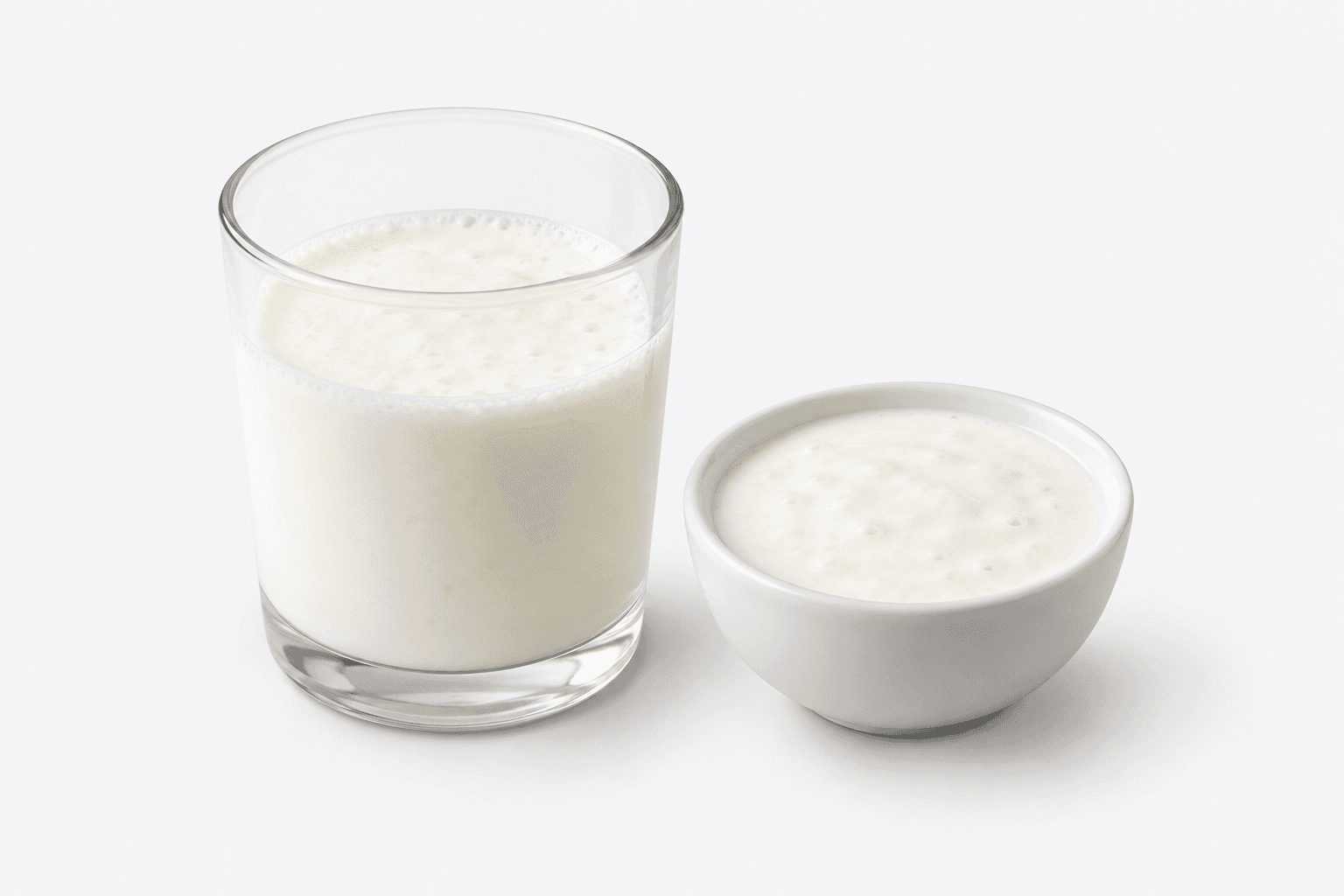
State the basis first. The Greek yoghurt here is nonfat plain; the kefir is lowfat plain, from a commercial product fortified with vitamins A and D. The fat basis differs slightly, so do not read 59 kcal against 43 kcal as a like-for-like gap.
The largest difference is protein: 10.2 g against 3.79 g, a factor of 2.7.
The reason is in the making. Greek yoghurt is strained of its whey. Water and lactose leave, and protein concentrates. Kefir is not strained — it stays at drinking consistency — so its protein sits close to ordinary milk. If protein is the point, there is no contest.
Where kefir leads is the makeup of the ferment. Yoghurt is usually made with two or three lactic acid bacteria; kefir ferments with kefir grains, a symbiotic community of many bacterial species plus yeasts. The range is far wider.
A line has to be drawn here. That kefir carries more strains is a fact about how it is made. That this produces better outcomes for gut health or immunity is a separate claim, and this site does not put the two on the same line. Probiotic effects have to be judged strain by strain, dose by dose and condition by condition.
Lactose is low in both, because fermentation breaks it down. Kefir is unstrained so more could remain, but its longer ferment takes much of it out in practice. Unless your lactose intolerance is severe, both are worth trying.
Kefir's 1.0 µg of vitamin D was added. Unfortified products have almost none. Read the label.
Sweetened or not may outweigh all of this. The table is plain for both. Sweetened versions can pass 20 g of sugar in a cup.