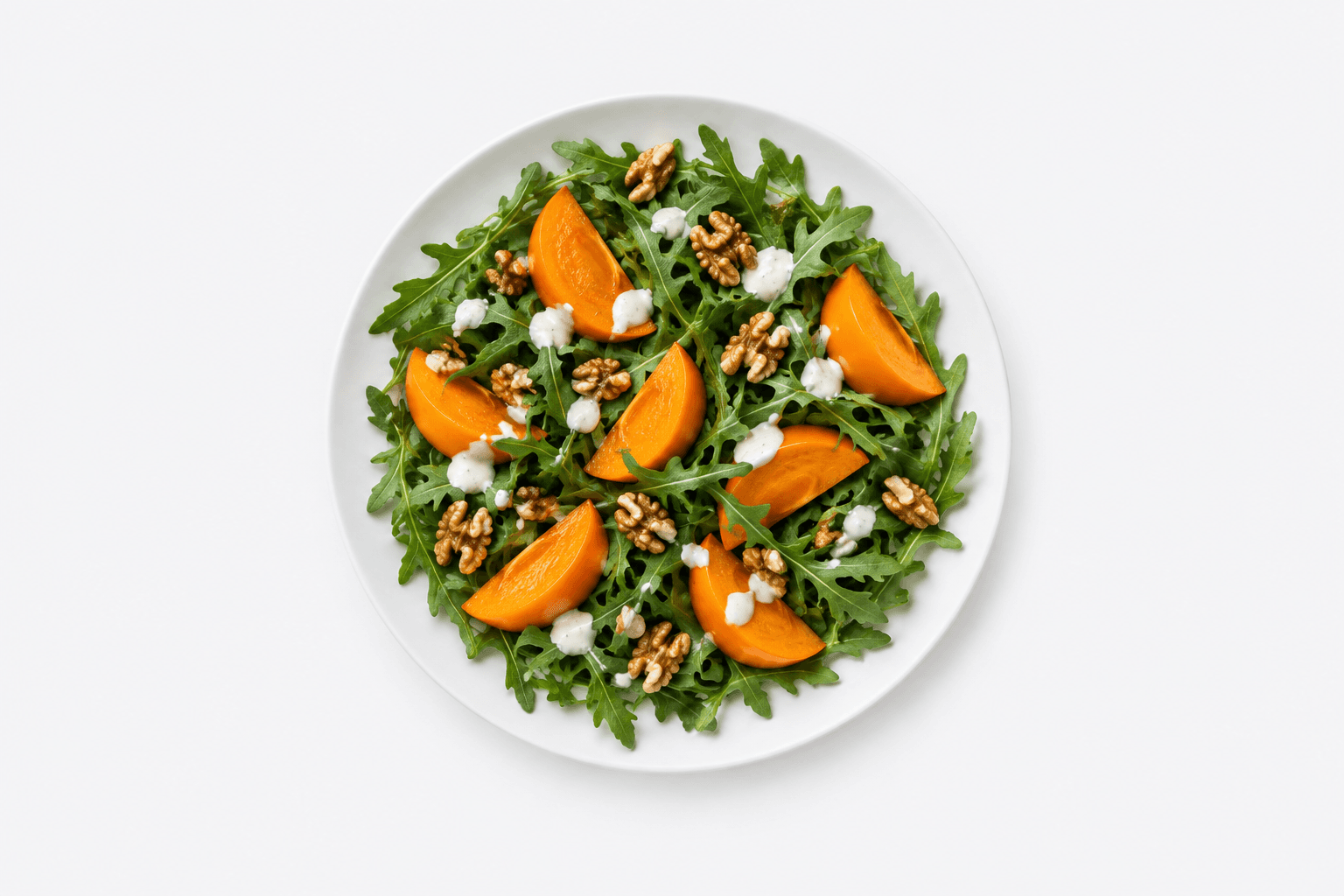
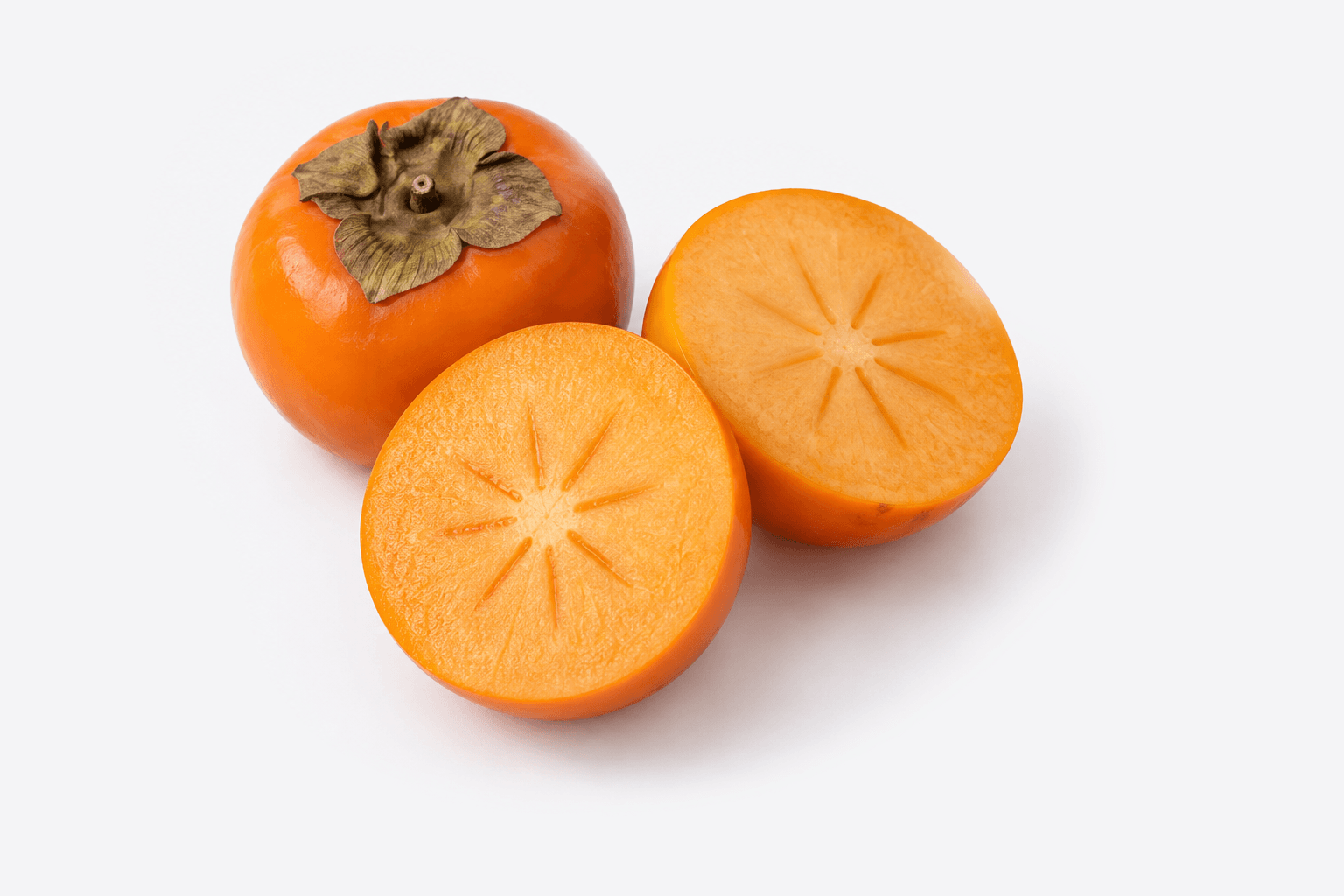
It has to be firm sweet persimmon. Soft ripe fruit collapses under the knife, and astringent varieties are unpleasant uncooked. Sweet varieties lose their soluble tannins as they grow, which is what makes them edible while still hard.
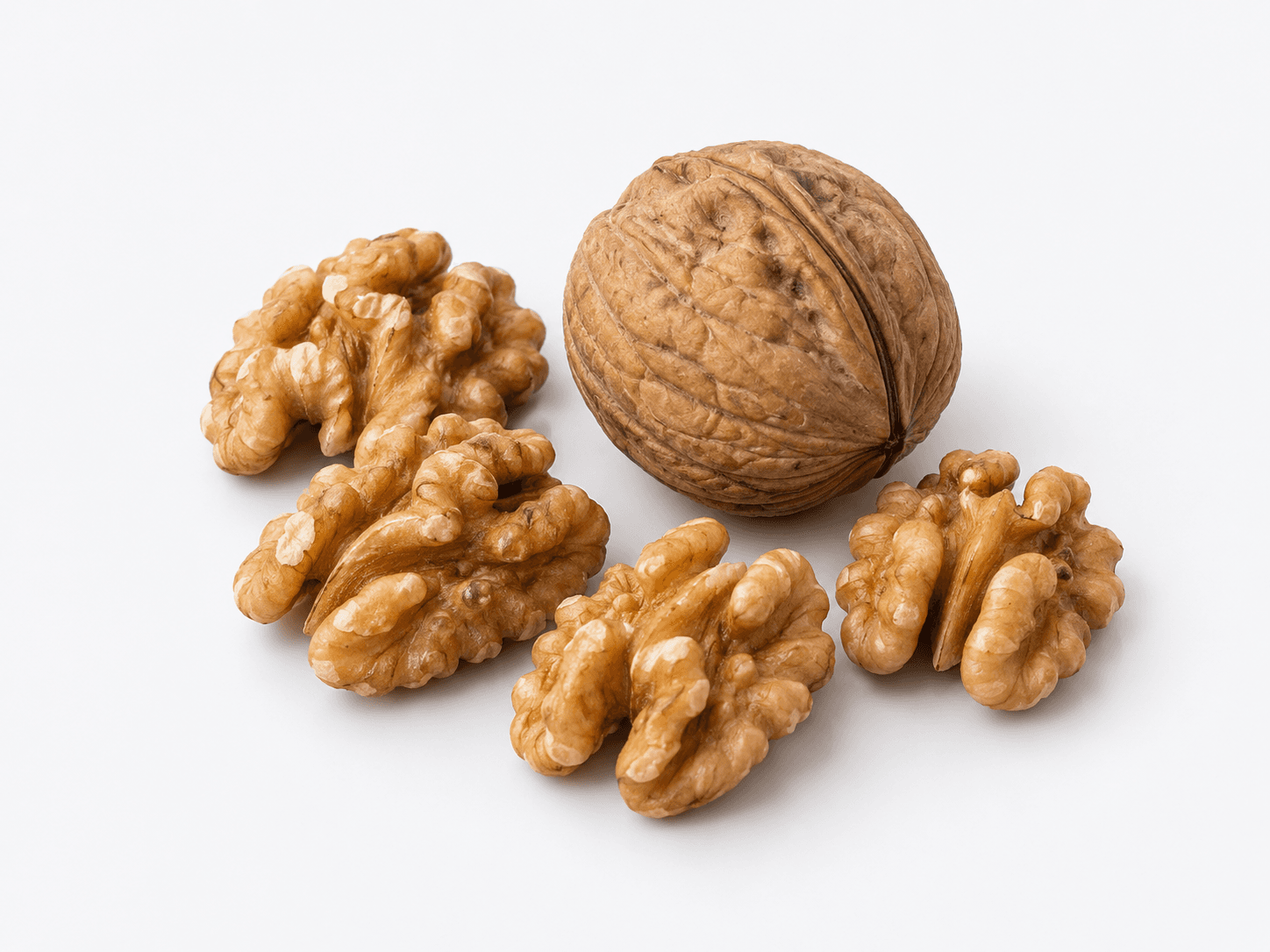
Toasting the walnuts is about bitterness, not aroma. The bitter, astringent note in walnuts comes from tannins in the skin; brief low heat softens it while the fat melts and the nuttiness comes forward. Never use high heat — walnuts are 65% fat and scorch fast.
Dotting the dressing rather than pouring it is about the persimmon's sugar. At 12.5 g per 100 g, the fruit is sweet enough already. Coat everything evenly and the salad tastes of nothing but sweetness. The yoghurt's acidity has to interrupt it for the fruit to read.
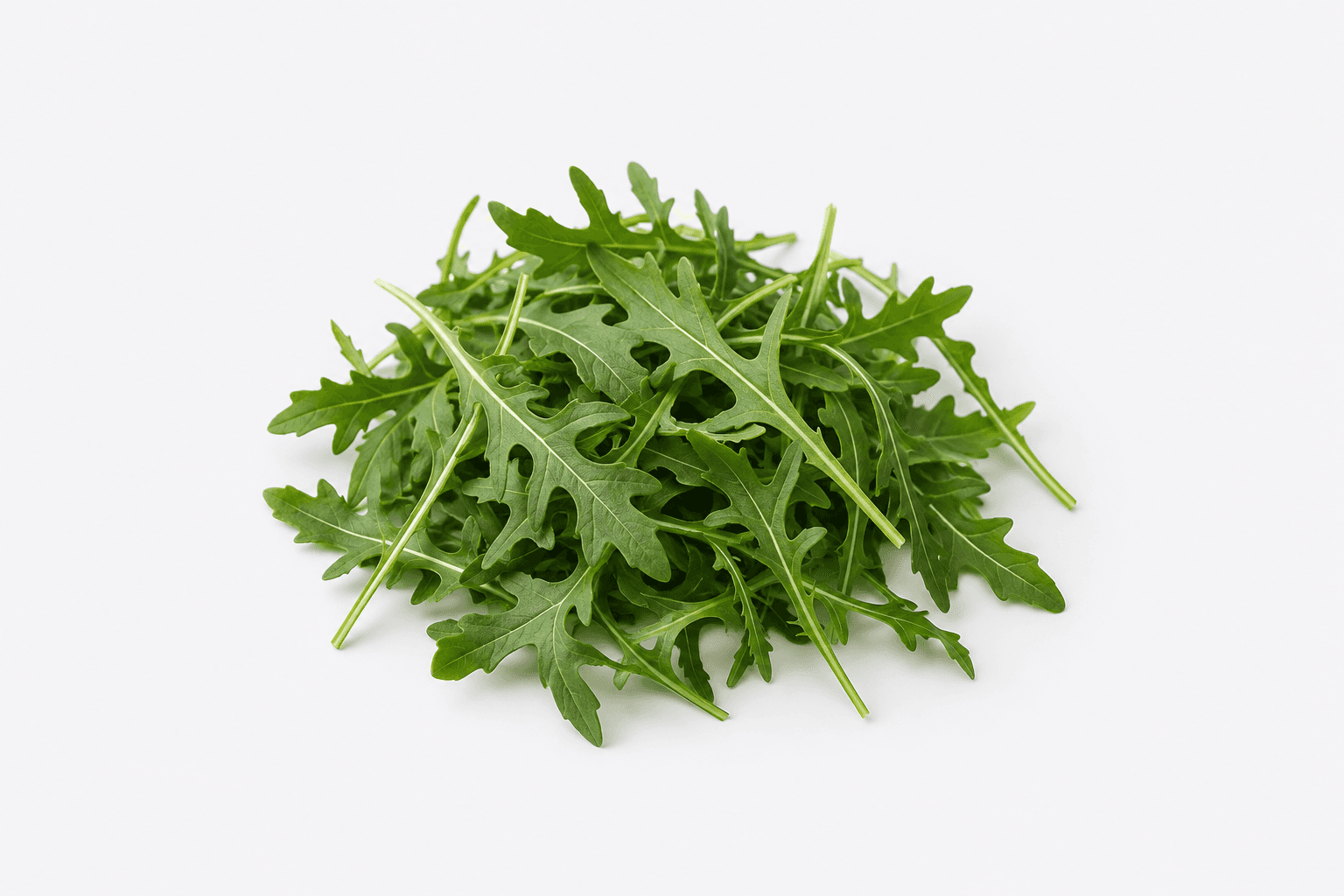
Rocket is here for the same reason. Its bitterness balances the sugar.
On the numbers, two servings of this salad carry about 13 g of fibre — 12 g from two persimmons (around 340 g of flesh), the rest from walnuts and rocket. That is half the 25 g daily target.
Beta-carotene is fat-soluble. It is what makes persimmon orange, and the olive oil and walnut fat help absorb it. There is a reason the dressing carries oil.
If you are counting sugar, two persimmons hold about 42 g. Split two ways that is 21 g each, which is not a small amount. With diabetes, drop to one persimmon and add more rocket.
Do not make this your only food on an empty stomach. Sweet persimmon carries little bezoar risk, but the rule is not to eat much persimmon on an empty stomach.