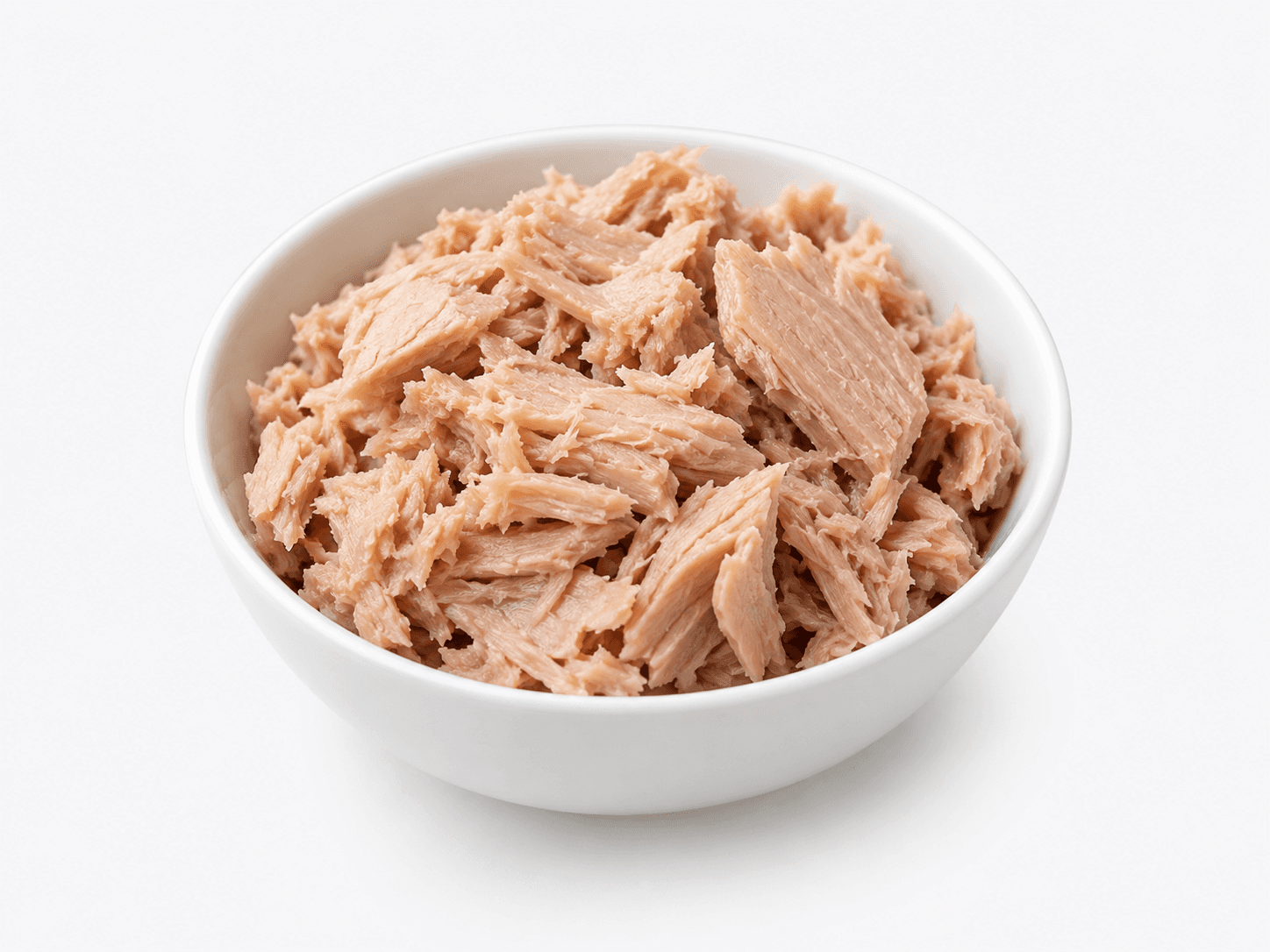
Seafood
Nutrition dataTuna
Canned tuna in water packs 19 g of protein into 85 kcal per 100 g. But its omega-3 is one-twelfth of salmon's.
Greek yoghurt instead of mayonnaise. That one swap is the whole reason the tin's 85 kcal survives.
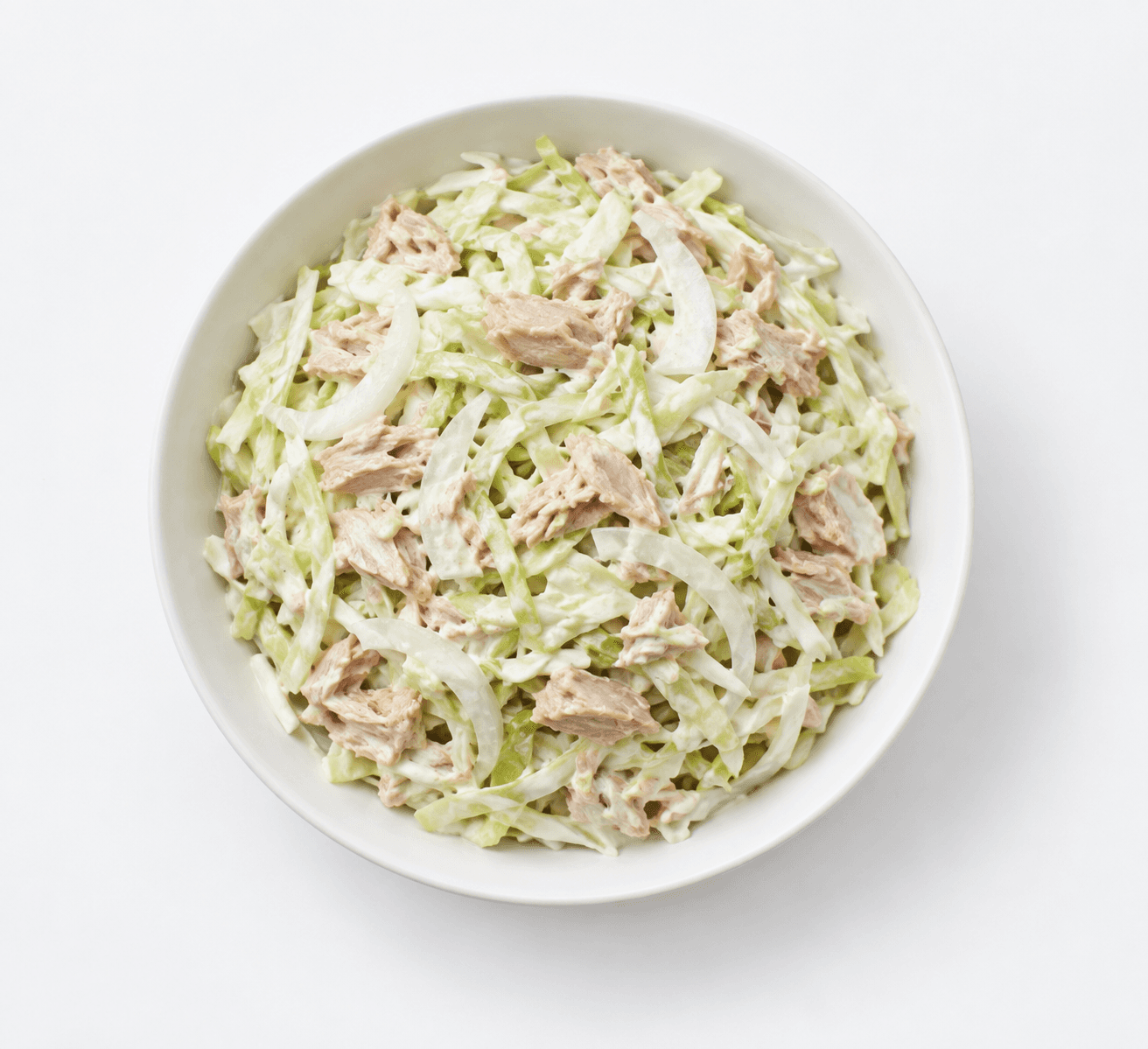
2 servings10 min
Tip the tuna into a sieve and drain it thoroughly. A good share of the sodium is in that liquid.
Shred the cabbage finely.
Slice the onion thinly and soak it in cold water for five minutes, then drain. That takes the harsh edge off.
Whisk the Greek yoghurt, lemon juice, mustard and pepper into a dressing.
Combine the cabbage, onion and tuna, and toss with the dressing.
Eat straight away — left to stand, the cabbage weeps.
What makes this recipe work is not an ingredient but an omission.
Canned tuna in water fits 19 g of protein into 85 kcal per 100 g, a density few foods match. Two tablespoons of mayonnaise adds about 180 kcal — tripling the total. The same amount of Greek yoghurt is around 30 kcal and adds protein on top.
Soaking the onion has a reason too. The sulphur compounds behind its harshness are water-soluble and leach out. Soak it too long and most of them are gone, so five minutes is enough.
Tuna has no fibre and no vitamin C. The 200 g of cabbage covers both, and that vitamin C also helps iron absorption from whatever else is on the plate.
Seafood
Nutrition dataCanned tuna in water packs 19 g of protein into 85 kcal per 100 g. But its omega-3 is one-twelfth of salmon's.
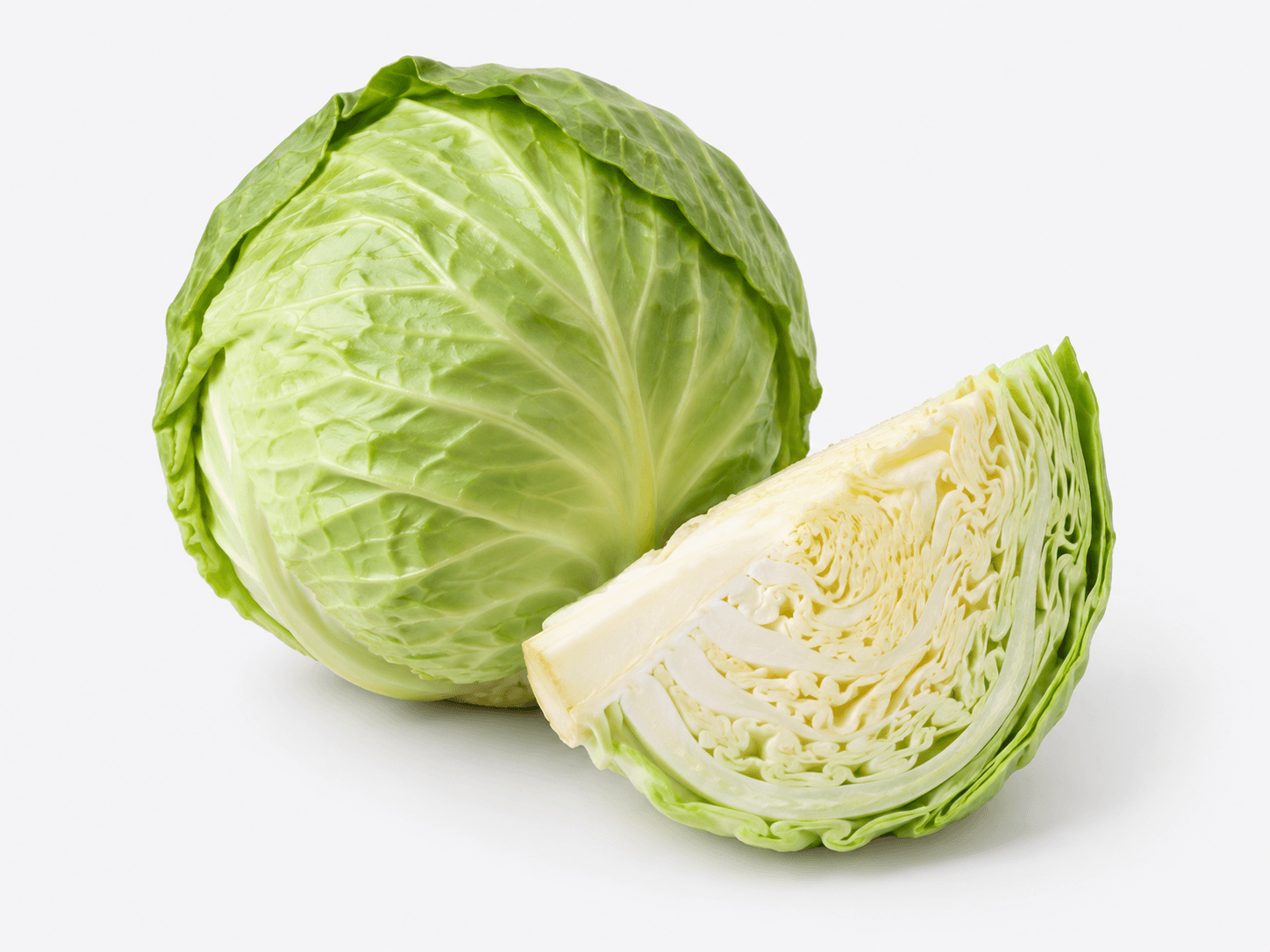
Vegetables
Early researchThere is a reason cabbage juice became a folk remedy for stomach trouble. The evidence, though, is weaker than its reputation suggests.
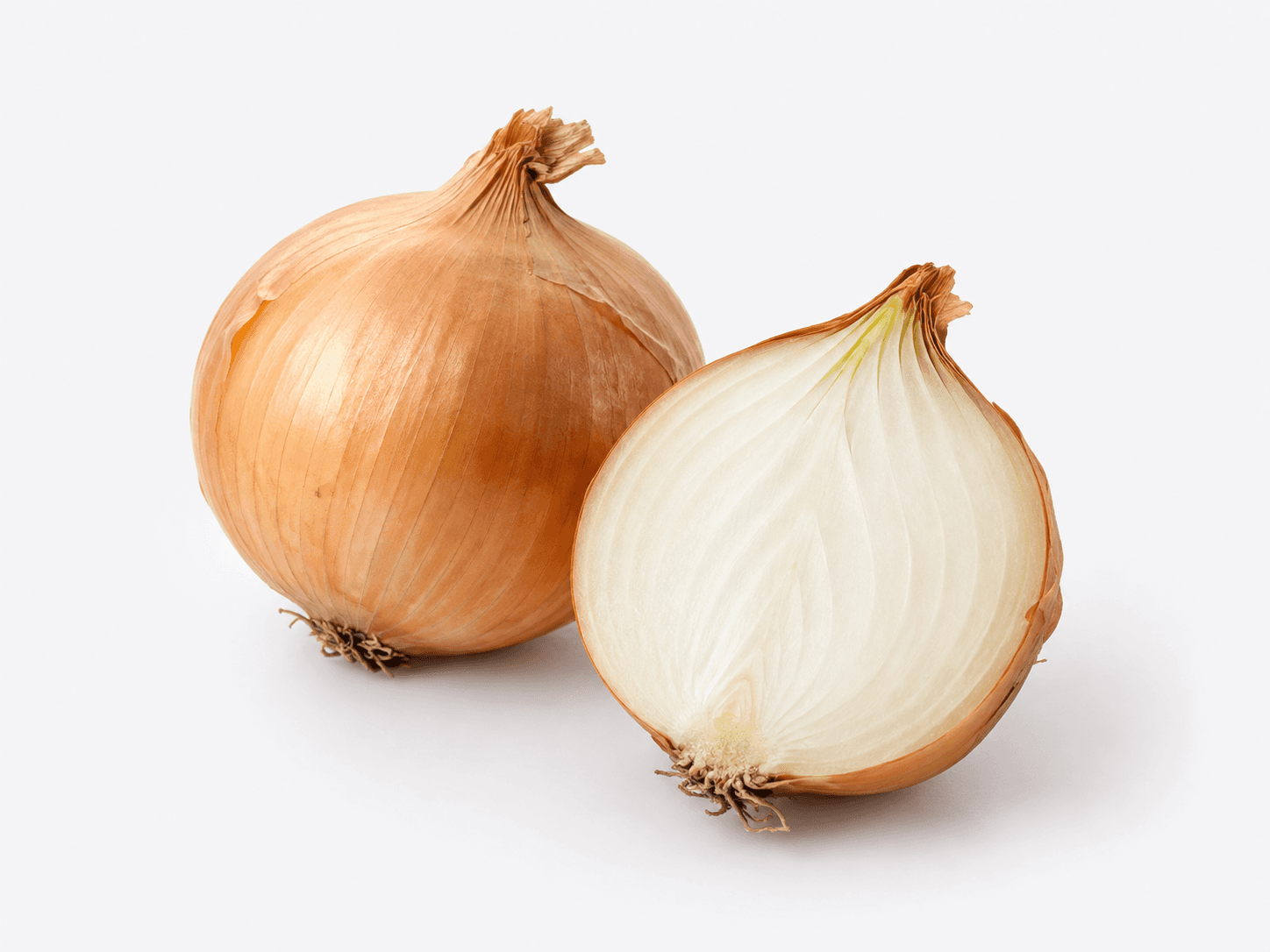
Vegetables
Moderate evidenceOnion's antioxidant quercetin concentrates in the outer layers. Peeling two extra layers out of habit throws much of it away.
Dairy & eggs
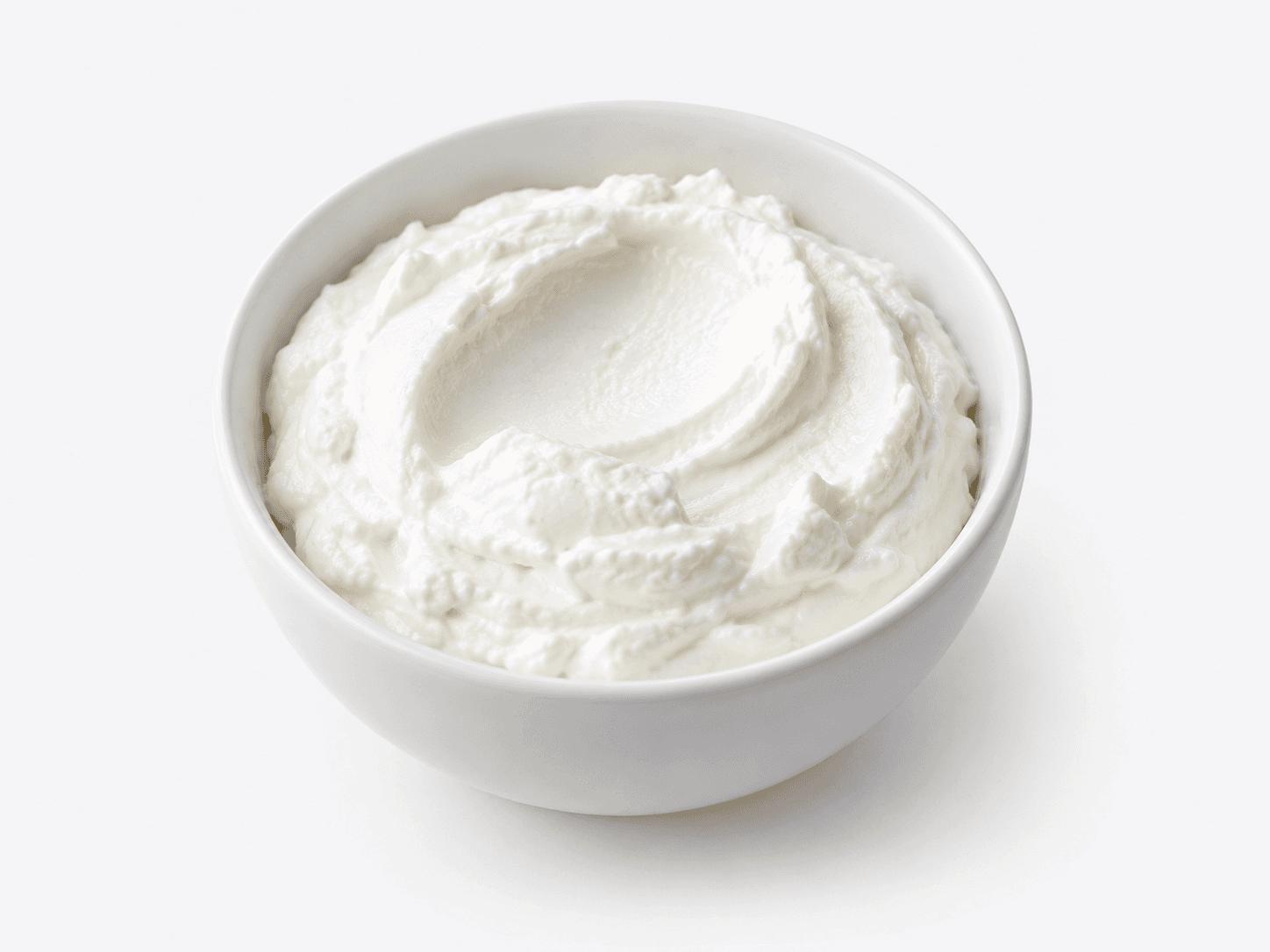
Moderate evidenceIt has nearly three times the protein of regular yogurt not because of any special ingredient, but because the liquid was removed. Calcium goes down in the same step.