Contents
What it is
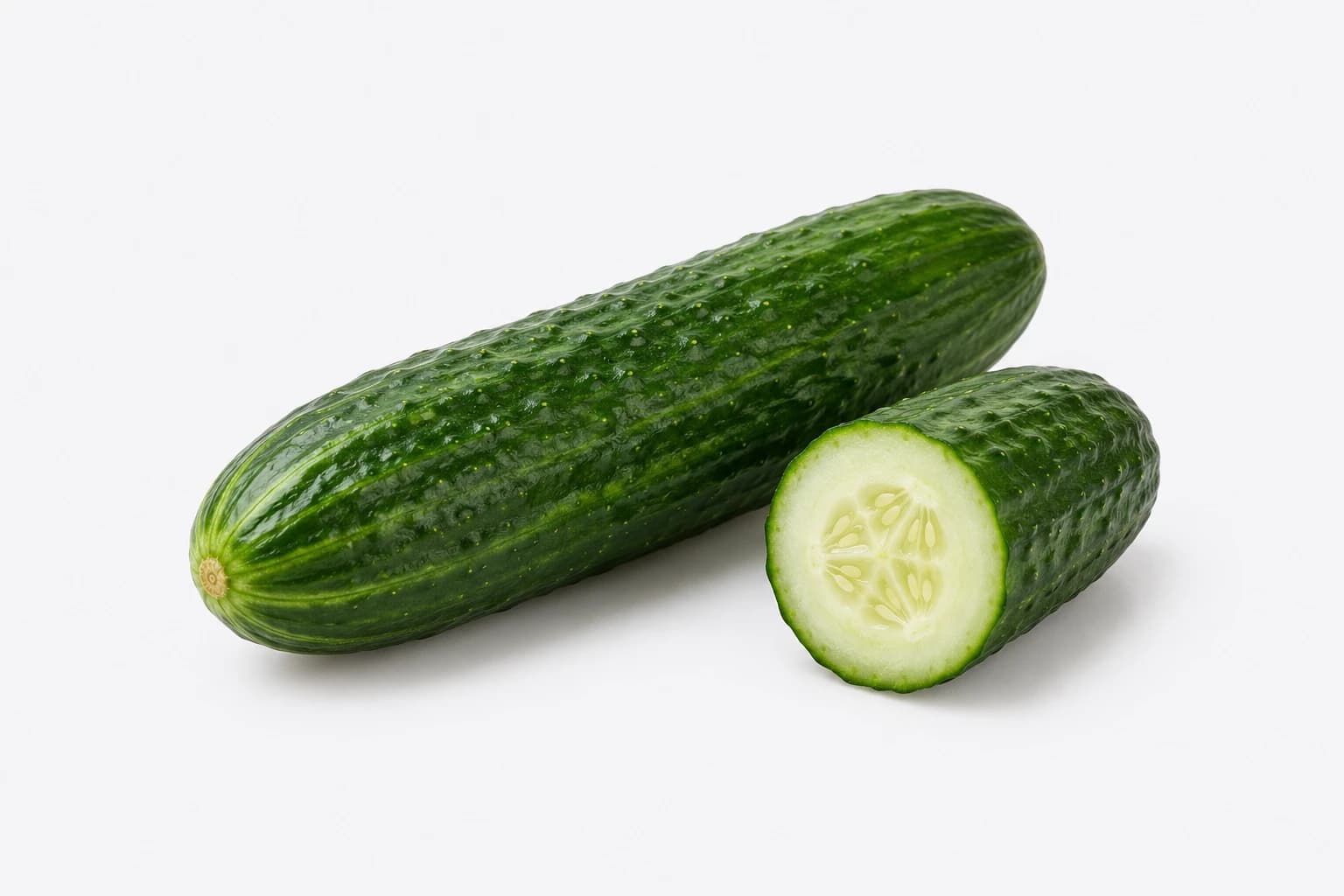
The cucumber is the fruit of a climbing vine in the gourd family, native to northern India and a relative of watermelon, pumpkin and melon. Around 95 percent of its weight is water, which puts it among the most watery ingredients on this site. Cucurbitacin, a bitter compound, sits near the skin, so depending on variety and growing conditions the stem end can taste bitter. Its whole appeal is the crisp bite, which is why salting it to draw out water sharpens rather than spoils the texture.
Scientific name Cucumis sativus
Cucumber is among the most common vegetables on a Korean table — in kimchi, in cold soups, in gimbap, dressed and salted.
So many people look for its benefits, and the accurate place to start is the composition table.
Raw cucumber with the peel is 95.2% water.
- 15 kcal
- Carbohydrate 3.63 g, fibre 0.5 g
- Protein 0.65 g, fat 0.11 g
- Potassium at 147 mg is its highest mineral
- Vitamin C is 2.8 mg — orange is 53.2, guava 228
The trials matter too. There are three, and none of them used cucumber.
- 2017, Journal of Food Science — a double-blind placebo-controlled trial of cucumber seed extract in adults with hyperlipidemia
- 2018, Clinical Interventions in Aging — cucumber extract against glucosamine-chondroitin in moderate knee osteoarthritis
- 2023, Current Rheumatology Reviews — a placebo-controlled study of a standardised cucumber extract on osteoarthritis measures
All three are extracts. None of them is a trial of what happens when you eat a cucumber.
This entry starts from that fact. And it does not mean cucumber is a poor vegetable — that is set out below.
Key benefits
- Nutrition data
It is 95.2% water — and that fact is what this vegetable is for
Per 100 g of raw cucumber with the peel:
- Water 95.2%
- 15 kcal
- Potassium 147 mg
- Carbohydrate 3.63 g, sugar 1.67 g, fibre 0.5 g
- Protein 0.65 g, fat 0.11 g
- Phosphorus 24 mg, calcium 16 mg, magnesium 13 mg
- Vitamin C 2.8 mg, folate 7 µg, beta-carotene 45 µg
- Sodium 2 mg
It is easy to look at this and conclude there is nothing here. That is half right.
The vitamin and mineral content is low. Vitamin C at 2.8 mg is 3% of the daily value, clearly low against other vegetables.
Energy (100 g) Vitamin C Fibre Cucumber 15 kcal 2.8 mg 0.5 g Lettuce 15 kcal 9.2 mg 1.3 g Tomato 18 kcal 13.7 mg 1.2 g Broccoli 34 kcal 89.2 mg 2.6 g Watercress 11 kcal 43 mg 0.5 g But what this vegetable actually does lies elsewhere.
First, it fills volume without energy. Fifteen kcal per 100 g; about 30 for a medium cucumber. Fill a side dish with cucumber and the bowl does not look empty while almost nothing goes into the day's total. That is arithmetic, not a trial.
Second, sodium is 2 mg — effectively none. And potassium is 147 mg. A Korean table tends to be high in sodium, and a vegetable with none of it and some potassium sits on the other side of that.
Third, the water. Being 95.2% water means eating cucumber is drinking water. But writing "hydration" up as a special benefit of cucumber is an overstatement — drinking water is faster and more certain.
Do not peel it. Vitamin K, fibre and beta-carotene concentrate towards the skin. The USDA lists peeled cucumber separately, and the figures are lower.
About bitterness. Cucumber bitterness comes from cucurbitacins, concentrated towards the stem end and varying by variety and growing conditions.
Do not eat a very bitter cucumber. Cases of severe gastrointestinal illness have been reported from cucurbit vegetables high in cucurbitacins. If it tastes strongly bitter, spit it out and discard it. This is rare in normal commercial cucumbers.
Choosing and keeping.
- Pick firm and heavy ones. Soft or wrinkled at one end means it has been sitting
- Cold refrigeration does not suit cucumbers. Held below 10°C for long they soften and pit. Wrap in paper and stand them upright in the crisper drawer
- They are sensitive to ethylene. Do not store them with apples, bananas or tomatoes
- Not established
Three clinical trials — and all of them used extracts, not cucumber
[1][2]There are three randomised human trials on cucumber. All three used extracts.
2017, Journal of Food Science — seed extract and lipids.
- Adults with hyperlipidemia
- Randomised, double-blind, placebo-controlled
- Cucumber seed extract (Cucumis sativus seed extract)
- Serum lipids measured
The design is sound. But what it used was a preparation extracted from the seeds.
Cucumber seeds are normally eaten as they are — nobody collects and extracts them. And extraction selects and concentrates particular compounds. What arrives when you eat a cucumber differs in both amount and composition.
2018, Clinical Interventions in Aging — extract and knee osteoarthritis.
- Patients with moderate knee osteoarthritis
- Multicentre randomised comparative trial
- Cucumber extract against glucosamine-chondroitin
Note that the comparator is not a placebo but another supplement. So the result is not "cucumber extract beats taking nothing" but "cucumber extract compared thus against glucosamine-chondroitin" — and the effect of glucosamine-chondroitin itself is debated.
2023, Current Rheumatology Reviews carries a placebo-controlled study of a standardised cucumber extract on osteoarthritis measures. An extract again.
This is exactly the structure of this site's celery entry. Just as celery's blood pressure trial used 1.34 g of seed extract in capsules, cucumber's trials are not cucumber.
So the grade is "not established".
Stated precisely:
- A trial found cucumber seed extract acting on lipids — that is not eating a cucumber
- A trial found cucumber extract acting on knee osteoarthritis measures — that is not eating a cucumber either
- A trial that fed cucumber and measured blood pressure, lipids, weight, joints or skin against a control is something this site could not find
If you are considering a cucumber extract supplement, that is a different product from the vegetable, and it is hard to verify whether it reproduces the dose and formulation of those trials.
- Not established
Weight loss, detox, puffiness, skin — the common claims
The "cucumber diet".
It is true that it is low in energy. Fifteen kcal per 100 g, and filling space with cucumber instead of other food lowers the day's total. That is arithmetic from the composition, not a benefit.
But a cucumber-only diet is not advisable. Protein is 0.65 g, fat 0.11 g, and vitamins and minerals are low. Replacing meals with a single food is not advisable with any food.
"Detox" and "detox water".
Putting cucumber and lemon in water is a familiar idea. If it tastes better and you therefore drink more water, that is useful in itself.
But "detox" is not a medically defined term. A claim about removing something from the body only means anything if it says what, how much, and measured how. And the amount of anything that steeps out of cucumber into water is very small.
"It reduces puffiness."
The explanation given is potassium and sodium excretion. Cucumber's potassium is 147 mg per 100 g. Banana is 358, spinach 558. If potassium is the goal, cucumber is not a good choice.
And this site found no trial that fed cucumber, measured swelling and compared against a control.
"Slices on the eyes reduce puffiness."
Anything cold on the eyes constricts blood vessels and makes puffiness look temporarily less. That is what cold does, not cucumber. A chilled spoon or a damp towel does the same.
On applying it to skin. Cucumber itself is mild and rarely a problem. But do not use it on broken or inflamed skin. And expecting coolness is more accurate than expecting an effect.
To summarise:
- Confirmed by composition: 95.2% water, 15 kcal, potassium 147 mg, sodium 2 mg
- Not confirmed: blood pressure, lipids, weight, swelling, skin — no trial fed cucumber and measured them
- From extracts: seed extract and lipids (2017), extract and knee osteoarthritis (2018 and 2023)
- Useful facts: it fills volume without energy, and has almost no sodium
This is not a reason to stop eating it. It tastes good, it is low in energy, and it has no sodium. It is a reason not to inflate that into "benefits".
How to eat it well
- Eat the peel. Vitamin K, fibre and beta-carotene are towards the skin.
- A medium cucumber is about 200 g, 30 kcal.
- Salting raises the sodium. One of cucumber's virtues is 2 mg of sodium, and pickled cucumber is a different food.
- Do not keep it very cold for long. Below 10°C it softens and pits. Wrap in paper and stand it in the crisper.
- Do not store it with apples, bananas or tomatoes. It is sensitive to ethylene.
- Do not eat a very bitter cucumber. It may be high in cucurbitacins.
- Sliced, it weeps. Cut it just before eating.
- Eat it with something carrying protein or fat. Cucumber alone is not a meal.
How to read the grades
Each benefit carries a label showing how far research on people supports it. Grades differ between items even within the same ingredient.
- Nutrition data
- A fact verifiable from food composition databases or health authorities. This is a different kind of statement from a clinical effect.
- Strong evidence
- Consistently confirmed across randomised controlled trials or meta-analyses.
- Moderate evidence
- Human studies exist, but effect sizes are small or results are mixed.
- Early research
- Cell or animal work, or small preliminary studies.
- Not established
- Commonly claimed, but not confirmed in studies on people.
What to watch out for
- All three clinical trials used extracts — seed extract (2017), standardised extract (2018 and 2023). None fed cucumber.
- The comparator in the 2018 osteoarthritis trial was glucosamine-chondroitin, not a placebo.
- Vitamin C is low at 2.8 mg. Orange is 53.2 and guava 228.
- Potassium at 147 mg is not high. Compare banana at 358 and spinach at 558.
- Do not eat a very bitter cucumber. Gastrointestinal illness from cucurbits high in cucurbitacins is documented.
- Pickled and salted cucumber carry entirely different sodium.
- Claims about weight loss, detox, swelling and skin have no trial that fed cucumber behind them.
- Slices on the eyes work by being cold, not by anything in the cucumber.
Nutrition
Per 100 g of raw cucumber with the peel. A medium cucumber is about 200 g, so the figures below are half of one. Peeling lowers them further.
- Calories
- 15 kcal<1%
- Potassium
- 147 mg3%
- Carbohydrates
- 3.63 g1%
- Sugars
- 1.67 g
- Fiber
- 0.5 g2%
- Protein
- 0.65 g1%
- Fat
- 0.11 g<1%
- Phosphorus
- 24 mg2%
- Calcium
- 16 mg1%
- Magnesium
- 13 mg3%
- Vitamin C
- 2.8 mg3%
- Folate
- 7 µg2%
- Beta-carotene
- 45 µg
- Vitamin A
- 5 µg<1%
- Iron
- 0.28 mg2%
- Sodium
- 2 mg<1%
Percentages are of the US FDA Daily Value for adults and children 4 and over. National reference intakes differ by sex and age.
Calculate this alongside other ingredients →
Key nutrients
Dishes with this ingredient
Sources
The databases and health authorities this article's nutrition figures and health statements draw on.
- 1Evaluation of the Effects of Cucumis sativus Seed Extract on Serum Lipids in Adult Hyperlipidemic Patients: A Randomized Double-Blind Placebo-Controlled Clinical TrialClinical trialSoltani R, et al. Journal of Food Science 2017PMID 27886382
- 2Effectiveness of Cucumis sativus extract versus glucosamine-chondroitin in the management of moderate osteoarthritis: a randomized controlled trialClinical trialNash RJ, et al. Clinical Interventions in Aging 2018PMID 30498336
- 3USDA FoodData CentralFood composition database
- 4PubMedResearch literature