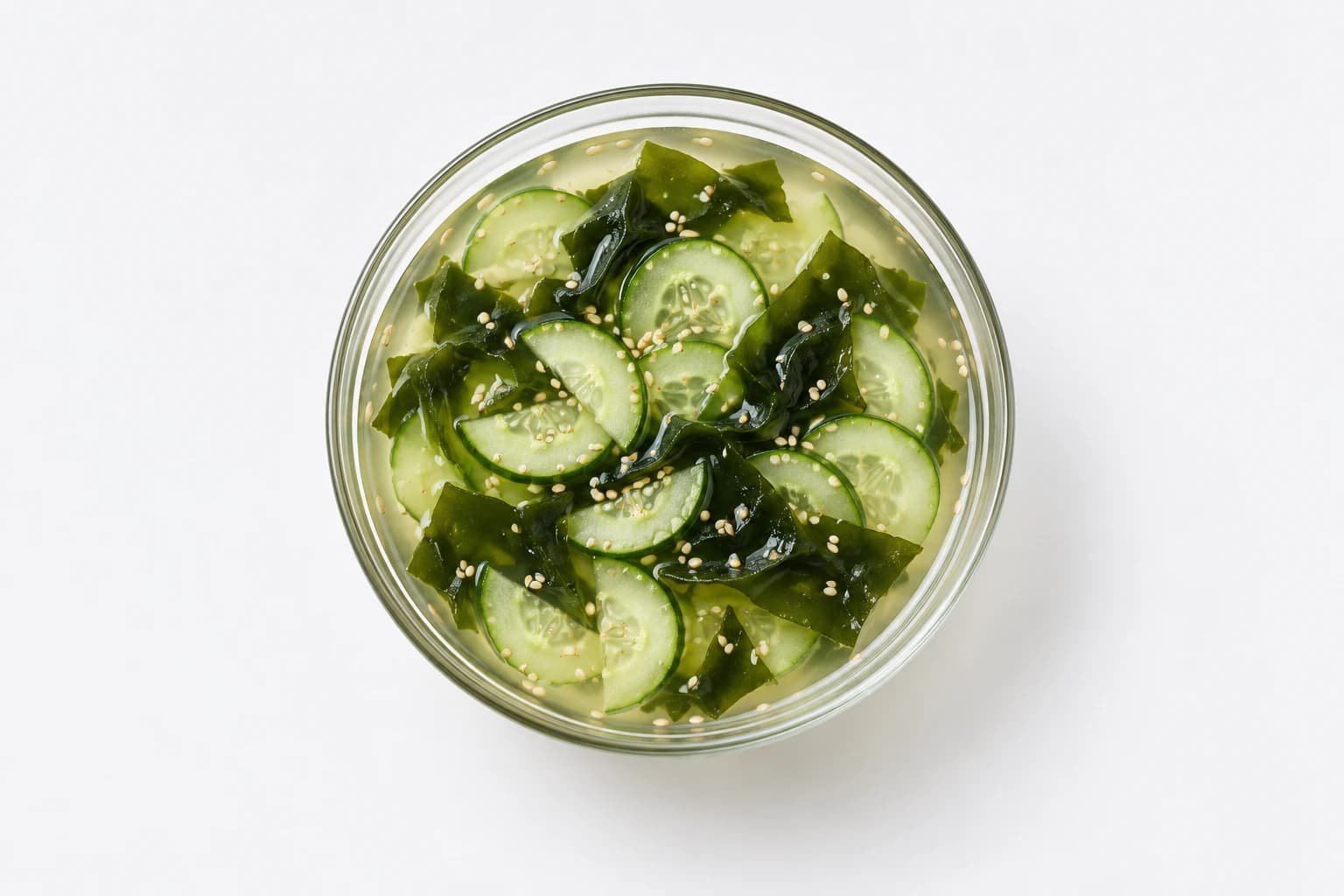
This soup is designed around two numbers — cucumber's 2 mg of sodium and the iodine in the seaweed.
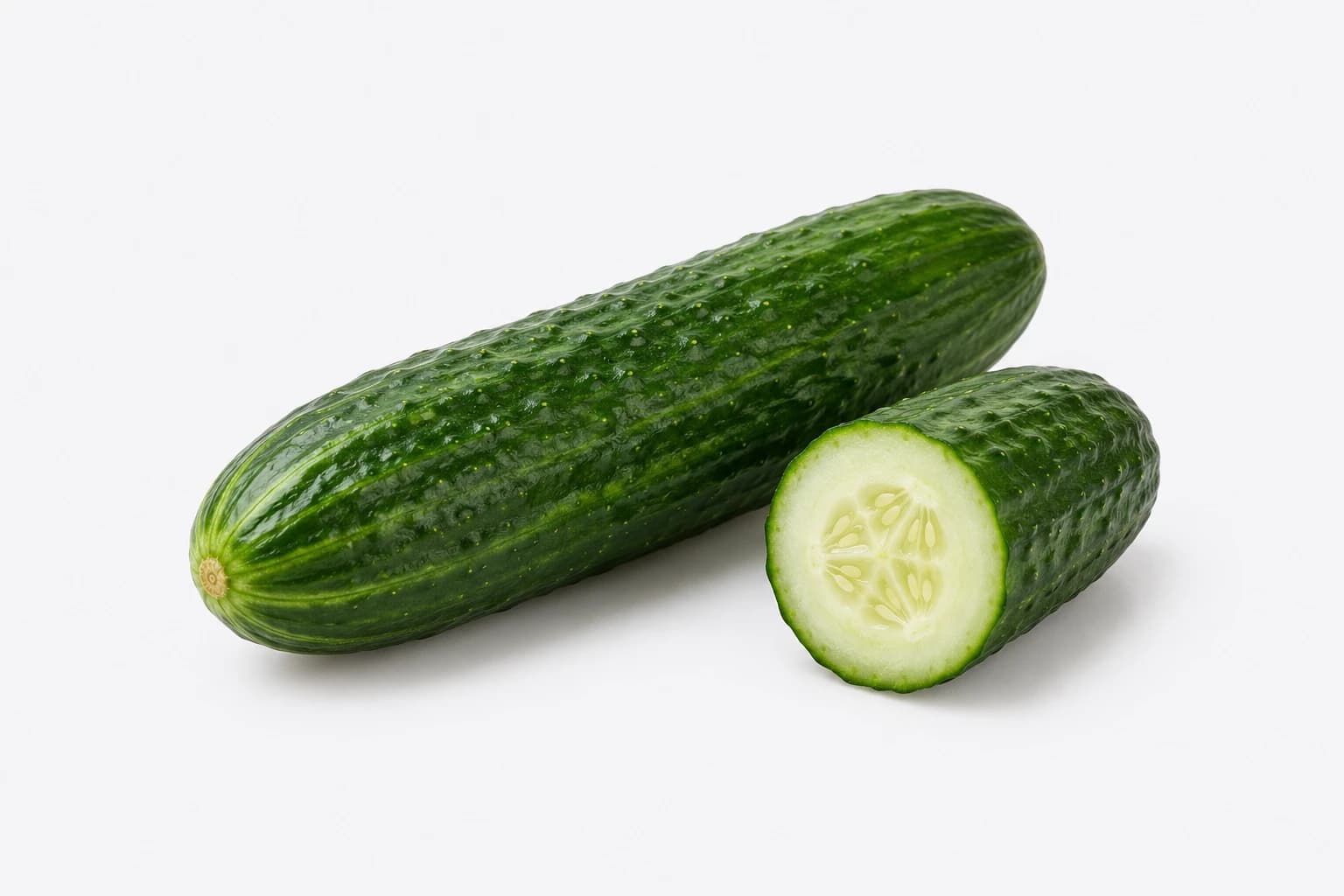
Cucumber first.
With the peel, 95.2% of 100 g is water, and sodium is 2 mg. Energy is 15 kcal.
That is cucumber's most useful property. Vitamin C at 2.8 mg is low (orange 53.2, guava 228), and potassium at 147 mg is not high either. What it does is fill volume without energy and without sodium.
But most Korean cucumber dishes erase that virtue. Pickled cucumber, cucumber kimchi, salted cucumber salad — all of them push the sodium up sharply.
Which is why this recipe does not salt the cucumber. Salting changes the crunch, but sliced thin it is perfectly good without.
And a word on the trials. There are three randomised trials on cucumber and all three used extracts — seed extract and lipids in 2017, extract and knee osteoarthritis in 2018 and 2023. A trial that fed cucumber and measured something against a control is not something this site could find. This soup is not built for an effect.
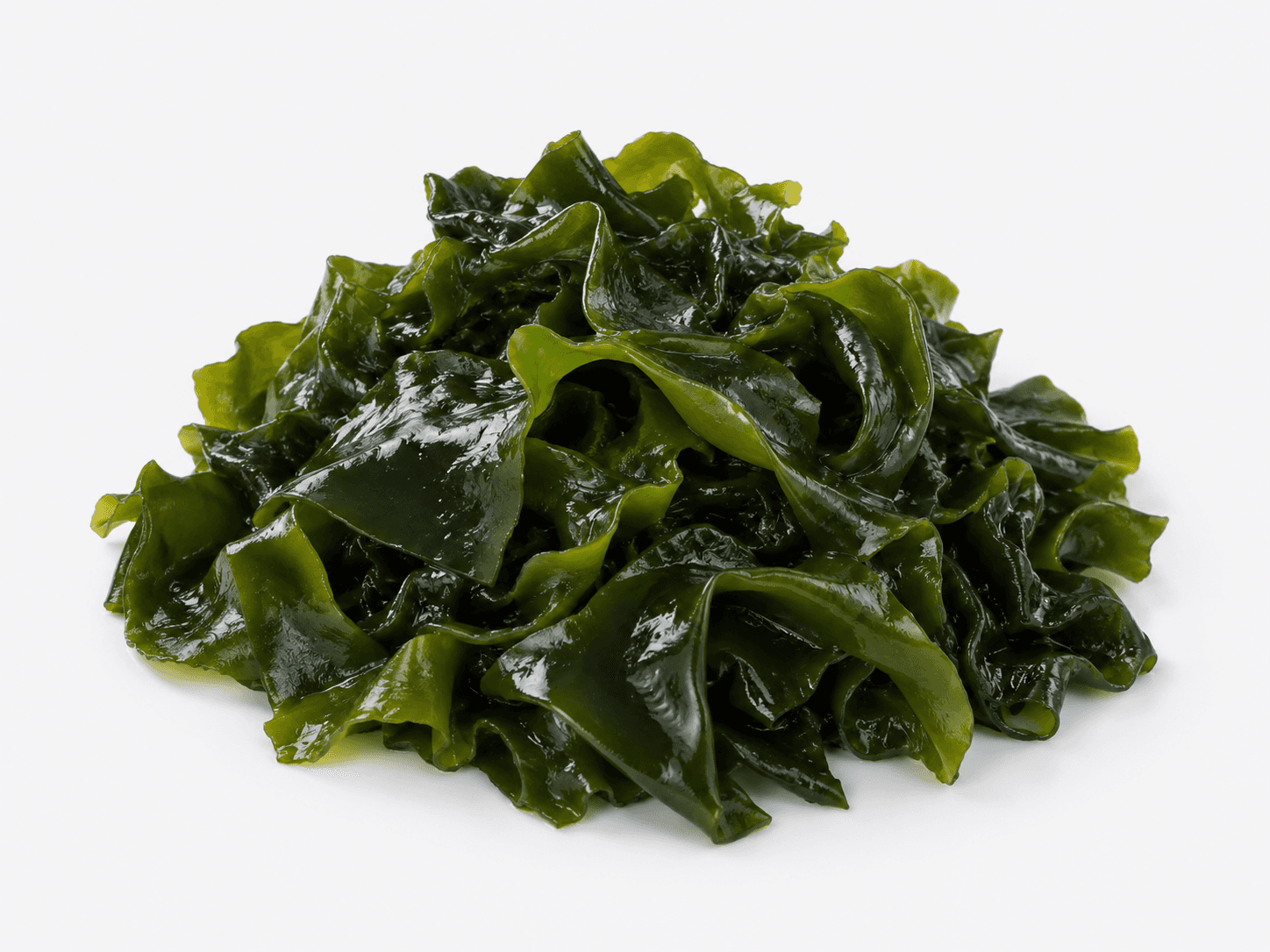
Next, the iodine in the seaweed. This matters more.
Five grams of dried sea mustard carries a substantial amount of iodine. In this site's intake calculator, 30 g of sea mustard reaches 44% of the daily upper limit. Five grams dried rehydrates to about that volume.
So this recipe caps the seaweed at 5 g.
- If you have thyroid disease or are being treated for one, talk to your clinician about seaweed
- If you eat seaweed soup often, having this on the same day stacks the iodine
- Kelp carries far more iodine than sea mustard. Do not add kelp to this recipe
That is also why the rehydrated seaweed is rinsed several times and squeezed. Much dried seaweed is salted before drying, and rinsing takes sodium out.
Per serving:
| Per serving |
|---|
| Cucumber 100 g | 15 kcal, sodium 2 mg, 95.2% water |
| Dried sea mustard 2.5 g | about 7 kcal, iodine, calcium, magnesium |
| Seasoning (vinegar, soy, sugar) | about 15 kcal |
| Total | about 37 kcal, sodium around 170 mg |
That 170 mg is about 7% of the WHO guidance. An ordinary chilled soup, broth and all, passes 500 mg easily.
Why only 1/2 tsp of soy sauce. That is about 150 mg of sodium. If you want more flavour, add vinegar first.
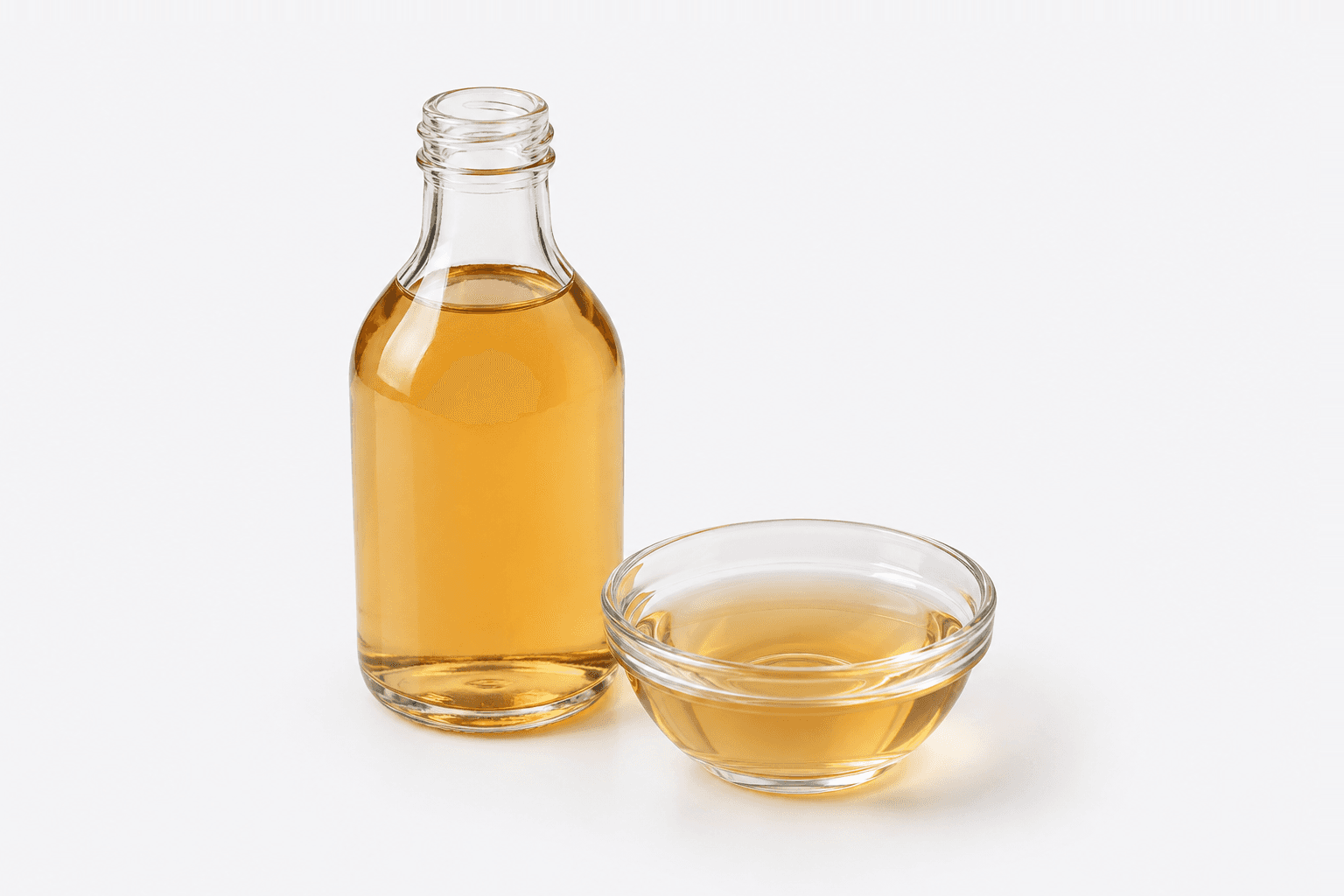
Sourness stands in for salt. Acid strengthens the impression of saltiness. The same sodium tastes better seasoned, and conversely, more vinegar lets you cut the salt without it tasting flat. This substitution works especially well in a chilled soup.
About the teaspoon of sugar. It takes the edge off the vinegar. You can leave it out, but then pull back on the vinegar a little.
Why slice the cucumber very thin. Cut thick, the broth never gets into it and you end up with cucumber and broth as separate things. Thin slicing increases the surface, which is what replaces salting.
Do not slice it ahead. Cut cucumber weeps. Make the broth in advance and slice the cucumber as you serve.
Do not use a very bitter cucumber. Cucumber bitterness comes from cucurbitacins, and gastrointestinal illness from cucurbits high in them is documented. If it tastes strongly bitter, discard it.
Do not keep cucumbers deep in a cold fridge for long. Below 10°C they soften and pit. Wrap in paper and stand them in the crisper drawer.