Contents
What it is
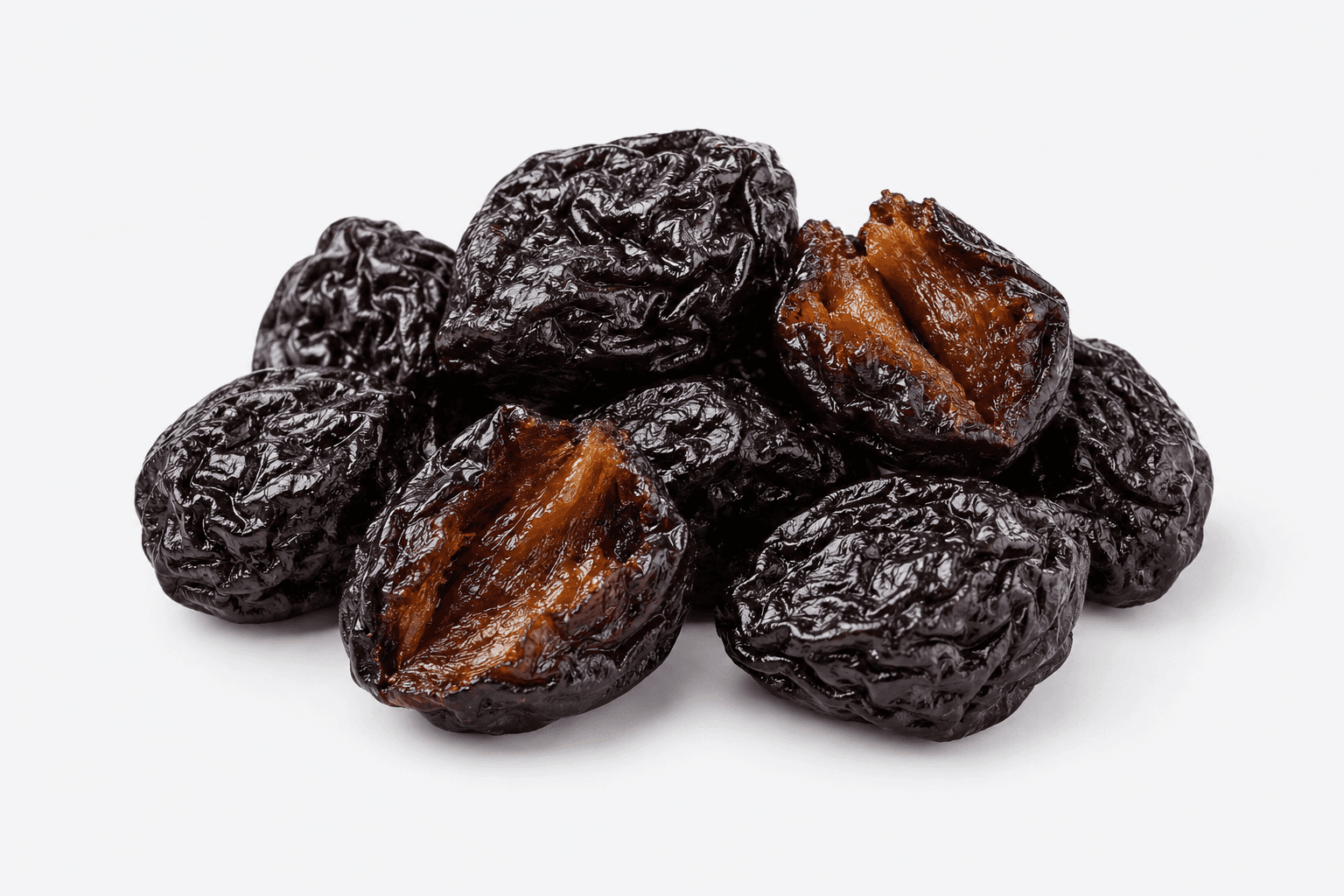
A prune is a dried plum — but not every plum can become one. Only European varieties sweet enough to dry with the stone in without fermenting are used, because the sugar concentrates as the water leaves and that is what preserves them. Since drying concentrates that sugar, a prune carries far more sugar and energy per gram than a fresh plum. What characterises it is a high content of sorbitol, a sugar alcohol, and that, along with the fibre, is where its use for constipation comes from.
Scientific name Prunus domestica
Prunes are dried plums. The constipation claim is old; the recent noise has been about bone.
The Prune Study, published in 2022 in the American Journal of Clinical Nutrition, randomised 235 postmenopausal women for 12 months into three arms: control, 50 g a day, 100 g a day.
What makes it interesting is that the two doses ended differently.
- The 50 g group held their total hip bone density (−0.3%). Controls lost 1.1%.
- The 100 g group was statistically indistinguishable from control.
The larger dose did not work. The reason is inside the paper: 41% of the 100 g group dropped out, against 10% of controls and 15% of the 50 g group.
People could not keep eating 100 g of prunes a day for a year. The dose that worked was the dose people could actually sustain.
Key benefits
- Moderate evidence
50 g a day preserved hip bone density over 12 months
[1]A 2022 single-centre, parallel-arm randomised controlled trial in the American Journal of Clinical Nutrition.
235 postmenopausal women, mean age 62.1 ± 5.0, randomised to:
- Control, n = 78
- Prunes 50 g/day, n = 79
- Prunes 100 g/day, n = 78
Bone mineral density every six months, plus bone biomarkers. Compliance was 90.2 ± 1.8% at 50 g and 87.1 ± 2.1% at 100 g.
The results:
- Total hip BMD — controls fell −1.1 ± 0.2% at 12 months; the 50 g group held at −0.3 ± 0.2% (group × time interaction P < 0.05)
- The 100 g group was not statistically separable from control (P > 0.05)
- FRAX hip fracture risk score — worsened in controls by six months (9.8 ± 0.5% → 10.3 ± 0.5%, P < 0.05) and was maintained in the pooled prune groups
Three things need saying plainly.
First, this is preservation, not gain. Even the 50 g group drifted down 0.3%. The loss slowed; bone did not improve.
Second, no fractures were counted. FRAX is a calculated risk score, not a tally of broken bones.
Third, the failure of the 100 g arm is the most honest part of this study. Dropout was 41% against 10% for control and 15% for 50 g (P < 0.001). Eating 100 g of prunes every day for a year was more than most people would do. The authors propose 50 g as the dose precisely on the grounds of compliance and retention.
More was not better. The sustainable amount was the effective amount.
- Moderate evidence
For constipation: no different from psyllium
[2]A 2024 systematic review and meta-analysis in Alimentary Pharmacology & Therapeutics — the first on foods, drinks and diets in chronic constipation. 23 studies (17 randomised), 1,714 participants.
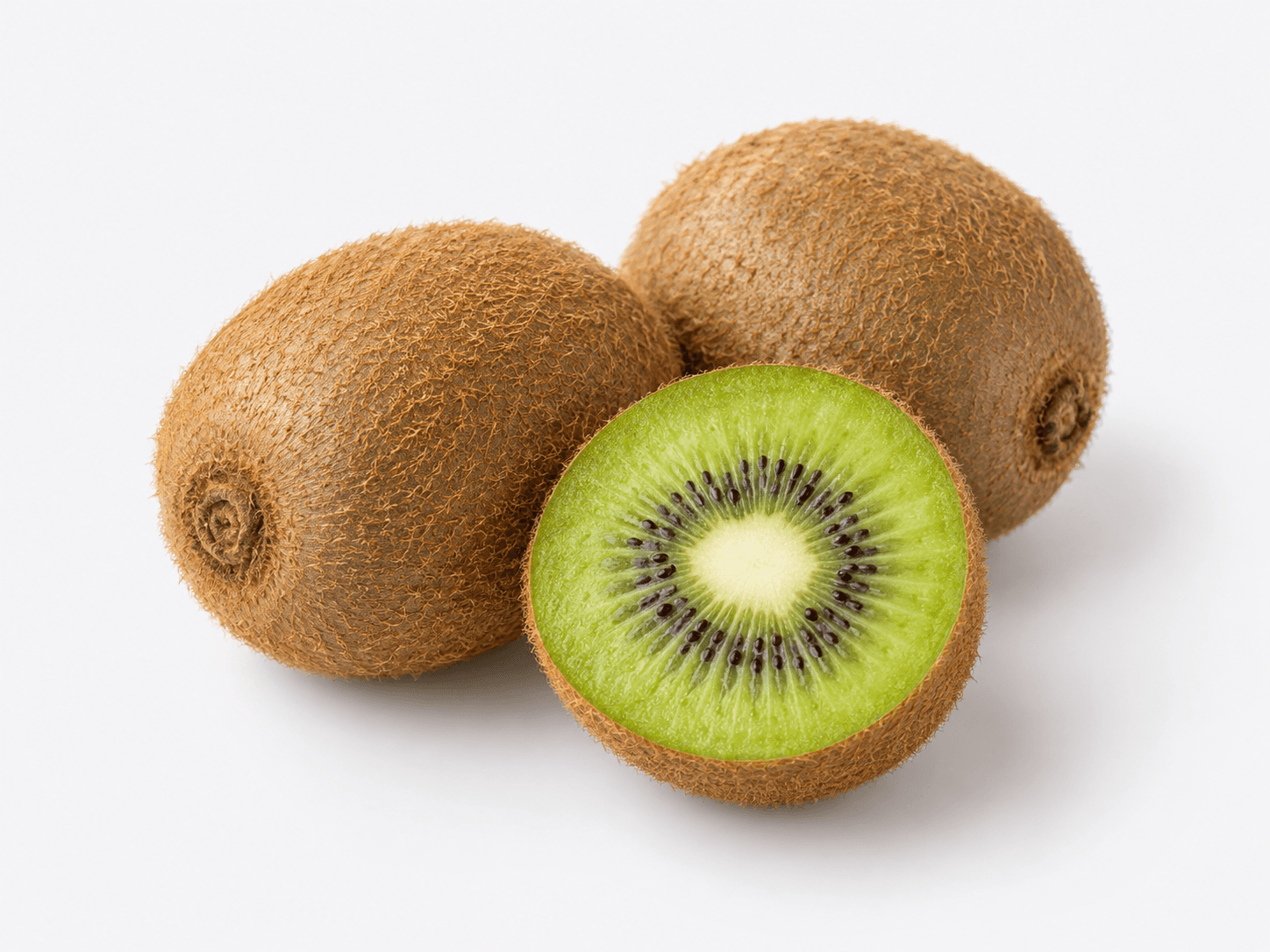
Foods covered: kiwifruit (7), high-mineral water (4), prunes (2), rye bread (2), and one each of mango, fig, cereal, oat bran, yoghurt, water supplementation, prune juice, high-fibre and no-fibre diets.
The findings:
- Fruit overall beat psyllium on stool frequency: +0.36 bowel movements per week (0.25–0.48, n = 232)
- That signal came mostly from kiwifruit — on its own, +0.36 per week (0.24–0.48, n = 192)
- For prunes there was no difference against psyllium.
- Rye bread beat white bread by +0.43 per week (0.03–0.83, n = 48)
- High-mineral water beat low-mineral water on response: RR 1.47 (1.20–1.81, n = 539)
Read "no difference" correctly. It does not mean prunes failed. It means they performed about as well as psyllium, a standard fibre laxative. With only two trials, a real difference could also have gone undetected.
Fibre is not the whole mechanism. Prunes are high in sorbitol, a sugar alcohol absorbed slowly, which draws water into the gut — an osmotic laxative effect. The 7.1 g of fibre and the sorbitol work together.
And the same fact causes the gas. See the cautions.
The authors' conclusion is restrained: fruit and rye bread may improve certain constipation outcomes, evidence on foods and diets is scarce, and more randomised trials are needed.
- Nutrition data
High in potassium and vitamin K — and in sugar
Per 100 g of dried plums:
- Potassium 732 mg — more than twice a banana's 358 mg
- Fibre 7.1 g — 28% of the adult requirement
- Vitamin K 59.5 µg — 50%
- Magnesium 41 mg, calcium 43 mg, copper 0.281 mg, manganese 0.299 mg
- Beta-carotene 394 µg
Back to the bone finding: no single compound explains it. Prunes carry vitamin K, potassium, boron and polyphenols together, and the study does not say which of them did the work.
Now the other side of the numbers.
- 240 kcal per 100 g
- 38.1 g of sugar per 100 g
Drying concentrates sugar as the water leaves. The trial's 50 g is 120 kcal and 19 g of sugar — a little more than a banana's 105 kcal and 14 g.
They are also easy to eat. Five disappear in a moment. Without counting them out, 100 g arrives quickly.
The glycaemic index is low, around 29. For all that sugar, the post-meal rise is not sharp, thanks to the fibre and sorbitol. With diabetes, still fix the portion in advance.
How to eat it well
- 50 g a day — five or six. That is the dose that worked and that people sustained for a year.
- Split them. Three in the morning and two in the evening sits better than five at once.
- Start with two or three. If you are not used to sorbitol, expect gas and bloating. Build up over weeks.
- Drink water with them. Fibre pulls water in; without enough, stools get harder, not softer.
- Many people find the empty stomach in the morning works best for constipation — that is when the gastrocolic reflex fires.
- Prune juice is not the same. The fibre is strained out and the sugar stays. Sorbitol remains, so the laxative effect does; but the bone trial used whole fruit.
- Mixed into yoghurt or oats, they sweeten without sugar.
How to read the grades
Each benefit carries a label showing how far research on people supports it. Grades differ between items even within the same ingredient.
- Nutrition data
- A fact verifiable from food composition databases or health authorities. This is a different kind of statement from a clinical effect.
- Strong evidence
- Consistently confirmed across randomised controlled trials or meta-analyses.
- Moderate evidence
- Human studies exist, but effect sizes are small or results are mixed.
- Early research
- Cell or animal work, or small preliminary studies.
- Not established
- Commonly claimed, but not confirmed in studies on people.
What to watch out for
- 38.1 g of sugar per 100 g. With diabetes, decide the portion first. 50 g is 19 g of sugar.
- Gas and bloating are common, from the sorbitol. Take particular care with IBS — prunes are high-FODMAP.
- Too many at once causes diarrhoea. That is part of why 41% of the 100 g arm dropped out.
- If you restrict potassium for kidney disease, 100 g is 732 mg. Discuss it with your clinician.
- On warfarin, note vitamin K at 59.5 µg per 100 g and keep your intake steady. Consistency matters more than the amount.
- They do not replace osteoporosis medication. The trial slowed bone density loss; it did not show fewer fractures.
- The bone evidence is a single trial in postmenopausal women. It has not been shown in men or in younger women.
Nutrition
Per 100 g of dried plums. A prune is 8–10 g, so 100 g is more than ten of them. The 50 g/day used in the trial below is five or six.
- Calories
- 240 kcal12%
- Carbohydrates
- 63.9 g23%
- Sugars
- 38.1 g
- Fiber
- 7.1 g25%
- Protein
- 2.18 g4%
- Potassium
- 732 mg16%
- Vitamin K
- 59.5 µg50%
- Magnesium
- 41 mg10%
- Calcium
- 43 mg3%
- Copper
- 0.281 mg31%
- Beta-carotene
- 394 µg
Percentages are of the US FDA Daily Value for adults and children 4 and over. National reference intakes differ by sex and age.
Calculate this alongside other ingredients →
Key nutrients
By health concern
Dishes with this ingredient
Sources
The databases and health authorities this article's nutrition figures and health statements draw on.
- 1Prunes preserve hip bone mineral density in a 12-month randomized controlled trial in postmenopausal women: the Prune StudyClinical trialDe Souza MJ, et al. Am J Clin Nutr 2022PMID 35798020
- 2Systematic review and meta-analysis: Foods, drinks and diets and their effect on chronic constipation in adultsMeta-analysisVan Der Schoot A, et al. Aliment Pharmacol Ther 2024PMID 37905980
- 3USDA FoodData CentralFood composition database
- 4NIH Office of Dietary SupplementsHealth authority
- 5European Food Safety Authority (EFSA)Health authority
- 6PubMedResearch literature