Contents
What it is
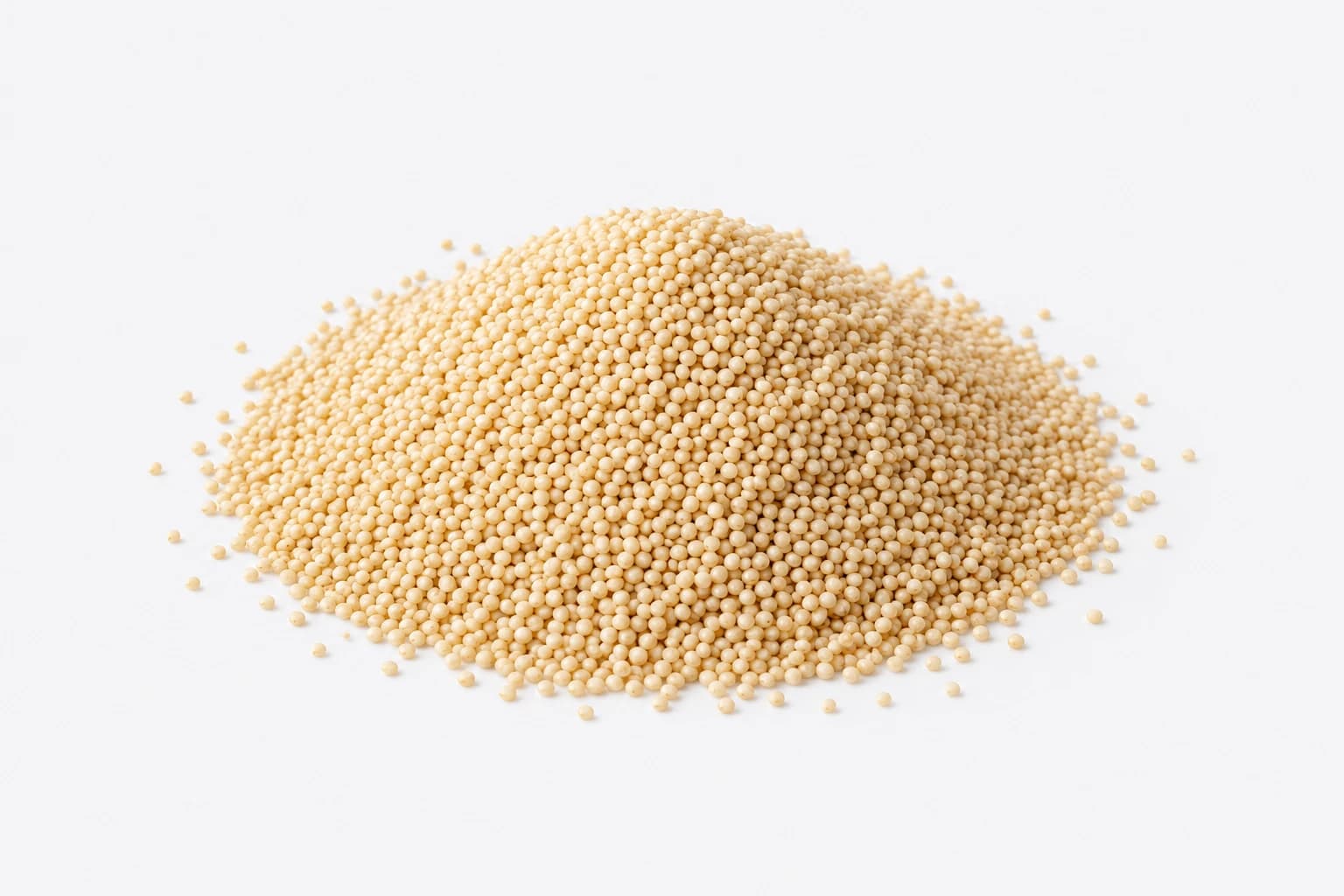
Amaranth is the seed of a plant in the amaranth family, in grains smaller than millet. It is not a grass like wheat or rice, so it is classed as a pseudocereal rather than a true cereal, and it contains no gluten. It is native to Central and South America and was a staple of the Aztecs. Cooked, it turns slightly gluey while keeping a pop to the bite, so it goes into porridge and salads, or is toasted until the grains burst like tiny popcorn. In some regions the leaves are eaten as a vegetable too.
Scientific name Amaranthus
Amaranth carries 7.61 mg of iron, 248 mg of magnesium and 13.6 g of protein — a showy nutrition table for a grain. Hence the "supergrain" label.
But a trial has tested whether that iron actually gets into the body. The result is the heart of this entry.
2012, The Journal of Nutrition. 279 Kenyan children aged 12 to 59 months were split three ways for 16 weeks. At baseline, 38% were anemic and 30% iron deficient.
| Arm | Iron per meal | Phytate to iron molar ratio |
|---|---|---|
| Control — unrefined maize porridge | 4.1 mg | 5:1 |
| Amaranth — 30% maize + 70% amaranth porridge | 23 mg | 3:1 |
| Powder — maize porridge + micronutrient powder | 6.6 mg | 2.6:1 |
The results:
- Powder arm: anemia down 46%, iron deficiency down 70%, iron-deficiency anemia down 75%. Hemoglobin and ferritin rose
- Amaranth arm: no significant change in hemoglobin or iron status
The amaranth arm ate 5.6 times the iron of the control. Nothing happened, while the arm given 1.6 times the iron delivered the benefit.
The paper states why — the meal's phytate-to-iron ratio was high. The iron in amaranth was present but not absorbed.
Key benefits
- Nutrition data
248 mg of magnesium, 3.33 mg of manganese — on the table alone, near the top among grains
Per 100 g of uncooked amaranth:
- Magnesium 248 mg — 59% of the daily value
- Manganese 3.33 mg — 145% of the daily value
- Iron 7.61 mg — 42% of the daily value
- Phosphorus 557 mg, potassium 508 mg, calcium 159 mg
- Protein 13.6 g, carbohydrate 65.2 g, fibre 6.7 g, fat 7.02 g
- Zinc 2.87 mg, copper 0.525 mg, selenium 18.7 µg
- Folate 82 µg, vitamin B6 0.591 mg
- 371 kcal, sugar 1.69 g, sodium 4 mg
Against other grains:
Amaranth Quinoa Brown rice Oats Magnesium 248 mg 197 mg 143 mg 177 mg Calcium 159 mg 47 mg 23 mg 54 mg Iron 7.61 mg 4.57 mg 1.47 mg 4.72 mg Protein 13.6 g 14.1 g 7.9 g 16.9 g The 159 mg of calcium stands out — unusual for a grain. It is still only 12% of the daily value, and calcium from plants does not absorb like the calcium in milk.
It has no gluten. Amaranth is not a grass but an amaranth, botanically distinct from wheat, barley and rye. That makes it an option for coeliac disease or anyone avoiding gluten. Commercial products are sometimes processed on wheat equipment, so check the label.
Its amino acid profile is well balanced for a grain. Grains are usually short on lysine; amaranth is not. This is established by composition analysis, which is why this site marks it as nutrition data rather than an evidence grade.
But something has to be read alongside this table.
As set out in the next section, the iron in amaranth is not absorbed in proportion to how much is there. Phytate is the reason, and magnesium, zinc and calcium are affected the same way. The figures in a composition table are what you ate, not what you absorbed.
Cooking. The seeds are tiny, so it does not behave like rice.
- Two and a half to three parts water, boiled about 20 minutes. It comes out closer to porridge
- To mix with rice, keep it to 10-20%. More and the rice turns sludgy
- Toasted in a dry pan it pops like popcorn. Scattering that over food is a common use
- Soaking or fermenting beforehand lowers the phytate — the reason is below
Store sealed and cool. At 7.02 g of fat it is high for a grain and goes rancid faster. For long keeping, refrigerate or freeze.
- Early research
Two iron trials split in opposite directions — and where they split is what matters
[1][2]Two trials have looked at amaranth's iron. One found nothing and one found something. That difference is the most useful fact about this grain.
2012, The Journal of Nutrition — Kenya, no effect.
- 279 children aged 12 to 59 months, 16 weeks
- At baseline, 38% anemic and 30% iron deficient
- Three arms: maize porridge (control), 30% maize + 70% amaranth porridge, maize porridge plus micronutrient powder
Arm Iron per meal Phytate to iron Result Control 4.1 mg 5:1 — Amaranth 23 mg 3:1 no change in hemoglobin or iron status Powder 6.6 mg 2.6:1 anemia −46%, iron deficiency −70%, IDA −75% Read the second and third rows side by side. The amaranth arm ate 3.5 times the iron of the powder arm and nothing changed, while the powder arm cut anemia by 46% on far less iron.
The paper gives the reason — the meal's phytate-to-iron ratio was high.
What is phytate? It is how grain and legume seeds store phosphorus. In the gut it binds iron, zinc, calcium and magnesium and blocks their absorption. Amaranth is high in iron, and high in phytate.
The powder arm used iron as NaFeEDTA, a form built to withstand phytate interference — which is why a smaller amount worked.
2020, PLoS One — Ethiopia, effect found.
A cluster-randomised trial in anemic children aged 2 to 5 in southern Ethiopia. Bread containing processed amaranth was compared with maize bread, and benefits were reported on hemoglobin, anemia and iron-deficiency anemia.
The decisive difference between the two trials is processing.
Phytate falls with soaking, germination and fermentation. Turning a grain into bread usually involves those steps. The 2012 trial stirred amaranth flour into porridge; the 2020 trial baked processed amaranth into bread.
So the two do not contradict each other. Read together they say:
- Amaranth contains a lot of iron — confirmed by composition
- Simply adding it may not deliver that iron — the 2012 trial
- Soaking, fermenting or otherwise processing it can change that — the 2020 trial
Translated into practice:
- Soak it for several hours before use and throw the water away. Phytate falls
- Eat it with something containing vitamin C. As set out in this site's guava entry, vitamin C raises absorption of plant iron
- Keep tea and coffee away from the meal. Tannins interfere with iron absorption
- If iron deficiency has been diagnosed, do not plan to fix it with amaranth. This is food, not treatment
The grade is "early research". Both trials studied children in specific settings, the directions diverged, and neither is a basis for transferring the result to adults or to people who are not short of iron.
- Not established
Claims about blood pressure, cholesterol and weight are unverified
Several claims attach to amaranth as it is sold as a supergrain. Most are unconfirmed in people.
Blood pressure and cholesterol.
A 2007 randomised trial used amaranth oil in coronary heart disease and hypertension.
But that is the oil, not the grain. Amaranth oil is rich in squalene and sold as a separate product, and eating the grain is a different intervention from taking the oil. It is the same reason this site separates celery seed extract from the vegetable.
And this site could not find a trial that fed amaranth grain, measured blood pressure or lipids and compared against a control.
Weight loss.
Because it is high in protein and fibre, the story goes that it satisfies. Plausible — but this site found no trial that fed amaranth and measured weight or intake. And it is 371 kcal per 100 g. That follows from it being a grain, but it is not a low-energy food.
Blood glucose.
Another line runs that being gluten-free and fibrous makes it good for blood sugar. Amaranth's glycemic index has in fact been reported on the high side. The popped form especially, with its starch already gelatinised, absorbs faster. There is no settled clinical evidence here, but it is worth stating plainly that "no gluten" does not mean "good for blood sugar".
To summarise:
- Confirmed by composition: magnesium 248 mg, manganese 3.33 mg, iron 7.61 mg, calcium 159 mg, no gluten, a balanced amino acid profile including lysine
- Partly confirmed: processed, it helped anemia (2020); simply added, it did not (2012)
- Not confirmed: blood pressure, cholesterol, weight loss
- A misreading: gluten-free does not imply favourable for blood sugar
Amaranth is a grain with a good composition table. But a good table, those nutrients actually entering the body, and something improving as a result are three separate claims. This site marks them at three different grades.
How to eat it well
- Soak it for several hours before use and discard the water. Lower phytate favours mineral absorption.
- Two and a half to three parts water, 20 minutes gives something close to porridge, not rice.
- To mix with rice, keep it to 10-20%. More turns it sludgy.
- Toasted dry it pops like popcorn. Scatter it over salad or yoghurt.
- Eat it with something containing vitamin C to favour iron absorption.
- Keep tea and coffee away from the meal. Tannins interfere with iron.
- It contains no gluten. Check commercial packaging for cross-contamination notices.
- Store sealed, refrigerated or frozen. At 7.02 g of fat it goes rancid faster than most grains.
How to read the grades
Each benefit carries a label showing how far research on people supports it. Grades differ between items even within the same ingredient.
- Nutrition data
- A fact verifiable from food composition databases or health authorities. This is a different kind of statement from a clinical effect.
- Strong evidence
- Consistently confirmed across randomised controlled trials or meta-analyses.
- Moderate evidence
- Human studies exist, but effect sizes are small or results are mixed.
- Early research
- Cell or animal work, or small preliminary studies.
- Not established
- Commonly claimed, but not confirmed in studies on people.
What to watch out for
- The 7.61 mg of iron is not absorbed as it stands. In the 2012 Kenyan trial, 5.6 times the iron moved neither hemoglobin nor iron status.
- The reason is phytate, and magnesium, zinc and calcium are affected the same way.
- The 2020 trial that did find a benefit used bread made with processed amaranth. Processing is what separated the results.
- Both trials studied children in specific settings. Neither is a basis for transferring the result to adults or to people not short of iron.
- The blood pressure and cholesterol trial used amaranth oil, not the grain.
- No trial was found on weight loss. It is 371 kcal per 100 g.
- Gluten-free does not mean favourable for blood sugar. The popped form absorbs faster.
- If iron deficiency has been diagnosed, follow your clinician's prescription rather than a food.
Nutrition
Per 100 g of uncooked amaranth grain. It takes up water and roughly triples, so a cooked bowl is around 50 g dry.
- Calories
- 371 kcal19%
- Magnesium
- 248 mg59%
- Manganese
- 3.33 mg145%
- Iron
- 7.61 mg42%
- Protein
- 13.6 g27%
- Carbohydrates
- 65.2 g24%
- Fiber
- 6.7 g24%
- Fat
- 7.02 g9%
- Phosphorus
- 557 mg45%
- Potassium
- 508 mg11%
- Calcium
- 159 mg12%
- Zinc
- 2.87 mg26%
- Copper
- 0.525 mg58%
- Selenium
- 18.7 µg34%
- Folate
- 82 µg21%
- Vitamin B6
- 0.591 mg35%
- Sugars
- 1.69 g
- Sodium
- 4 mg<1%
Percentages are of the US FDA Daily Value for adults and children 4 and over. National reference intakes differ by sex and age.
Calculate this alongside other ingredients →
Key nutrients
By health concern
Dishes with this ingredient
Sources
The databases and health authorities this article's nutrition figures and health statements draw on.
- 1Efficacy of processed amaranth-containing bread compared to maize bread on hemoglobin, anemia and iron deficiency anemia prevalence among two-to-five year-old anemic children in Southern Ethiopia: A cluster randomized controlled trialClinical trialOrsango AZ, et al. PLoS One 2020PMID 32986748
- 2Maize porridge enriched with a micronutrient powder containing low-dose iron as NaFeEDTA but not amaranth grain flour reduces anemia and iron deficiency in Kenyan preschool childrenClinical trialMacharia-Mutie CW, et al. The Journal of Nutrition 2012PMID 22810982
- 3USDA FoodData CentralFood composition database
- 4PubMedResearch literature