Contents
What it is
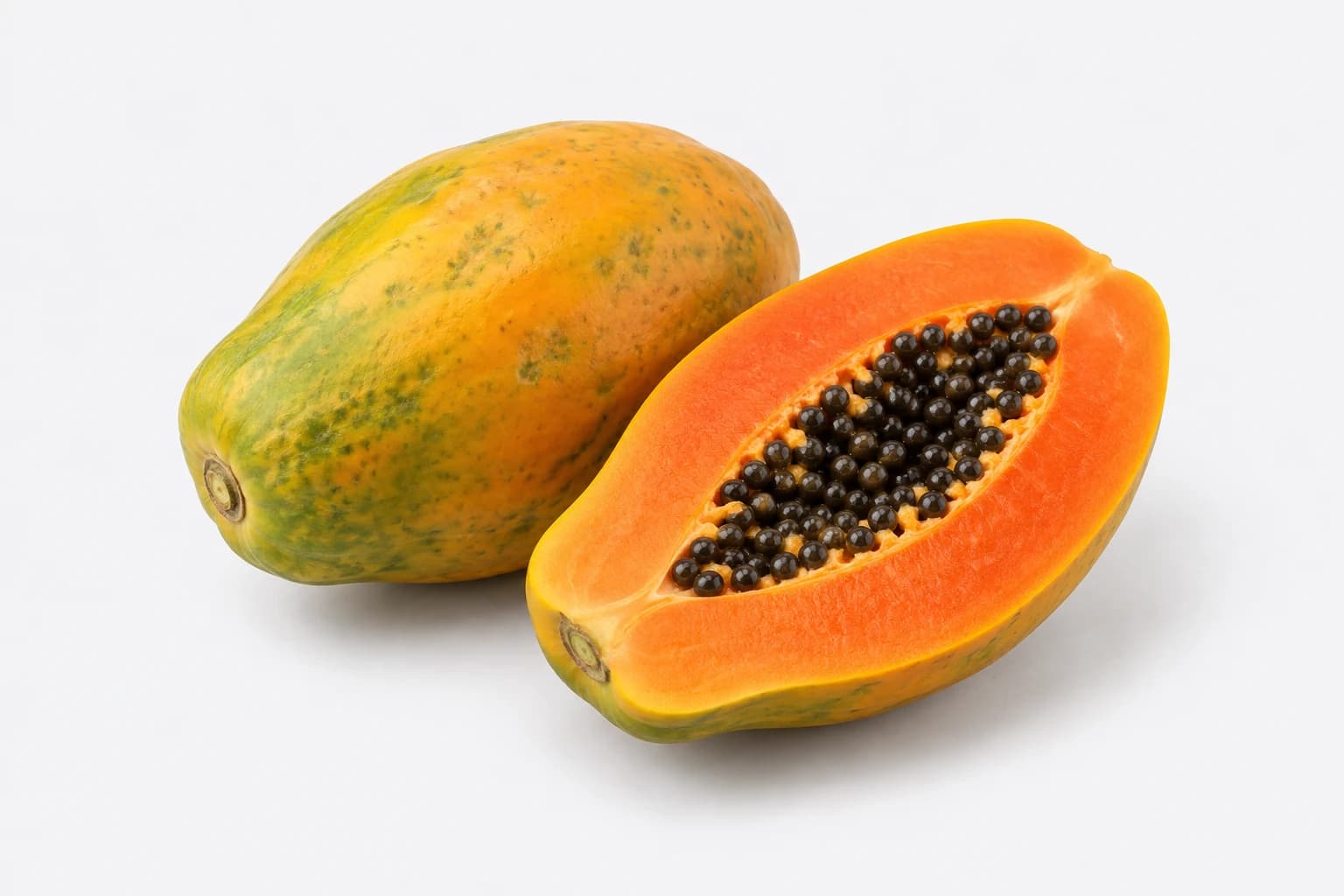
The papaya is the fruit of a plant native to Central America. It looks like a tree, but the stem is barely woody, so botanically it is closer to a giant herb. Ripe, the skin turns yellow, the flesh goes orange and soft, and the hollow centre is packed with round black seeds. It contains papain, a protein-digesting enzyme used to tenderise meat, and the enzyme is most abundant in the unripe green fruit. Green papaya is treated as a vegetable rather than a fruit and shredded into salads.
Scientific name Carica papaya
Search for papaya and you will find a great deal about raising platelets. The claim comes from the folk use of papaya leaf in dengue.
In 2026 that claim was properly tested. And the result was good.
2026, JCO Global Oncology — phase III, triple-blinded, placebo-controlled, multicentre.
- 219 patients with chemotherapy-induced thrombocytopenia randomised 2:1; 198 analysed
- Papaya leaf extract arm 129, placebo arm 69
- The primary outcome was how fast platelets recovered to 75,000
- By day 4, 59% had recovered against 44% (p=0.042). In the per-protocol analysis, 64% against 48% (p=0.034)
- No grade 3 or 4 treatment-related adverse events
- Among patients with grade 2 thrombocytopenia, fewer needed dose reductions or delays in subsequent chemotherapy (25% against 43%, p=0.033)
This is a well-designed trial, and the result is significant.
But this entry is about papaya fruit.
A leaf is not a fruit. And what the trial used was a concentrated extract of the leaf. Eating papaya does not do the same thing.
Key benefits
- Not established
The phase III trial of leaf extract — and why it does not carry across to the fruit
[1]2026, JCO Global Oncology.
Design Phase III, triple-blinded, randomised, placebo-controlled, multicentre Dates March 2020 to October 2024 Allocation 219 randomised 2:1, 198 analysed (extract 129, placebo 69) Participants patients with chemotherapy-induced thrombocytopenia Intervention papaya leaf extract, until platelets reached 75,000, a transfusion was needed, or day 10 Primary outcome proportion reaching platelets above 75,000 by day 4 The results:
Analysis Extract Placebo p Modified ITT 59% 44% 0.042 Per protocol 64% (83/129) 48% (33/69) 0.034 Dose reduction or delay in later chemotherapy (grade 2) 25% 43% 0.033 There were no grade 3 or grade 4 treatment-related adverse events.
The quality of this trial deserves acknowledgement first. A triple-blinded, placebo-controlled, multicentre phase III trial is a standard rarely seen in food-related research. It is far stronger than the evidence behind most entries on this site.
So why is the grade "not established"?
Because this entry is about papaya fruit, and the trial used leaf extract.
Three things differ.
First, the part of the plant. Leaf and fruit come from the same plant but differ in composition. It is like tomato leaf against tomato fruit — and tomato leaf does carry alkaloids the fruit does not.
Second, the form. Extraction selects and concentrates particular compounds. It is the same problem set out in this site's celery entry.
Third, the population. This trial studied patients whose platelets had fallen from chemotherapy. It is not a trial of what happens to someone whose platelets are normal.
A word on dengue. There is a tradition of using papaya leaf for the thrombocytopenia of dengue, and research in that direction. But this entry is about the fruit, so that evidence is not carried over as a benefit of the fruit.
If you are considering papaya leaf tea or leaf extract products, those are different from the food this entry covers. And if you are in chemotherapy or have a blood disorder, speak to your clinician. Something that acts on platelets can also affect bleeding and clotting.
The honest conclusion:
- Papaya leaf extract sped up platelet recovery in chemotherapy patients — that is what the phase III trial showed
- Evidence that eating papaya fruit raises platelets is something this site could not find
- So the grade for the fruit is "not established"
- Nutrition data
60.9 mg of vitamin C, 1,830 µg of lycopene — what the fruit actually holds
Per 100 g of raw papaya:
- Vitamin C 60.9 mg
- Lycopene 1,830 µg
- Folate 37 µg
- 43 kcal, carbohydrate 10.8 g, sugar 7.82 g, fibre 1.7 g
- Potassium 182 mg, magnesium 21 mg, calcium 20 mg
- Vitamin A 47 µg RAE, beta-carotene 274 µg
- Protein 0.47 g, fat 0.26 g, sodium 8 mg
- Vitamin E 0.3 mg, vitamin K 2.6 µg
The 60.9 mg of vitamin C is the most useful figure here. Against an adult requirement of around 100 mg, 100 g covers more than 60%. The edible part of a medium fruit is about 300 g, so half of one clears the day.
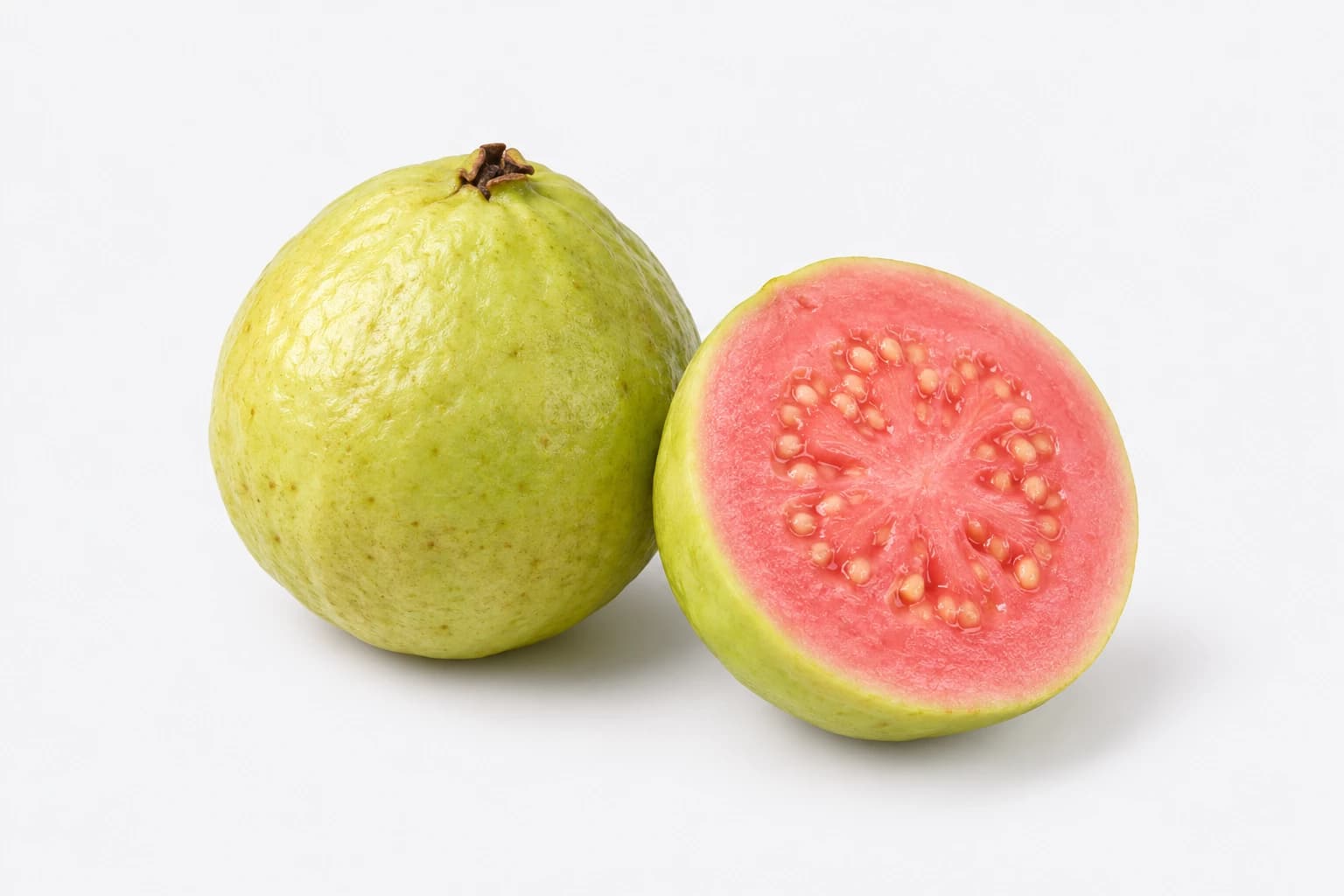
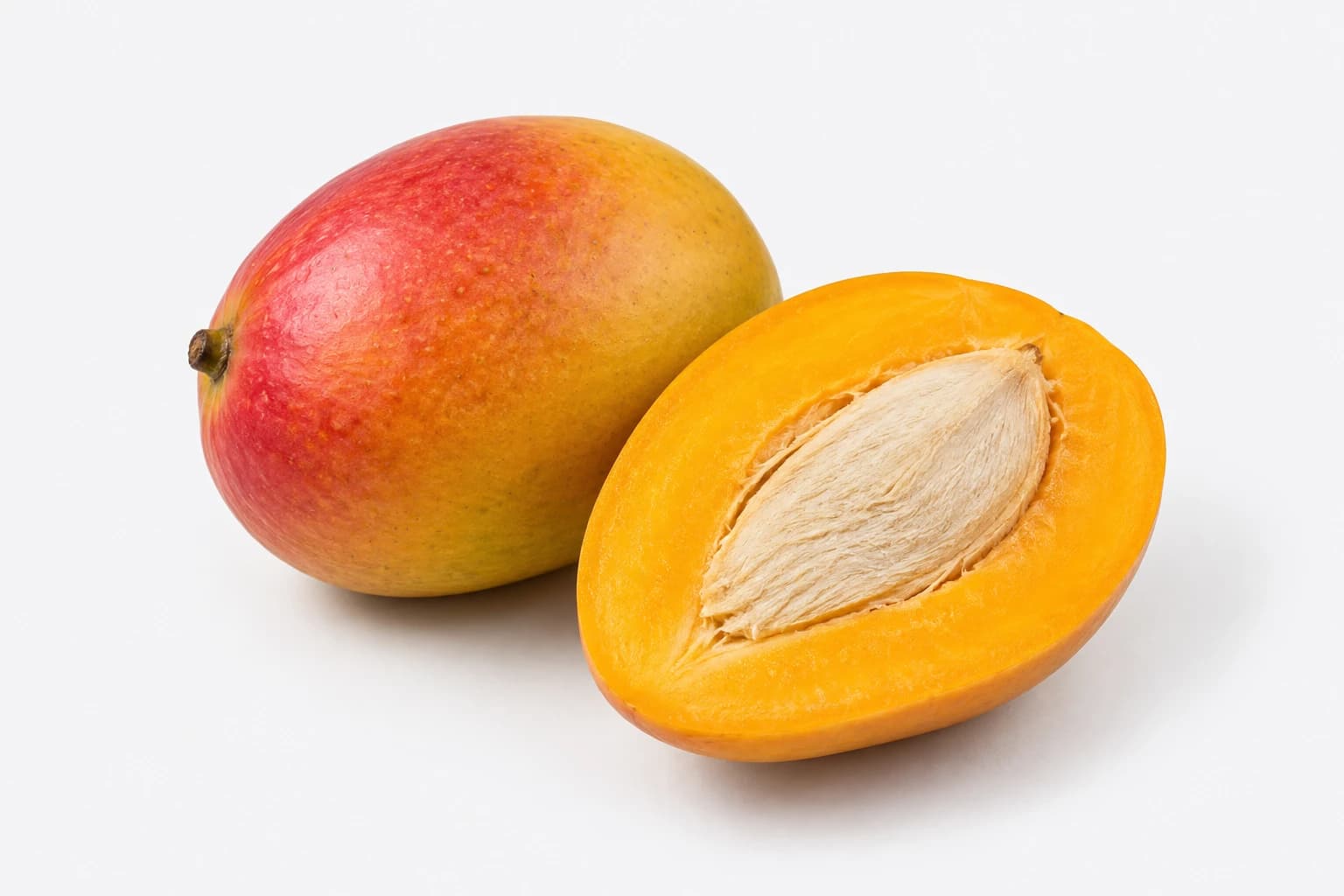
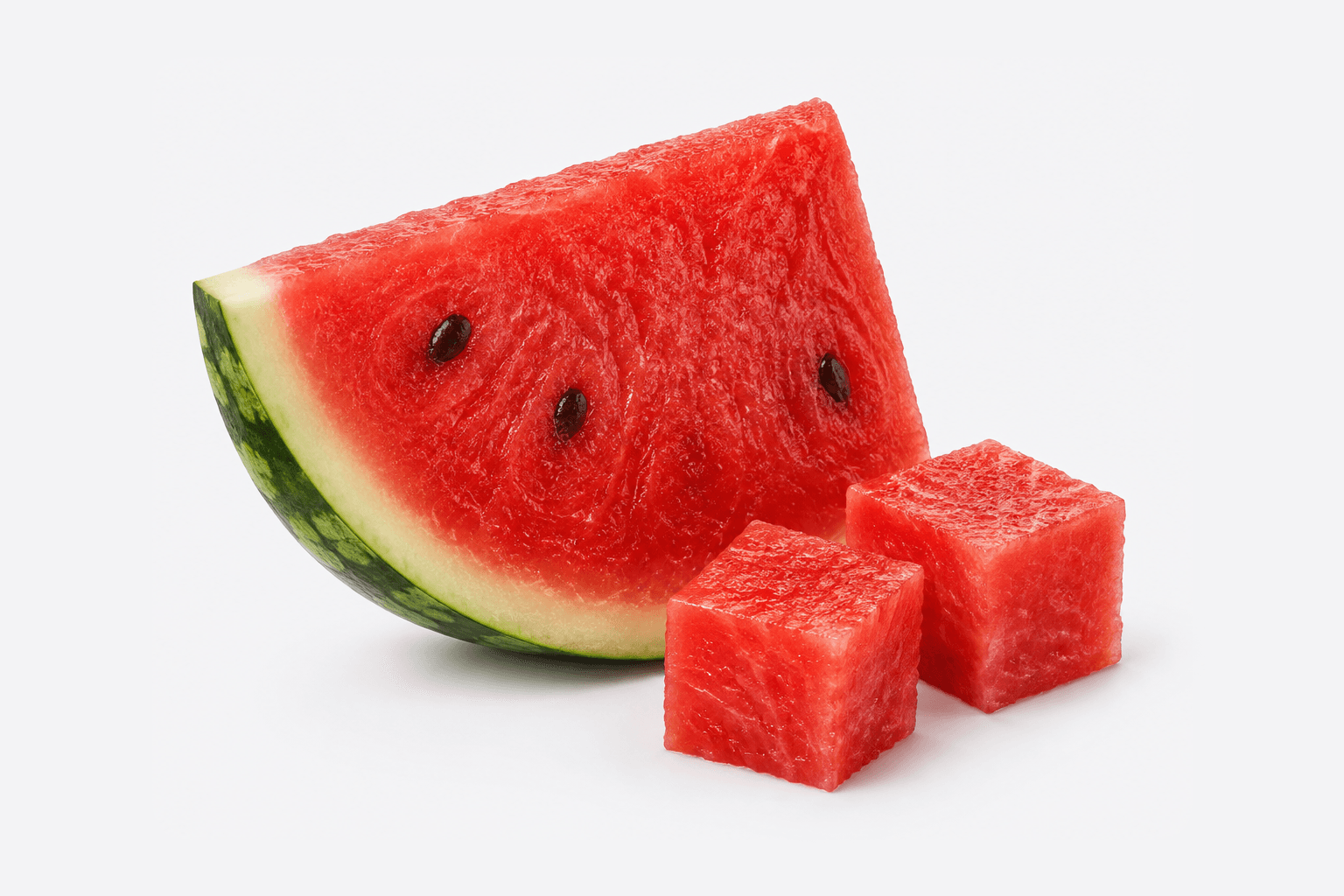
Fruit Vitamin C (100 g) Guava 228 mg Kiwi 92.7 mg Papaya 60.9 mg Orange 53.2 mg Mango 36.4 mg The 1,830 µg of lycopene is worth noting too. Raw tomato holds about 2,570 µg per 100 g. Papaya's orange flesh is that pigment, the same family as in watermelon and guava.
But there is no daily value for lycopene, and this site does not print a percentage where no reference exists. What has been confirmed in people from eating lycopene amounts to what is written in the tomato entry, and no more.
At 43 kcal it is low among fruits — mango is 60, banana 89. Sugar at 7.82 g is low too, about half of mango's 13.7 g or banana's 12.2 g.
Fibre, though, is only 1.7 g, against guava's 5.4 g.
Choosing. It is ready when the skin turns from green towards yellow and it yields slightly to a fingertip. Fully green means unripe.
Ripen at room temperature. The fridge stops it where it is. Chill it after it ripens.
The seeds are not usually eaten. They taste peppery, and for reasons set out below, do not make a habit of large amounts.
Unripe green papaya is a different food. Southeast Asian cooking uses it in salads and stir-fries, and it carries more latex than the ripe fruit.
- Early research
The seed and intestinal parasites — a small 2007 pilot study
[2]There is a tradition of using papaya seeds against intestinal parasites, and one trial has tested it.
2007, Journal of Medicinal Food. A randomised trial giving dried papaya seeds to people with intestinal parasitosis. The paper calls itself a "pilot study".
How to read that.
- A pilot study is a step towards designing the real trial. It is not used to settle a question
- It was small
- This site could not find a larger trial since that confirmed the result
- And what it used was dried seeds, not the fruit
If you suspect intestinal parasites, get diagnosed and treated. Effective antiparasitic drugs exist, and they are safe and certain. This site does not recommend papaya seeds for deworming.
There are reasons not to eat large amounts of the seeds, too.
Papaya seeds contain benzyl isothiocyanate — the source of the peppery taste — and safety data for large quantities is not adequate. Animal research has also reported effects of high-dose papaya seed on sperm. That has not been confirmed in people, but there is no reason to eat large amounts daily beyond culinary use.
To summarise:
- Confirmed: the composition — vitamin C 60.9 mg, lycopene 1,830 µg, folate 37 µg
- Confirmed for a different part of the plant: leaf extract sped platelet recovery in chemotherapy patients (phase III)
- Preliminary: dried seeds and intestinal parasites (small, 2007)
- Not confirmed: that eating the fruit raises platelets
- Not established
The digestion claim — and warnings about allergy and pregnancy
Digestion is the claim most often attached to papaya, backed by papain, a protein-digesting enzyme.
It is true that papain breaks down protein. It is used as a meat tenderiser. And it is highest in unripe green papaya, falling as the fruit ripens.
But this site could not find a clinical trial that fed papaya, measured digestive function and compared against a control.
The same structure is set out in this site's mango and fig entries. Containing an enzyme and improving digestion when a person eats it are separate claims. An enzyme swallowed meets stomach acid and digestive enzymes first.
And three warnings have to go here.
First, cross-reaction with latex allergy.
Papaya contains latex components, and people allergic to natural rubber latex have been reported to react to papaya. This is called latex-fruit syndrome, and banana, avocado, kiwi and chestnut are on the same list.
If latex gloves have ever given you a reaction, be careful with your first papaya. Stop and seek care if your mouth itches or swells.
Second, unripe papaya in pregnancy.
The latex in unripe green papaya has a record of being linked to uterine contraction. It is not settled in people, but there is no reason to take a risk where the data is thin.
- Fully ripe papaya is generally regarded as not a problem
- Unripe green papaya, and salads and stir-fries made from it, are safer avoided in pregnancy
- Papaya leaf tea and leaf extract are also not recommended in pregnancy
Third, papain enzyme supplements. These are not the fruit but an extracted, concentrated product, and there are reports that they may affect blood clotting. If you take an anticoagulant such as warfarin, speak to your clinician.
Eating it as fruit is generally safe. The warnings above concern the unripe fruit, the seeds, the leaf, and extracts.
How to eat it well
- The edible part of a medium fruit is about 300 g, and half of one covers the day's vitamin C.
- Eat it as the skin turns from green towards yellow, yielding slightly to a fingertip.
- Ripen at room temperature. The fridge stops it where it is.
- A squeeze of lime or lemon tames the characteristic smell and adds vitamin C.
- The seeds are not usually eaten. Do not take large amounts.
- Treat unripe green papaya as a different food. It carries more latex.
- If you have a latex allergy, be careful the first time.
- In pregnancy, eat only fully ripe fruit and avoid the unripe fruit and leaf tea.
How to read the grades
Each benefit carries a label showing how far research on people supports it. Grades differ between items even within the same ingredient.
- Nutrition data
- A fact verifiable from food composition databases or health authorities. This is a different kind of statement from a clinical effect.
- Strong evidence
- Consistently confirmed across randomised controlled trials or meta-analyses.
- Moderate evidence
- Human studies exist, but effect sizes are small or results are mixed.
- Early research
- Cell or animal work, or small preliminary studies.
- Not established
- Commonly claimed, but not confirmed in studies on people.
What to watch out for
- The phase III trial used papaya leaf extract, not the fruit. Evidence that eating the fruit raises platelets was not found.
- Its participants were patients whose platelets had fallen from chemotherapy.
- Cross-reaction is reported in people with latex allergy (latex-fruit syndrome).
- In pregnancy, avoid unripe green papaya and leaf tea. Its latex has a record of being linked to uterine contraction.
- Papain enzyme supplements are not the fruit. They have been reported to affect clotting, so talk to your clinician if you take an anticoagulant.
- Do not eat large amounts of the seeds. Animal research has reported effects of high doses on sperm.
- No human trial was found behind the digestion claim.
- The seed and parasite study was a small 2007 pilot; for deworming, get a diagnosis and a prescription.
Nutrition
Per 100 g of raw papaya. The edible part of a medium fruit is about 300 g, so the figures below are a third of one.
- Calories
- 43 kcal2%
- Vitamin C
- 60.9 mg68%
- Lycopene
- 1,830 µg
- Folate
- 37 µg9%
- Carbohydrates
- 10.8 g4%
- Sugars
- 7.82 g
- Fiber
- 1.7 g6%
- Potassium
- 182 mg4%
- Vitamin A
- 47 µg5%
- Beta-carotene
- 274 µg
- Magnesium
- 21 mg5%
- Calcium
- 20 mg2%
- Protein
- 0.47 g<1%
- Fat
- 0.26 g<1%
- Vitamin E
- 0.3 mg2%
- Vitamin K
- 2.6 µg2%
- Sodium
- 8 mg<1%
Percentages are of the US FDA Daily Value for adults and children 4 and over. National reference intakes differ by sex and age.
Calculate this alongside other ingredients →
Key nutrients
Dishes with this ingredient
Sources
The databases and health authorities this article's nutrition figures and health statements draw on.
- 1Carica Papaya Leaf Extract to Improve Chemotherapy-Induced Thrombocytopenia: A Phase III Triple-Blinded, Randomized, Placebo-Controlled, Multicentric TrialClinical trialOstwal V, et al. JCO Global Oncology 2026PMID 41812092
- 2Effectiveness of dried Carica papaya seeds against human intestinal parasitosis: a pilot studyClinical trialOkeniyi JA, et al. Journal of Medicinal Food 2007PMID 17472487
- 3USDA FoodData CentralFood composition database
- 4PubMedResearch literature