Contents
What it is
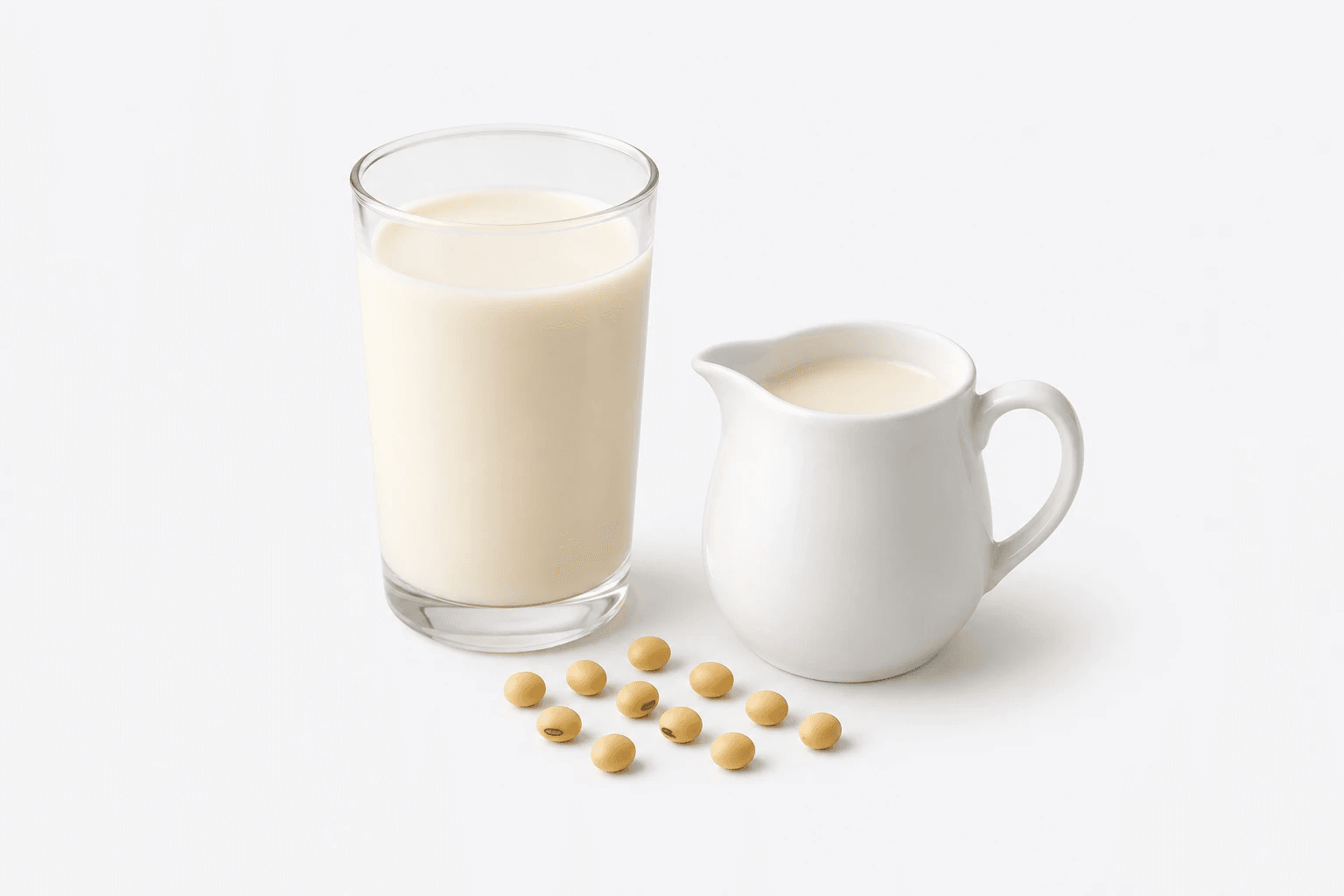
Soy milk is the liquid left after soaked soybeans are ground, boiled and strained free of pulp. Unlike dairy milk it contains no lactose and no cholesterol, while the protein is in a similar range. Calcium, though, falls short of dairy on the bean's own account, so commercial soy milk is usually fortified — the label will say whether it has been. Sweetened and unsweetened versions sit side by side on the shelf, which is also worth checking. Heating it forms a skin of coagulated protein and fat on the surface; lifted off and dried, that skin is yuba.
Soy drink is the oldest of the milk alternatives. And a paper has now made the comparison properly.
A 2026 systematic review and network meta-analysis in Advances in Nutrition compared soy, rice and oat drinks against each other and against cow milk. Fourteen randomised controlled trials, 543 participants.
The overall verdict comes first.
"Overall, few differences were observed comparing plant-based drinks with another or with cow milk on cardiometabolic outcomes."
Then come the exceptions. Replacing 500 mL/day of cow milk with soy drink:
- LDL cholesterol −0.47 mmol/L (about −18 mg/dL) — low certainty
- Systolic pressure −8.23 mmHg, diastolic −7.82 mmHg — low certainty
- HDL unchanged at +0.01 mmol/L — moderate certainty
Something here deserves naming. A systolic drop of 8.23 mmHg is comparable to a single antihypertensive tablet. When changing one drink produces a shift that size, it is usually a signal about sample size rather than about effect. All fourteen trials together hold 543 people, and the authors graded these results low certainty.
And the dose is 500 mL — two and a half cartons a day.
Key benefits
- Early research
8 mmHg lower on soy instead of cow milk — while the paper's verdict is "few differences"
[1]2026, Advances in Nutrition. Systematic review and network meta-analysis, registered on PROSPERO (CRD42025638028).
Methods.
- Three databases (MEDLINE, Cochrane CENTRAL, Web of Science) and two trial registries
- Only randomised controlled trials of at least three weeks comparing plant-based drinks with each other or with cow milk
- Risk of bias by RoB 2.0, certainty of evidence by GRADE
- Fourteen RCTs, 543 participants — soy, rice and oat drinks and cow milk
Results.
Comparison Outcome Mean difference (95% CI) Certainty Cow milk 500 mL/d → soy LDL cholesterol −0.47 mmol/L (−0.85 to −0.10) Low Cow milk 500 mL/d → soy HDL cholesterol +0.01 mmol/L (−0.03 to 0.05) Moderate Cow milk 500 mL/d → soy Systolic pressure −8.23 mmHg (−10.90 to −5.55) Low Cow milk 500 mL/d → soy Diastolic pressure −7.82 mmHg (−13.61 to −2.02) Low Oat drink vs cow milk Total cholesterol −0.12 mmol/L (−0.24 to −0.01) Very low Oat drink vs rice drink Total cholesterol −0.23 mmol/L (−0.40 to −0.05) Very low In mg/dL, LDL −0.47 mmol/L is about −18 mg/dL, and oat drink's total cholesterol −0.12 mmol/L is about −5 mg/dL.
How to read the table.
First, the verdict and the individual numbers differ. The sentence the authors put first is "few differences were observed". Soy's LDL and blood pressure are the exceptions within that. Lifting a few rows out of the table can create an impression opposite to the paper's conclusion.
Second, −8.23 mmHg is too large. That size is comparable to a single antihypertensive tablet. When a food intervention produces a figure like that, suspect the limits of the data before the size of the effect. All fourteen trials together hold 543 people, and any one comparison holds far fewer. That is why the authors graded it low certainty, which in GRADE means the true value may be substantially different from the estimate.
Third, the diastolic interval runs from −13.61 to −2.02 — more than 11 mmHg wide. That is the data failing to pin the estimate down.
Fourth, this is not "drink soy milk" but "drink soy milk instead of cow milk". The comparator is cow milk, not water or nothing. If you do not currently drink milk, these numbers do not transfer to you.
Fifth, the dose is 500 mL a day — two and a half cartons. That is a different proposition from a glass now and then.
Sixth, HDL did not move: +0.01 mmol/L, moderate certainty. And that null result carries a higher certainty grade than the positive ones — the finding that nothing changed is the more trustworthy finding here.
The honest conclusion:
- Swapping cow milk for soy can be a reasonable choice, particularly with lactose intolerance
- But do not make the swap expecting 8 mmHg. The authors graded that number low certainty
- Their closing sentence calls for high-quality RCTs
- The grade here is "early research"
- Nutrition data
124 mg of calcium and 1.11 µg of B12 — added at the factory, not grown in the bean
The table above is for soy drink that is unsweetened and fortified with calcium and vitamins A and D. That distinction is the most important thing in this entry.
Per 100 g:
- 33 kcal — low
- Protein 2.86 g
- Fat 1.61 g (saturated 0.206 g), carbohydrate 1.74 g, sugar 0.41 g
- Calcium 124 mg, vitamin B12 1.11 µg, vitamin D 1.2 µg — all fortificants
- Vitamin B2 0.207 mg, B1 0.154 mg
- Potassium 120 mg, magnesium 16 mg, sodium 37 mg
- Cholesterol 0
Side by side with cow milk (both per 100 g):
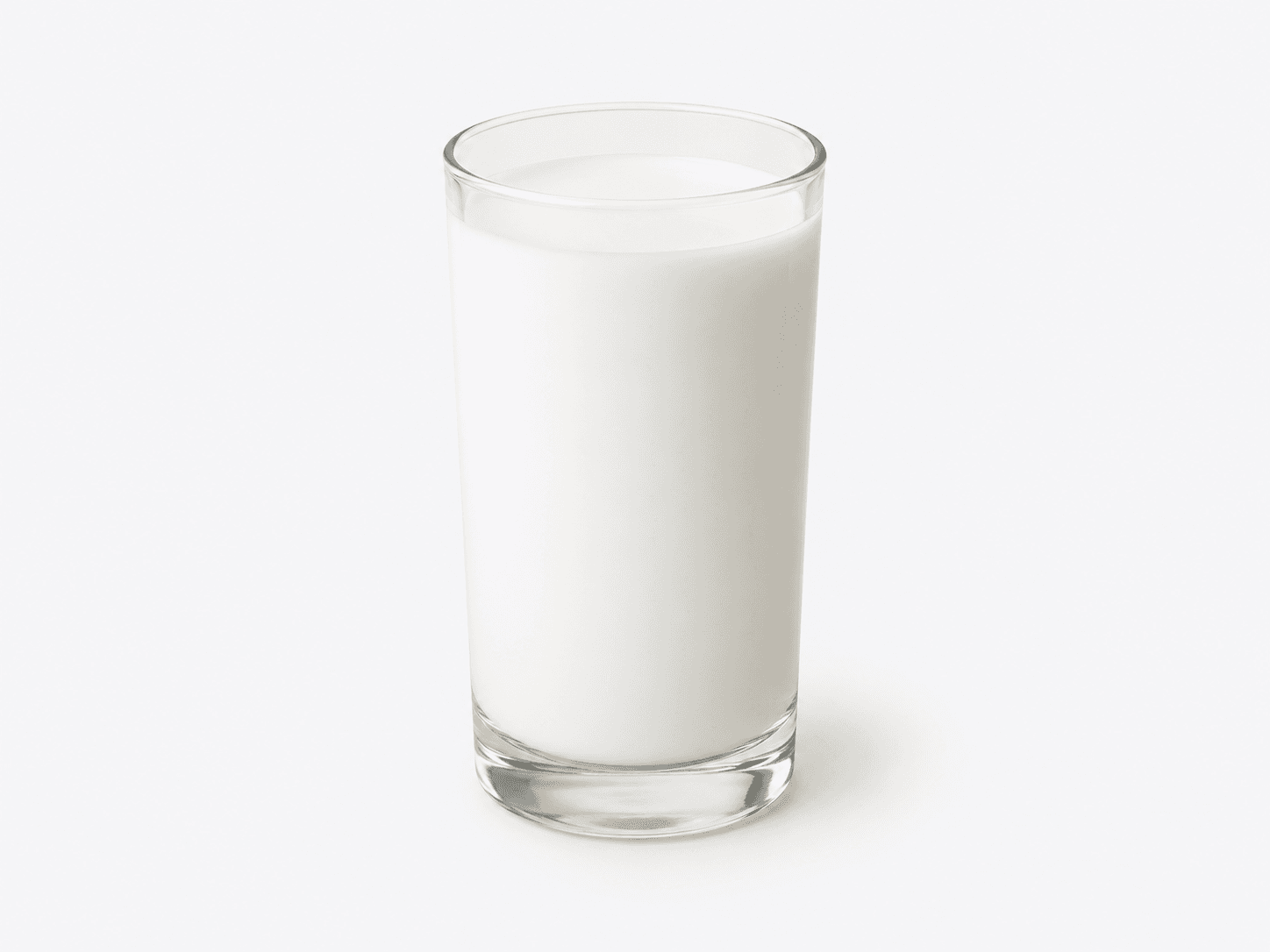
Soy (fortified, unsweetened) Cow milk (whole, vitamin D added) Protein 2.86 g 3.27 g Fat 1.61 g 3.20 g Carbohydrate 1.74 g 4.63 g Calcium 124 mg 123 mg Vitamin B12 1.11 µg 0.54 µg Potassium 120 mg 150 mg Sodium 37 mg 38 mg Cholesterol 0 present The calcium is almost identical: 124 against 123 mg. But the soy drink's 124 mg was put there during manufacture, not grown in the bean.
Unfortified soy drink is a different product. It has almost no calcium, B12 or vitamin D. Soybeans contain no B12 at all. If you are vegetarian and counting on soy drink for B12, check the label for fortification.
And added calcium settles. Calcium carbonate does not dissolve, so it collects at the bottom of the carton. Pour without shaking and you drink only part of the calcium on the label. Shake it.
Cow milk is slightly ahead on protein: 3.27 against 2.86 g. Not a large gap, but if you substitute one for the other expecting equal protein, you come up a little short.
Fat and carbohydrate are lower in soy, and cholesterol is zero.
- Not established
The soy drink you buy is probably not the soy drink in this table
This entry is about reading the label.
The figures above are for unsweetened soy drink. A good share of what sells in Korean shops is not unsweetened.
Three things to check.
First, sugar. Unsweetened soy drink has 0.41 g of sugar per 100 g. Sweetened products add sugar on top of that, and cartons carrying more than 10 g per 190 mL are common. Look at the sugar line. The trials in the meta-analysis above generally used drinks without added sweetness.
Second, fortification. Calcium 124 mg, B12 1.11 µg and vitamin D 1.2 µg are numbers that were put there. Unfortified products have essentially none of the three, and B12 is not present in soybeans in the first place.
Third, soy content. Soy drink is ground soybean in water, so the proportion of water sets the protein. Whether the protein line reads near 3 g or around 1 g per 100 mL tells you a lot.
One common claim, handled honestly.
The idea that soy isoflavones affect male hormones has circulated online for years. This site has not yet published a clinical paper it has verified on that question. So no conclusion is drawn here in either direction. It will be added as its own entry once the evidence is checked. Declaring it safe and warning that it is dangerous are the same kind of error without evidence.
Only what can be stated with confidence:
- With lactose intolerance, soy drink contains no lactose
- With cow's milk allergy, soy drink is an option — but not with soy allergy
- Do not give soy drink to an infant in place of formula. Ordinary soy drink is not infant formula
- If you take levothyroxine for your thyroid, soy products have been noted to interfere with its absorption. Separate the timing and speak to your doctor
How to eat it well
- Shake before pouring. Added calcium settles.
- Read the sugar line. Sweetened cartons can pass 10 g each.
- Check for fortification. Calcium, B12 and vitamin D are absent unless added.
- Substituting for cow milk, allow for slightly less protein (2.86 vs 3.27 g per 100 g).
- In coffee it can split from acid and heat; barista versions are formulated against that.
- Refrigerate once opened and use within two or three days.
- Not for anyone with a soy allergy.
How to read the grades
Each benefit carries a label showing how far research on people supports it. Grades differ between items even within the same ingredient.
- Nutrition data
- A fact verifiable from food composition databases or health authorities. This is a different kind of statement from a clinical effect.
- Strong evidence
- Consistently confirmed across randomised controlled trials or meta-analyses.
- Moderate evidence
- Human studies exist, but effect sizes are small or results are mixed.
- Early research
- Cell or animal work, or small preliminary studies.
- Not established
- Commonly claimed, but not confirmed in studies on people.
What to watch out for
- The −8.23 mmHg and −0.47 mmol/L LDL results are graded low certainty. The paper's overall verdict is that "few differences were observed".
- That result used 500 mL a day, and the comparator was cow milk, not water.
- Calcium, B12 and vitamin D are fortificants, largely absent from unfortified products.
- Do not give it to an infant in place of formula.
- Contraindicated with soy allergy.
- On levothyroxine, separate the timing and speak to your doctor.
- This site has not verified the claims about isoflavones and hormones, and draws no conclusion in either direction.
Nutrition
Per 100 g of unsweetened soy drink fortified with calcium and vitamins A and D. A carton is usually 190–200 mL, so one carton is roughly double the figures below. Unfortified soy drink contains almost no calcium, B12 or vitamin D.
- Calories
- 33 kcal2%
- Protein
- 2.86 g6%
- Fat
- 1.61 g2%
- Carbohydrates
- 1.74 g<1%
- Sugars
- 0.41 g
- Fiber
- 0.5 g2%
- Calcium
- 124 mg10%
- Vitamin B12
- 1.11 µg46%
- Vitamin D
- 1.2 µg6%
- Vitamin B2
- 0.207 mg16%
- Vitamin B1
- 0.154 mg13%
- Potassium
- 120 mg3%
- Magnesium
- 16 mg4%
- Sodium
- 37 mg2%
Percentages are of the US FDA Daily Value for adults and children 4 and over. National reference intakes differ by sex and age.
Calculate this alongside other ingredients →
Key nutrients
By health concern
Dishes with this ingredient
Compare with
Sources
The databases and health authorities this article's nutrition figures and health statements draw on.