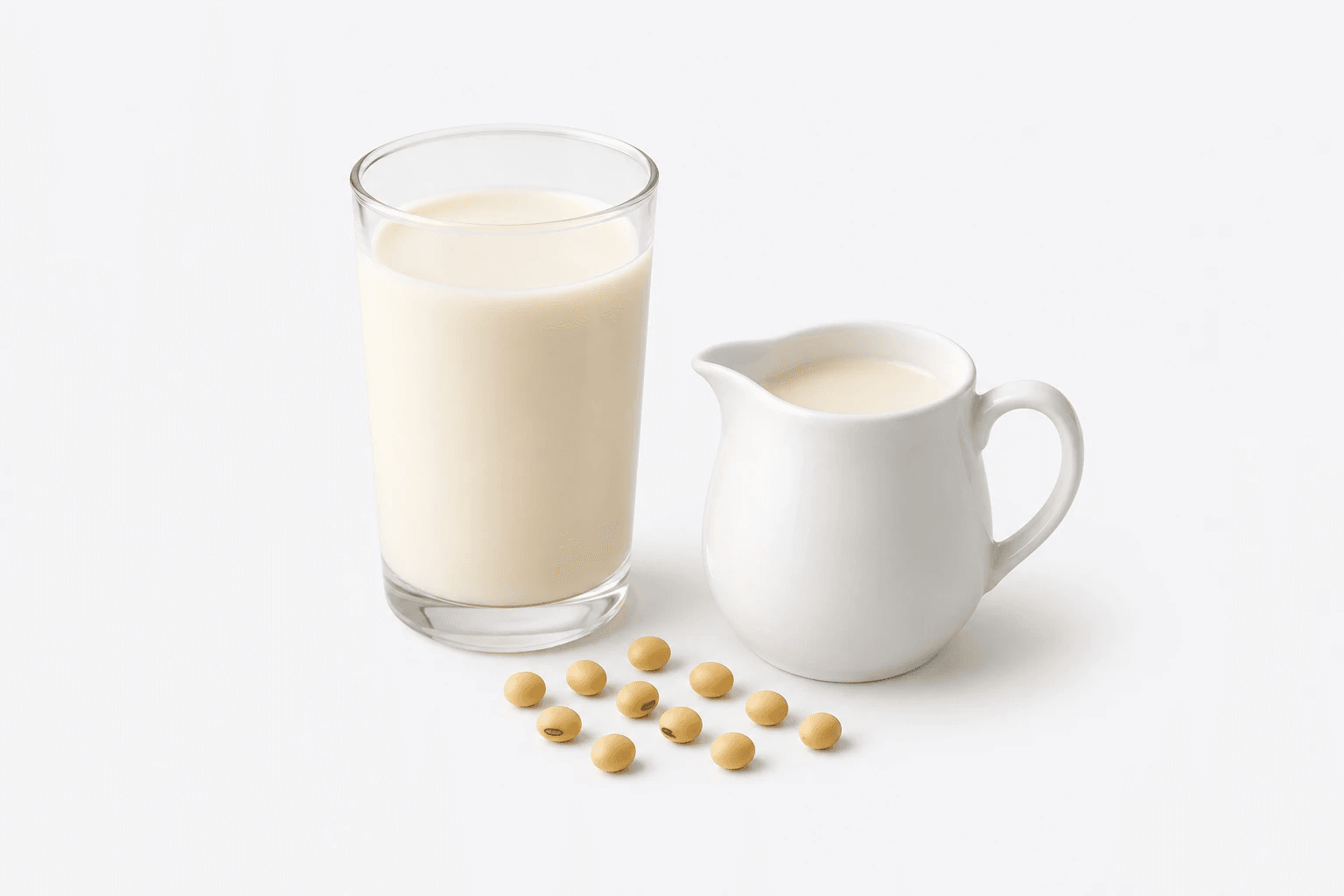
The first thing to know about this comparison is that the soy milk figures are for a fortified product.
Calcium at 124 mg, vitamin B12 at 1.11 µg and vitamin D at 1.2 µg did not come from the soybean. They were put in during manufacture. Unfortified soy milk has essentially no calcium, no B12 and no vitamin D. Cow's milk's 113 mg of calcium and 0.45 µg of B12 are simply there.
So read the label when you buy soy milk. Phrases like "nothing added" or "100% whole soybean" do not mean fortified. Often they mean the opposite.
Fortified calcium brings one practical problem. It does not dissolve in soy milk; it settles. It ends up concentrated in the last glass, or left in the bottom of the carton and thrown away. Shake it before pouring. The calcium in cow's milk is bound to protein and does not settle.
Protein is close: 2.86 g against 3.2 g. Soy protein is one of the few plant proteins with a full set of essential amino acids, so it does not fall far behind on quality either, not only on quantity.
One difference barely shows in the table — iodine. Cow's milk carries 36 to 40 µg; soy milk has none. In several countries dairy is a principal source of iodine, and switching entirely to plant drinks removes that contribution. Seaweed covers it if you eat seaweed; if you do not, it is worth knowing.
With lactose intolerance, soy is the clear answer. With a soy allergy, the reverse.
Sweetened or not may matter more than any of this. The soy milk above is unsweetened, at 0.41 g of sugar. Sweetened cartons can pass 10 g. Whichever side of this comparison you take, that is the row that moves most.