Contents
What it is
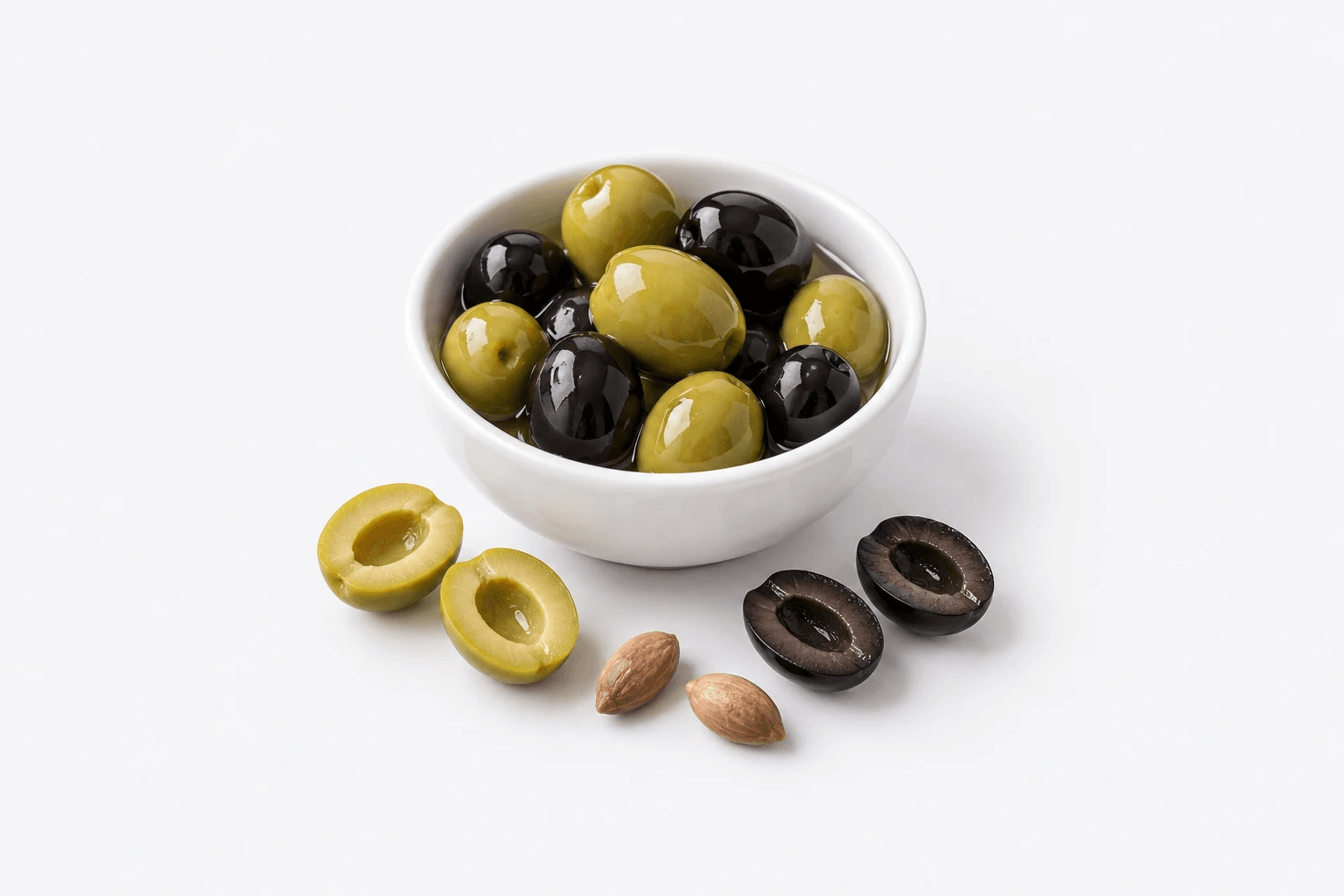
The olive is the fruit of a tree in the olive family, native to the Mediterranean. Straight off the tree it is inedibly bitter because of a compound called oleuropein. It therefore has to be cured — soaked in brine or lye, or fermented — to draw that bitterness out, which is why every olive you eat is a cured one. Green olives are picked unripe and black ones are either ripe or darkened by oxidation treatment. Being cured, they are high in sodium.
Scientific name Olea europaea
The olive is the emblem of the Mediterranean diet. But the emblem and the evidence sit in different places.
Starting honestly: this site has not yet found a clinical trial that fed olives and measured outcomes. There is a great deal of research on the Mediterranean diet and on olive oil, but those interventions were generally the oil. "People in the Mediterranean eat olives" and "eating olives does X" are different sentences.
So this page is about composition.
Per 100 g of canned ripe olives:
- Sodium 735 mg — the central number of this food
- Fat 10.9 g (saturated 2.28 g) — mostly monounsaturated
- Potassium 8 mg — essentially none; the brine took it
- Fibre 1.6 g, sugar 0 g, 116 kcal
- Vitamin E 1.65 mg, beta-carotene 198 µg
735 mg of sodium against 8 mg of potassium. That pairing defines the olive. Raw olives are too bitter to eat, and what makes them edible is salt.
Key benefits
- Nutrition data
735 mg of sodium, 8 mg of potassium — that is what the cure did
Per 100 g of canned ripe olives:
- 116 kcal
- Fat 10.9 g — saturated 2.28 g; most of the rest monounsaturated
- Sodium 735 mg
- Carbohydrate 6.04 g, fibre 1.6 g, sugar 0 g
- Protein 0.84 g
- Iron 6.28 mg, calcium 88 mg, copper 0.251 mg
- Vitamin E 1.65 mg, vitamin A 17 µg, beta-carotene 198 µg, vitamin K 1.4 µg
- Potassium 8 mg
- Cholesterol 0
Per olive (4 g):
100 g (about 25) One olive (4 g) Five olives (20 g) Energy 116 kcal 5 kcal 23 kcal Sodium 735 mg 29 mg 147 mg Fat 10.9 g 0.4 g 2.2 g Start with the sodium. The WHO recommends under 2,000 mg a day. 100 g of olives is 37% of that. Though few people eat 100 g in one sitting. Five olives is 147 mg, around 7% of the day.
What matters more than the olive is the company it keeps — pizza, pasta, a salty salad dressing, a snack plate beside cheese. Often the olive is not the problem; the whole plate the olive sits on is salty.
Look at the 8 mg of potassium. That is the fingerprint of processing. Most fruits and vegetables carry far more potassium than sodium. The olive is inverted, at roughly 90 to 1. The potassium that was in the fresh fruit left into the brine, and sodium took its place.
The 10.9 g of fat is mostly monounsaturated — oleic acid, olive oil's main component, in the form it occupies in the fruit. Saturated fat is low at 2.28 g, and cholesterol is zero.
Sugar is 0 g. It is a fruit with no sweetness; fermentation and curing consumed it.
The 6.28 mg of iron is unusually high, a figure rarely seen in a plant food. It belongs specifically to canned ripe olives. Black ripe olives are darkened with ferrous gluconate, an iron salt used to fix the colour, and it appears on the ingredient list. So this iron came from processing rather than from the fruit, and green olives or other cures give different numbers.
The vitamin E (1.65 mg) and beta-carotene (198 µg) sit alongside the fat, which favours their absorption.
- Not established
The evidence for olives is evidence for olive oil — the two should not be merged
This entry is about what this site does not know.
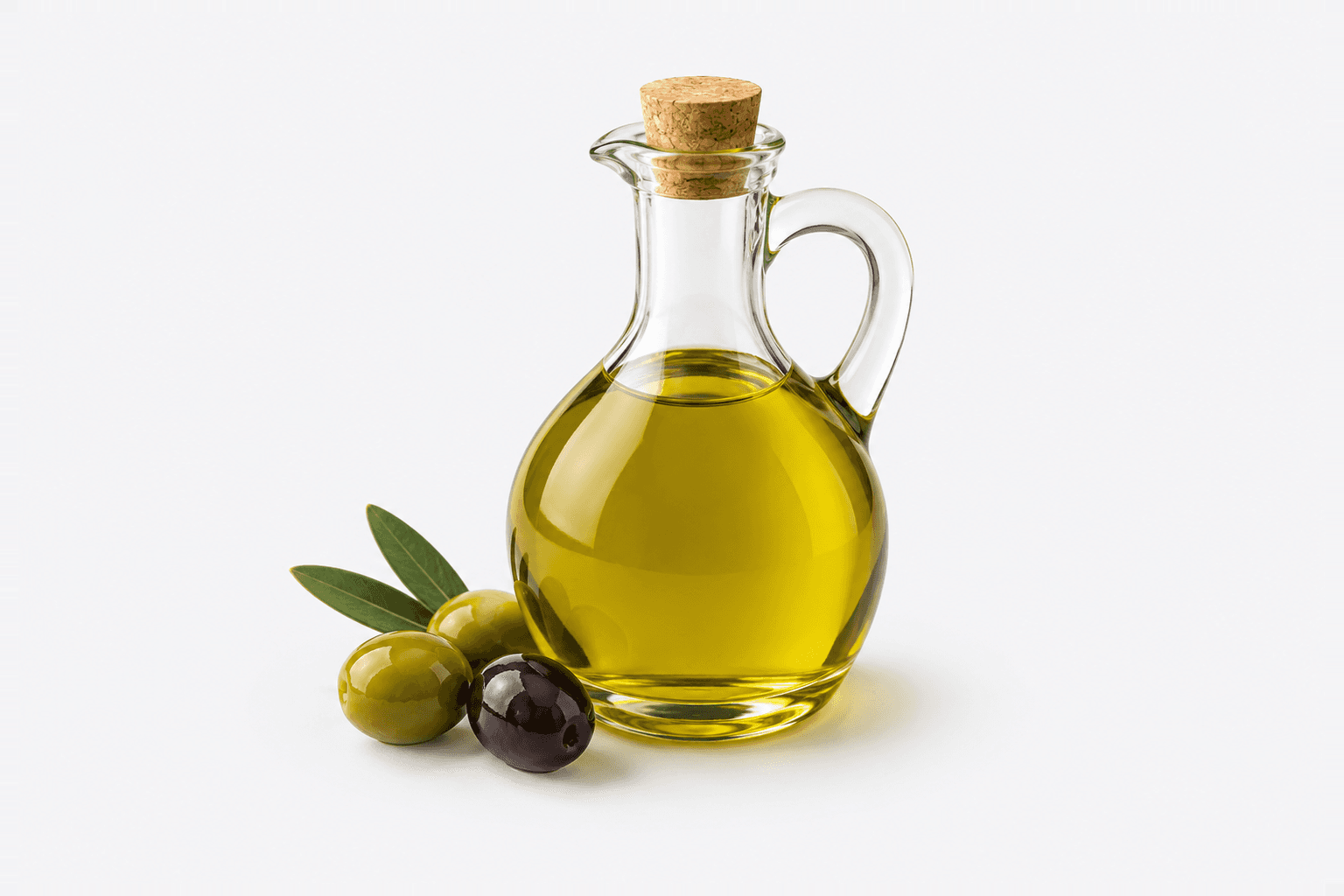
The Mediterranean diet is among the most studied eating patterns in nutrition. And the names of those studies nearly always contain olive oil. The oil, not the fruit.
Why the distinction matters.
First, the intervention was oil. Participants in Mediterranean diet trials were generally given extra virgin olive oil, at doses set in tablespoons per day. There is no basis for transferring those results to cured olive fruit.
Second, the composition differs.
Olive fruit (canned) Olive oil Sodium 735 mg/100 g effectively 0 Fat 10.9 g/100 g 100 g/100 g Fibre 1.6 g 0 Polyphenols largely lost in curing retained depending on pressing Same tree, different foods. The fruit is salty and the oil is not. The oil is entirely fat; the fruit is around a tenth.
Third, curing changes the composition. Raw olives are bitter because of oleuropein, and making them edible means drawing it out with lye or brine. The compound that makes them bitter is the polyphenol. The process that makes them edible reduces it.
What this site can say now:
- No clinical trial feeding olives and measuring outcomes has been found yet. One may exist that this site has not found
- So this page contains no sentence of the form "eating olives improves X"
- Evidence on olive oil is handled separately in this site's olive oil entry
- This entry will be updated as evidence is found
Between observing that Mediterranean populations live long and claiming that olives are the reason lies a long distance. That diet also contains fish, vegetables, pulses, whole grains and nuts, along with a walking life and the hours at which people eat. Crediting a single food misreads the diet.
- Not established
"Black olives are the riper ones" is not always true
This entry is about the label.
It is commonly explained that black olives are riper and green olives less ripe. Partly true, partly not.
Some olives do ripen black naturally. They turn black or purple on the tree and are cured in salt or brine — named varieties such as Kalamata belong here.
But the uniformly jet-black canned olive is different. Those are under-ripe olives treated with lye and darkened by blowing air through to oxidise them, with ferrous gluconate used to fix the colour. It is printed on the ingredient list. That is why the 6.28 mg of iron in the table above is so unusually high.
So look at them separately.
- Perfectly uniform black, canned, pitted into rings → usually darkened by oxidation
- Colour varying from olive to olive, wrinkled, stone in → often naturally ripened and cured
This is not a claim that one is better. This site holds no clinical data comparing them. But you should know which one the table above describes. It is for canned ripe olives, and green olives and naturally cured olives differ in both sodium and iron.
One thing to check — the sodium on the label. The same fruit varies widely per 100 g depending on the cure. The number on the back of the jar is more accurate than the name of the variety.
To cut the salt, rinse them once in water: the surface brine washes off. The salt that has soaked in stays.
How to eat it well
- One olive is about 4 g and 29 mg of sodium. Five is 147 mg.
- Rinsing removes the surface brine, though not the salt that has soaked in.
- Watch the salt of the whole plate, not the olive alone — pizza, cheese and pickles add up fast.
- Check the sodium on the back of the jar. Cures vary widely.
- Vitamin E and beta-carotene sit alongside the fat, which favours absorption.
- Transfer an opened can, brine and all, to a glass container and refrigerate; do not leave it in the metal tin.
- Cooking with unpitted olives, tell people the stones are in.
How to read the grades
Each benefit carries a label showing how far research on people supports it. Grades differ between items even within the same ingredient.
- Nutrition data
- A fact verifiable from food composition databases or health authorities. This is a different kind of statement from a clinical effect.
- Strong evidence
- Consistently confirmed across randomised controlled trials or meta-analyses.
- Moderate evidence
- Human studies exist, but effect sizes are small or results are mixed.
- Early research
- Cell or animal work, or small preliminary studies.
- Not established
- Commonly claimed, but not confirmed in studies on people.
What to watch out for
- This site has not yet found a clinical trial feeding olives and measuring outcomes. Evidence on the Mediterranean diet and olive oil does not transfer to the fruit.
- 735 mg of sodium per 100 g. With hypertension or a sodium restriction, count them.
- Potassium is 8 mg — essentially none. Do not treat olives as a potassium source.
- The table is for canned ripe olives. Green and naturally cured olives differ.
- The 6.28 mg of iron comes from processing, ferrous gluconate used as a colour fixative.
- With unpitted products, mind your teeth.
- Allergy to olive fruit is rare but reported.
Nutrition
Per 100 g of canned ripe (black) olives. One olive is about 4 g, so 100 g is roughly twenty-five of them. Green olives and other cures give different figures.
- Calories
- 116 kcal6%
- Fat
- 10.9 g14%
- Sodium
- 735 mg32%
- Carbohydrates
- 6.04 g2%
- Fiber
- 1.6 g6%
- Sugars
- 0 g
- Protein
- 0.84 g2%
- Iron
- 6.28 mg35%
- Calcium
- 88 mg7%
- Vitamin E
- 1.65 mg11%
- Vitamin A
- 17 µg2%
- Beta-carotene
- 198 µg
- Copper
- 0.251 mg28%
- Potassium
- 8 mg<1%
Percentages are of the US FDA Daily Value for adults and children 4 and over. National reference intakes differ by sex and age.
Calculate this alongside other ingredients →
Key nutrients
Dishes with this ingredient
Sources
The databases and health authorities this article's nutrition figures and health statements draw on.