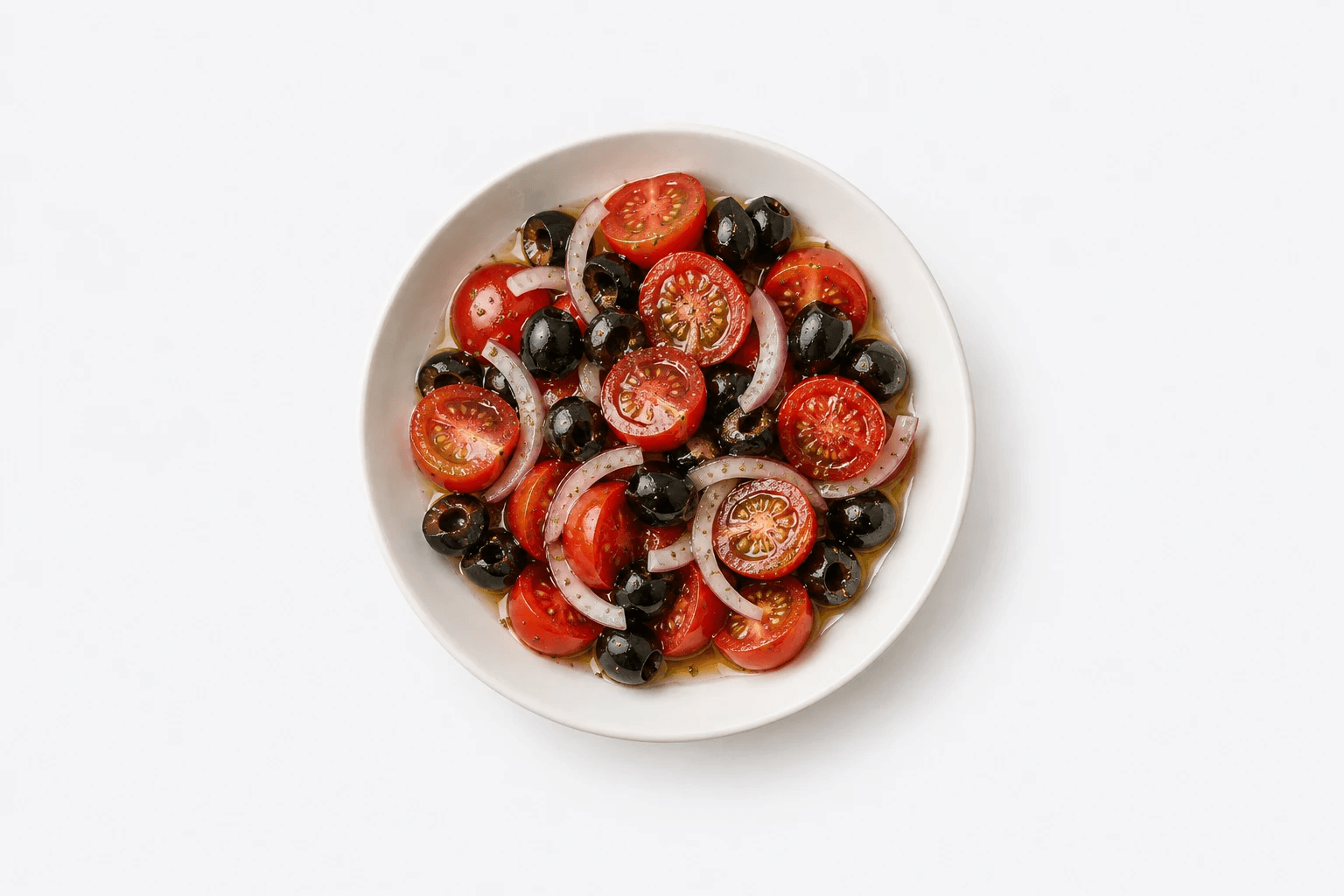
Adding no salt is the rule of this salad.
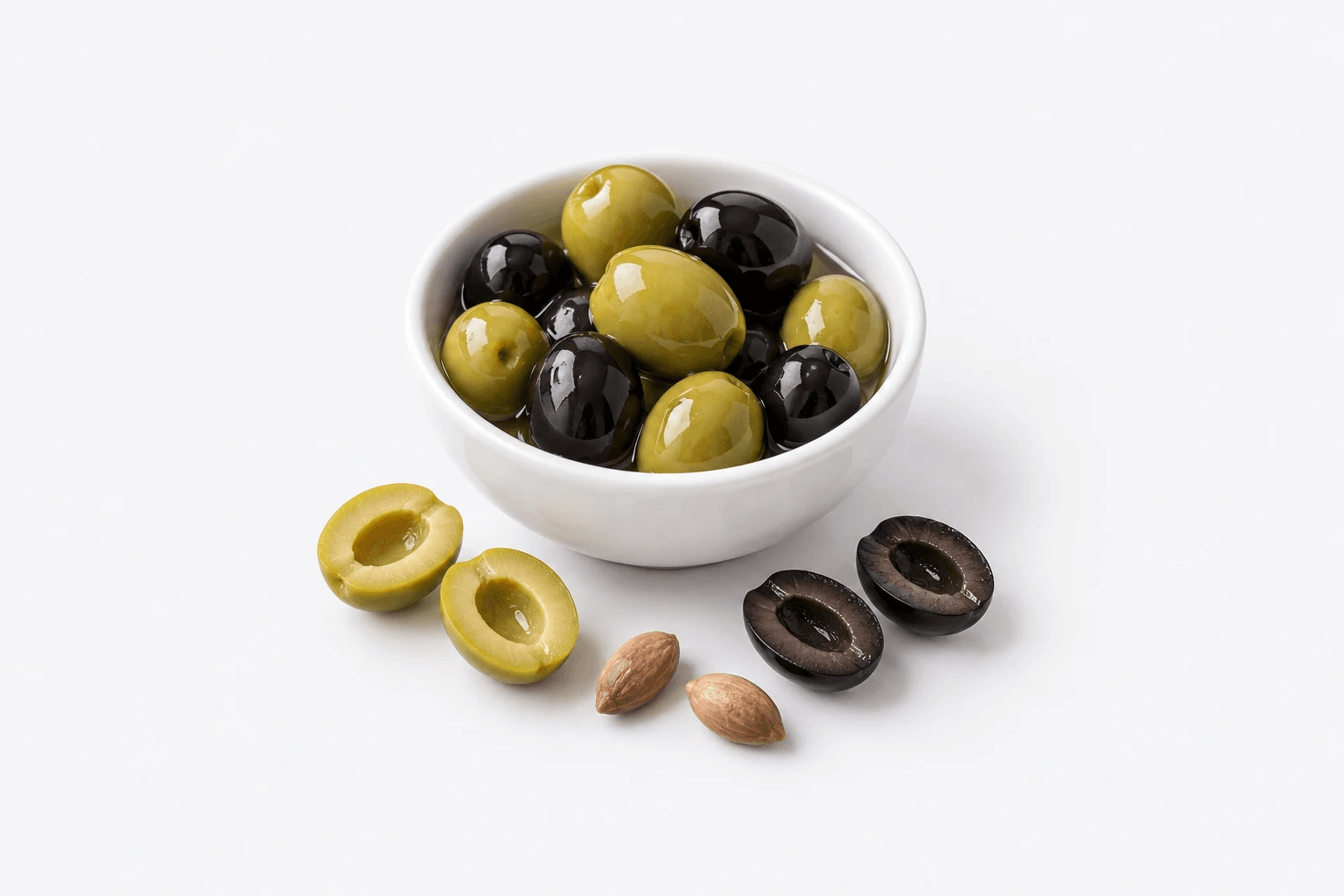
40 g of olives is about 294 mg of sodium. Across two servings that is 147 mg each. Add salt and the design of the dish falls apart.
The olives are the salt.
| 100 g | Used here (40 g) | Per serving (20 g) |
|---|
| Sodium | 735 mg | 294 mg | 147 mg |
| Energy | 116 kcal | 46 kcal | 23 kcal |
| Fat | 10.9 g | 4.4 g | 2.2 g |
Why rinse them. Brine clings to the surface, and one rinse in a sieve takes that surface layer off. But the salt that has soaked in stays — it is safer to assume the 735 mg above is unchanged.
Why halve them. A whole olive tastes salty only when you bite it, and until then the tomatoes are bland. Halved, the brine runs out into the dressing and seasons the whole plate. That is why no salt is needed.
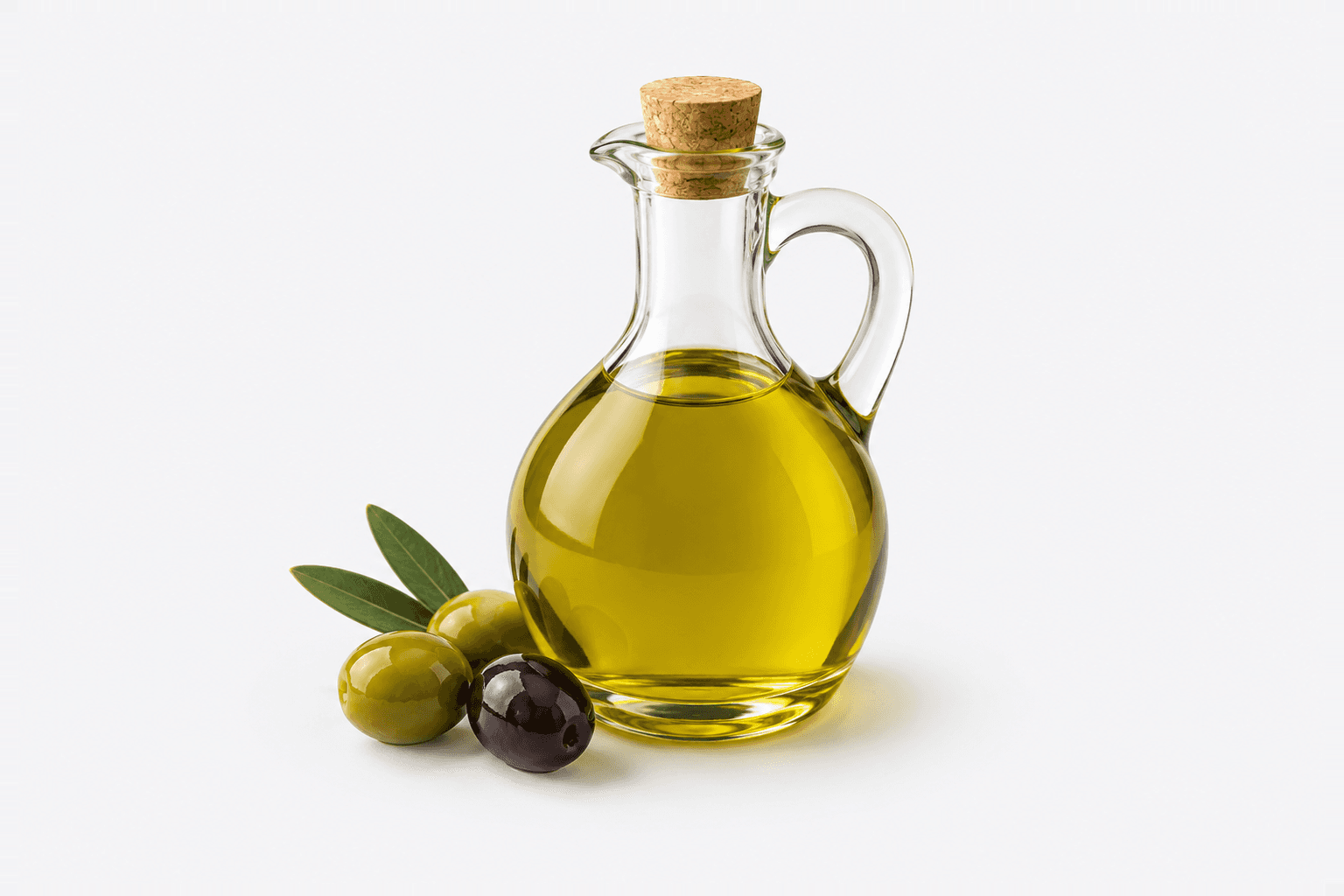
Why add olive oil separately. The fruit has fat in it, but a dressing needs oil in liquid form. And tomato's lycopene is fat-soluble, so eating it alongside fat favours absorption.
The fruit and the oil are different foods. The evidence behind Mediterranean diet research is mostly about the oil, and this site has not yet found a clinical trial that fed the fruit and measured outcomes. Both are on this plate; the evidence is only on one side.
Why soak the onion. The harsh compounds dissolve into the water. Five minutes is enough; much longer and the aroma goes too.
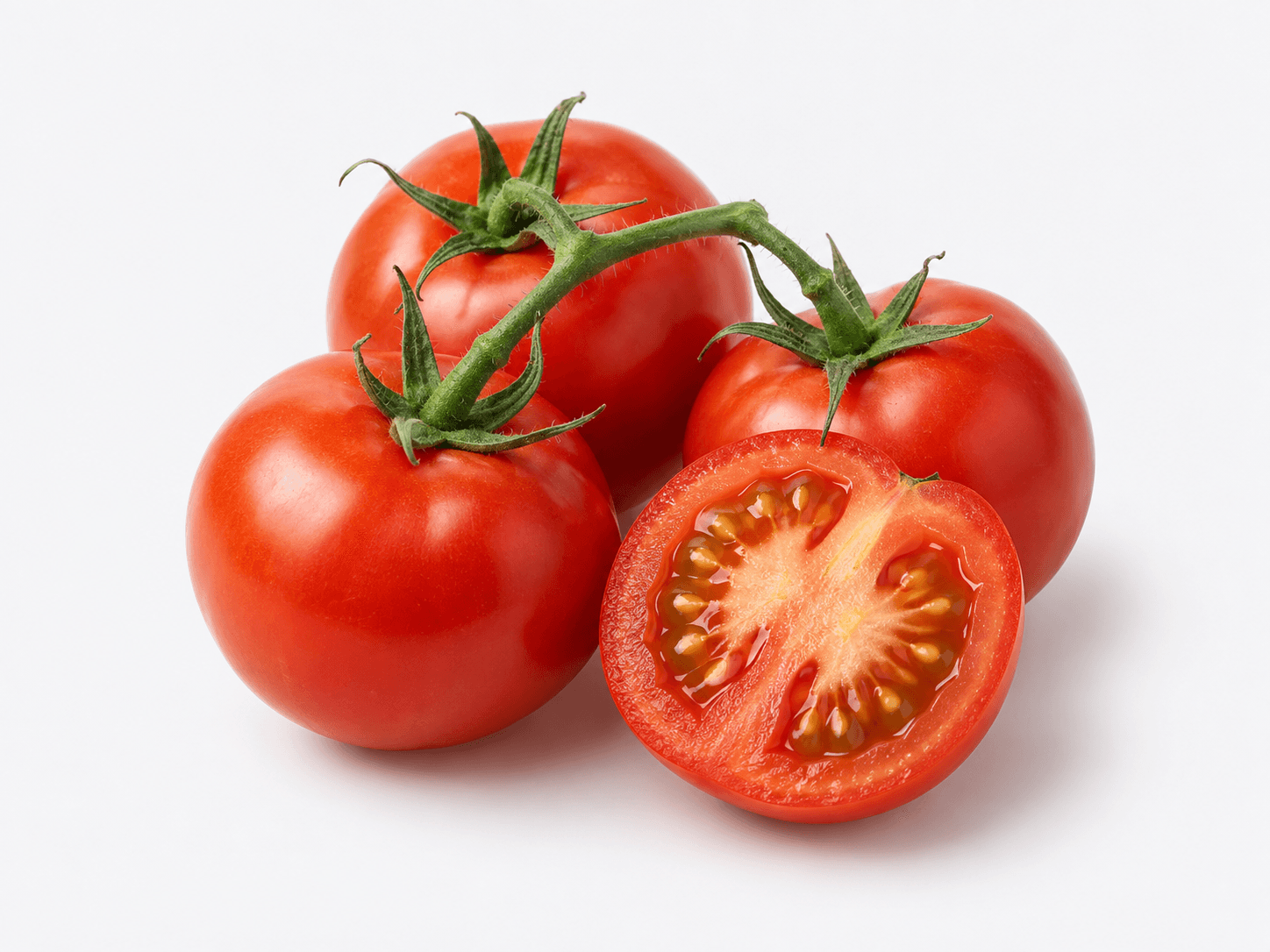
Why let it stand ten minutes. Salt on tomato draws out juice, and that juice mixes into the dressing and seasons the whole dish. Eaten immediately, the olives are salty and the tomatoes taste of nothing.
Do not use tomatoes straight from the fridge. Cold suppresses the aroma compounds. Thirty minutes at room temperature makes a real difference.
To cut the sodium further, drop to 6 olives and add another half teaspoon of vinegar. Sourness covers for missing salt.
Served with bread, you finish the juice left in the dish. But bread carries sodium too — look at the total.