Contents
What it is
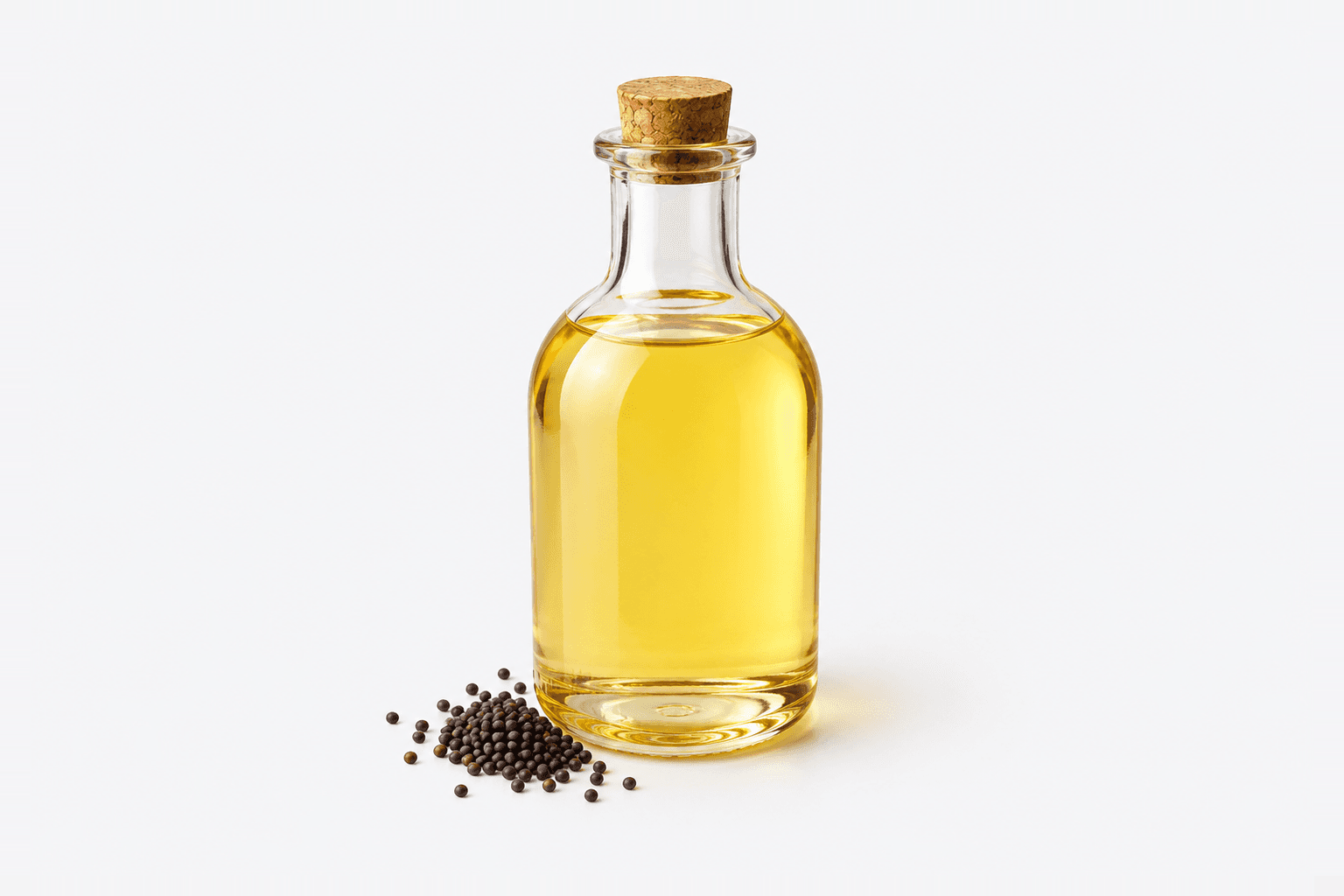
Canola oil is pressed from rapeseed. Rapeseed oil was historically hard to use as food because it was high in erucic acid and glucosinolates; in the 1970s Canadian breeders developed varieties low in both, and the result became a cooking oil. The name canola itself dates from that work. The oil has almost no flavour or aroma of its own and a high smoke point, which makes it a general-purpose frying and cooking oil that stays out of the way of the ingredients.
Scientific name Brassica napus
Canola oil gets dismissed for being cheap and tasting of nothing. Look at the fat profile and the picture inverts.
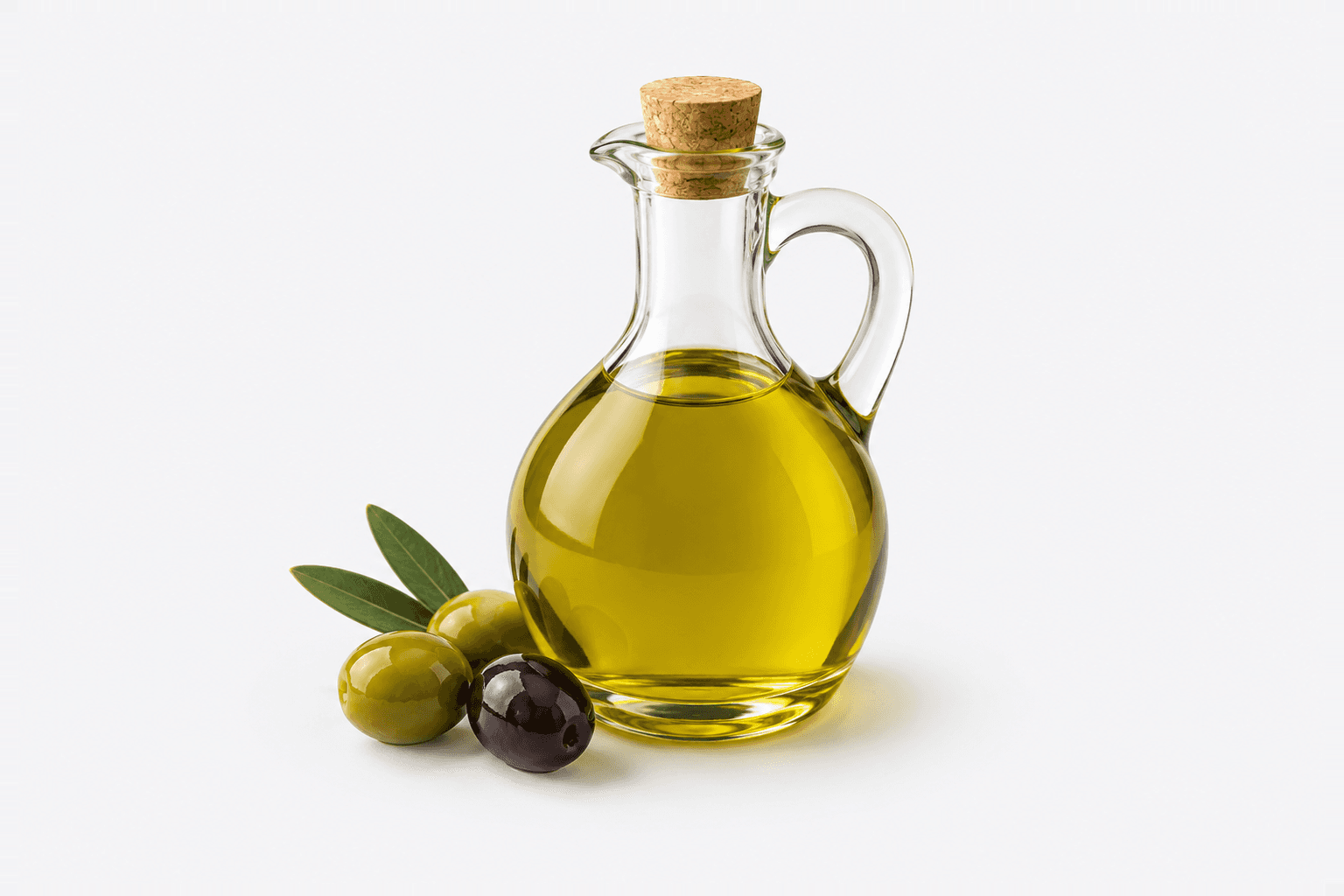
Saturated fat is 7.4 g, the lowest of the common cooking oils, and alpha-linolenic acid — plant omega-3 — is 9.1 g, among the highest. Olive oil carries 13.8 g of saturated fat and essentially no omega-3.
The internet line that canola is 'oil pressed from toxic rapeseed' is half true. Old rapeseed was high in erucic acid and glucosinolates. In 1970s Canada, breeders produced a cultivar low in both — that is canola. The name is Canada plus oil, low acid.
Key benefits
- Strong evidence
It lowers LDL cholesterol — more than olive oil does
[1]A 2020 meta-analysis pooled 42 controlled clinical trials. Against other edible oils, canola lowered total cholesterol by 0.27 mmol/L (37 trials) and LDL by 0.23 mmol/L (35 trials). The LDL/HDL ratio fell 0.21 (10 trials), total/HDL 0.13 (15 trials) and apolipoprotein B 0.03 g/L (14 trials).
Compared head to head with olive oil, total cholesterol fell further on canola.
The reason is plain. Blood lipids largely track saturated fat. Canola's 7.4 g is half olive oil's 13.8 g and a eleventh of coconut oil's 82.5 g.
But these are intermediate markers, not events. No large randomised trial has tested canola oil against heart attacks or death.
- Moderate evidence
9.1 g of plant omega-3 (ALA) — though conversion is inefficient
[2]Canola oil holds 9.14 g of alpha-linolenic acid per 100 g. A tablespoon (14 g) is 1.3 g, close to the adequate intake for adults (1.6 g for men, 1.1 g for women).
A meta-analysis of 41 prospective studies on ALA and mortality found lower total mortality (relative risk 0.90) and cardiovascular mortality (0.92) in those eating more of it.
One qualifier matters. ALA is not the EPA and DHA of fish. Conversion in the body runs at 5–8 % to EPA and under 1 % to DHA. Canola oil does not substitute for fish.
Vitamin E is 17.5 mg, higher than olive oil's 14.4 mg.
- Not established
The claims that canola is harmful have not been confirmed
Three stories circulate.
① Erucic acid damages the heart. Old rapeseed oil did carry it — which is why the plant was rebred. Edible canola is now regulated to no more than 2 % erucic acid of total fatty acids.
② Refining creates trans fat. Traces do form during deodorising, typically 1–2 % of total fat. That is not the same order as partially hydrogenated oil at 30–50 %.
③ It is genetically modified, so it is dangerous. Much North American canola is indeed a GM cultivar. But refining strips out nearly all protein and DNA, so genetic material in the oil itself falls below detection. The safety debate about GM crops and the composition of a refined oil are different questions.
None of the three amounts to demonstrated harm in humans. Nor does 'not confirmed' mean 'proven safe' — what is solid here is the lipid evidence, and nothing more.
How to eat it well
- It smokes around 200–230 °C. Sautéing, pan-frying, deep-frying — all fine. Its flat flavour is the advantage in that job.
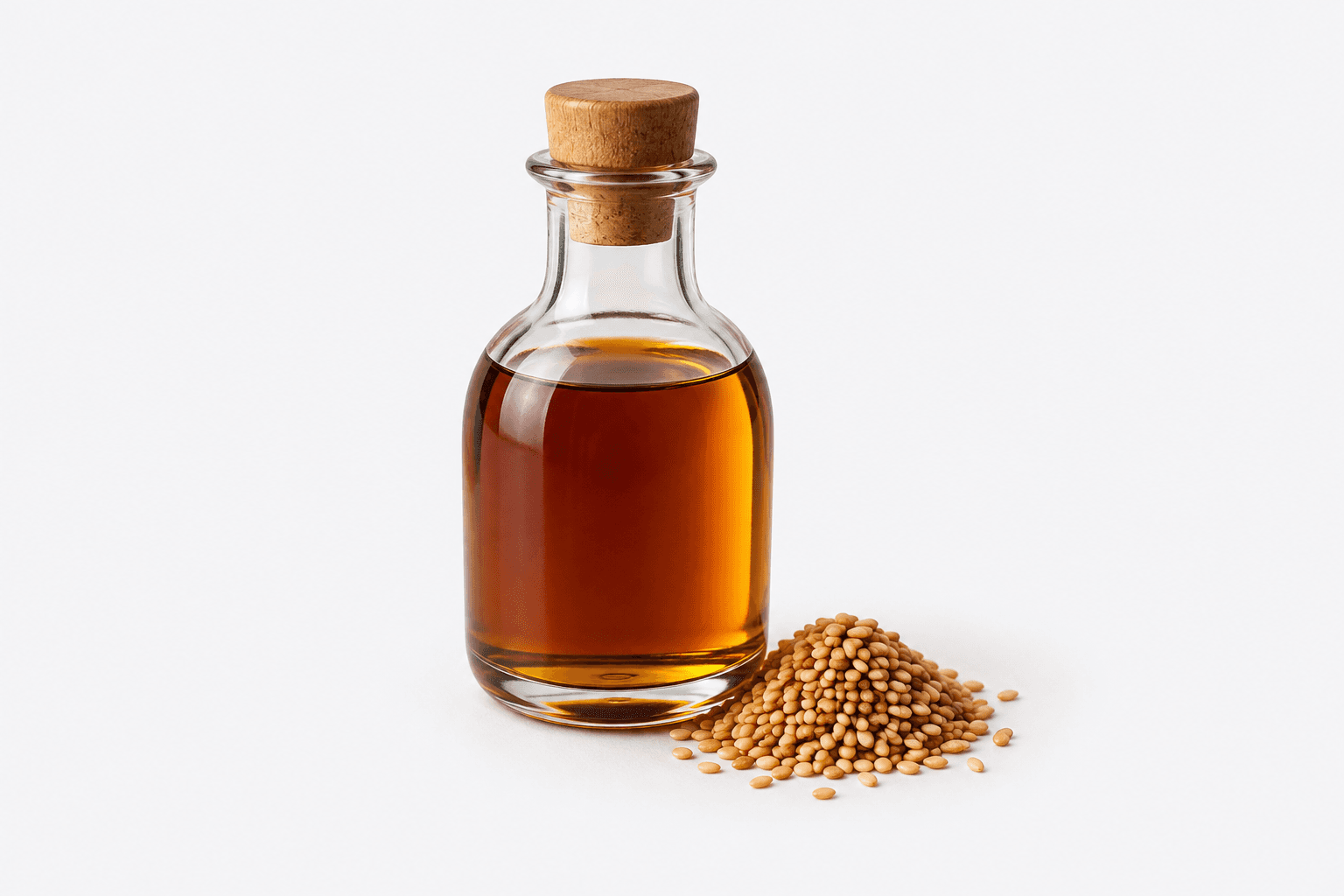
- Split the roles with a flavour oil. Canola for the heat, sesame or extra-virgin olive oil for the finish.
- ALA is heat-sensitive. If omega-3 is the point, use it raw, in a dressing.
- Keep it sealed and dark. At 28 g of polyunsaturated fat it goes rancid faster than olive oil.
- Do not reuse frying oil many times. Repeated heating produces oxidation products in any oil.
How to read the grades
Each benefit carries a label showing how far research on people supports it. Grades differ between items even within the same ingredient.
- Nutrition data
- A fact verifiable from food composition databases or health authorities. This is a different kind of statement from a clinical effect.
- Strong evidence
- Consistently confirmed across randomised controlled trials or meta-analyses.
- Moderate evidence
- Human studies exist, but effect sizes are small or results are mixed.
- Early research
- Cell or animal work, or small preliminary studies.
- Not established
- Commonly claimed, but not confirmed in studies on people.
What to watch out for
- A tablespoon is 124 kcal. Better lipids are no reason to use more. The trials above measured replacing another oil.
- The evidence is cholesterol numbers, not heart attacks. No large randomised outcome trial exists.
- ALA does not replace EPA and DHA. The conversion rate is low.
- Rapeseed allergy is uncommon but real.
- High polyunsaturated content means it goes rancid in storage. If the smell changes, throw it out.
Nutrition
Per 100 g, about seven tablespoons. One tablespoon is 14 g and 124 kcal.
Percentages are of the US FDA Daily Value for adults and children 4 and over. National reference intakes differ by sex and age.
Calculate this alongside other ingredients →
Key nutrients
By health concern
Compare with
Sources
The databases and health authorities this article's nutrition figures and health statements draw on.
- 1The effects of Canola oil on cardiovascular risk factors: A systematic review and meta-analysis with dose-response analysis of controlled clinical trialsMeta-analysisAmiri M, et al. Nutr Metab Cardiovasc Dis 2020PMID 33127255
- 2Dietary intake and biomarkers of alpha linolenic acid and risk of all cause, cardiovascular, and cancer mortality: systematic review and dose-response meta-analysis of cohort studiesMeta-analysisNaghshi S, et al. BMJ 2021PMID 34645650
- 3USDA FoodData CentralFood composition database
- 4NIH Office of Dietary SupplementsHealth authority
- 5European Food Safety Authority (EFSA)Health authority
- 6PubMedResearch literature