Contents
What it is
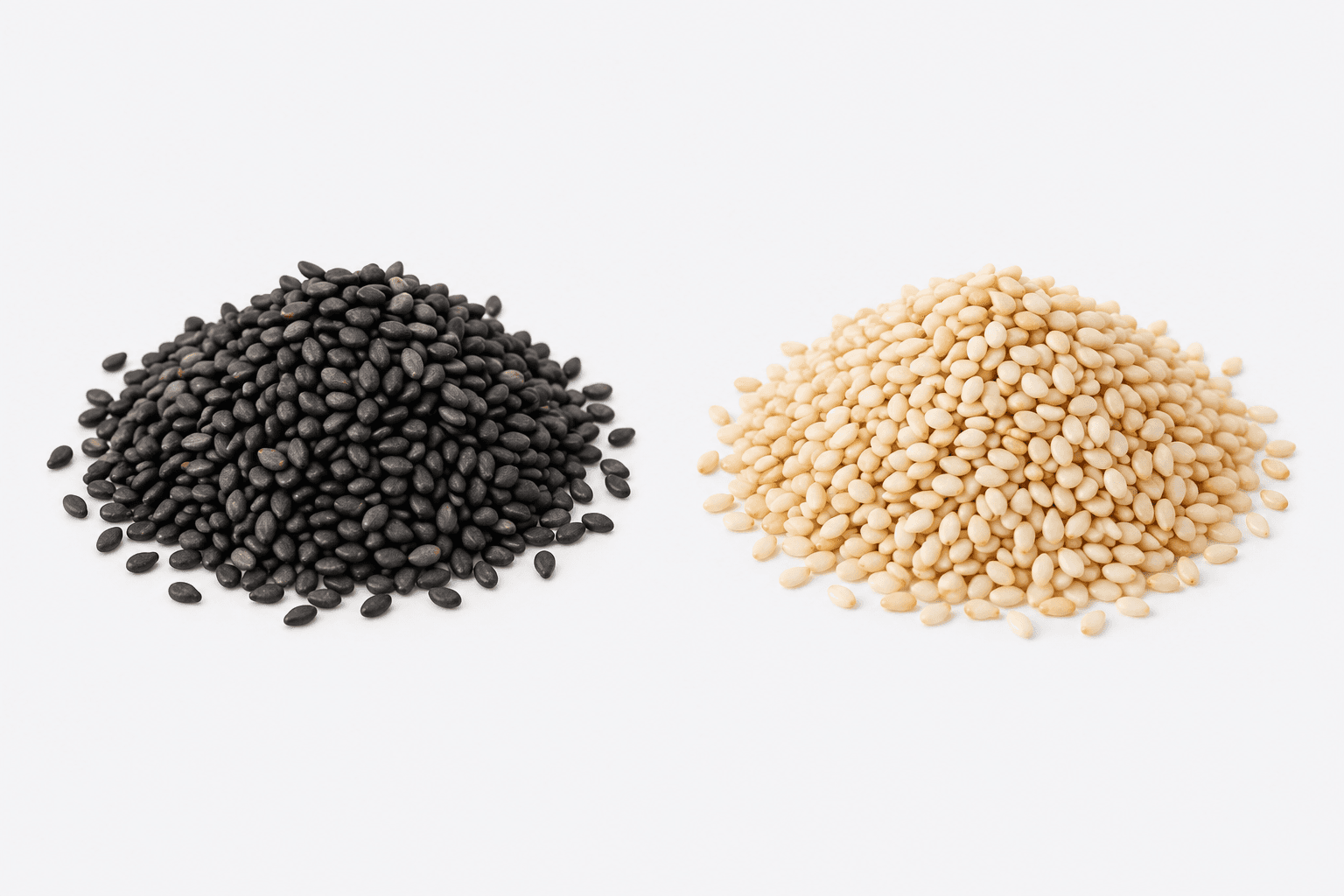
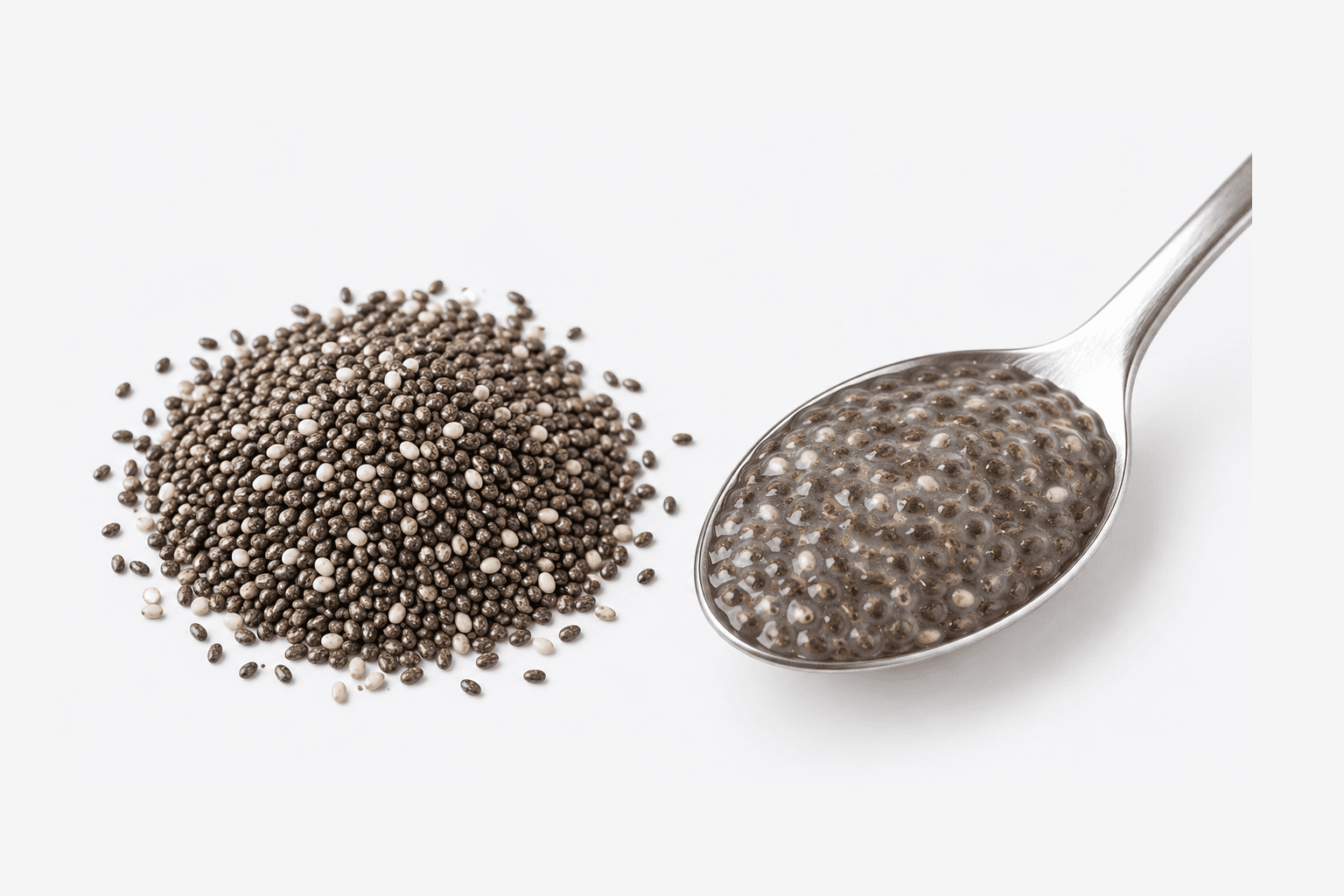
Chia seeds are the seeds of an annual sage in the mint family — small grey specks, finer than sesame. The plant is native to Mexico and Guatemala and was a crop of the Aztecs and Maya. Soaked, the soluble fibre on the seed coat takes up water and swells into a translucent gel, and that is the defining property of the ingredient. The seeds have almost no flavour of their own, so they go into drinks, yoghurt and puddings. Swallowing a large spoonful dry is a bad idea, since they can swell in the throat — always soak them first.
Scientific name Salvia hispanica
Chia seeds carry 17.8 g of omega-3 (ALA) per 100 g — more than seven times the omega-3 in 100 g of salmon (around 2.3 g).
But it is not the same omega-3.
Chia's omega-3 is entirely ALA, alpha-linolenic acid. The forms the body actually uses, EPA and DHA, have to be converted from it, and that conversion runs at 5–8% for EPA and under 1% for DHA.
Work it through. Two tablespoons (20 g) of chia is 3.56 g of ALA. Of that, 0.2–0.3 g becomes EPA and about 0.03 g becomes DHA. One fillet of mackerel carries over 1 g of DHA.
There are reasons to eat chia. They are not the omega-3 — they are the 34.4 g of fibre.
Key benefits
- Moderate evidence
Triglycerides fell, but the dose-response runs backwards
[1]A 2024 systematic review and meta-regression in Prostaglandins & Other Lipid Mediators, covering 14 randomised trials and 835 participants up to April 2024.
- Triglycerides — higher dose −8.69 mg/dL, lower dose −13.11 mg/dL
- LDL cholesterol — significant only in the higher-dose group, at −4.77 mg/dL
- Systolic blood pressure — −2.78 mmHg, also only at the higher dose
Read that first line again. Triglycerides fell more in the group eating less — −13.11 on the lower dose against −8.69 on the higher.
That is an inverted dose-response. When a compound genuinely does something, more of it usually moves the number further. When the opposite comes out, you have to consider that the effect may not be the chia, or that differences between the trials — baseline values, changes to the whole diet, trial length — are doing the work.
LDL and blood pressure appeared only at the higher dose. Those point the right way, but −4.77 mg/dL and −2.78 mmHg are small — almost exactly soy protein's LDL figure on this site (−4.76 mg/dL), and a blood pressure change between cocoa's and hibiscus's.
835 participants split across 14 trials is an average of 60 each.
The honest summary — lipids and blood pressure moved a little, the triglyceride result is hard to trust, and neither is the size of a medicine.
- Nutrition data
34.4 g of fibre — this is the real one
Per 100 g of dried chia seeds:
- Fibre 34.4 g — 138% of the adult requirement
- Calcium 631 mg — 63%, five times the 120 mg in 100 g of milk
- Phosphorus 860 mg, magnesium 335 mg, selenium 55.2 µg
- Iron 7.72 mg, zinc 4.58 mg, manganese 2.72 mg
- Protein 16.5 g, energy 486 kcal
Two tablespoons (20 g) comes to 6.9 g of fibre, 126 mg of calcium and 67 mg of magnesium. Those 6.9 g are 28% of the daily requirement — few foods let you add that much fibre in one go.
What distinguishes chia's fibre is viscosity. On contact with water it forms a gel at the surface and holds more than ten times its weight. That is the pudding. This soluble fibre works by slowing gastric emptying and building fullness.
631 mg of calcium is top-tier among plant foods. Chia does contain phytate and oxalate, so absorption is not as high as from milk. Even allowing for that, 126 mg in 20 g is a meaningful amount.
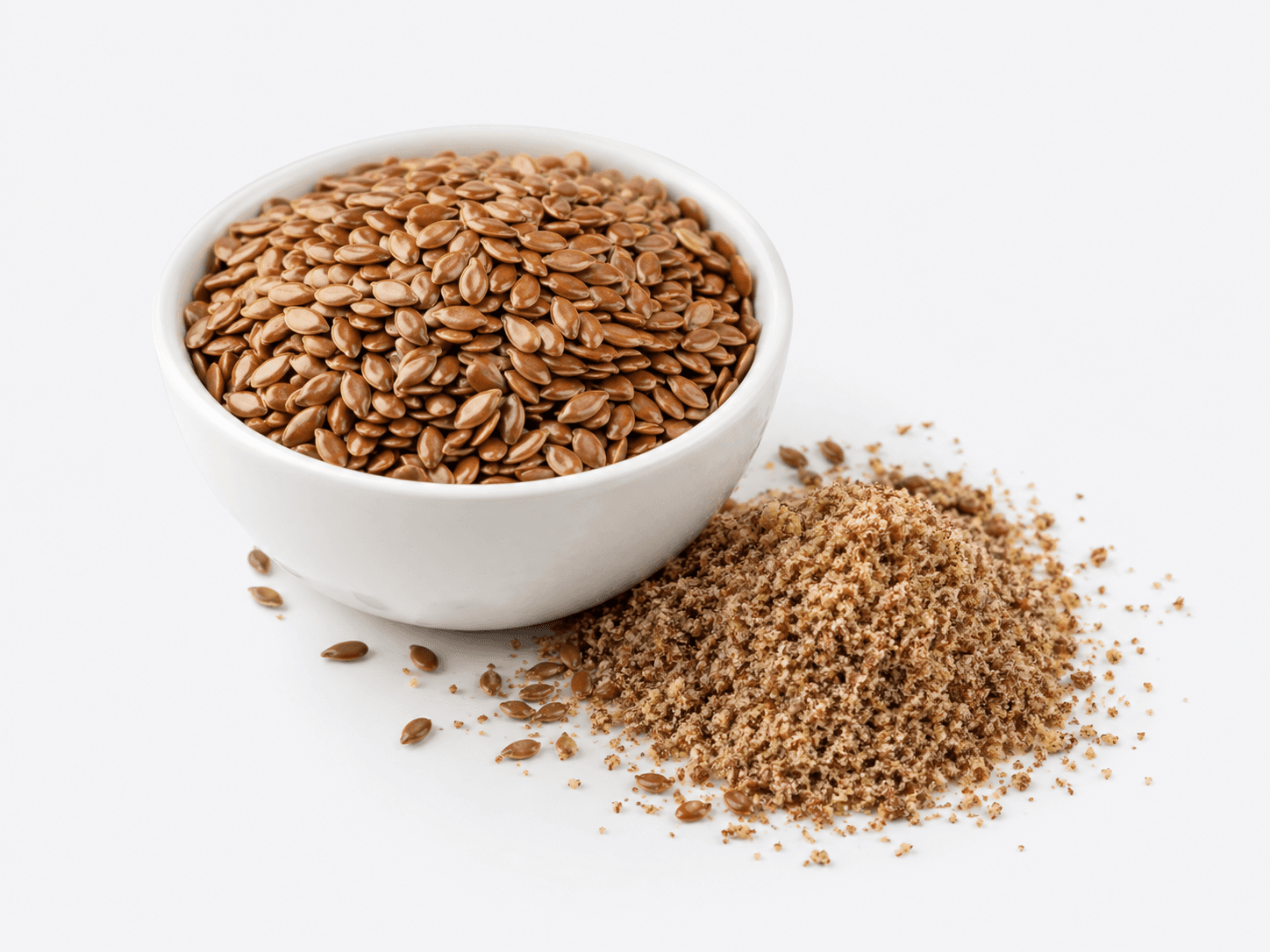
Against flaxseed: flax has to be ground — whole seeds pass straight through — while chia is digestible whole because the hull swells in water. In exchange, chia has less of flax's lignans.
- Not established
Weight loss and the "superfood" claims are not established
The claim attached most often to chia is weight loss — the logic being that it swells with water, so it fills you up.
The analysis above did look at obesity. "Obesity indicators" is in its title. But the outcomes reported as significant were three: triglycerides, LDL and systolic blood pressure. No significant reduction in body weight or waist circumference appears in that summary.
Fullness and weight loss are different things. Eating less at one meal does nothing to the scale if the day's total energy does not fall. And chia itself is 486 kcal per 100 g — two tablespoons are 97 kcal.
The other claims, sorted:
- "Food of Aztec warriors" — a history claim, not a nutritional one.
- "Antioxidant" — there are polyphenols, and no trials of disease outcomes in people.
- "Blood sugar control" — the analysis above examined diabetes measures; what it reported as significant were lipids and blood pressure.
Chia is a seed with a lot of fibre. That is what is established, and it is reason enough on its own.
How to eat it well
- Always take them with liquid. Swallowed dry they can swell in the oesophagus — obstruction has been reported. Soaking for ten minutes or more first is the safe way.
- Two tablespoons (20 g) is a realistic serving: 6.9 g of fibre, 97 kcal.
- Soak at one part seed to six to ten parts liquid. In milk or soy milk, two hours in the fridge gives you pudding.
- No grinding needed. Unlike flax, the hull swells and digests.
- Start with one tablespoon. A sudden jump in fibre brings gas and bloating. Build up over weeks.
- Yoghurt, oats and smoothies are the easiest routes. They have almost no flavour, so they go anywhere.
- The energy density is that of nuts. Do not scale up the portion because it is called a superfood.
How to read the grades
Each benefit carries a label showing how far research on people supports it. Grades differ between items even within the same ingredient.
- Nutrition data
- A fact verifiable from food composition databases or health authorities. This is a different kind of statement from a clinical effect.
- Strong evidence
- Consistently confirmed across randomised controlled trials or meta-analyses.
- Moderate evidence
- Human studies exist, but effect sizes are small or results are mixed.
- Early research
- Cell or animal work, or small preliminary studies.
- Not established
- Commonly claimed, but not confirmed in studies on people.
What to watch out for
- Do not swallow spoonfuls dry. Oesophageal obstruction from gelling has been reported. Take them with liquid, or soaked.
- With swallowing difficulty or a history of oesophageal narrowing, be particularly careful.
- With IBS, 34.4 g of fibre can provoke symptoms. Start small.
- On blood pressure medication or anticoagulants: blood pressure moved −2.78 mmHg in the analysis above, and ALA has been raised as possibly affecting clotting. Discuss high-dose supplementation with your clinician.
- 486 kcal per 100 g. Two tablespoons are 97 kcal — count them as a snack.
- They do not replace fish oil. ALA converts to EPA at 5–8% and to DHA at under 1%.
- The triglyceride result has an inverted dose-response and low confidence.
Nutrition
Per 100 g of dried chia seeds. A serving is one or two tablespoons (10–20 g), so what you eat is about a tenth of this table.
- Calories
- 486 kcal24%
- Fiber
- 34.4 g123%
- Fat
- 30.7 g39%
- Omega-3
- 17.8 g
- Protein
- 16.5 g33%
- Calcium
- 631 mg49%
- Phosphorus
- 860 mg69%
- Magnesium
- 335 mg80%
- Selenium
- 55.2 µg100%
- Iron
- 7.72 mg43%
- Zinc
- 4.58 mg42%
- Manganese
- 2.72 mg118%
Percentages are of the US FDA Daily Value for adults and children 4 and over. National reference intakes differ by sex and age.
Calculate this alongside other ingredients →
Key nutrients
Dishes with this ingredient
Compare with
Sources
The databases and health authorities this article's nutrition figures and health statements draw on.
- 1The impact of chia seeds on diabetes, blood pressure, lipid profile, and obesity indicators: Systematic review and meta-regression analysis of 14 randomized controlled trialsMeta-analysisFateh HL, et al. Prostaglandins Other Lipid Mediat 2024PMID 39299649
- 2USDA FoodData CentralFood composition database
- 3European Food Safety Authority (EFSA)Health authority
- 4NIH Office of Dietary SupplementsHealth authority
- 5PubMedResearch literature