Contents
What it is
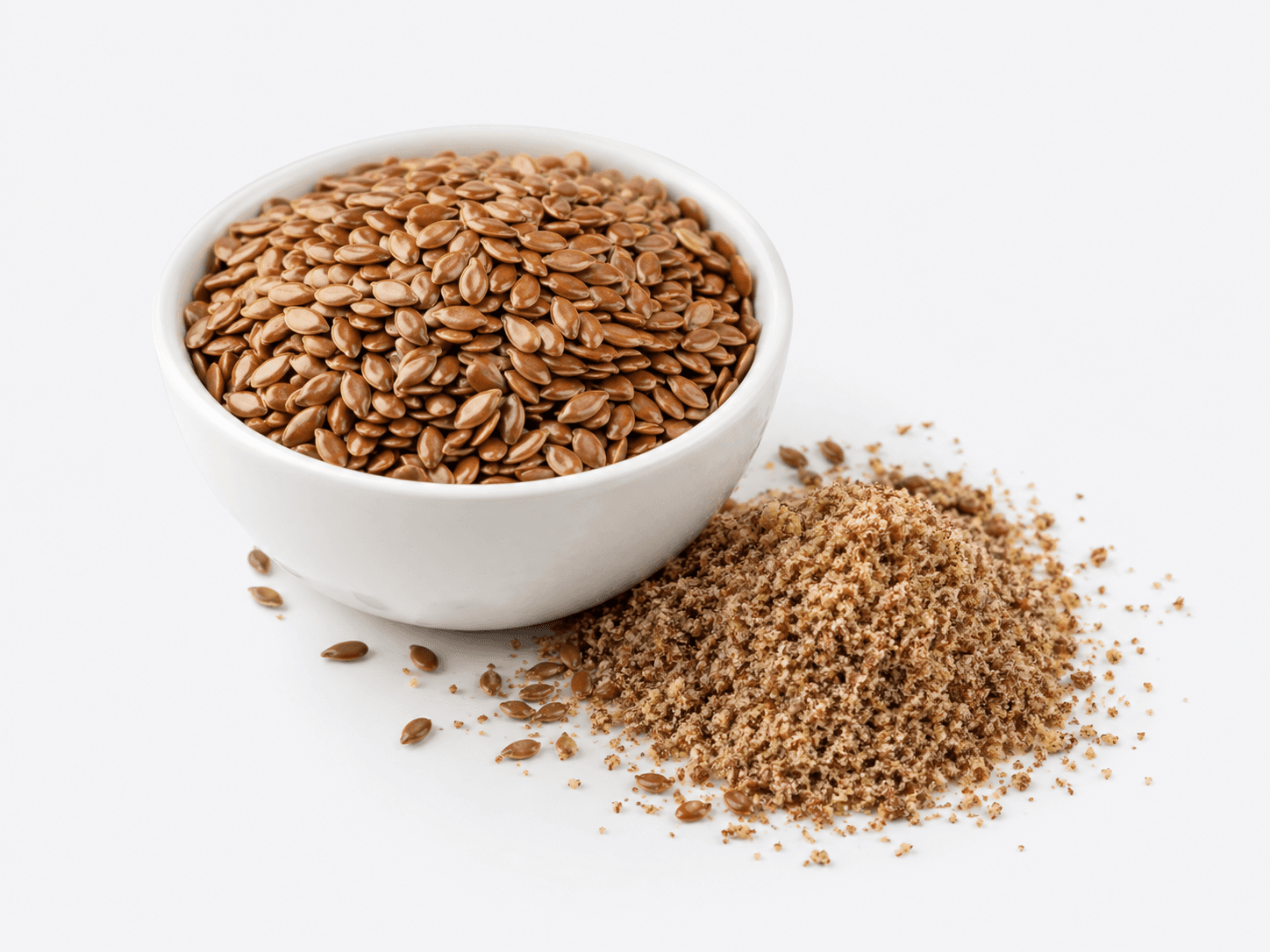
Flaxseed is the seed of the flax plant — the same plant whose stem fibres are woven into linen, and a crop used so long that the species name, usitatissimum, means most useful. It is native to western Asia. The seed coat is hard and slick, so swallowed whole the seeds pass through undigested; grinding them is the basic step. Grinding does expose the oil to air and it goes rancid quickly, so grind just before use or keep the meal sealed in the fridge.
Scientific name Linum usitatissimum
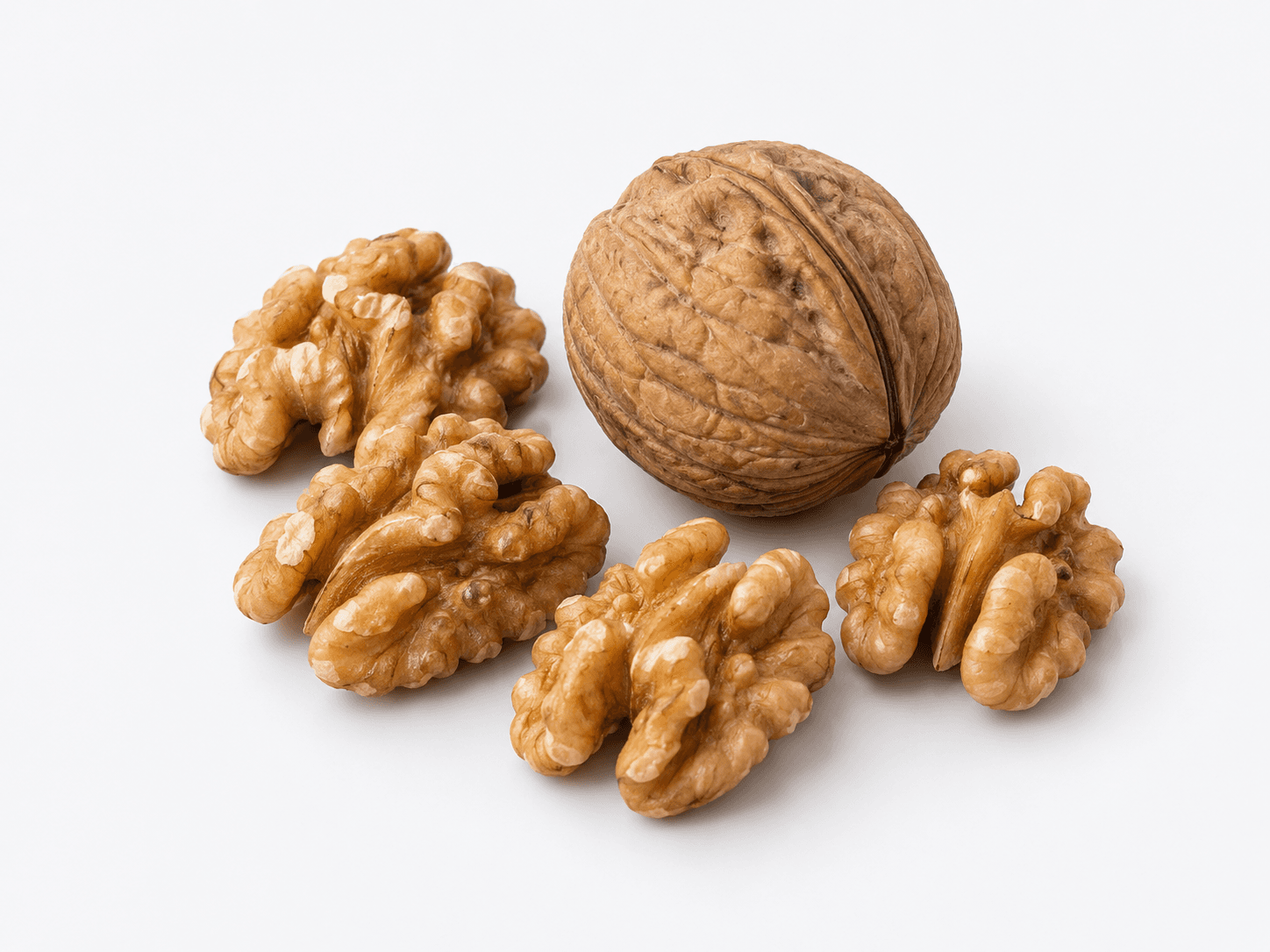
Flaxseed sits near the top of any food ranked by plant omega-3 density: 19.4 g of ALA per 100 g, more than double a walnut's 9.1 g.
But it carries a precondition more important than for almost any other food. You have to grind it. The hull is too tough for digestive enzymes, so a whole seed swallowed is a whole seed passed — the oil and lignans inside untouched.
Evidence on blood pressure and blood lipids has accumulated too. The spread between trials, though, is very wide.
Key benefits
- Moderate evidence
It lowers blood pressure — a large effect for a food
[1]A dose-response meta-analysis of 33 randomised trials (43 treatment arms, 2,427 participants). Flaxseed lowered systolic pressure by 3.19 mmHg (95 % CI −4.15 to −2.24) and diastolic by 2.61 mmHg (−3.27 to −1.94), both at P < 0.001.
That is not a small number for a food — grape polyphenols, elsewhere on this site, managed 1.48 mmHg systolic.
But the heterogeneity is extreme: I² of 92.5 % and 94.1 %. The trials disagreed sharply with each other, and a single pooled average is hard to lean on. The effect was clearest under specific conditions: over 20 weeks, at 30 g a day or more, and in people who already had hypertension.
- Moderate evidence
It lowers total cholesterol and triglycerides
[2][3]Pooling 62 randomised trials (3,772 participants), total cholesterol fell 5.39 mg/dL (95 % CI −9.48 to −1.30), triglycerides 9.42 mg/dL (−15.51 to −3.33), and LDL 4.21 mg/dL (−7.26 to −1.15).
HDL did not move (0.05, −0.78 to 0.87, P = 0.910).
A separate meta-analysis in people with type 2 diabetes also found lower HbA1c. The direction is consistent and every effect is small — comparable to soy protein's LDL reduction of 4.76 mg/dL. This is something you add to a diet, not something that replaces a medicine.
- Nutrition data
23.1 g of fibre and 136 µg of selenium
23.1 g of fibre per 100 g — three times cooked lentils. At 10 g to a tablespoon, that is 2.3 g, more than a bowl of brown rice.
Selenium runs 136 µg per 100 g against an adult requirement of 55 µg, so a tablespoon covers about a quarter.
But 100 g is 545 kcal, because 37.3 g of it is fat. Flaxseed is not something you eat by the bowl; it is something you scatter a spoonful of.
How to eat it well
- Grind it, always. Whole seeds do not digest — the hull sees to that. Buying whole and grinding just before use is best.
- Keep ground flaxseed cold. ALA degrades with heat and oxygen and goes rancid quickly at room temperature. A bitter taste or a paint-like smell means it already has.
- One or two tablespoons a day (10–20 g) is realistic. The 30 g that showed the clearest effect is 165 kcal, which is a lot to add daily.
- Scatter it over yoghurt, oats or salad, or fold it into batter. Avoid long cooking at high heat.
- Drink enough water. With 23 g of fibre, too little fluid leaves you bloated instead.
How to read the grades
Each benefit carries a label showing how far research on people supports it. Grades differ between items even within the same ingredient.
- Nutrition data
- A fact verifiable from food composition databases or health authorities. This is a different kind of statement from a clinical effect.
- Strong evidence
- Consistently confirmed across randomised controlled trials or meta-analyses.
- Moderate evidence
- Human studies exist, but effect sizes are small or results are mixed.
- Early research
- Cell or animal work, or small preliminary studies.
- Not established
- Commonly claimed, but not confirmed in studies on people.
What to watch out for
- Do not eat large amounts raw. Flaxseed contains cyanogenic glycosides, so large raw quantities are not advised. A tablespoon or two is not a concern, and heat reduces them.
- A sudden jump in fibre brings gas and bloating. Start small and build up.
- On anticoagulants, high-dose ALA may increase bleeding tendency — check with a clinician.
- Leave 30 minutes or more around medication. Large amounts of fibre can slow drug absorption.
- Lignans act as weak phytoestrogens. If you are being treated for a hormone-related condition, discuss it with your doctor.
- With a history of bowel narrowing (stricture or adhesions), swelling fibre can be hazardous.
Nutrition
Per 100 g of ground flaxseed. Whole seeds pass through largely undigested.
- Calories
- 545 kcal27%
- Fat
- 37.3 g48%
- Omega-3
- 19.4 g
- Fiber
- 23.1 g83%
- Protein
- 18.0 g36%
- Magnesium
- 372 mg89%
- Selenium
- 136 µg247%
- Phosphorus
- 556 mg44%
- Manganese
- 2.4 mg104%
Percentages are of the US FDA Daily Value for adults and children 4 and over. National reference intakes differ by sex and age.
Calculate this alongside other ingredients →
Key nutrients
By health concern
Dishes with this ingredient
Compare with
Sources
The databases and health authorities this article's nutrition figures and health statements draw on.
- 1Effect of flaxseed supplementation on blood pressure: a systematic review, and dose-response meta-analysis of randomized clinical trialsMeta-analysisLi L, et al. Food Funct 2023PMID 36622248
- 2Effect of flaxseed supplementation on lipid profile: An updated systematic review and dose-response meta-analysis of sixty-two randomized controlled trialsMeta-analysisHadi A, et al. Pharmacol Res 2020PMID 31899314
- 3Flaxseed supplementation significantly reduces hemoglobin A1c in patients with type 2 diabetes mellitus: A systematic review and meta-analysisMeta-analysisXi H, et al. Nutr Res 2023PMID 36640581
- 4USDA FoodData CentralFood composition database
- 5NIH Office of Dietary SupplementsHealth authority
- 6Dietary intake and biomarkers of alpha linolenic acid and risk of all cause, cardiovascular, and cancer mortality: systematic review and dose-response meta-analysis of cohort studiesMeta-analysisNaghshi S, et al. BMJ 2021PMID 34645650
- 7PubMedResearch literature