Contents
What it is
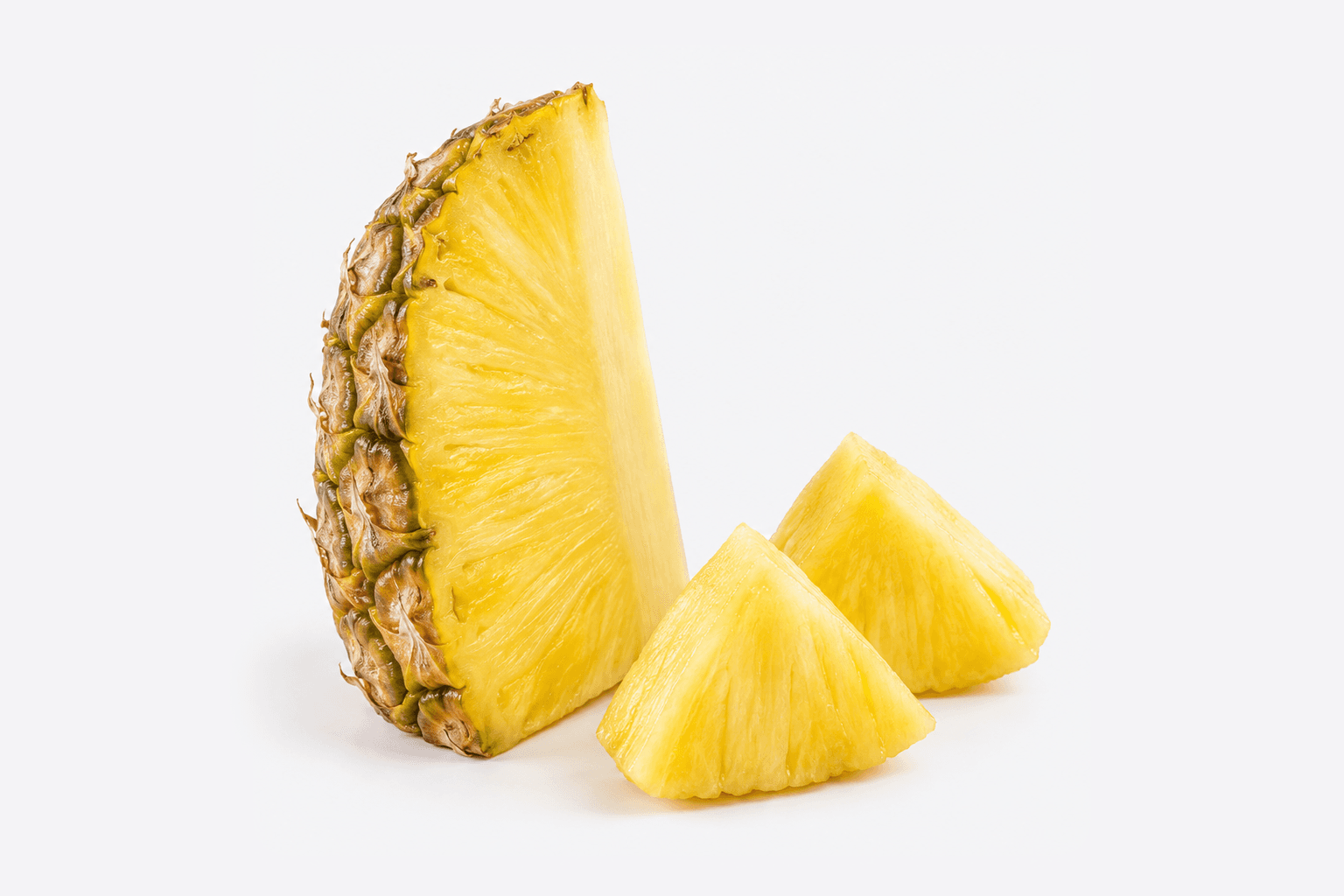
The pineapple is the fruit of a perennial in the bromeliad family — not a tree but a low plant growing from the ground. What looks like one fruit is in fact dozens of separate flowers, each setting its own small fruit, fused around a central core; every hexagon on the skin marks one flower. It is native to South America. It contains bromelain, a protein-digesting enzyme, which is why eating a lot of it stings the tongue and why it stops gelatine from setting. Once picked it does not ripen further.
Scientific name Ananas comosus
Almost every claim about pineapple leads to bromelain. This page separates one thing first: the bromelain trials are not trials of eating pineapple.
The 2019 meta-analysis covered a proteolytic enzyme preparation given after third-molar surgery. A tablet at a set dose, not pineapple flesh. And within it the results split — pain and quality-of-life scores improved, but there was no evidence for swelling or trismus (difficulty opening the mouth).
There is also a reason not to assume bromelain works the same way when eaten. Bromelain is a protein — an enzyme — and stomach acid and pepsin break it down like any other protein. Supplements route around that with enteric coating. And canned pineapple retains no bromelain activity at all, because heat inactivates it.
What is solid about pineapple itself is the composition. Per 100 g it holds 47.8 mg of vitamin C (53% of the requirement) and 0.927 mg of manganese (40% of the adequate intake) — among the highest manganese of any common fruit.
Key benefits
- Early research
Bromelain after third-molar surgery: pain and quality of life improved, swelling and trismus did not
[1]2019, Medicina Oral Patología Oral y Cirugía Bucal: a systematic review and meta-analysis of six randomised clinical trials of bromelain after third-molar (wisdom tooth) surgery.
What improved:
- Sleep quality — standardised mean difference −1.19
- Social isolation — −0.97
- Physical appearance — −0.77
- Pain at 24 hours — −0.49; at 7 days — −0.52
What had no evidence:
- Trismus (difficulty opening the mouth) — no evidence
- Facial swelling — no evidence
That contrast is the core of this meta-analysis. Bromelain is usually sold for reducing inflammation and swelling. Yet swelling and trismus — the two outcomes most directly tied to inflammation — are exactly where the evidence failed to appear. What improved was pain and the patient-reported quality-of-life items.
Three things to read alongside it.
First, six trials. Six randomised trials entered the meta-analysis, and post-dental-surgery trials are typically small.
Second, what was given was not pineapple. It was an isolated, purified proteolytic enzyme preparation. Nothing in this study shows that eating pineapple delivers a comparable amount of active bromelain.
Third, the setting is very specific: wisdom tooth surgery. It does not extend to digestion, weight, inflammatory disease or muscle soreness.
The honest summary: there is preliminary evidence for bromelain preparations after dental surgery. It is not evidence for eating pineapple.
- Nutrition data
47.8 mg of vitamin C and 0.927 mg of manganese — among the highest manganese of any common fruit
Per 100 g of raw pineapple:
- 50 kcal, carbohydrate 13.1 g, sugar 9.85 g, fibre 1.4 g
- Vitamin C 47.8 mg — 53% of the 90 mg requirement
- Manganese 0.927 mg — 40% of the 2.3 mg adequate intake
- Potassium 109 mg, magnesium 12 mg, copper 0.11 mg, folate 18 µg
Manganese is this fruit's real distinguishing feature. Manganese at this level per 100 g is rare among commonly eaten fruit. Apple holds 0.035 mg, banana 0.27 mg, orange 0.025 mg. Pineapple holds 0.927 mg — twenty-six times an apple.
Manganese serves in bone formation and as a cofactor for several enzymes. But deficiency is rare, so there is no evidence that this figure changes anything clinically. It is a feature of the composition table, and this site claims nothing beyond that.
At 47.8 mg, one cup (165 g) gives 79 mg of vitamin C, close to a day's requirement. Vitamin C is heat-labile, though, so grilling or cooking reduces it.
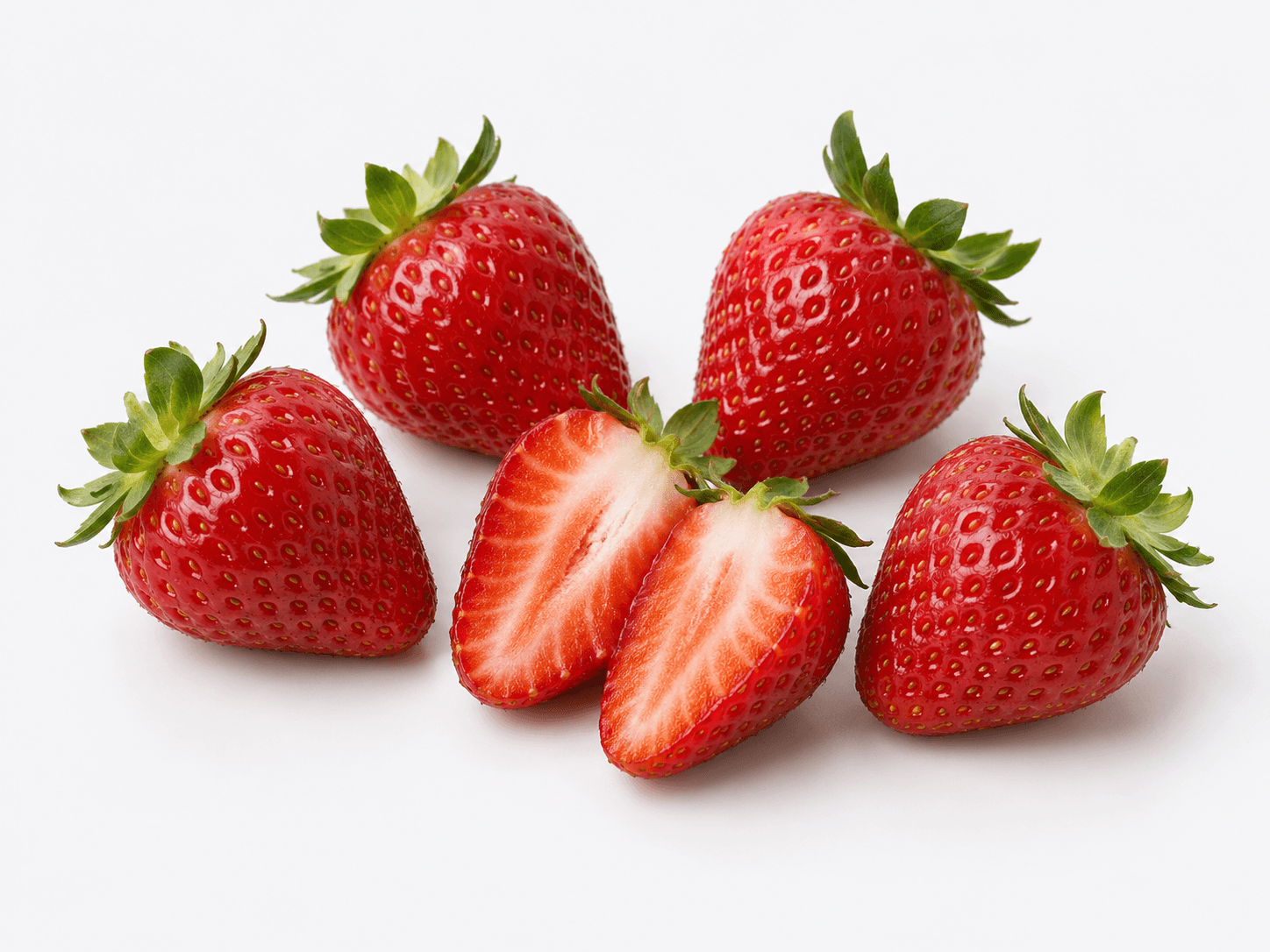
Sugar at 9.85 g is mid-range for fruit — below banana (12.2 g), above strawberry (4.89 g). Juice is a different matter: a cup (240 ml) of pineapple juice carries over 25 g of sugar and almost none of the fibre.
The core holds the most bromelain. It is usually discarded for toughness, but it blends.
- Not established
The digestion claim, and why your tongue stings
This entry sorts through claims that are not established.
"Pineapple aids digestion" comes from the fact that bromelain is a protein-cutting enzyme. In a test tube it does cut protein. But there is no randomised evidence that eating pineapple improves digestion in people.
The reasons follow naturally.
- Bromelain is itself a protein. In the stomach, acid (pH 1.5–3.5) and pepsin break it down like any other protein.
- The human gut already secretes plenty of its own proteases — pepsin in the stomach, trypsin and chymotrypsin from the pancreas. There is no evidence a healthy person needs supplementing.
- Supplements route around this with enteric coating and a measured dose. Eating the fruit does not.
The stinging tongue is, ironically, evidence that bromelain really does work — just on the wrong target. It is acting on the proteins of your oral mucosa, not on your food. That is why a lot of pineapple leaves your tongue feeling faintly stripped. Canned pineapple does not do this, because heat has inactivated the enzyme.
Gelatine failing to set is the same mechanism. Fresh pineapple in a gelatine dessert keeps it liquid, because bromelain cuts gelatine — which is collagen protein. Use canned, or blanch the fresh fruit first.
Using it to tenderise meat is a well-founded use. That happens on the counter, not inside you, so the stomach-acid problem does not apply. But marinate too long and the meat surface turns mushy — keep it under 30 minutes.
How to eat it well
- Distinguish fresh from canned. Bromelain activity survives only in fresh, and canning also cuts the vitamin C.
- Do not throw away the core. It holds the most bromelain and blends into smoothies.
- The bottom is sweeter. After cutting, mix top and bottom so the sweetness is even.
- Choose by smell, not colour. The base should smell sweet; skin colour varies by cultivar.
- Marinate meat for under 30 minutes. Longer and the surface goes mushy.
- For gelatine desserts, use canned or blanch the fresh fruit first.
- If your tongue stings, rinse with a little salt water. It reduces the enzyme activity.
- Eating it for digestion is not worth doing — there is no evidence.
How to read the grades
Each benefit carries a label showing how far research on people supports it. Grades differ between items even within the same ingredient.
- Nutrition data
- A fact verifiable from food composition databases or health authorities. This is a different kind of statement from a clinical effect.
- Strong evidence
- Consistently confirmed across randomised controlled trials or meta-analyses.
- Moderate evidence
- Human studies exist, but effect sizes are small or results are mixed.
- Early research
- Cell or animal work, or small preliminary studies.
- Not established
- Commonly claimed, but not confirmed in studies on people.
What to watch out for
- The meta-analysis above studied a bromelain preparation. Its results do not transfer to eating pineapple.
- There was no evidence for swelling or trismus. Expectations of an anti-inflammatory effect are not supported by that study.
- Bromelain has reported antiplatelet activity. On warfarin or antiplatelet drugs, or before surgery, avoid supplement forms and speak with your clinician.
- Oral stinging and lip swelling are common reactions. Stop if they are marked.
- Take care with latex allergy. Pineapple is among the cross-reacting foods in latex-fruit syndrome.
- Sugar is 9.85 g per 100 g, and juice over 25 g a cup. With diabetes, count portions of the fresh fruit.
- With reflux oesophagitis, the acidity (around pH 3.3) may provoke symptoms.
- Claims about digestion, weight loss and reducing inflammation are not established.
Nutrition
Per 100 g of raw pineapple. A slice is about 40 g and a cup of chunks about 165 g. Canned differs from fresh in bromelain activity.
- Calories
- 50 kcal3%
- Carbohydrates
- 13.1 g5%
- Sugars
- 9.85 g
- Fiber
- 1.4 g5%
- Vitamin C
- 47.8 mg53%
- Manganese
- 0.927 mg40%
- Potassium
- 109 mg2%
- Magnesium
- 12 mg3%
- Copper
- 0.11 mg12%
- Folate
- 18 µg5%
Percentages are of the US FDA Daily Value for adults and children 4 and over. National reference intakes differ by sex and age.
Calculate this alongside other ingredients →
Key nutrients
Dishes with this ingredient
Sources
The databases and health authorities this article's nutrition figures and health statements draw on.
- 1Efficacy of proteolytic enzyme bromelain on health outcomes after third molar surgery. Systematic review and meta-analysis of randomized clinical trialsMeta-analysisMendes ML, et al. Med Oral Patol Oral Cir Bucal 2019PMID 30573710
- 2USDA FoodData CentralFood composition database
- 3NIH Office of Dietary SupplementsHealth authority
- 4European Food Safety Authority (EFSA)Health authority
- 5PubMedResearch literature