Contents
What it is
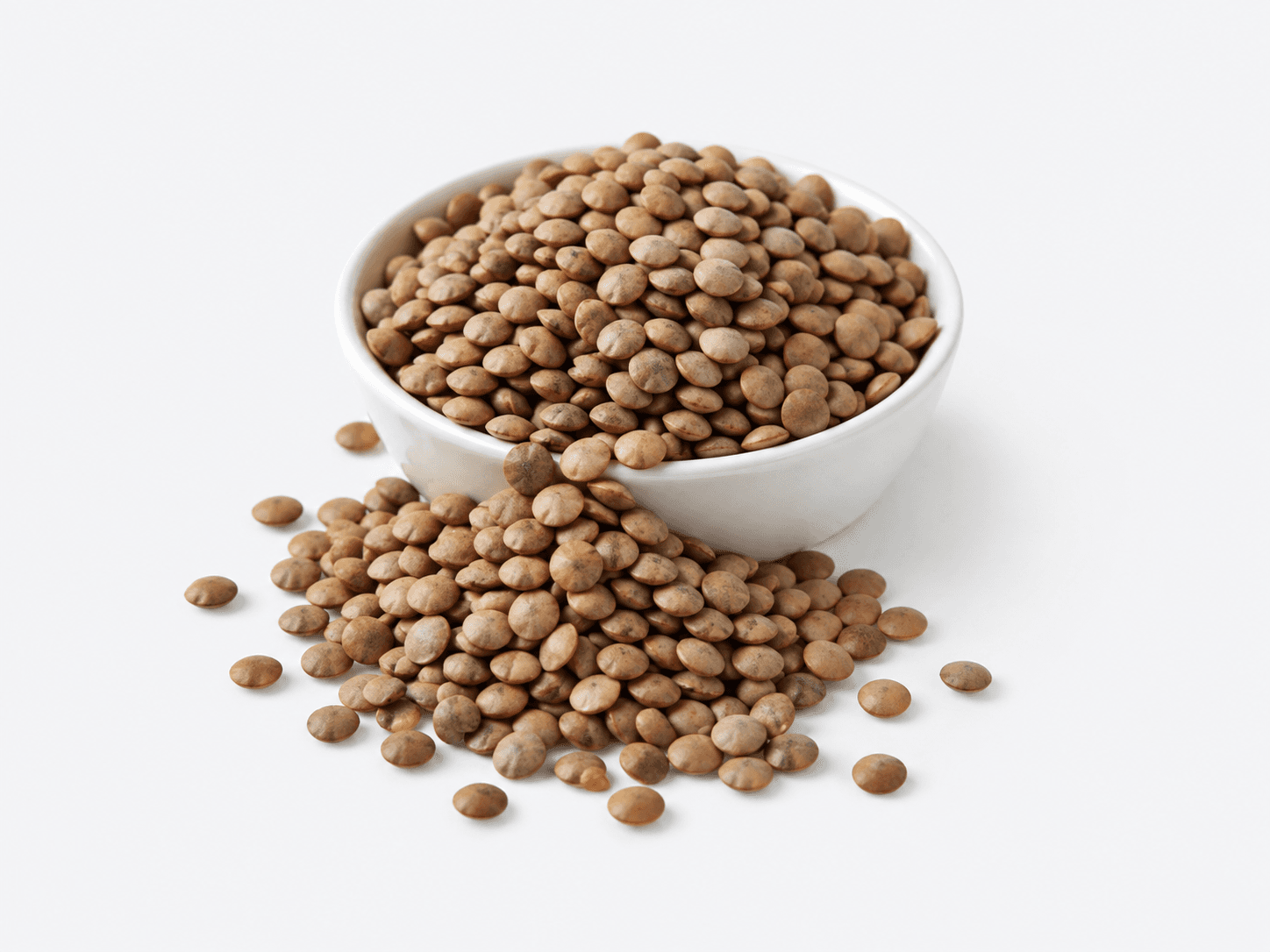
The lentil is the flat seed of an annual legume. It is shaped like a biconvex lens, and in fact the optical word lens comes from the Latin name of this very plant. It is native to western Asia and is among the oldest crops ever cultivated. Brown, green and red are all common: split red lentils have the skin removed and collapse quickly into soups, while skin-on varieties hold their shape and suit salads. Unlike most pulses, lentils need no soaking and can go straight into the pot.
Scientific name Lens culinaris
Lentils get introduced as a superfood, but what actually stands out is not an exotic compound — it is the density of ordinary things.
7.9 g of fibre per 100 g cooked: five times brown rice. 181 µg of folate is 45 % of an adult's daily requirement. And 9 g of protein sits inside 116 kcal.
The cholesterol effect of pulses is also among the better-organised bodies of evidence in food research. Most of those studies, though, looked at pulses as a group; relatively few isolated lentils.
Key benefits
- Strong evidence
It lowers LDL cholesterol
[1][2]A recent meta-analysis pooled 38 randomised trials (2,095 people). At a median of 130 g of pulses a day for about 6 weeks, LDL fell by 0.14 mmol/L — about 5.4 mg/dL (95 % CI −0.19 to −0.08). Non-HDL cholesterol fell 0.22 mmol/L, and the evidence was graded moderate-to-high for most outcomes.
An earlier 2014 meta-analysis (26 trials, 1,037 people) put the LDL reduction at 0.17 mmol/L. The estimate shrinking slightly as more trials accumulate is a familiar pattern.
Results were similar across pulse types. But the authors explicitly noted that chickpeas, dried peas and lentils need more study. 'Pulses do this' is accurate today; 'lentils specifically do this' is not yet.
- Nutrition data
7.9 g of fibre — one bowl is a third of the daily target
Cooked lentils carry 7.9 g of fibre per 100 g. A cup, around 200 g, is 15.8 g — more than half an adult's 25–30 g target.
For comparison, cooked brown rice has 1.6 g per 100 g and sweet potato about 3 g. Pulses sit in a different class of fibre density from grains and vegetables.
Folate runs 181 µg per 100 g too, 45 % of the 400 µg adult requirement — a meaningful figure for anyone who might become pregnant.
- Nutrition data
The one pulse you do not have to soak
This is practical rather than nutritional, but it is what decides whether you actually eat them.
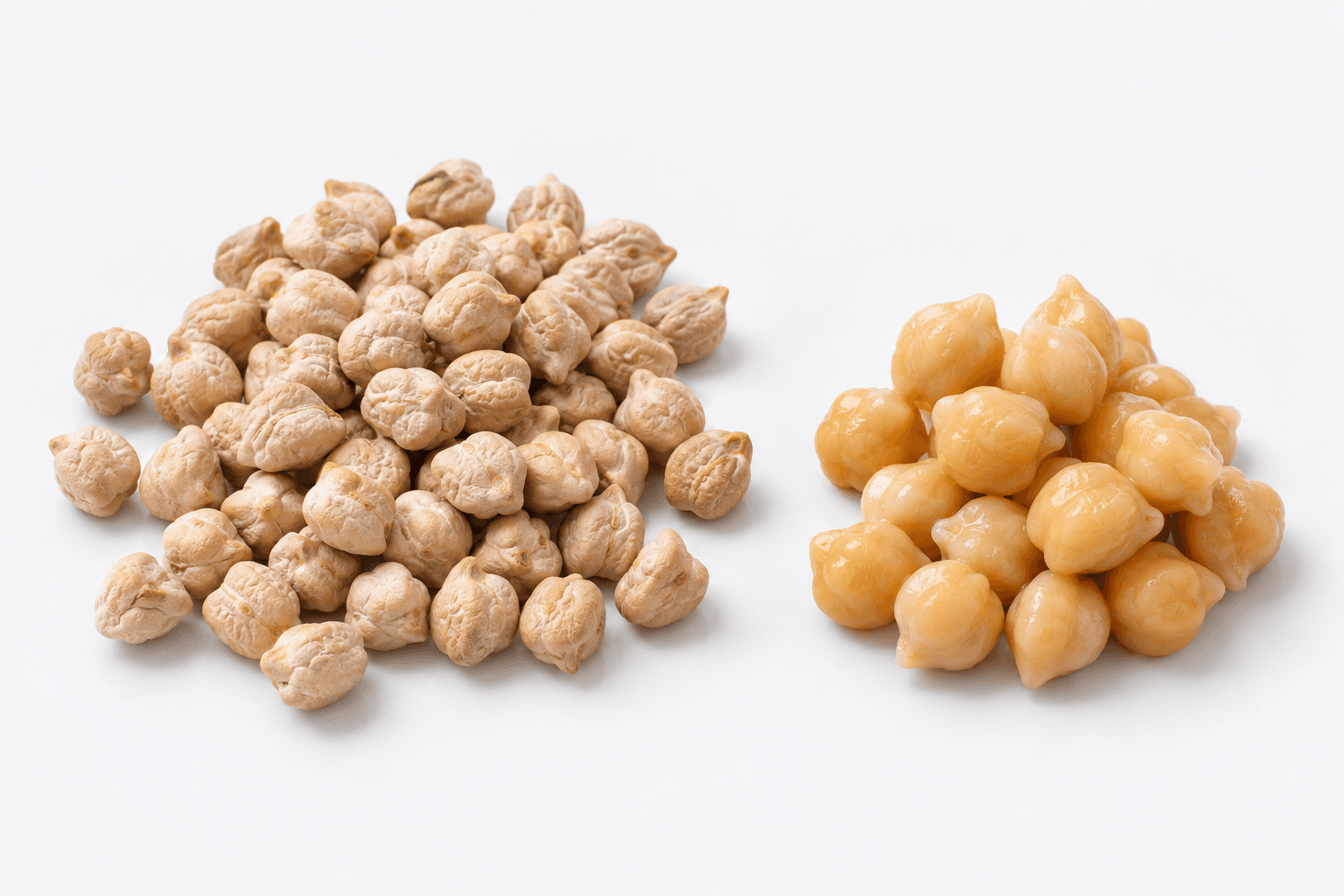
Black beans and chickpeas need an overnight soak. Lentils go from rinse to pot in 15–20 minutes of simmering — the skin is thin and the seed is small. Red lentils collapse into soup in about ten.
Iron is 3.3 mg per 100 g, but it is non-haem and absorbs poorly. That is handled below.
How to eat it well
- Pair the iron with vitamin C. Non-haem iron absorbs badly on its own, but vitamin C multiplies it. Add tomato, lemon juice or peppers.
- Leave coffee and tea for an hour after the meal. Tannins block non-haem iron.
- Brown and green lentils hold their shape; red ones fall apart. The former for salads, the latter for soups and curries.
- Salt at the end. Added early, it toughens the skins and slows cooking.
- If cholesterol is the goal, the studied dose is 130 g cooked a day — about half a rice bowl.
How to read the grades
Each benefit carries a label showing how far research on people supports it. Grades differ between items even within the same ingredient.
- Nutrition data
- A fact verifiable from food composition databases or health authorities. This is a different kind of statement from a clinical effect.
- Strong evidence
- Consistently confirmed across randomised controlled trials or meta-analyses.
- Moderate evidence
- Human studies exist, but effect sizes are small or results are mixed.
- Early research
- Cell or animal work, or small preliminary studies.
- Not established
- Commonly claimed, but not confirmed in studies on people.
What to watch out for
- They cause gas at first. Gut bacteria ferment their oligosaccharides (the raffinose family). Increasing the amount slowly usually settles it, and discarding the first boiling water helps.
- On a potassium- or phosphorus-restricted renal diet, count them: 369 mg potassium and 180 mg phosphorus per 100 g.
- Gout is not a strong reason to avoid them. Plant purines do not raise urate the way meat and seafood purines do.
- Phytate interferes somewhat with iron and zinc absorption. Soaking or sprouting reduces it.
- Undercooked pulses are hard to digest. Cook until a seed crushes between your fingers.
Nutrition
Per 100 g of cooked lentils. A cup is about 200 g, twice this table. Dried lentils gain roughly two and a half times their weight when boiled, and run around 350 kcal per 100 g dry.
- Calories
- 116 kcal6%
- Protein
- 9.0 g18%
- Carbohydrates
- 20.1 g7%
- Fiber
- 7.9 g28%
- Folate
- 181 µg45%
- Iron
- 3.3 mg18%
- Potassium
- 369 mg8%
- Phosphorus
- 180 mg14%
- Zinc
- 1.3 mg12%
Percentages are of the US FDA Daily Value for adults and children 4 and over. National reference intakes differ by sex and age.
Calculate this alongside other ingredients →
Key nutrients
By health concern
Dishes with this ingredient
Compare with
Sources
The databases and health authorities this article's nutrition figures and health statements draw on.
- 1Effect of Different Types of Whole Dietary Pulses on Established Therapeutic Lipid Targets for Cardiovascular Risk Reduction: An Updated Systematic Review and Dose-Response Meta-Analysis of Randomized Controlled TrialsMeta-analysisBack S, et al. J Am Heart Assoc 2026PMID 42132198
- 2Effect of dietary pulse intake on established therapeutic lipid targets for cardiovascular risk reduction: a systematic review and meta-analysis of randomized controlled trialsMeta-analysisHa V, et al. CMAJ 2014PMID 24710915
- 3USDA FoodData CentralFood composition database
- 4NIH Office of Dietary SupplementsHealth authority
- 5World Health Organization · Healthy dietHealth authority
- 6PubMedResearch literature