Grains & legumes
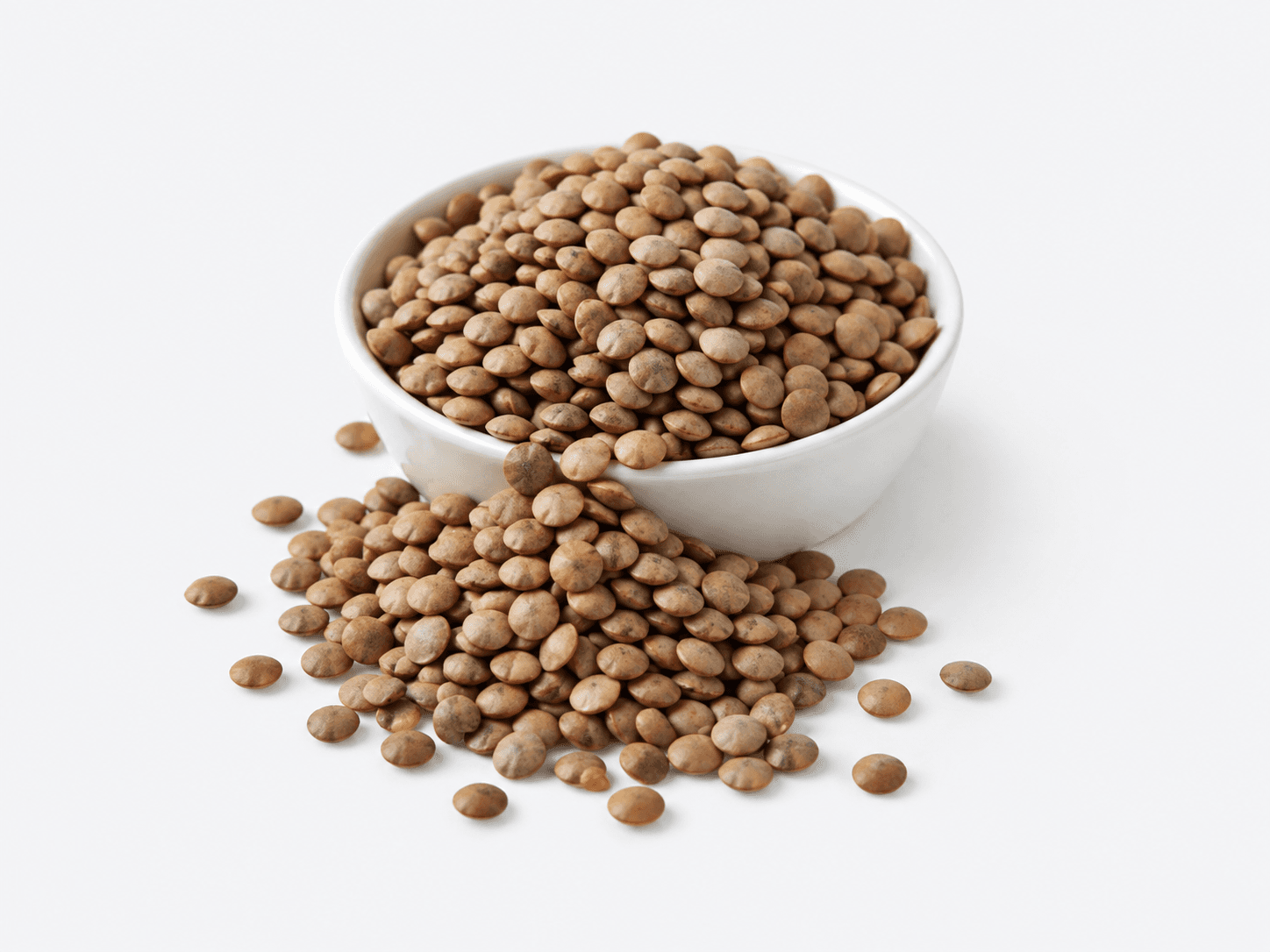
Lentils
7.9 g of fibre and 181 µg of folate per 100 g cooked. The LDL effect is settled across 38 randomised trials.
Cooked, per 100 g, protein runs 9.0 g against 8.9 g — effectively identical — while energy runs 116 kcal against 164. And lentils need no soaking.
Grains & legumes
7.9 g of fibre and 181 µg of folate per 100 g cooked. The LDL effect is settled across 38 randomised trials.
Grains & legumes
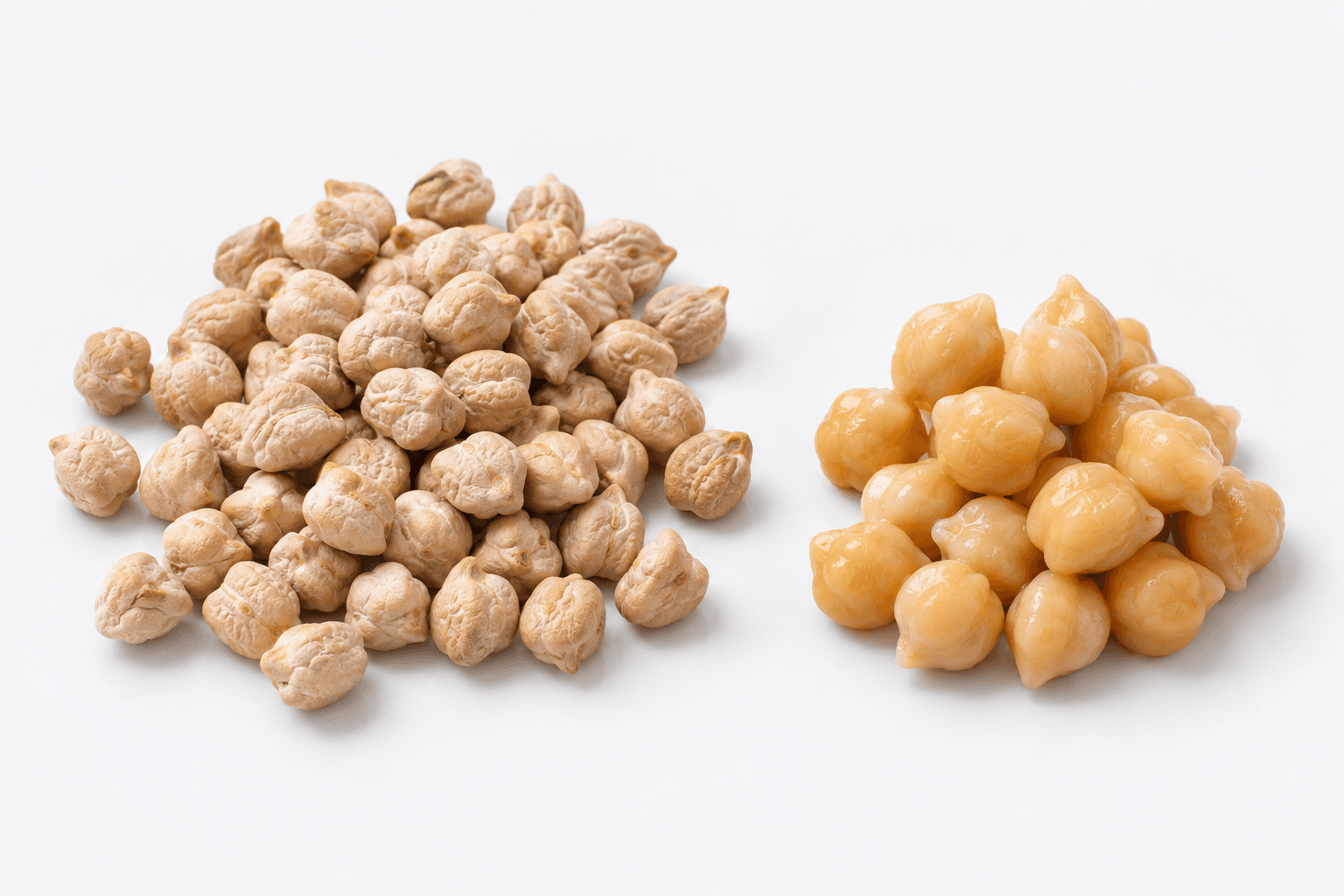
7.6 g of fibre and 172 µg of folate per 100 g cooked. Twenty-eight trials found a glucose effect — graded very low certainty.
Lentils — Leads on
Chickpeas — Leads on
Per 100 g edible portion. Only rows where both have a figure are shown, and no winner is marked for items like calories or sugars where more is not better.
Basis for these figures
| Nutrition | Lentils | Chickpeas |
|---|---|---|
| Calories | 116 kcal | 164 kcal |
| Protein | 9.0 g | 8.9 g |
| Carbohydrates | 20.1 g | 27.4 g |
| Fiber | 7.9 g | 7.6 g |
| Folate | 181 µg | 172 µg |
| Iron | 3.3 mg | 2.9 mg |
| Potassium | 369 mg | 291 mg |
| Zinc | 1.3 mg | 1.5 mg |
Nutritionally these two are remarkably alike. Protein 9.0 g against 8.9 g, fibre 7.9 g against 7.6 g, folate 181 µg against 172 µg, iron 3.3 mg against 2.9 mg — no row opens up decisively.
What separates them is energy: 116 kcal against 164, a factor of 1.4. Lentils deliver the same protein and fibre for fewer calories. If you are watching weight, that single row is the practical difference.
Cooking time separates them further. Lentils cook in 20 to 25 minutes with no soaking. Dried chickpeas want an overnight soak and one to two hours of simmering. Canned chickpeas erase that gap, but then watch the sodium — tipping them into a sieve and rinsing washes a good share away.
Chickpeas win rows of their own. Manganese at 1.03 mg and magnesium at 48 mg are rows the lentil table does not have. And their firmer texture holds its shape in salads and when roasted, where lentils collapse — which is why lentils belong in soups and curries.
On evidence the two sit in the same place. The 2026 Journal of the American Heart Association meta-analysis cited on this site pooled 38 randomised trials and 2,095 people and found pulses lowered LDL by 0.14 mmol/L — but its authors wrote into the text that more research is needed on chickpeas, peas and lentils. A 2024 Journal of Nutrition trial then looked at peas on their own and LDL did not fall significantly. "Pulses do this" is accurate; that these two in particular do it is still thin.
Both contain oligosaccharides. Gas and bloating are possible, and low-FODMAP diets limit the portion. Rinsing removes some.