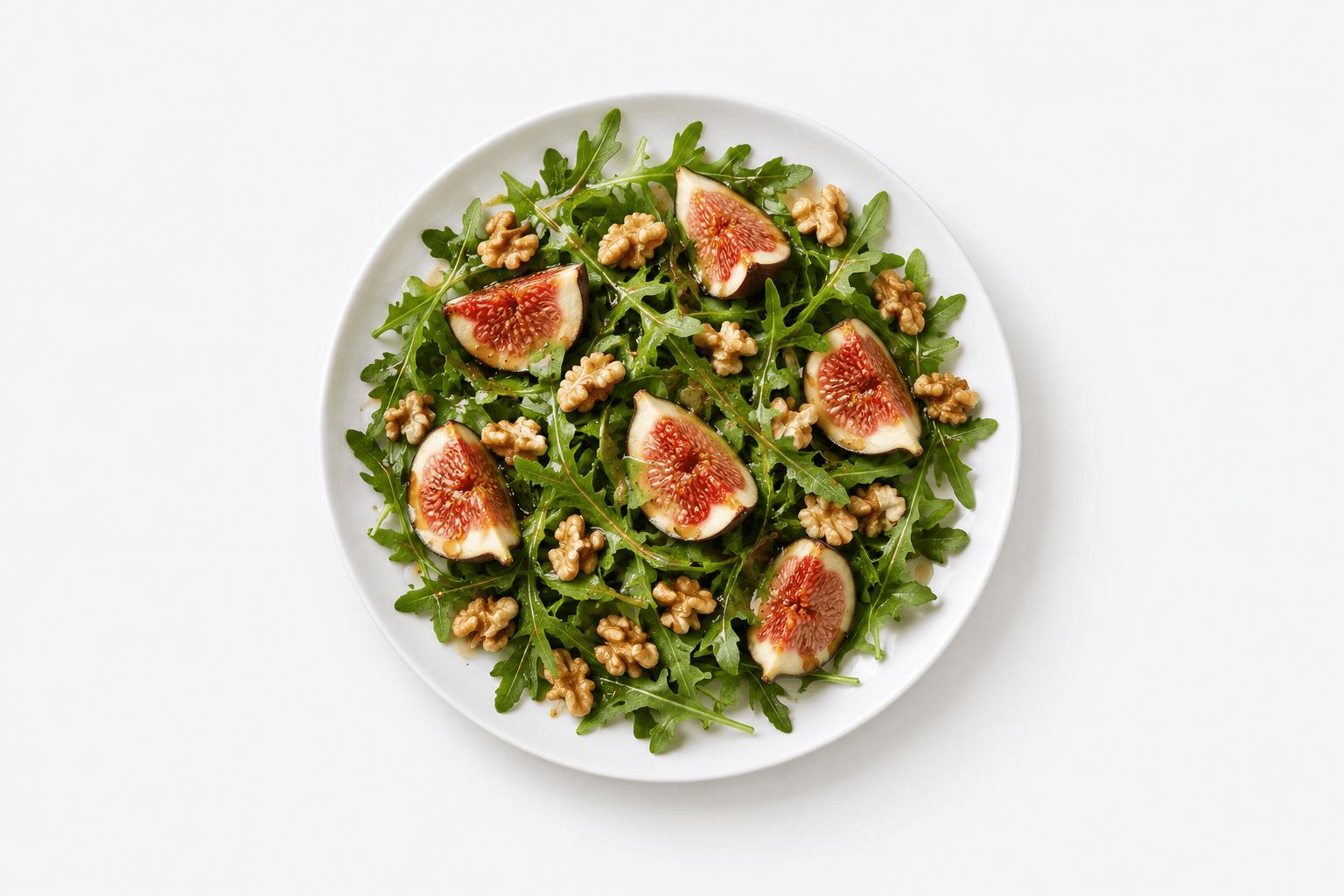
The rule of this salad is no added sugar.
Four figs (200 g) already carry 32.6 g of sugar. Split two ways, that is 16.3 g each. Add honey or syrup and it becomes a dessert.
| Per serving (2 figs, 100 g) |
|---|
| Figs | 74 kcal, sugar 16.3 g, fibre 2.9 g |
| Rocket 30 g | leaves, almost no energy |
| Walnuts 8 g | mostly unsaturated fat |
| Olive oil ½ tbsp | about 60 kcal |
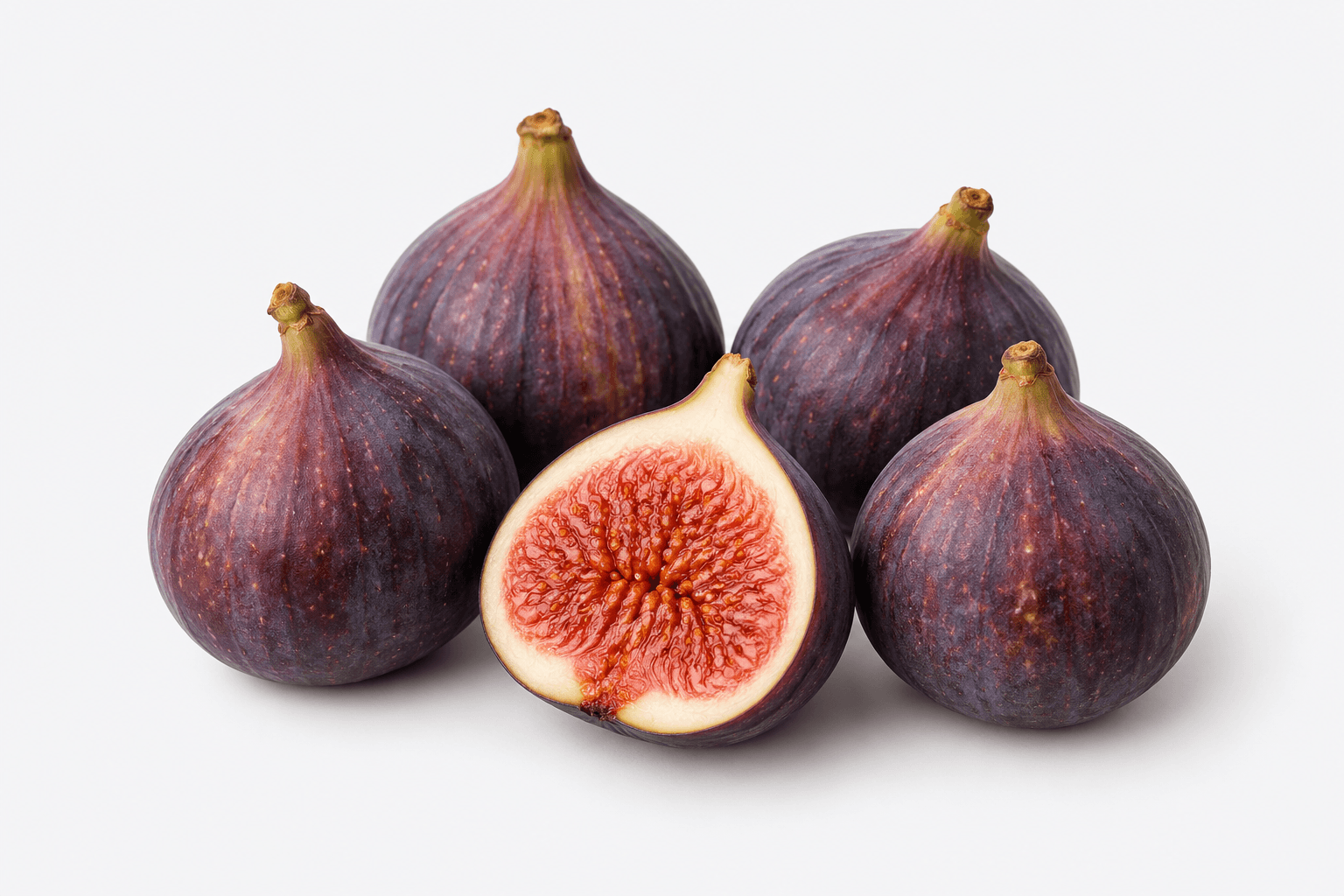
Not peeling them is the single most important line. Much of the fig's 2.9 g of fibre sits in the skin. Fibre is the first thing to reach for when explaining the fig constipation evidence, and peeling throws it away.
But keep expectations accurate. The two fig trials used syrup or a processed form, and in the four-month trial the severity of abdominal pain and CRP did not move. This salad is a way to bring fibre and water together, not a medicine.
Why balsamic. Figs are sweet, so acidity has to do the balancing. Balsamic suits them better than lemon because its own sweetness sits in the same family. But balsamic glaze — the thick kind — is often a sugar-added product. Use plain balsamic vinegar.
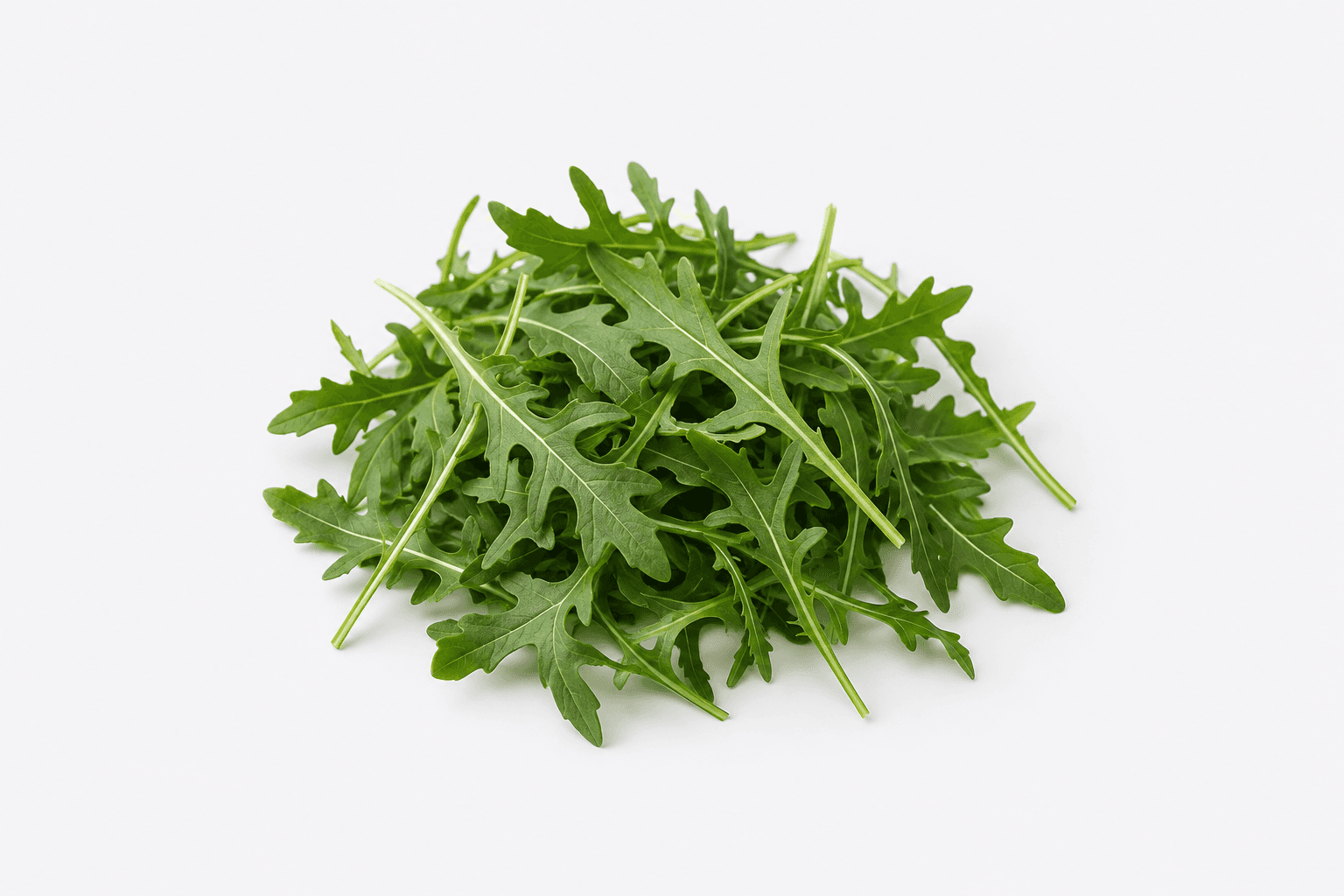
Rocket is there for the same reason. Its bitterness carries the sweetness. Sweetness alone gets tiring by the second mouthful.
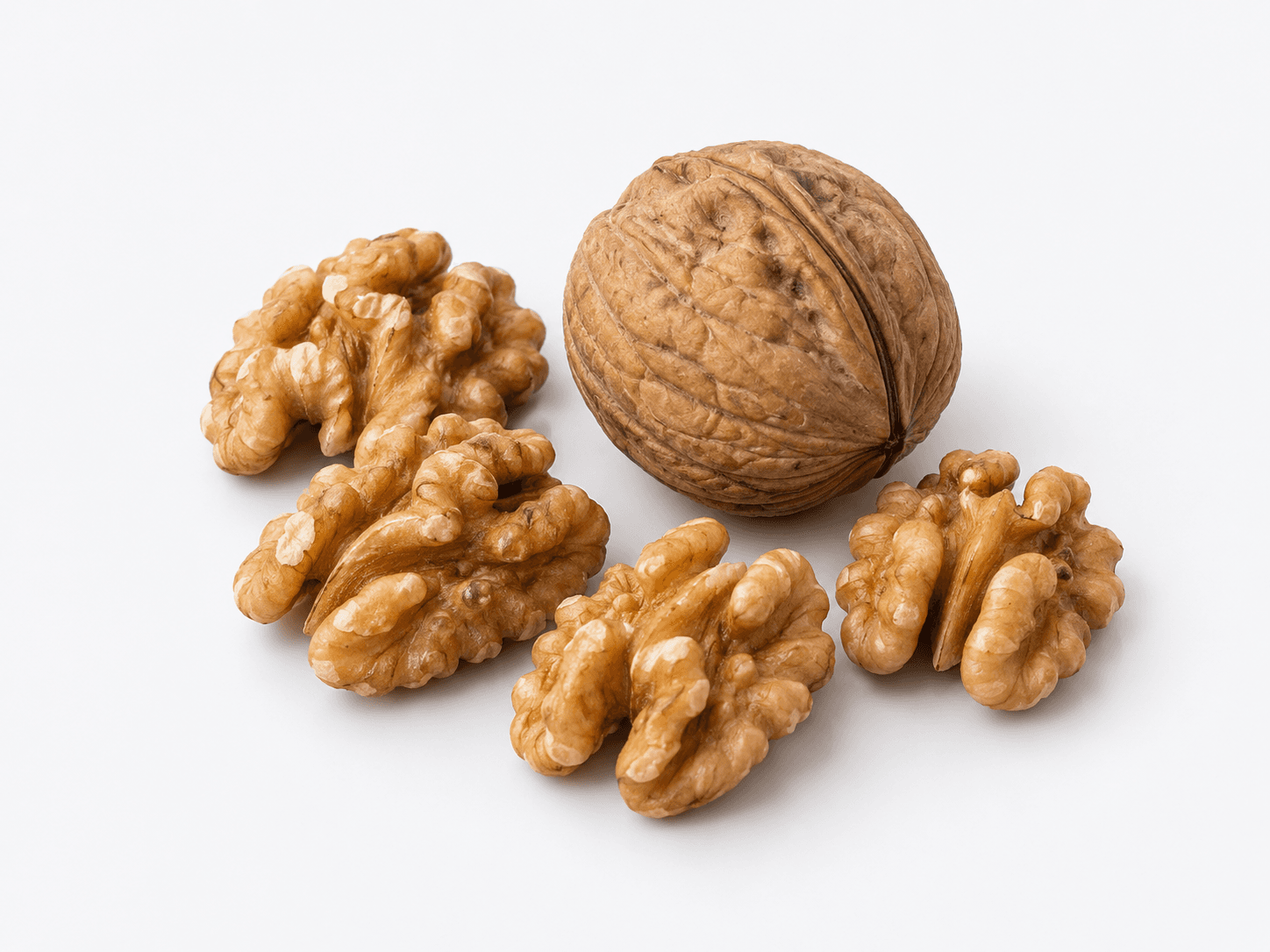
Why toast the walnuts. Raw works, but two minutes in a dry pan changes the aroma considerably. Walnut skins are astringent and a little heat helps. They are fatty and burn fast, so keep it low and short.
Why the figs go on last. They are soft and juicy, and tossing breaks them up and turns the whole salad sloppy. Laid on top they hold their shape, and you can split them with a fork as you eat.
Do not wash figs before storing. Water on the skin brings mould quickly. Two to three days refrigerated is the limit, and rinse them only just before use.
Wear gloves on a day of heavy fig prep. The milky sap from the stems irritates skin, and sap-covered skin exposed to sunlight can develop phototoxic dermatitis.
With diabetes, a serving carries 16.3 g of sugar. Count it as part of the meal.
With IBS, figs move into the high-FODMAP range as the portion grows. Try one instead of two and see.