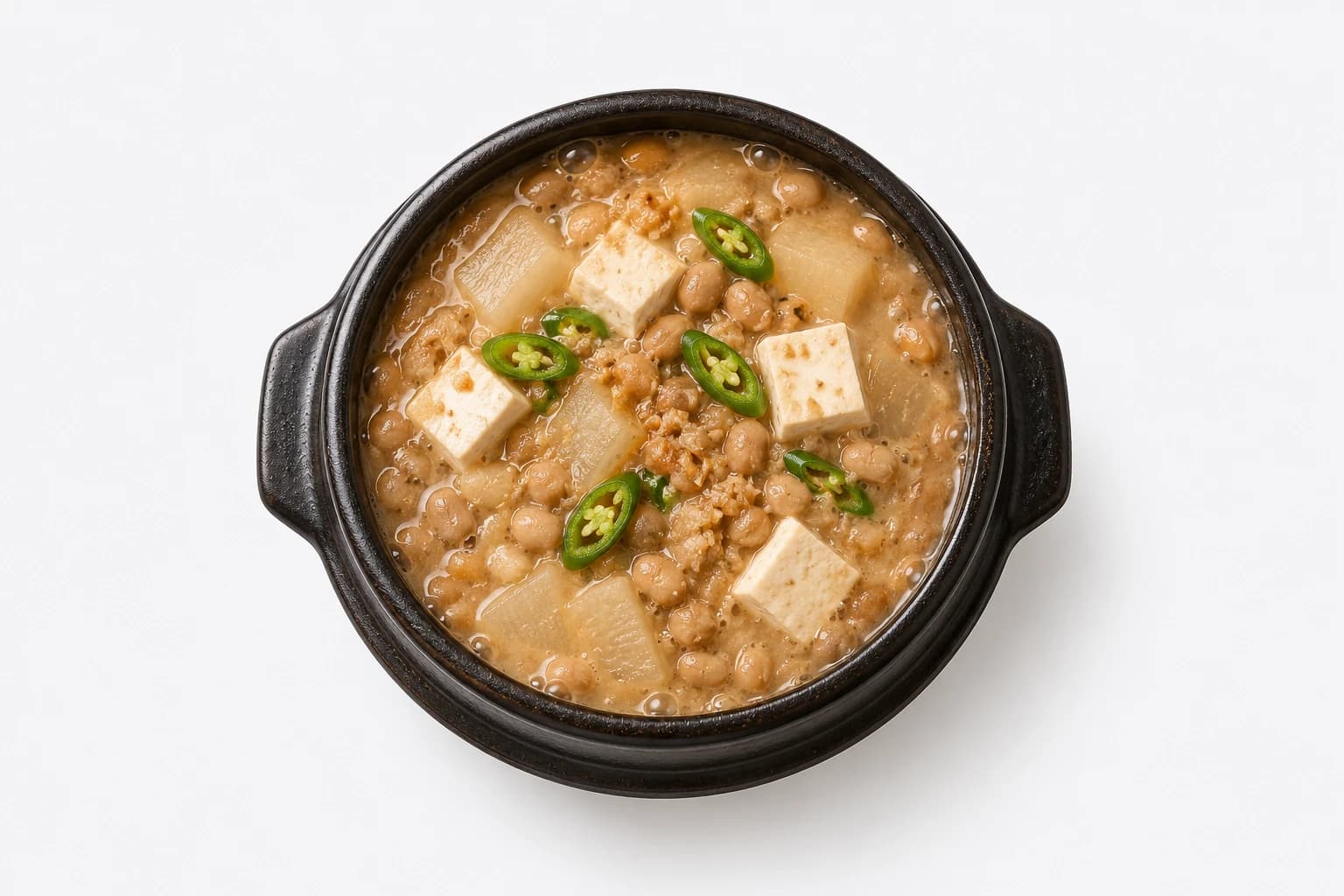
First, what this stew rests on and what it does not.
Cheonggukjang has two recent trials: 2025 in Nutrients and 2023 in Foods. Both carry a decisive limitation.
Neither had a placebo arm. All three groups ate cheonggukjang; only the amount or the type differed. So the comparison "those who ate it did better than those who did not" does not exist in the first place.
And the 2023 trial found no change at all in obesity or inflammatory markers.
The 2011 trial in the Journal of Medicinal Food reported better lipids, but the figures are against the starting value, not against a control group.
And look at the form these trials used. Not stew — tablets at 3.3 g a day. A serving of this stew holds 50 g of cheonggukjang. The amount differs, the form differs, and so does whether it was cooked.
So what is this recipe for? Not to deliver an effect. To take out sodium.
Per serving:
| Per serving |
|---|
| Cheonggukjang 50 g | about 100 kcal, protein 9 g |
| Tofu 75 g | 62 kcal, protein 7.5 g, calcium 212 mg |
| Radish and onion | about 30 kcal |
| Total | about 195 kcal, protein 17 g |
The sodium is the centre of this recipe.
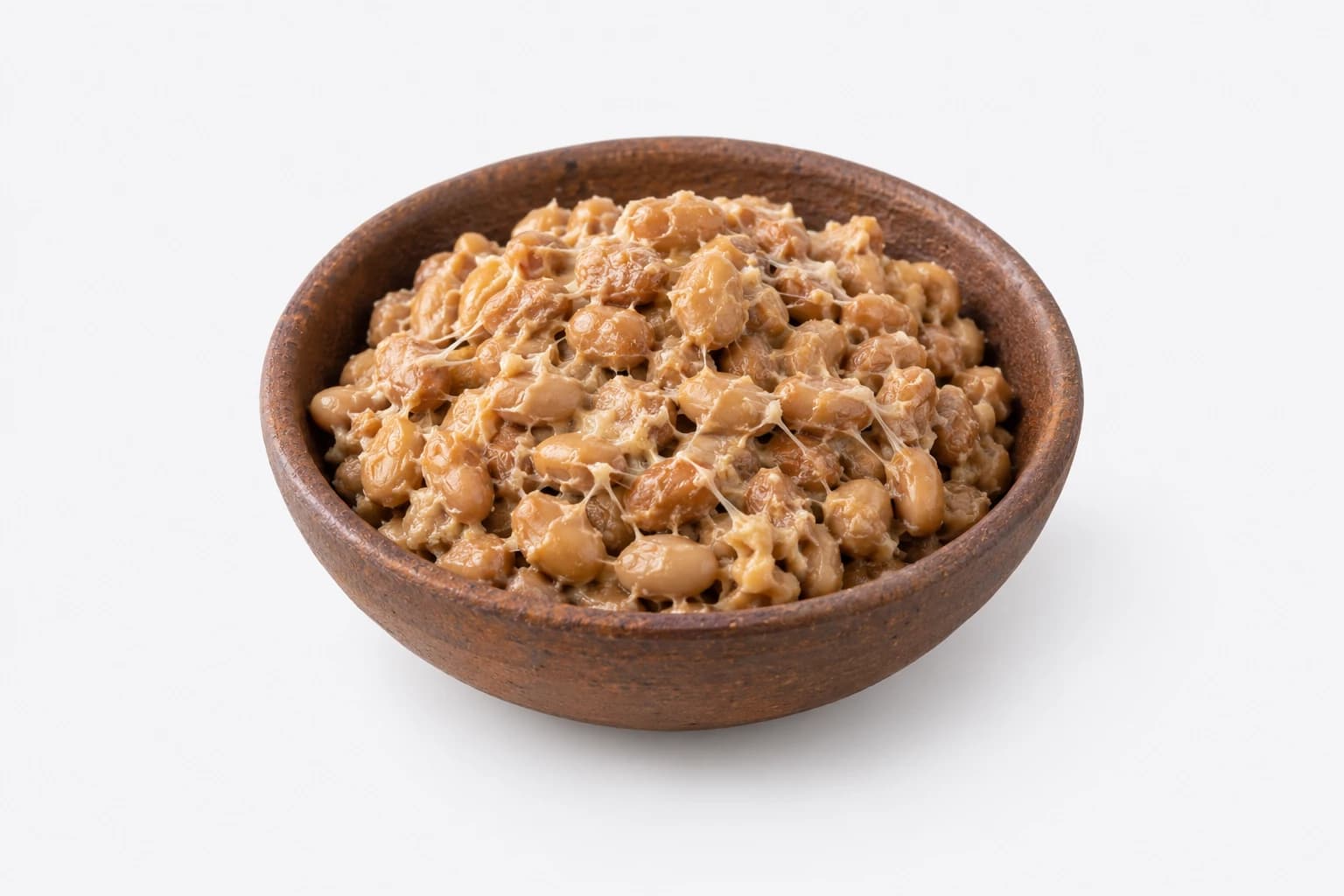
Cheonggukjang's sodium varies enormously by product — some hold 300 mg per 100 g, others over 1,000 mg. So read the label. This recipe cannot give you a figure, because it does not know your product.
One thing is certain: do not add salt or soy sauce. The cheonggukjang already contains salt. Korean stews conventionally add soy sauce on top of it, and that pushes a bowl past 1,000 mg easily.
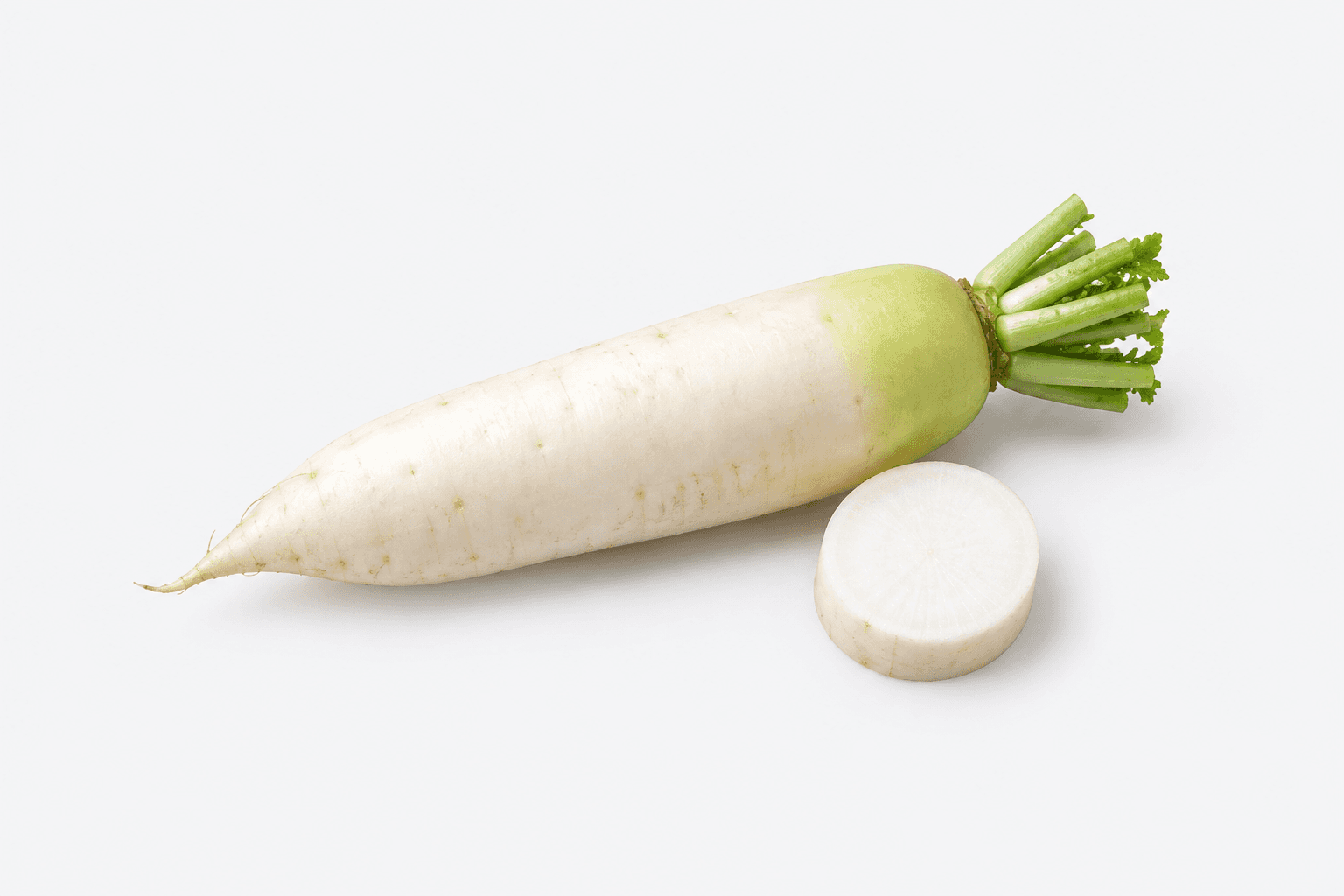
This is why the radish boils for ten minutes first. Radish sweetens as it cooks, and so does onion. Sweetness drawn out of vegetables stands in for the seasoning. That is why there is no salt here.
Leave the broth and the sodium drops by more than half. Spooning the solids over rice is the simplest way.
Why it never boils after the cheonggukjang goes in. Two reasons.
First, aroma. Cheonggukjang's characteristic aroma compounds are volatile. Boil it hard and the smell leaves; what stays is the salt.
Second, the bacteria. Cheonggukjang is fermented by Bacillus subtilis. What live bacteria do here is not settled by the trials above, but boiling erases the question itself. Five minutes on low heat is plenty to warm it for eating.
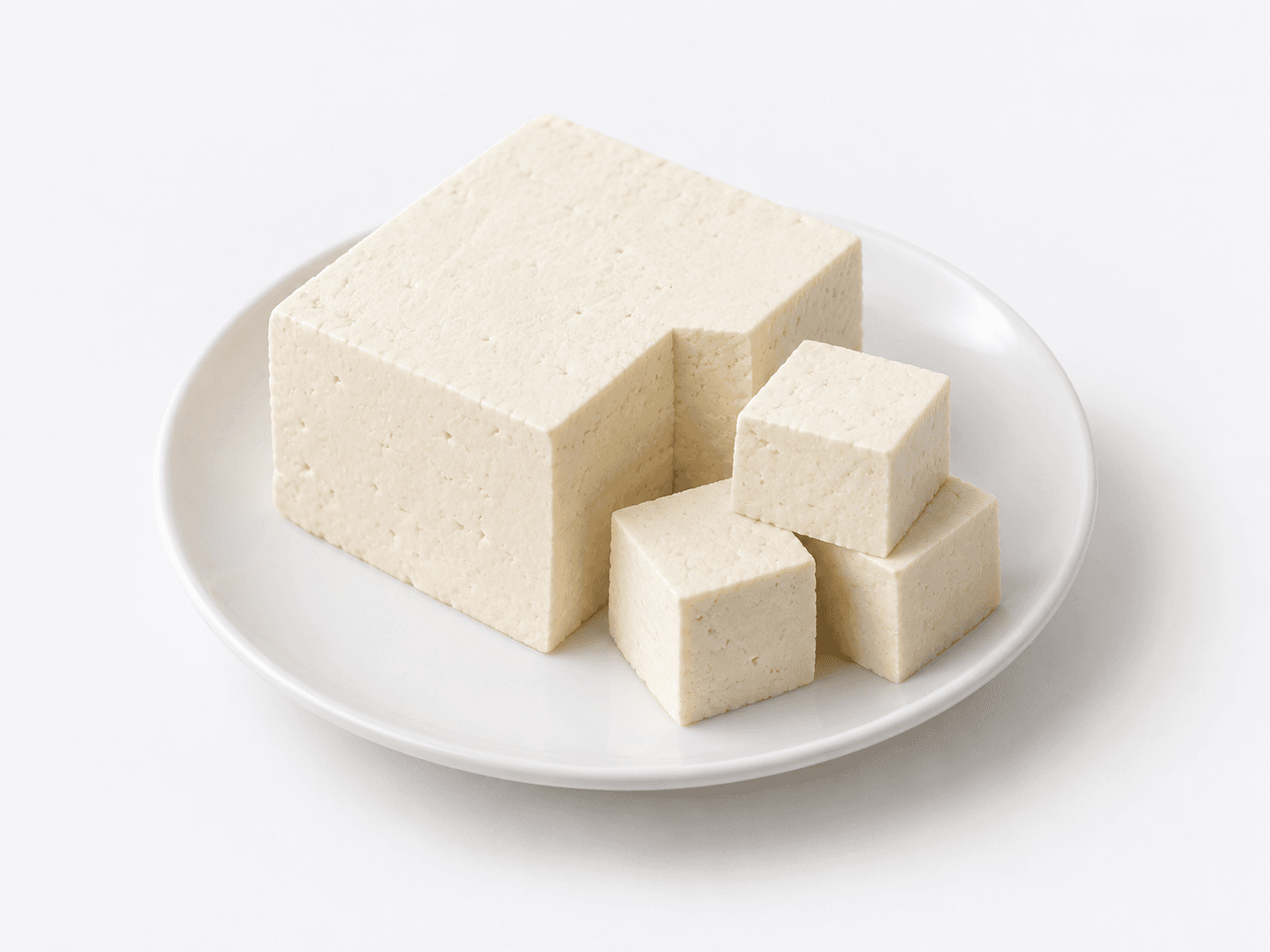
Why the tofu goes in last. Tofu is already a cooked food. Simmered long, the protein contracts, the block turns spongy with holes and goes tough. Three minutes warms it through.
If you take warfarin, take note. Fermentation by Bacillus subtilis produces vitamin K2 (menaquinone-7), which interferes with how warfarin works. The warning attached to natto exists for this reason, and cheonggukjang is made with the same organism. Do not change your intake abruptly; talk to your clinician.
The claim that nattokinase dissolves clots is one this site could not verify. Breaking down fibrin in a test tube and acting on a clot in a person who ate it are separate claims.
Cheonggukjang freezes well. Divide it into single portions. You can add it straight from frozen — since it never boils anyway, put it in at that step and wait a little longer.