Contents
What it is
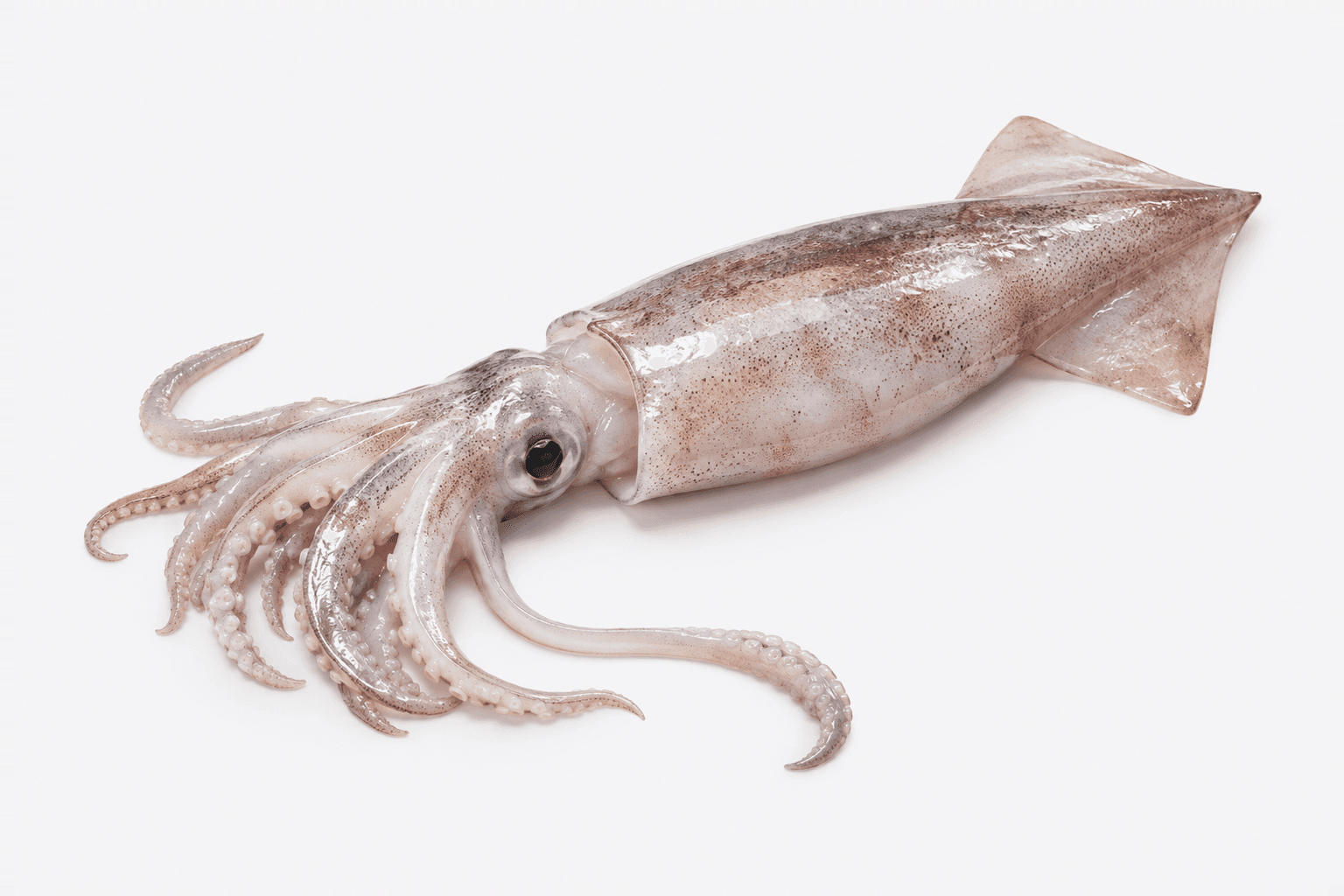
Squid are ten-armed cephalopod molluscs. Unlike the octopus they keep a thin, transparent internal quill, and two of the ten arms are long tentacles for seizing prey. The body is almost pure muscle, so heat makes it contract and toughen fast: only very brief cooking or very long cooking leaves it tender, and everything in between is rubbery. Scoring the flesh spreads that contraction out so it curls less. In Korea it is also widely eaten dried and salted as jeotgal.
Scientific name Todarodes pacificus
Squid spent decades on the 'high cholesterol, be careful' list. At 233 mg per 100 g it genuinely is high.
But the relationship between dietary cholesterol and blood cholesterol is less linear than once assumed — that is the weight of the past twenty years of evidence. The US Dietary Guidelines dropped the 300 mg cholesterol ceiling in 2015.
On nutrition alone, squid is an unusual combination.
- 15.6 g of protein against 1.38 g of fat — leaner than chicken breast
- Selenium 44.8 µg — 75 % of the 60 µg adult requirement
- Copper 1.89 mg — more than twice the 0.8 mg requirement
- 92 kcal
The problem is how squid arrives at a Korean table: battered, stir-fried, salted, shredded and sweetened. Mostly alongside oil, salt or sugar.
Key benefits
- Nutrition data
15.6 g of protein on 1.38 g of fat
Squid holds 15.6 g of protein and 1.38 g of fat per 100 g. Few protein foods are this lean — it sits between chicken breast (3.6 g) and cod (0.7 g).
That is why the energy is only 92 kcal, a quarter of pork belly at 331 kcal for the same weight.
A word on protein quality is due. Squid protein is complete, carrying all the essential amino acids, and digests well. Leucine, which matters for muscle synthesis, is adequate.
Within that 1.38 g of fat sit 0.146 g of EPA and 0.342 g of DHA — 0.49 g together. Not comparable to mackerel's 2 g and more, but not nothing either. Squid is not enough to serve as an omega-3 source.
Choline comes in at 65 mg.
- Moderate evidence
233 mg of cholesterol — how to read that number
[1]Squid carries 233 mg of cholesterol per 100 g, more than an egg's roughly 186 mg.
Plenty of people have avoided squid over that figure. Here is where the evidence stands.
One trial is worth consulting. A 1996 study in the American Journal of Clinical Nutrition compared a high-cholesterol shrimp diet with a low-fat diet in people with normal lipids.
On the shrimp diet LDL rose 7 % — but HDL rose 12 %, so the LDL/HDL ratio actually improved. Triglycerides were 13 % lower. The egg diet used as a comparator raised LDL 10 % and HDL 7 %.
Important limits belong with it.
- This is a shrimp trial, not a squid trial. The composition is similar enough to be informative, but it is not the same food.
- It is a small study: 18 participants over three weeks.
- Every participant had normal lipids. Whether the same holds for someone with dyslipidaemia is a question this trial does not answer.
- It measured lipids, not heart attacks or deaths.
Put together: you need not fear squid's cholesterol the way people once did, but there is not yet evidence to declare it simply fine. Individual response varies a great deal, and roughly a quarter of people are hyper-responders to dietary cholesterol.
- Nutrition data
High in selenium and copper
Squid holds 44.8 µg of selenium per 100 g, 75 % of the 60 µg adult requirement. Selenium serves the antioxidant enzyme glutathione peroxidase and thyroid hormone metabolism.
Copper is 1.89 mg, more than twice the 0.8 mg adult requirement. Copper works in iron metabolism, connective tissue synthesis and neurotransmitter production. Copper shortfall is uncommon on a Korean diet, but squid is among its notable sources.
Vitamin B12 is 1.3 µg, 54 % of the 2.4 µg requirement; phosphorus is 221 mg.
There is a caution. The upper intake level for selenium is 400 µg for adults. You will not reach it on squid alone, but add it up if you also take a selenium supplement. Copper's limit is 10 mg, which food alone will not reach.
How to eat it well
- Blanch or grill it. Those preserve squid's low fat and low energy. Batter roughly triples the calories.
- Cook it briefly or cook it a long time. The middle is where it turns rubbery — one or two minutes in boiling water, or thirty minutes-plus of simmering.
- Score the flesh so heat penetrates evenly and it cooks in less time.
- Treat sweetened dried shredded squid as a different food. It is processed with sugar, syrup and a lot of salt; products above 1,000 mg of sodium per 100 g are common.
- Stir-fried with vegetables it makes a plate that is filling for its calories.
- It takes well to garlic, chilli and lemon — all of which help cut the salt.
How to read the grades
Each benefit carries a label showing how far research on people supports it. Grades differ between items even within the same ingredient.
- Nutrition data
- A fact verifiable from food composition databases or health authorities. This is a different kind of statement from a clinical effect.
- Strong evidence
- Consistently confirmed across randomised controlled trials or meta-analyses.
- Moderate evidence
- Human studies exist, but effect sizes are small or results are mixed.
- Early research
- Cell or animal work, or small preliminary studies.
- Not established
- Commonly claimed, but not confirmed in studies on people.
What to watch out for
- With dyslipidaemia, do not dismiss the 233 mg of cholesterol. The trial above studied 18 people with normal lipids.
- With gout, take care. Squid is relatively high in purines.
- Shellfish and mollusc allergy is common and can be severe. Squid is classed as a mollusc and is a labelled allergen in Korea.
- Raw squid carries anisakis risk. Freezing (−20 °C for 24 hours or more) or cooking prevents it.
- Dried seasoned squid and salted squid are very high in sodium. Squid's nutritional advantages do not carry over to them.
- Squid ink can accumulate small amounts of heavy metals. There is no reason to eat ink dishes often.
Nutrition
Per 100 g of raw squid. A medium squid yields about 200 g of flesh. Battered and fried, the calories roughly triple.
- Calories
- 92 kcal5%
- Protein
- 15.6 g31%
- Fat
- 1.38 g2%
- Selenium
- 44.8 µg81%
- Copper
- 1.89 mg210%
- Vitamin B12
- 1.3 µg54%
- Phosphorus
- 221 mg18%
- Choline
- 65 mg12%
Percentages are of the US FDA Daily Value for adults and children 4 and over. National reference intakes differ by sex and age.
Calculate this alongside other ingredients →
Key nutrients
Dishes with this ingredient
Sources
The databases and health authorities this article's nutrition figures and health statements draw on.
- 1Effects of shrimp consumption on plasma lipoproteinsClinical trialDe Oliveira e Silva ER, et al. Am J Clin Nutr 1996PMID 8901790
- 2USDA FoodData CentralFood composition database
- 3MFDS Food Composition Database · 식품안전나라Food composition database
- 4NIH Office of Dietary SupplementsHealth authority
- 5PubMedResearch literature